Cyano-, Nitrile-
Cyano and nitrile compounds are organic molecules that contain cyano (C≡N) or nitrile groups in their structure, characterized by the presence of nitrogen. These groups play important roles in various chemical reactions and industrial applications. In this category, you will find a wide range of cyano and nitrile compounds, ranging from simple to complex structures. At CymitQuimica, we offer high-quality cyano and nitrile compounds tailored to meet research and industrial needs. Our compounds are suitable for a variety of synthesis and analytical applications.
Found 9624 products of "Cyano-, Nitrile-"
Sort by
Purity (%)
0
100
|
0
|
50
|
90
|
95
|
100
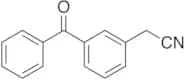
(3-Benzoylphenyl)acetonitrile
CAS:<p>Impurity Ketoprofen EP Impurity I<br>Applications (3-Benzoylphenyl)acetonitrile (Ketoprofen EP Impurity I) is a Ketoprofen intermediate.<br>References Allais, A., et al.: Eur. J. Med. Chem., 9, 381 (1974).<br></p>Formula:C15H11NOColor and Shape:Colourless To Light YellowMolecular weight:221.255'-(4-Cyanophenyl)-[1,1':3',1''-terphenyl]-4,4''-dicarbonitrile
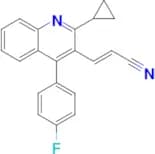
CAS:Purity:97%Color and Shape:SolidMolecular weight:381.43798828125(E)-3-(2-Cyclopropyl-4-(4-fluorophenyl)quinolin-3-yl)acrylonitrile
CAS:Purity:95.0%Molecular weight:314.36300659179692-[5-(2-Fluorobenzoyl)-2-thienyl]acetonitrile
CAS:Formula:C13H8FNOSColor and Shape:SolidMolecular weight:245.27N-(3-Cyano-4,5,6,7-tetrahydrobenzo[b]thiophen-2-yl)-3-phenylpropanamide
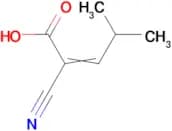
CAS:Purity:97%Molecular weight:310.42001342773442-Cyano-4-methylpent-2-enoic acid
CAS:Purity:97.0%Color and Shape:SolidMolecular weight:139.15400695800781-[(diphenylmethylidene)amino]cyclopropane-1-carbonitrile
CAS:Purity:95.0%Molecular weight:246.31300354003906[1,1′-Binaphthalene]-3,3′-dicarbonitrile,2,2′-dihydroxy-, (1S)-
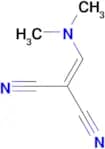
CAS:Color and Shape:SolidMolecular weight:336.35(DIMETHYLAMINOMETHYLENE)MALONONITRILE
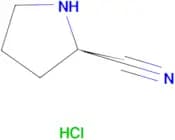
CAS:Purity:97.0%Color and Shape:SolidMolecular weight:121.14299774169922(R)-Pyrrolidine-2-carbonitrile hydrochloride
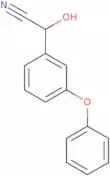
CAS:Formula:C5H9ClN2Purity:97%Color and Shape:SolidMolecular weight:132.592-Hydroxy-2-(3-phenoxyphenyl)acetonitrile
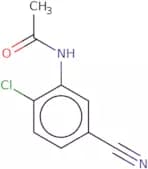
CAS:<p>2-Hydroxy-2-(3-phenoxyphenyl)acetonitrile is an organic compound that is synthesized by the reaction of 3-phenoxybenzaldehyde with nitrous acid in aqueous solution. This compound can be racemized by the enzyme lipase and esterified to form an ester linkage. 2-Hydroxy-2-(3-phenoxyphenyl)acetonitrile has been shown to exhibit insecticidal activity against various strains of bacteria, including Bacillus subtilis, Staphylococcus aureus, and Escherichia coli. 2HPA is a pyrethroid insecticide that has been shown to inhibit lipid synthesis by binding to phospholipids in the bacterial cell membrane. This inhibits the production of fatty acids and glycerol phosphate, inhibiting the growth of the bacteria.</p>Formula:C14H11NO2Purity:Min. 95%Color and Shape:Clear LiquidMolecular weight:225.24 g/molN-(5-Cyano-2-chlorophenyl)acetamide
CAS:<p>N-(5-Cyano-2-chlorophenyl)acetamide is a high quality, reagent, and versatile building block. It is a fine chemical that can be used as a building block for the synthesis of other compounds. N-(5-Cyano-2-chlorophenyl)acetamide is also a speciality chemical that can be used in research or as a reaction component. It has been found to be useful as an intermediate in the synthesis of complex compounds.<br>END></p>Formula:C9H7ClN2OPurity:Min. 95%Molecular weight:194.62 g/mol4-Cyano-2-hydroxybenzaldehyde
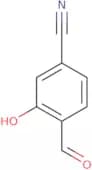
CAS:<p>4-Cyano-2-hydroxybenzaldehyde is a high quality chemical that can be used as a reagent and intermediate in the synthesis of complex compounds. It is also an important building block in the synthesis of fine chemicals. 4-Cyano-2-hydroxybenzaldehyde has been used as a versatile building block in the synthesis of organic compounds, useful scaffolds in medicinal chemistry, and reactive intermediates. It has also been shown to have anti-inflammatory properties and may be a potential treatment for inflammatory bowel disease.</p>Formula:C8H5NO2Purity:Min. 95%Molecular weight:147.13 g/mol2,4,6-Trichlorobenzonitrile
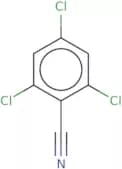
CAS:<p>2,4,6-Trichlorobenzonitrile is a chlorine-containing chemical that has been used as a pesticide. It is a highly toxic substance and can be fatal if ingested. 2,4,6-Trichlorobenzonitrile is converted to chloride in soil and water by microbial action. This chemical can be activated by light or temperature changes and is used in the production of pesticides that are phytotoxic. It also has been shown to have thermodynamic properties that allow it to act as an environmental pollutant. 2,4,6-Trichlorobenzonitrile can react with sulfoxides to form chloromethylation products such as 2,3,5-trichloroethanol. These reactions are catalyzed by metal ions such as Fe(II) and Mn(II).</p>Formula:C7H2Cl3NPurity:Min. 95%Color and Shape:PowderMolecular weight:206.46 g/mol


![5'-(4-Cyanophenyl)-[1,1':3',1''-terphenyl]-4,4''-dicarbonitrile](/_next/image/?url=https%3A%2Fstatic.cymitquimica.com%2Fproducts%2F10%2Fthumb-webp%2FF606603.webp&w=3840&q=75)
![2-[5-(2-Fluorobenzoyl)-2-thienyl]acetonitrile](/_next/image/?url=https%3A%2Fstatic.cymitquimica.com%2Fproducts%2F10%2Fthumb-webp%2FF010103.webp&w=3840&q=75)
![N-(3-Cyano-4,5,6,7-tetrahydrobenzo[b]thiophen-2-yl)-3-phenylpropanamide](/_next/image/?url=https%3A%2Fstatic.cymitquimica.com%2Fproducts%2F10%2Fthumb-webp%2FF707148.webp&w=3840&q=75)
![5-[3,5-bis(trifluoromethyl)phenyl]-2-furonitrile](/_next/image/?url=https%3A%2Fstatic.cymitquimica.com%2Fproducts%2F10%2Fthumb-webp%2FF518829.webp&w=3840&q=75)
![1-[(diphenylmethylidene)amino]cyclopropane-1-carbonitrile](/_next/image/?url=https%3A%2Fstatic.cymitquimica.com%2Fproducts%2F10%2Fthumb-webp%2FF517018.webp&w=3840&q=75)
![[1,1′-Binaphthalene]-3,3′-dicarbonitrile,2,2′-dihydroxy-, (1S)-](/_next/image/?url=https%3A%2Fstatic.cymitquimica.com%2Fproducts%2F10%2Fthumb-webp%2FF988861.webp&w=3840&q=75)