Cyano-, Nitrile-
Cyano and nitrile compounds are organic molecules that contain cyano (C≡N) or nitrile groups in their structure, characterized by the presence of nitrogen. These groups play important roles in various chemical reactions and industrial applications. In this category, you will find a wide range of cyano and nitrile compounds, ranging from simple to complex structures. At CymitQuimica, we offer high-quality cyano and nitrile compounds tailored to meet research and industrial needs. Our compounds are suitable for a variety of synthesis and analytical applications.
Found 9624 products of "Cyano-, Nitrile-"
Sort by
Purity (%)
0
100
|
0
|
50
|
90
|
95
|
100
2-Cyanoethyl phosphate barium salt hydrate
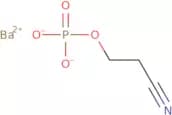
CAS:<p>2-Cyanoethyl phosphate barium salt hydrate is an alkaline compound that is soluble in water. It has been used to synthesize phosphodiesters, benzene, dioxan and alcohols. The chemical was originally developed as a reagent for the quantitative conversion of ethyl acetate esters to their corresponding acid chlorides. This reaction can be carried out quantitatively in tetrahydrofuran at room temperature with yields of about 95%. 2-Cyanoethyl phosphate barium salt hydrate also converts alcohols to their corresponding monophosphates quantitatively in alkaline conditions. Crystalline forms are obtained by reacting the compound with triethylamine and benzene.</p>Formula:C3H6BaNO4P•xH2OPurity:Min. 95%Color and Shape:PowderMolecular weight:324.42 g/mol2,5-Diaminobenzonitrile
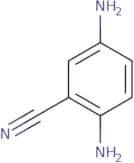
CAS:<p>2,5-Diaminobenzonitrile is a chemical compound with the molecular formula C6H5N3. It is a white crystalline solid that is insoluble in water and soluble in organic solvents such as acetone, chloroform, and ether. 2,5-Diaminobenzonitrile has been shown to be an effective monomer for polymer synthesis due to its stability and high densities. This chemical also has the ability to undergo hydrogen bonding and form hydrogen peroxide when heated to a temperature of 100 °C. The thermal isomerization of 2,5-diaminobenzonitrile can be slowed by adding other amines or nitrites.</p>Formula:C7H7N3Purity:Min. 95%Color and Shape:PowderMolecular weight:133.15 g/mol4-Octylbenzylamine
CAS:<p>4-Octylbenzylamine is a hydrophobic molecule that is soluble in organic solvents. In simulations, it was shown to have affinity for anions and aromatic hydrocarbons, as well as the ability to be immobilized on surfaces. 4-Octylbenzylamine is also a chromatographic stationary phase that can be used to separate solutes with similar properties. This molecule has been oriented so that it binds to the hydrated surface of the column, which improves its affinity for anions and aromatic hydrocarbons. The high-performance liquid chromatography (HPLC) technique utilizes this property to separate molecules of different affinities from one another in a systematic manner.</p>Formula:C15H25NPurity:Min. 95%Color and Shape:PowderMolecular weight:219.37 g/mol4-Amino-3-nitrobenzonitrile
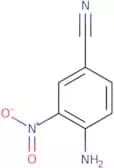
CAS:<p>4-Amino-3-nitrobenzonitrile is an organic compound that is used as a precursor in the synthesis of drugs to treat infectious diseases. 4-Amino-3-nitrobenzonitrile has been shown to have potent activity against Leishmania species, including L. major and L. braziliensis. It binds to sulfoxides by a nitro group and forms a covalent bond with the sulfoxide. This results in the formation of an intramolecular hydrogen bond between the nitro group and the sulfoxide, which prevents it from forming hydrogen bonds with other molecules. Gel permeation chromatography can be used for analytical determination of this drug. 4-Amino-3-nitrobenzonitrile has also been studied using chemosensors and in vivo studies, showing that it can be used to inhibit protozoa such as Giardia lamblia, Entamoeba histolyt</p>Formula:C7H5N3O2Purity:Min. 98%Color and Shape:PowderMolecular weight:163.13 g/mol4-Cyanobenzylamine HCl
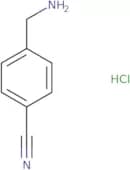
CAS:<p>4-Cyanobenzylamine HCl is a degradable polymer that has been shown to inhibit colonic adenocarcinoma in mice. This compound was synthesized by the reaction of 4-cyanobenzylamine with 3-mercaptopropionic acid and was characterized using IR, 1H NMR, and 13C NMR spectroscopy. It also showed an inhibitory effect on the proliferation of human colon cancer cells. The polymer was found to gel when mixed with different concentrations of acrylamide and methylene bisacrylamide. Gelation occurred at a lower concentration of acrylamide than the amount used in previous studies. This may be due to its functional groups and morphology, which could have contributed to the inhibition of cell growth.</p>Formula:C8H8N2·HClPurity:Min. 95%Color and Shape:PowderMolecular weight:168.62 g/mol4-tert-Butylcalix[4]arene - contains 12% residual solvent (ethyl acetate and acetonitrile)
CAS:<p>4-tert-Butylcalix[4]arene is a polymorphic compound with transport properties. It has been shown to have an activation energy of ˜30 kcal/mol, and can be characterized by its nmr spectra. The molecule can be found in n-hexane and zirconium. 4-tert-Butylcalix[4]arene is a coordination complex with a transfer mechanism that contains chloride or metal ion. It forms an acid complex with thermally stable molecules.</p>Formula:C44H56O4Purity:Min. 95%Color and Shape:PowderMolecular weight:648.91 g/mol1-Adamantyl acetonitrile
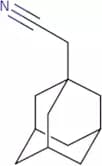
CAS:<p>1-Adamantyl acetonitrile is a trifluoroacetic acid derivative that is used in the synthesis of 4-aminoantipyrine, chlorides, acid chlorides, and acetonitrile. 1-Adamantyl acetonitrile can be used to produce a variety of pharmaceuticals, such as aliphatic carboxylic acids, aldehydes, and amide. It can also serve as a reactant for reactions with alcohols or amines.</p>Formula:C12H17NPurity:Min. 95%Color and Shape:PowderMolecular weight:175.27 g/mol2,4-Dimethoxybenzylamine
CAS:<p>Tak-659 is an amide compound that inhibits the serine protease activity of a number of enzymes, including cathepsin B and L. Tak-659 has been shown to have inhibitory effects on inflammation in animal models by inhibiting the production of inflammatory cytokines. Tak-659 has also been shown to impair protein synthesis in gram-negative bacteria, such as Escherichia coli and Pseudomonas aeruginosa. The mechanism for this inhibition is not entirely clear but may be due to tak-659 binding to the ribosomal RNA near the peptidyl transferase center, blocking the entry of amino acids into the ribosome. Tak-659 binds with high affinity to adenosine receptors and has been shown to reduce levels of inflammatory cytokines in mouse tumor cells.</p>Formula:C9H13NO2Purity:Min. 95%Color and Shape:Colorless Clear LiquidMolecular weight:167.21 g/mol2-Amino-4-fluorobenzylamine dihydrochloride
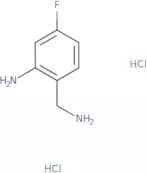
CAS:<p>2-Amino-4-fluorobenzylamine dihydrochloride is a research chemical that is used as a reactant in organic synthesis. 2-Amino-4-fluorobenzylamine dihydrochloride is an intermediate for the preparation of other chemicals and can also be used as a building block for more complex compounds. This chemical has been shown to have good quality and can be used in many different types of research.<br>2-Amino-4-fluorobenzylamine dihydrochloride has CAS number 606139-20-2.</p>Formula:C7H9FN2·2HClPurity:Min. 95 Area-%Color and Shape:PowderMolecular weight:213.08 g/mol(S,E)-3-(6-Bromopyridin-2-yl)-2-cyano-N-(1-phenylethyl)acrylamide
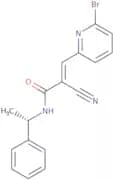
CAS:<p>(S,E)-3-(6-Bromopyridin-2-yl)-2-cyano-N-(1-phenylethyl)acrylamide (MBI-23) is a potential antineoplastic agent that has been shown to induce regression of bladder cancer in mice. MBI-23 induces apoptosis by inhibiting the proliferation of cancer cells and inducing differentiation of cancer stem cells. It is also shown to inhibit tumor growth and progression in glioma and prostate cancer models. MBI-23 binds to the KDR receptor subtype, which is activated by organic acids and inhibited by inorganic compounds. This binding leads to constitutive activation of the KDR receptor, thereby inducing apoptosis. The tautomers and stereoisomers of MBI-23 have not been fully elucidated yet.</p>Formula:C17H14ON3BrPurity:Min. 98 Area-%Color and Shape:White PowderMolecular weight:356.22 g/mol2-Chloro-4-fluorobenzonitrile
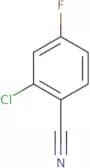
CAS:<p>2-Chloro-4-fluorobenzonitrile is a drug that has been shown to have antitumor effects by binding to the CB2 receptor. It inhibits hydrogenation reduction of the molecule, which may be due to its ability to react with both functional groups. 2-Chloro-4-fluorobenzonitrile has also been shown to inhibit progesterone receptor, which may lead to an increase in progesterone levels and a decrease in estrogen levels. The pharmacokinetic properties of this compound are not yet known.</p>Formula:C7H3ClFNPurity:Min. 95%Color and Shape:White PowderMolecular weight:155.56 g/mol4-Hydroxy-3-methoxybenzylamine hydrochloride
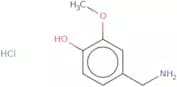
CAS:<p>4-Hydroxy-3-methoxybenzylamine hydrochloride is a reagent, complex compound and useful intermediate for the production of speciality chemicals. CAS No. 7149-10-2 is not a hazardous chemical and does not pose any significant risk to human health or the environment when used as intended. This chemical has many uses including being a useful scaffold in organic synthesis, a useful building block for the preparation of other compounds, and a versatile building block for the preparation of various compounds. It also has many applications in research such as being an intermediate for the synthesis of other compounds, or as a reactant in various reactions.</p>Formula:C8H12NO2ClPurity:Min. 98 Area-%Color and Shape:White PowderMolecular weight:189.64 g/mol4-Bromo-3-cyanotoluene
CAS:<p>4-Bromo-3-cyanotoluene is a quinazolinone that can be synthesized by reacting 2-bromotoluene with nitric acid. It is a substrate for the synthesis of other quinazolinones.</p>Formula:C8H6BrNPurity:Min. 95%Molecular weight:196.04 g/mol3-Aminobenzonitrile
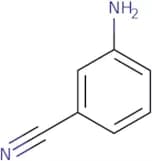
CAS:<p>3-Aminobenzonitrile is an amine that has been shown to inhibit the growth of bacteria. It was synthesized by the reaction of nitrobenzene with benzamide in the presence of acetic acid. The chemical structure of 3-aminobenzonitrile is similar to that of a group of natural amino acids, including cysteine and tryptophan, which are known inhibitors of bacterial growth. This compound is soluble in organic solvents and can be used as an injection solution. 3-Aminobenzonitrile has been evaluated by kinetic studies and found to have a high affinity for bacterial cells, with an inhibition constant (Ki) value of 0.37 mM. It is also active against other microorganisms such as yeast or mold fungi, but not against plant or animal cells. 3-Aminobenzonitrile inhibits the synthesis of proteins by binding to a number of different sites on the ribosomes where</p>Purity:Min. 95%Color and Shape:Yellow PowderMolecular weight:118.14 g/mol2-(2,3-Dichlorophenyl)-2-guanidinyliminoacetonitrile
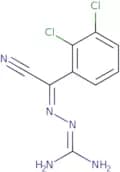
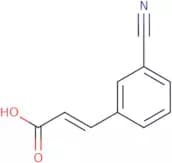
CAS:<p>2-(2,3-Dichlorophenyl)-2-guanidinyliminoacetonitrile (2,3-DCPP) is a high quality reagent that is used in the preparation of complex compounds. It is also an intermediate in the synthesis of fine chemicals and useful scaffold and building block for research chemical. 2,3-DCPP has been shown to react with a variety of functional groups including amines, alcohols, thiols, carboxylic acids, organometallic reagents and many others. It is also a versatile building block for the synthesis of chemical substances such as pharmaceuticals, agrochemicals or dyes.</p>Formula:C9H7Cl2N5Purity:Min. 95%Color and Shape:White PowderMolecular weight:256.09 g/mol3-Cyanocinnamic acid
CAS:<p>3-Cyanocinnamic acid is a reactive, unreactive, and stepwise cycloaddition compound. It can participate in photochemical reactions with other compounds to form photodimers. 3-Cyanocinnamic acid has an optimal reaction temperature of 100°C and a reaction time of 5 minutes. The diradical nature of 3-cyanocinnamic acid makes it sensitive to UV light, and the photochemical reactions are simulated by quantum mechanics calculations. Photodimerisation simulations show that 3-cyanocinnamic acid is capable of forming photodimers with 2-cyanocinnamic acid or 4-cyanocinnamic acid at room temperature.</p>Formula:C10H7NO2Purity:Min. 95%Color and Shape:PowderMolecular weight:173.17 g/molN-Cyanomorpholine
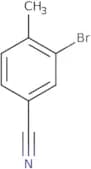
CAS:<p>N-Cyanomorpholine is a synthetic compound that is used as a reagent in organic synthesis. It has been shown to form stable complexes with amines, such as aniline and pyridine. In addition, it can be used in the intramolecular hydrogenation of alkenes, which is catalyzed by palladium on carbon. N-Cyanomorpholine was found to be effective against some viruses, such as herpes simplex virus type 1 and influenza virus type A. It also has been validated for use in the synthesis of dianthus caryophyllus and acrylonitrile.</p>Formula:C5H8N2OPurity:Min. 95%Molecular weight:112.13 g/mol2-Bromo-4-cyanotoluene
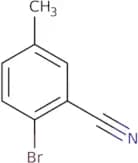
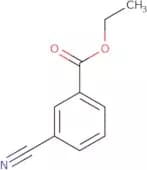
CAS:<p>2-Bromo-4-cyanotoluene is a ligand that is used in cross-coupling reactions. It is used to form complexes with metals, such as palladium and nickel, for the preparation of organometallic reagents. 2-Bromo-4-cyanotoluene has been shown to inhibit secretory phospholipase A2 (sPLA2) and PLA2 activity in a fluorimetric assay. This compound also inhibits the catalytic activity of spla2, which is an enzyme involved in the biosynthesis of arachidonic acid. 2-Bromo-4-cyanotoluene also inhibits piperazine synthesis by reacting with the nitrogen atom on the piperazine ring.</p>Formula:C8H6BrNPurity:Min. 95%Molecular weight:196.04 g/mol3-Cyanobenzoic acid ethyl ester
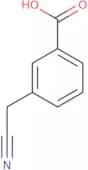
CAS:<p>3-Cyanobenzoic acid ethyl ester is a reaction component that is used in organic synthesis. It is a versatile building block, useful intermediate, and useful building block. 3-Cyanobenzoic acid ethyl ester is a fine chemical that can be used as a reagent for the preparation of other compounds. This compound has been assigned CAS No. 2463-16-3 and has the molecular formula C7H6O2.</p>Formula:C10H9NO2Purity:Min. 95%Color and Shape:PowderMolecular weight:175.18 g/mol3-(Cyanomethyl)benzoic acid
CAS:<p>3-(Cyanomethyl)benzoic acid is a useful building block that is used as a reagent in the production of pharmaceuticals and research chemicals. It is also used as a speciality chemical and as a high-quality fine chemical. This compound has versatile uses, including reactions with other chemicals to form complex compounds, and can be used as a reaction component or an intermediate in the synthesis of other chemicals. 3-(Cyanomethyl)benzoic acid has no known toxicity and its CAS number is 5689-33-8.</p>Formula:C9H7NO2Purity:Min. 95%Color and Shape:PowderMolecular weight:161.16 g/mol


![4-tert-Butylcalix[4]arene - contains 12% residual solvent (ethyl acetate and acetonitrile)](/_next/image/?url=https%3A%2Fstatic.cymitquimica.com%2Fproducts%2F3D%2Fthumb-webp%2FFB59591.webp&w=3840&q=75)