Cyano-, Nitrile-
Cyano and nitrile compounds are organic molecules that contain cyano (C≡N) or nitrile groups in their structure, characterized by the presence of nitrogen. These groups play important roles in various chemical reactions and industrial applications. In this category, you will find a wide range of cyano and nitrile compounds, ranging from simple to complex structures. At CymitQuimica, we offer high-quality cyano and nitrile compounds tailored to meet research and industrial needs. Our compounds are suitable for a variety of synthesis and analytical applications.
Found 9618 products of "Cyano-, Nitrile-"
Sort by
Purity (%)
0
100
|
0
|
50
|
90
|
95
|
100
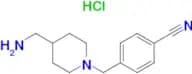
4-(4-Aminomethyl-piperidin-1-ylmethyl)-benzonitrile hydrochloride
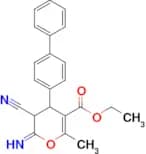
CAS:Purity:95.0%Molecular weight:265.79000854492196-Amino-4-biphenyl-4-yl-5-cyano-2-methyl-4H-pyran-3-carboxylic acid ethyl ester
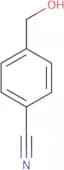
CAS:Molecular weight:360.41299438476564-Cyanobenzyl alcohol
CAS:<p>4-Cyanobenzyl alcohol is a phosphane that reacts with amines to form imines. This reaction can be used as a tool for the identification of amines in protein samples. The reaction time for this reaction is about 3 hours and can only be done at room temperature. 4-Cyanobenzyl alcohol also has potent inhibition activity against cyclopentadienyl, which is an important intermediate of organic synthesis. The ruthenium complex catalyzes this reaction and it can be used as a homogeneous catalyst.</p>Formula:C8H7NOPurity:Min. 95%Color and Shape:PowderMolecular weight:133.15 g/mol2-Phenoxyphenylacetonitrile
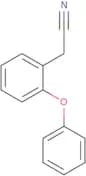
CAS:<p>2-Phenoxyphenylacetonitrile is a pyrethroid n-oxide that is chemically related to other insecticides that are used in agriculture and against insects such as mosquitoes. 2-Phenoxyphenylacetonitrile is a synthetic compound that has been shown to have an optimum pH of 5.5, which makes it difficult to dissolve in water. The compound's high stability at low pH levels means that it can be used in acidic environments. It also has been shown to have strong activity against human serum and food composition, with no detectable activity against bacteria or fungi.</p>Formula:C14H11NOPurity:Min. 95%Color and Shape:Clear LiquidMolecular weight:209.24 g/mol4-Ethoxybenzonitrile
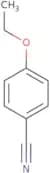
CAS:<p>4-Ethoxybenzonitrile is an organic compound that belongs to the group of nitroalkanes. It is a substrate for reductive amination, which is a reaction in which the nitro group on 4-ethoxybenzonitrile is reduced by an amine to form an amide. This reaction can be facilitated by metal catalysts, such as copper(II) acetate and zinc chloride. The reaction yields high selectivity (>90%) with respect to the product formed and has been shown to be more efficient than other reductive amination reactions. 4-Ethoxybenzonitrile has been used as a building block for various compounds, including dyestuffs, pharmaceuticals, and pesticides. 4-Ethoxybenzonitrile is also resistant to tyrosinase due to its lack of electron donating groups on its aromatic ring.</p>Formula:C9H9NOPurity:Min. 98 Area-%Color and Shape:PowderMolecular weight:147.17 g/mol4-Aminobenzonitrile
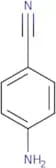
CAS:<p>4-Aminobenzonitrile is a chemical compound that has been shown to be an antimicrobial agent. It has been found to be active against bacteria and fungi, such as Candida albicans and Aspergillus niger. 4-Aminobenzonitrile binds with epidermal growth factor (EGF) by intramolecular hydrogen bonding, which leads to the disruption of the protein's tertiary structure. The nitrogen atoms in this compound have been shown to react with water vapor at high temperatures, which results in the release of hydrogen gas. This reaction can be used for phase transition temperature studies. 4-Aminobenzonitrile also shows intermolecular hydrogen bonding with fatty acids, which causes the molecule to change its shape and protonation state. These changes affect its frequency shift and molecular modeling study results.</p>Formula:C7H6N2Purity:Min. 95%Color and Shape:Off-White PowderMolecular weight:118.14 g/mol4-Amino-3-nitrobenzylamine hydrochloride
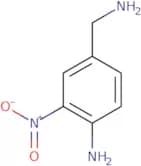
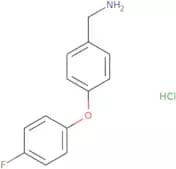
CAS:<p>4-Amino-3-nitrobenzylamine hydrochloride is a potential vanilloid receptor antagonist with potent antagonistic activities. It has been shown to inhibit the activation of neuronal TRPV1 receptors, as well as the uptake of 4-aminobenzoic acid (4-BA) in rat brain synaptosomes. In addition, this compound can be used to optimize drug structure, acting as an amide and alkyl groups. 4-Amino-3-nitrobenzylamine hydrochloride binds to the vanilloid receptor TRPV1 and blocks its activation. This prevents the release of proinflammatory substances that are responsible for pain, inflammation, and tissue injury.</p>Formula:C7H9N3O2·HClPurity:Min. 95%Color and Shape:PowderMolecular weight:203.63 g/mol4-(4-Fluorophenoxy)benzylamine hydrochloride
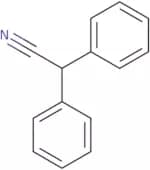
CAS:<p>4-(4-Fluorophenoxy)benzylamine hydrochloride is a metabolic agent that inhibits the metabolism of phenylpropionic acid and butanoic acid. It is used industrially as an oxime to protect other organic compounds from damage by peroxides, such as in polymerization reactions. 4-(4-Fluorophenoxy)benzylamine hydrochloride has been shown to be effective in treating metabolic diseases, such as phenylketonuria and urea cycle disorders.</p>Formula:C13H12FNO·HClPurity:Min. 95%Color and Shape:PowderMolecular weight:253.7 g/molDiphenylacetonitrile
CAS:<p>Diphenylacetonitrile is an organic compound that has a low energy and is used as a nutritional supplement. It is a derivative of mandelonitrile, which can be synthesized by the Friedel-Crafts reaction between chloroform and diphenylacetic acid. Diphenylacetonitrile is an aromatic hydrocarbon with nitrogen atoms and hydroxyl groups, which can be found in the virus or p. aeruginosa. The molecule has been shown to have anti-inflammatory potency in animal models. The synthesis of this compound involves the use of halides, such as hydrogen sulfate or bromide, which are also present in high concentrations in this product. <br>Diphenylacetonitrile (DPCN) is a low-energy nitrile that undergoes Friedel-Crafts reactions with chloroform to produce the corresponding chloride (DPCCl). DPCN has been shown to inhibit inflammatory responses</p>Formula:C14H11NPurity:Min. 95%Color and Shape:PowderMolecular weight:193.24 g/molN-Cyanomorpholine
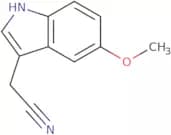
CAS:<p>N-Cyanomorpholine is a synthetic compound that is used as a reagent in organic synthesis. It has been shown to form stable complexes with amines, such as aniline and pyridine. In addition, it can be used in the intramolecular hydrogenation of alkenes, which is catalyzed by palladium on carbon. N-Cyanomorpholine was found to be effective against some viruses, such as herpes simplex virus type 1 and influenza virus type A. It also has been validated for use in the synthesis of dianthus caryophyllus and acrylonitrile.</p>Formula:C5H8N2OPurity:Min. 95%Molecular weight:112.13 g/mol5-Methoxyindole-3-acetonitrile
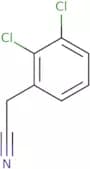
CAS:<p>5-Methoxyindole-3-acetonitrile is a synthetic compound used as a reference for the synthesis of melatonin. It is produced by the addition of magnesium to 5-methoxyindole, followed by reaction with cyanide and nitrile. The synthesis of this compound was first published in 1938 and has since been used as a reference for many other studies. It has been shown that 5-methoxyindole-3-acetonitrile has high performance liquid chromatography properties, with a linear range from 0.5 to 50 mg/mL and an ultraviolet spectrum that falls within the region between 220 nm and 400 nm. A molecular modeling study was conducted on this compound, which showed that it conforms with 4-hydroxy indole ring systems found in natural products such as tryptophan and serotonin. This product also has fluorescent properties, which are caused by its electron withdrawing group (cyano).</p>Formula:C11H10N2OPurity:Min. 95%Color and Shape:PowderMolecular weight:186.21 g/mol(2,3-Dichlorophenyl)acetonitrile
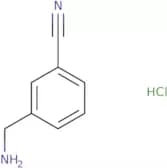
CAS:<p>(2,3-Dichlorophenyl)acetonitrile is a fine chemical that is useful as a building block in the synthesis of more complex compounds. It has been used in research as a reagent and as a speciality chemical. (2,3-Dichlorophenyl)acetonitrile reacts with many different types of compounds to form new molecules. This intermediate can be used in the synthesis of many different types of compounds and also serves as an important scaffold for larger molecules.</p>Formula:C8H5Cl2NPurity:Min. 95%Color and Shape:PowderMolecular weight:186.04 g/mol3-Cyanobenzylamine HCl
CAS:<p>3-Cyanobenzylamine HCl is a high quality chemical that is used as a reagent, intermediate, or building block in the synthesis of complex compounds. It is a fine chemical and speciality chemical that may be used as a research chemical and versatile building block for the synthesis of organic compounds. 3-Cyanobenzylamine HCl has been shown to react with other chemicals to form useful scaffolds and building blocks, such as amides, amino acid esters, and ureas.</p>Formula:C8H9ClN2Purity:Min. 95%Color and Shape:PowderMolecular weight:168.62 g/mol4-(Benzyloxy)-3-methoxyphenylacetonitrile
CAS:<p>4-(Benzyloxy)-3-methoxyphenylacetonitrile is an anti-cancer drug that belongs to the class of dihydroisoquinolines. It is used as a monomer in the synthesis of other drugs and it has been shown to be an effective inhibitor of cancer cells when used with carbamic acid. 4-(Benzyloxy)-3-methoxyphenylacetonitrile is synthesised through the reaction of 2,4-dichloroisonicotinic acid and 3-fluoroacetamide in the presence of a strong acid catalyst. This compound has been shown to have a high level of stereoselectivity, which makes it useful for synthesising other compounds.</p>Formula:C16H15NO2Purity:Min. 95%Color and Shape:PowderMolecular weight:253.3 g/molDodeca 2E,4E,8Z,10E,Z-tetraenoic acid isobutylamide - ca. 10 mg/ml acetonitrile solution
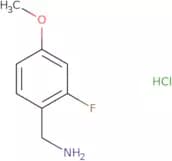
CAS:<p>Dodeca 2E,4E,8Z,10E,Z-tetraenoic acid isobutylamide (DETBA) is a versatile building block that is used in the synthesis of natural products and pharmaceuticals. DETBA can be used as a reaction component in organic synthesis to form complex compounds such as polyesters, polyamides, polyurethanes, and polyimides. It also has high quality and can be used in research or speciality chemical applications.</p>Formula:C16H25NOPurity:Min. 96 Area-%Color and Shape:Clear LiquidMolecular weight:247.38 g/mol2-Fluoro-4-methoxybenzylamine hydrochloride
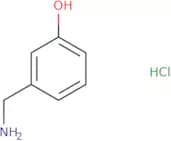
CAS:<p>2-Fluoro-4-methoxybenzylamine hydrochloride is a potent inhibitor of polymerase (DNA and RNA). It has been shown to inhibit the growth of human breast cancer cells and to induce apoptosis. 2-Fluoro-4-methoxybenzylamine hydrochloride binds to the polymerase, which blocks synthesis of DNA or RNA. The binding site is located near the active site of the enzyme. This drug also has an insulin-like effect by stimulating IGF-I production and increasing protein synthesis in somatotrophic cells.</p>Formula:C8H11ClFNOPurity:Min. 95%Color and Shape:PowderMolecular weight:191.63 g/mol3-Hydroxybenzylamine hydrochloride
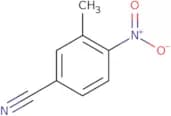
CAS:<p>3-Hydroxybenzylamine hydrochloride (3HBH) is a chemical compound that has been used as a reagent and in the synthesis of other compounds. It is also known to be a useful scaffold for complex compounds, and can be used as a building block for the synthesis of fine chemicals. 3HBH has been found to have many applications in research, such as being an intermediate for pharmaceuticals, pesticides, dyes, and agrochemicals. 3HBH is also useful in organic syntheses where it has been found to react with nitriles and amides to form esters and amides respectively.</p>Formula:C7H9NO·HClPurity:Min. 95%Color and Shape:PowderMolecular weight:159.61 g/mol3-Methyl-4-nitrobenzonitrile
CAS:<p>3-Methyl-4-nitrobenzonitrile is a fluorescing aromatic amine that is synthesized by aliphatic amines. It has been shown to inhibit the growth of cells in culture, which may be due to its ability to bind with and inhibit the insulin-like growth factor receptor-1 (IGF-1R). 3-Methyl-4-nitrobenzonitrile has also been shown to bind with cytochrome P450 enzymes, where it can be oxidized or reduced. The conformation of 3-methyl-4 nitrobenzonitrile is dependent on the solvent molecules present.</p>Formula:C8H6N2O2Purity:Min. 95%Color and Shape:PowderMolecular weight:162.15 g/mol