Cyano-, Nitrile-
Cyano and nitrile compounds are organic molecules that contain cyano (C≡N) or nitrile groups in their structure, characterized by the presence of nitrogen. These groups play important roles in various chemical reactions and industrial applications. In this category, you will find a wide range of cyano and nitrile compounds, ranging from simple to complex structures. At CymitQuimica, we offer high-quality cyano and nitrile compounds tailored to meet research and industrial needs. Our compounds are suitable for a variety of synthesis and analytical applications.
Found 9624 products of "Cyano-, Nitrile-"
Sort by
Purity (%)
0
100
|
0
|
50
|
90
|
95
|
100
2-Bromophenylacetonitrile
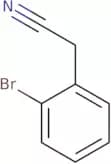
CAS:<p>2-Bromophenylacetonitrile is a synthetic compound that is used in wastewater treatment. It is effective at removing cyanides, phenylpropionic acid, and aldehydes from wastewater. 2-Bromophenylacetonitrile has been shown to be an efficient method for the removal of liriodenine from sewage water and for the removal of 2-bromostyrene from industrial waste water. This process can be used as an analytical method to measure the concentration of these substances in samples of wastewater. The reaction mechanism involves the formation of a nitrilium ion intermediate and subsequent reactions with alcohols to form esters or ethers.</p>Formula:C8H6BrNPurity:Min. 95%Color and Shape:Colourless To Pale Yellow Clear LiquidMolecular weight:196.04 g/mol2-Hydroxy-4-nitrobenzonitrile
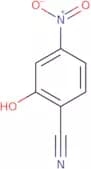
CAS:<p>2-Hydroxy-4-nitrobenzonitrile is a nitrile derivative that has an antibacterial activity. This compound interacts with the pyochelin, a siderophore in Pseudomonas aeruginosa. The antibiotic inhibits the uptake of pyochelin by the bacteria and causes cell death by inhibiting the synthesis of proteins necessary for bacterial growth. 2-Hydroxy-4-nitrobenzonitrile can be used as a potential stabilizer for materials such as polystyrene and polyurethane which are susceptible to degradation by hydrolysis or oxidation. In addition, this compound is also useful in gram-negative bacterium due to its ability to inhibit their growth by binding to their ribosomes. The conformational studies have been shown to be important for understanding the biological properties of this molecule.</p>Formula:C7H4N2O3Purity:Min. 95%Color and Shape:PowderMolecular weight:164.12 g/mol4-Aminophenylacetonitrile
CAS:<p>4-Aminophenylacetonitrile is a molecule that is structurally similar to nitrobenzene. 4-Aminophenylacetonitrile has been shown to be an efficient method for inhibiting faecalis growth and secretory phospholipase A2 (sPLA2) activity in vitro. It also inhibits the population growth of E. coli in vivo, which can be attributed to its ability to inhibit the enzyme catalysed by hydrogen bond formation.</p>Formula:C8H8N2Purity:Min. 95%Color and Shape:PowderMolecular weight:132.16 g/mol4-Chloro-3-nitrobenzonitrile
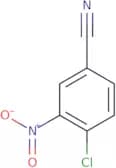
CAS:<p>4-Chloro-3-nitrobenzonitrile is a molecule with potent antibacterial activity. It is synthesized by the reaction of sodium carbonate, hydrogen chloride, and 4-chlorobenzonitrile. 4-Chloro-3-nitrobenzonitrile has shown antimicrobial properties against a wide range of bacteria, including methicillin resistant Staphylococcus aureus (MRSA) and Enterococcus faecium. This compound has been used in the treatment of infections caused by these bacteria. 4-Chloro-3-nitrobenzonitrile also has the ability to inhibit the synthesis of fatty acids and lipids in bacterial cells, which may be responsible for its antimicrobial effects.</p>Formula:C7H3ClN2O2Purity:Min. 95%Color and Shape:PowderMolecular weight:182.56 g/mol5-Cyano-DL-tryptophan
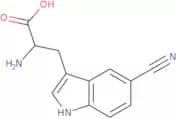
CAS:<p>5-Cyano-DL-tryptophan is an antimicrobial peptide that exhibits potent antimicrobial activity against Gram-positive and Gram-negative bacteria. It also has a high affinity for the bacterial ribosome, which leads to inhibition of protein synthesis. 5-Cyano-DL-tryptophan can be synthesized by dehydration of tryptophan in a model system. The molecule is an analog of the natural amino acid tryptophan and has fluorescence properties that are sensitive to hydration levels. 5-Cyano-DL-tryptophan binds to the peptide binding site on the ribosome and induces a frequency shift in its fluorescence emission spectrum when bound. This property makes it a useful tool for studying peptide binding sites on the ribosome.</p>Formula:C12H11N3O2Purity:Min. 95%Color and Shape:Yellow PowderMolecular weight:229.23 g/mol2,6-Dichlorophenylacetonitrile
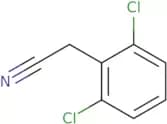
CAS:<p>2,6-Dichlorophenylacetonitrile (2,6-DCPA) is a cyanide herbicide that controls weed growth. 2,6-DCPA is used as a preemergent herbicide and is applied to the soil before planting. It can be mixed with calcium oxide or other materials to form a dust, which is then applied to the soil surface. 2,6-DCPA inhibits plant growth by interfering with the photosynthesis process, which may be due to its high cytotoxicity. The exact mechanism of action has not been determined but it may be due to interference with chloride transport or ethyl esters production in plants. This chemical has also been shown to inhibit amine metabolism in plants and animals.<br>2,6-DCPA has two isomers: cis and trans. They differ only in the position of the chlorine atom on the benzene ring: cis (left) and trans (right).</p>Formula:C8H5Cl2NPurity:Min. 95%Color and Shape:White PowderMolecular weight:186.04 g/mol4-Ethoxybenzonitrile
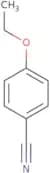
CAS:<p>4-Ethoxybenzonitrile is an organic compound that belongs to the group of nitroalkanes. It is a substrate for reductive amination, which is a reaction in which the nitro group on 4-ethoxybenzonitrile is reduced by an amine to form an amide. This reaction can be facilitated by metal catalysts, such as copper(II) acetate and zinc chloride. The reaction yields high selectivity (>90%) with respect to the product formed and has been shown to be more efficient than other reductive amination reactions. 4-Ethoxybenzonitrile has been used as a building block for various compounds, including dyestuffs, pharmaceuticals, and pesticides. 4-Ethoxybenzonitrile is also resistant to tyrosinase due to its lack of electron donating groups on its aromatic ring.</p>Formula:C9H9NOPurity:Min. 98 Area-%Color and Shape:PowderMolecular weight:147.17 g/mol4-Cyanobenzylamine HCl
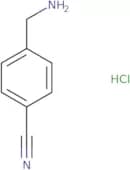
CAS:<p>4-Cyanobenzylamine HCl is a degradable polymer that has been shown to inhibit colonic adenocarcinoma in mice. This compound was synthesized by the reaction of 4-cyanobenzylamine with 3-mercaptopropionic acid and was characterized using IR, 1H NMR, and 13C NMR spectroscopy. It also showed an inhibitory effect on the proliferation of human colon cancer cells. The polymer was found to gel when mixed with different concentrations of acrylamide and methylene bisacrylamide. Gelation occurred at a lower concentration of acrylamide than the amount used in previous studies. This may be due to its functional groups and morphology, which could have contributed to the inhibition of cell growth.</p>Formula:C8H8N2·HClPurity:Min. 95%Color and Shape:PowderMolecular weight:168.62 g/molMethyl 4-(cyanomethyl)benzoate
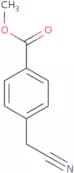
CAS:<p>Methyl 4-(cyanomethyl)benzoate is a synthetic compound that binds to the H1 receptor, which is part of the histamine family. It is an antagonist of this receptor and inhibits its activity. The affinity of methyl 4-(cyanomethyl)benzoate for the H1 receptor was measured by fluorescence displacement analysis in rat brain membranes. This compound also has potent anti-inflammatory properties, which may be due to its inhibition of prostaglandin synthesis. Methyl 4-(cyanomethyl)benzoate has been shown to be expressed in cells that are chemotactic for neutrophils and natural killer (NK) cells. Methyl 4-(cyanomethyl)benzoate also binds to a prostanoid receptor, CRTh2, leading to an increase in NK cell migration.<br>Methyl 4-(cyanomethyl)benzoate inhibits cyclooxygenase-1 (COX</p>Formula:C10H9NO2Purity:Min. 95%Color and Shape:Clear LiquidMolecular weight:175.18 g/mol2-(Diphenylamino)benzoic acid
CAS:<p>Please enquire for more information about 2-(Diphenylamino)benzoic acid including the price, delivery time and more detailed product information at the technical inquiry form on this page</p>Formula:C19H15NO2Purity:Min. 95%Molecular weight:289.33 g/mol2,5-Dimethoxybenzonitrile
CAS:<p>2,5-Dimethoxybenzonitrile is a polymerized organic compound that belongs to the class of benzene compounds. It is a monomer with two methyl groups on either side of the benzene ring. 2,5-Dimethoxybenzonitrile has been studied in terms of its transition and optimization properties using techniques such as IR and NMR spectroscopy. The frequencies of the chemical bonds have been analyzed, and it has been found that the molecule is centrosymmetric. 2,5-Dimethoxybenzonitrile can also be used to form polymers with other molecules by linking them together through covalent bonds.</p>Formula:C9H9NO2Purity:Min. 95%Color and Shape:PowderMolecular weight:163.17 g/mol3-Cyanopropionaldehydedimethylacetal
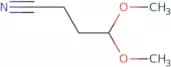
CAS:<p>3-Cyanopropionaldehydedimethylacetal (3CPDMA) is a reactive compound that inhibits the proliferation of muscle cells. It has been shown to inhibit the synthesis of 3-hydroxy-3-methylglutaryl coenzyme A, which is required for the production of cholesterol and fatty acids. This inhibition leads to a decrease in the growth of cells and their ability to divide. 3CPDMA has also been shown to have an inhibitory effect on picolinic acid, which is involved in the activation of receptors that induce cellular proliferation. The inhibition of this receptor may be due to its ability to compete with other ligands for binding sites on the receptor.<br>It has been shown that 3CPDMA acts as an antagonist against acarids, which are mites that feed on skin cells. This property may be due to its antagonistic effects on amino acid composition, which may affect calcium uptake by cells or cell membrane permeability.</p>Formula:C6H11NO2Purity:Min. 95%Color and Shape:PowderMolecular weight:129.16 g/mol3,4-Dimethoxybenzylamine
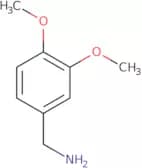
CAS:<p>3,4-Dimethoxybenzylamine is an amine that is used in the synthesis of pharmaceuticals. It can be polymerized by heating with aqueous formaldehyde and hydrochloric acid to form a resin. 3,4-Dimethoxybenzylamine inhibits serotonin receptors, exhibiting inhibitory properties at concentrations of 10-5 M. 3,4-Dimethoxybenzylamine also has pharmacokinetic properties that are similar to vitamin B1. This compound has been shown to inhibit homogeneous catalysts and is used for coatings for ganglion cells.</p>Formula:C9H13NO2Purity:Min. 95%Color and Shape:Clear LiquidMolecular weight:167.21 g/molXylene cyanol
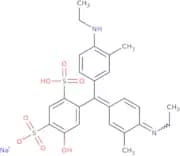
CAS:<p>Xylene cyanol is a chemical compound that belongs to the group of phenols. It has been shown to be active in vitro against human skin cancer cells, and induces cell lysis. Xylene cyanol has also been found to bind to the BCR-ABL kinase domain, which is an enzyme that plays a crucial role in the development of leukemia and other autoimmune diseases. Xylene cyanol binds to dna binding domains on the protein surface and forms an adduct with bcr-abl kinase, which inhibits its activity. This inhibition prevents activation of this enzyme and leads to cell death by preventing DNA synthesis.</p>Formula:C25H27N2O7S2•NaPurity:Min. 90%Color and Shape:PowderMolecular weight:554.61 g/mol3-Cyanophenylacetic acid
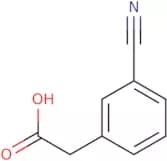
CAS:<p>3-Cyanophenylacetic acid is a versatile building block and useful intermediate that can be used in the synthesis of a wide range of organic compounds. 3-Cyanophenylacetic acid is a fine chemical with CAS No. 1878-71-3 that can be used as a research chemical, reaction component, or speciality chemical. It is an important reagent for making complex organic compounds. 3-Cyanophenylacetic acid is a high quality product with the following characteristics: <br>1) Colorless crystals; <br>2) Soluble in water; <br>3) Soluble in acetone; <br>4) Slightly soluble in ether; <br>5) Reactivity: stable to heat, light, and air; <br>6) pH (1% solution): 2.0 - 4.0; <br>7) Melting point: 129 °C; <br>8) Boiling point: 188 °C at 760 mmH</p>Formula:C9H7NO2Purity:Min. 95%Molecular weight:161.16 g/mol5-Cyanoindole-3-carboxaldehyde
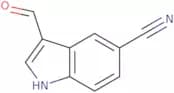
CAS:<p>5-Cyanoindole-3-carboxaldehyde is an aldehyde that is used in synthesis of β-unsaturated aldehydes. It is prepared by the reaction of 3-cyanoindole with formaldehyde. 5-Cyanoindole-3-carboxaldehyde has antibacterial activity against gram positive and gram negative bacteria. It also has a high yield and can be purified by filtration or by condensation with chlorobenzene. 5-Cyanoindole-3-carboxaldehyde can be activated by irradiation, which makes it useful for the production of pharmaceuticals.</p>Formula:C10H6N2OPurity:Min. 95%Molecular weight:170.17 g/mol4-Bromobenzylamine
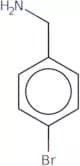
CAS:<p>4-Bromobenzylamine is a chemical compound that has been used to study the process optimization of sephadex g-100. It is also used as a chemotherapeutic treatment for cancer. 4-Bromobenzylamine binds to intracellular targets, such as nitrogen atoms and cell lysis, with physiological levels found in fetal bovine serum. The nitrogen atom is an essential structural component of 4-bromobenzylamine that is necessary for its biological activity and may be involved in binding to DNA polymerase. This drug has been shown to inhibit the growth of metastatic colorectal cancer cells by inhibiting cellular proliferation. Structural analysis has revealed that 4-bromobenzylamine interacts with the polymerase chain reaction (PCR) enzyme and inhibits the ability of DNA polymerases to add nucleotides to the growing strand of DNA.</p>Formula:C7H8BrNPurity:Min. 95%Color and Shape:PowderMolecular weight:186.05 g/moltert-Butyl 4-cyanobenzylcarbamate
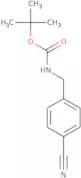
CAS:<p>tert-Butyl 4-cyanobenzylcarbamate (tB4Cbz) is a high quality chemical that can be used as a reagent, complex compound, or useful intermediate in the production of fine chemicals. Tert-Butyl 4-cyanobenzylcarbamate is also a useful scaffold for the synthesis of speciality chemicals and research chemicals. It can be used as a versatile building block for reactions involving amides, nitriles, esters, and amines.</p>Formula:C13H16N2O2Purity:Min. 95%Color and Shape:PowderMolecular weight:232.28 g/mol2,4-Dimethoxybenzylamine
CAS:<p>Tak-659 is an amide compound that inhibits the serine protease activity of a number of enzymes, including cathepsin B and L. Tak-659 has been shown to have inhibitory effects on inflammation in animal models by inhibiting the production of inflammatory cytokines. Tak-659 has also been shown to impair protein synthesis in gram-negative bacteria, such as Escherichia coli and Pseudomonas aeruginosa. The mechanism for this inhibition is not entirely clear but may be due to tak-659 binding to the ribosomal RNA near the peptidyl transferase center, blocking the entry of amino acids into the ribosome. Tak-659 binds with high affinity to adenosine receptors and has been shown to reduce levels of inflammatory cytokines in mouse tumor cells.</p>Formula:C9H13NO2Purity:Min. 95%Color and Shape:Colorless Clear LiquidMolecular weight:167.21 g/molEthyl 3-cyanopropanoate
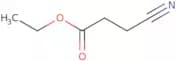
CAS:<p>Ethyl 3-cyanopropanoate is an organic compound with the formula CH3C(O)CH2CN. It is a colorless liquid that boils at 100 °C. It is used in the synthesis of other organic compounds, such as oxazolidinones, cyclopropenes, and quinolizines. The yield can be increased to 98% by using a catalyst such as potassium tert-butoxide or zinc chloride in the reaction. The reaction proceeds through an elimination followed by an acid-catalyzed alkylation to afford the desired product. This process also results in a high yield of ethyl bromoacetate as a side product.</p>Formula:C6H9NO2Purity:Min. 95%Color and Shape:PowderMolecular weight:127.14 g/mol