Cyano-, Nitrile-
Cyano and nitrile compounds are organic molecules that contain cyano (C≡N) or nitrile groups in their structure, characterized by the presence of nitrogen. These groups play important roles in various chemical reactions and industrial applications. In this category, you will find a wide range of cyano and nitrile compounds, ranging from simple to complex structures. At CymitQuimica, we offer high-quality cyano and nitrile compounds tailored to meet research and industrial needs. Our compounds are suitable for a variety of synthesis and analytical applications.
Found 9624 products of "Cyano-, Nitrile-"
Sort by
Purity (%)
0
100
|
0
|
50
|
90
|
95
|
100
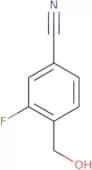
4-Cyano-2-fluorobenzyl alcohol
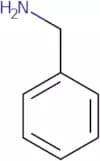
CAS:<p>4-Cyano-2-fluorobenzyl alcohol is a reagent that is used to produce chlorine and hydrochloric acid. It is also used industrially in the production of potassium chloride, a compound that is used in fertilizers, animal feed supplements, and water treatment. 4-Cyano-2-fluorobenzyl alcohol reacts with chloride ions to form hypochlorous acid (HOCl), which then reacts with water to form hydrogen chloride gas. The reaction with fluoride ions leads to the formation of hydrofluoric acid (HF).</p>Formula:C8H6FNOPurity:Min. 95%Color and Shape:White To Beige SolidMolecular weight:151.14 g/molBenzylamine
CAS:<p>Substrate of benzylamine oxidase and monoamine oxidase B</p>Formula:C7H9NPurity:Min. 98.0 Area-%Color and Shape:Colorless Slightly Yellow Clear LiquidMolecular weight:107.15 g/mol2-Bromo-4-nitrobenzonitrile
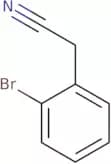
CAS:<p>2-Bromo-4-nitrobenzonitrile is a chemical compound that can be used to study the relationship between genetic polymorphism and chromosome structure. This compound has been found to induce polyploidy in Brassica plants, which may have implications for the evolution of these species. 2-Bromo-4-nitrobenzonitrile also has been shown to be a useful marker for phylogenetic and ecological studies of Lepidium species. The compound is diploid in nature, but can be used as a matrix in tetraploid plants.</p>Formula:C7H3BrN2O2Purity:Min. 95%Color and Shape:PowderMolecular weight:227.02 g/mol2-Bromophenylacetonitrile
CAS:<p>2-Bromophenylacetonitrile is a synthetic compound that is used in wastewater treatment. It is effective at removing cyanides, phenylpropionic acid, and aldehydes from wastewater. 2-Bromophenylacetonitrile has been shown to be an efficient method for the removal of liriodenine from sewage water and for the removal of 2-bromostyrene from industrial waste water. This process can be used as an analytical method to measure the concentration of these substances in samples of wastewater. The reaction mechanism involves the formation of a nitrilium ion intermediate and subsequent reactions with alcohols to form esters or ethers.</p>Formula:C8H6BrNPurity:Min. 95%Color and Shape:Colourless To Pale Yellow Clear LiquidMolecular weight:196.04 g/mol2-(Diphenylamino)benzoic acid
CAS:<p>Please enquire for more information about 2-(Diphenylamino)benzoic acid including the price, delivery time and more detailed product information at the technical inquiry form on this page</p>Formula:C19H15NO2Purity:Min. 95%Molecular weight:289.33 g/mol4-Bromo-2-cyanoanisole
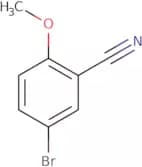
CAS:<p>4-Bromo-2-cyanoanisole is a synthetic compound that can be used as a ligand in the transition metal catalyzed cross-coupling reaction. This chemical has been shown to form complexes with nickel, palladium, and platinum. 4-Bromo-2-cyanoanisole is also a biomolecule that interacts with other molecules and can be used in the study of natural products.</p>Formula:C8H6BrNOPurity:Min. 95%Color and Shape:PowderMolecular weight:212.04 g/mol4-Chloro-3,5-dinitrobenzonitrile
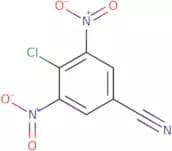
CAS:<p>4-Chloro-3,5-dinitrobenzonitrile is a mesomeric compound that has four amines and one nitro group. It is a dipole with chloride as the negative end and amine as the positive end. The reaction mechanism of this chemical is nucleophilic substitution. 4-Chloro-3,5-dinitrobenzonitrile reacts with an organic solvent to form a buffer. A buffer is an ionized solution that resists changes in pH when acid or base are added to it. This chemical also reacts with thionyl chloride to form hydrochloric acid, which can be used to leishmania parasites. 4-Chloro-3,5-dinitrobenzonitrile also reacts with an anion such as ClO4− or NO2− to form a salt such as chlorate or nitrate respectively.</p>Formula:C7H2ClN3O4Purity:Min. 95%Color and Shape:PowderMolecular weight:227.56 g/mol3-Aminobenzonitrile
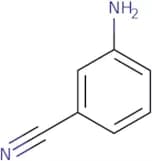
CAS:<p>3-Aminobenzonitrile is an amine that has been shown to inhibit the growth of bacteria. It was synthesized by the reaction of nitrobenzene with benzamide in the presence of acetic acid. The chemical structure of 3-aminobenzonitrile is similar to that of a group of natural amino acids, including cysteine and tryptophan, which are known inhibitors of bacterial growth. This compound is soluble in organic solvents and can be used as an injection solution. 3-Aminobenzonitrile has been evaluated by kinetic studies and found to have a high affinity for bacterial cells, with an inhibition constant (Ki) value of 0.37 mM. It is also active against other microorganisms such as yeast or mold fungi, but not against plant or animal cells. 3-Aminobenzonitrile inhibits the synthesis of proteins by binding to a number of different sites on the ribosomes where</p>Purity:Min. 95%Color and Shape:Yellow PowderMolecular weight:118.14 g/mol4-Mercaptobenzonitrile
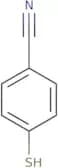
CAS:<p>4-mercaptobenzonitrile (4MBN) is a typical compound used in many spectroscopic experiments. The addition of 4-mercaptobenzonitrile to metal surfaces is used to create self-assembled monolayers with metals. For numerous reasons, it can difficult to immbolize certain chemical groups on surfaces. The addition of 4-mercaptobenzonitrile forms a modified metal surface that enhances technique sensitivity and serves as tool for a better understanding of the interfaces. In recent years, the use of 4-mercaptobenzonitrile together with other molecules on metal nanoparticles has been explored for biomedicinal purposes, serving as a tool for creating surface-enhanced Raman scattering tags (SER tags), useful as cancer biomarker imaging (Li, 2018).</p>Formula:C7H5NSPurity:Min. 95%Color and Shape:PowderMolecular weight:135.19 g/mol2-Bromo-5-cyanonitrobenzene
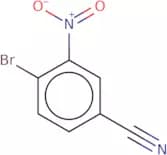
CAS:<p>2-Bromo-5-cyanonitrobenzene is a chemical compound that has been shown to have broad-spectrum activity against drug-resistant bacteria. It is able to kill gram-negative and gram-positive bacteria, including drug-resistant strains. The mechanism of action for 2-bromo-5-cyanonitrobenzene is not well understood but it has been observed that the molecule undergoes an oxidative cyclization reaction in the presence of chloride ions or hydroxides. This process leads to the formation of a nitrosobenzene metabolite which reacts with DNA to inhibit protein synthesis and cause cell death. 2-Bromo-5-cyanonitrobenzene has also been shown to be potent against a wide range of different types of bacteria, including those most commonly associated with skin infections, respiratory tract infections, and urinary tract infections.</p>Formula:C7H3BrN2O2Purity:Min. 95%Color and Shape:PowderMolecular weight:227.02 g/mol4-Amino-3-nitrobenzylamine hydrochloride
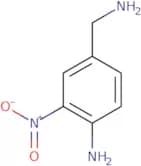
CAS:<p>4-Amino-3-nitrobenzylamine hydrochloride is a potential vanilloid receptor antagonist with potent antagonistic activities. It has been shown to inhibit the activation of neuronal TRPV1 receptors, as well as the uptake of 4-aminobenzoic acid (4-BA) in rat brain synaptosomes. In addition, this compound can be used to optimize drug structure, acting as an amide and alkyl groups. 4-Amino-3-nitrobenzylamine hydrochloride binds to the vanilloid receptor TRPV1 and blocks its activation. This prevents the release of proinflammatory substances that are responsible for pain, inflammation, and tissue injury.</p>Formula:C7H9N3O2·HClPurity:Min. 95%Color and Shape:PowderMolecular weight:203.63 g/mol2-Fluoro-4-methoxybenzylamine hydrochloride
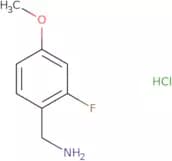
CAS:<p>2-Fluoro-4-methoxybenzylamine hydrochloride is a potent inhibitor of polymerase (DNA and RNA). It has been shown to inhibit the growth of human breast cancer cells and to induce apoptosis. 2-Fluoro-4-methoxybenzylamine hydrochloride binds to the polymerase, which blocks synthesis of DNA or RNA. The binding site is located near the active site of the enzyme. This drug also has an insulin-like effect by stimulating IGF-I production and increasing protein synthesis in somatotrophic cells.</p>Formula:C8H11ClFNOPurity:Min. 95%Color and Shape:PowderMolecular weight:191.63 g/mol3,5-Dibromo-4-methoxybenzonitrile
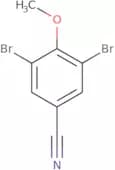
CAS:<p>3,5-Dibromo-4-methoxybenzonitrile (DBMB) is a pentane that can be synthesized in the laboratory. DBMB is used as a weed control agent to kill weeds and grasses in neoprene rubber products and other materials. The chemical reacts with nitro groups on the surface of the material, producing an unstable intermediate that decomposes into pentane and nitric acid. 3,5-Dibromo-4-methoxybenzonitrile has been shown to have low toxicity to mammals at high doses.<br>The compound may also be used as a chemical intermediate for the synthesis of other compounds or drugs. Nitro groups may be reduced by reductants such as sodium borohydride or lithium aluminium hydride to produce analdehyde derivatives.</p>Formula:C8H5Br2NOPurity:Min. 95%Color and Shape:White Off-White PowderMolecular weight:290.94 g/mol1,4-Dihydro-2,6-dimethyl-4-(3-nitrophenyl)-3,5-pyridinedicarboxylic acid 3-(2-cyanoethyl) 5-methyl ester
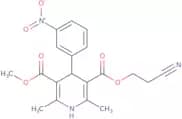
CAS:<p>1,4-Dihydro-2,6-dimethyl-4-(3-nitrophenyl)-3,5-pyridinedicarboxylic acid 3-(2-cyanoethyl) 5-methyl ester is a chemical compound that has the CAS number 75130-24-4. It is a white powder with a melting point of 144°C. This chemical is soluble in acetone, ether and chloroform. It can be used as a building block for organic synthesis due to its versatility and useful scaffold.</p>Formula:C19H19N3O6Purity:Min. 95%Color and Shape:White to yellow solid.Molecular weight:385.37 g/mol4-(Benzyloxy)-3-methoxyphenylacetonitrile
CAS:<p>4-(Benzyloxy)-3-methoxyphenylacetonitrile is an anti-cancer drug that belongs to the class of dihydroisoquinolines. It is used as a monomer in the synthesis of other drugs and it has been shown to be an effective inhibitor of cancer cells when used with carbamic acid. 4-(Benzyloxy)-3-methoxyphenylacetonitrile is synthesised through the reaction of 2,4-dichloroisonicotinic acid and 3-fluoroacetamide in the presence of a strong acid catalyst. This compound has been shown to have a high level of stereoselectivity, which makes it useful for synthesising other compounds.</p>Formula:C16H15NO2Purity:Min. 95%Color and Shape:PowderMolecular weight:253.3 g/mol3-Cyanophenylboronic acid
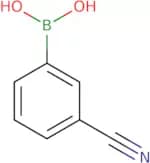
CAS:<p>3-Cyanophenylboronic acid is an organic compound that has been shown to have antimicrobial activity against Pseudomonas aeruginosa. The synthetic pathway of this compound begins with the benzamidine, which reacts with dibutyltin oxide to form 3-cyanophenylboronic acid. This molecule can then be reacted with a cationic polymerization agent such as polyethyleneimine or polyallylamine, producing a polymerized product. When tested in humans, 3-cyanophenylboronic acid showed a high oral bioavailability and low plasma protein binding. It also has a short serum half-life and is metabolized by serine proteases in the liver.</p>Formula:C7H6BNO2Purity:Min. 95%Color and Shape:PowderMolecular weight:146.94 g/mol2-Cyano-3-trifluoromethylpyridine
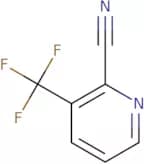
CAS:<p>2-Cyano-3-trifluoromethylpyridine is a fine chemical that is used as a versatile building block in the synthesis of complex compounds. It can be used as an intermediate in research chemicals, reaction components, and speciality chemicals. 2-Cyano-3-trifluoromethylpyridine is a high quality reagent that can be used for the synthesis of various derivatives. It is also a useful scaffold for the development of new drugs and other chemical compounds.</p>Formula:C7H3F3N2Purity:Min. 95%Color and Shape:liquid.Molecular weight:172.11 g/mol2-Amino-4-cyano-phenol
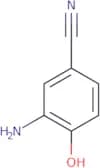
CAS:<p>2-Amino-4-cyano-phenol is a compound that has been shown to have antitubercular activity. It modulates the activity of cromakalim, which is a drug used for the treatment of tuberculosis. 2-Amino-4-cyano-phenol is also an antibacterial agent and has been shown to activate bacterial DNA replication and protein synthesis. The mechanism of action of this compound is thought to be due in part to its ability to bind with the ribosomes on the outside surface of cells and inhibit their function. 2-Amino-4-cyano-phenol has also been shown to have structural similarities with phenylephrine, which inhibits bacterial growth by binding to DNA gyrase, thereby preventing transcription and replication.</p>Formula:C7H6N2OPurity:Min. 95%Color and Shape:PowderMolecular weight:134.14 g/molN-Cyanomorpholine
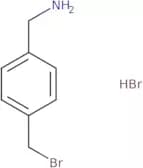
CAS:<p>N-Cyanomorpholine is a synthetic compound that is used as a reagent in organic synthesis. It has been shown to form stable complexes with amines, such as aniline and pyridine. In addition, it can be used in the intramolecular hydrogenation of alkenes, which is catalyzed by palladium on carbon. N-Cyanomorpholine was found to be effective against some viruses, such as herpes simplex virus type 1 and influenza virus type A. It also has been validated for use in the synthesis of dianthus caryophyllus and acrylonitrile.</p>Formula:C5H8N2OPurity:Min. 95%Molecular weight:112.13 g/mol4-(Bromomethyl)benzylamine HBr
CAS:<p>4-(Bromomethyl)benzylamine HBr is a fine chemical that can be used as a building block for organic synthesis. This compound is also a useful research chemical, reagent, and specialty chemical. 4-(Bromomethyl)benzylamine HBr has been used as a reaction component in the synthesis of various pharmaceuticals, such as theophylline and ampicillin. It has also been used as an intermediate in the production of other compounds, such as 4-hydroxybutyric acid and 3-methylthiopropionic acid. This complex compound can be purchased at high quality and is versatile enough to act as a scaffold for many reactions.</p>Formula:C8H11Br2NPurity:Min. 95%Color and Shape:PowderMolecular weight:280.99 g/mol