Cyano-, Nitrile-
Cyano and nitrile compounds are organic molecules that contain cyano (C≡N) or nitrile groups in their structure, characterized by the presence of nitrogen. These groups play important roles in various chemical reactions and industrial applications. In this category, you will find a wide range of cyano and nitrile compounds, ranging from simple to complex structures. At CymitQuimica, we offer high-quality cyano and nitrile compounds tailored to meet research and industrial needs. Our compounds are suitable for a variety of synthesis and analytical applications.
Found 9618 products of "Cyano-, Nitrile-"
Sort by
Purity (%)
0
100
|
0
|
50
|
90
|
95
|
100
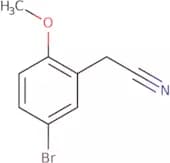
(5-Bromo-2-methoxyphenyl)acetonitrile
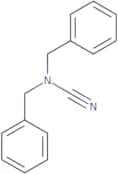
CAS:<p>5-Bromo-2-methoxyphenyl)acetonitrile is a chemical building block that can be used in the synthesis of complex compounds. It is a versatile intermediate that can be used as a reagent in organic reactions. This compound has been shown to be useful as a reaction component and is a high quality product. 5-Bromo-2-methoxyphenyl)acetonitrile has CAS number 7062-40-0 and is listed on the Chemical Abstracts Service (CAS).</p>Formula:C9H8BrNOPurity:Min. 95%Molecular weight:226.07 g/molCyanodibenzylamine
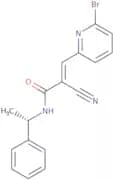
CAS:<p>Cyanodibenzylamine is a synthetic, pharmaceutical preparation. It is an amine that undergoes nucleophilic attack by an amide to form a cyanoguanidine. Cyanodibenzylamine can be used as a stabilizer and additive in pharmaceutical preparations. It also has the ability to bind metal hydroxides, which may be due to the presence of basic fibroblast growth factor and isoquinoline compound. Cyanodibenzylamine is also used as a polymerization initiator in organic chemistry, with hydrocarbon solvents such as benzene or toluene as its solvent.</p>Formula:C15H14N2Purity:Min. 95%Color and Shape:PowderMolecular weight:222.29 g/mol(S,E)-3-(6-Bromopyridin-2-yl)-2-cyano-N-(1-phenylethyl)acrylamide
CAS:<p>(S,E)-3-(6-Bromopyridin-2-yl)-2-cyano-N-(1-phenylethyl)acrylamide (MBI-23) is a potential antineoplastic agent that has been shown to induce regression of bladder cancer in mice. MBI-23 induces apoptosis by inhibiting the proliferation of cancer cells and inducing differentiation of cancer stem cells. It is also shown to inhibit tumor growth and progression in glioma and prostate cancer models. MBI-23 binds to the KDR receptor subtype, which is activated by organic acids and inhibited by inorganic compounds. This binding leads to constitutive activation of the KDR receptor, thereby inducing apoptosis. The tautomers and stereoisomers of MBI-23 have not been fully elucidated yet.</p>Formula:C17H14ON3BrPurity:Min. 98 Area-%Color and Shape:White PowderMolecular weight:356.22 g/mol3-Hydroxyphenylacetonitrile
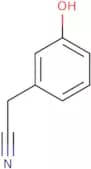
CAS:<p>3-Hydroxyphenylacetonitrile is a molecule that is the precursor for a number of isothiocyanates, which are phytochemicals with antibacterial properties. It has been shown to have inhibitory effects on dopamine hydroxylase, an enzyme that catalyzes the conversion of dopamine to norepinephrine and epinephrine. 3-Hydroxyphenylacetonitrile also inhibits the activity of other active enzymes such as cytochrome P450. The inhibition of these enzymes by 3-hydroxyphenylacetonitrile may be responsible for its antibacterial properties. This molecule is inactivated by cyanides, which leads to its inability to produce any isothiocyanates. Kinetic studies show that 3-hydroxyphenylacetonitrile saturates at high concentrations, leading to decreased production of cyanide.</p>Formula:C8H7NOPurity:Min. 95%Color and Shape:PowderMolecular weight:133.15 g/molBarium tetracyanoplatinate(II) hydrate
CAS:Controlled Product<p>Please enquire for more information about Barium tetracyanoplatinate(II) hydrate including the price, delivery time and more detailed product information at the technical inquiry form on this page</p>Formula:C4H2BaN4OPtPurity:Min. 95%Molecular weight:454.5 g/mol2,6-Difluorobenzonitrile
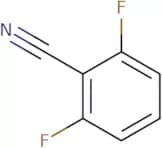
CAS:<p>2,6-Difluorobenzonitrile is a nucleophilic compound that reacts with inorganic acids to form new chemical structures. It has been shown to react with hydrochloric acid, sodium carbonate and phosphotungstic acid. The FT-IR spectroscopy of 2,6-difluorobenzonitrile shows a reaction product with a proton. This means that the molecule is able to transfer a hydrogen ion from one site to another. The reaction between 2,6-difluorobenzonitrile and sodium carbonate produces an insoluble precipitate of sodium phosphate and sodium chloride, which can be analyzed gravimetrically. 2,6-Difluorobenzonitrile has also been shown to have fluorescence properties that are activated by ultraviolet light and naphthalene.</p>Formula:C7H3F2NPurity:Min. 95%Color and Shape:PowderMolecular weight:139.1 g/mol4-Cyanophenol
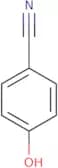
CAS:<p>4-Cyclohexyphenol is a natural compound that belongs to the class of compounds known as phenols. It has a hydroxyl group and an intramolecular hydrogen bond. The thermal expansion of 4-cyanophenol is approximately 6.6 × 10⁻⁶/°C, which is greater than the thermal expansion of p-hydroxybenzoic acid (approximately 1.8 × 10⁻⁶/°C). The reaction mechanism for 4-cyanophenol involves intramolecular hydrogen bonding, which leads to its rapid degradation. 4-Cyanophenol reacts with trifluoroacetic acid in the presence of sodium carbonate to form p-hydroxybenzoic acid, which can be determined by measuring its absorbance at 290 nm. Hydrogen bonding interactions with the surface are responsible for the high sensitivity and selectivity of this analytical method.<br>4-Cyanophenol may also be detected using plasma mass spect</p>Formula:C7H5NOPurity:Min. 95%Color and Shape:PowderMolecular weight:119.12 g/molPhenoxyacetonitrile
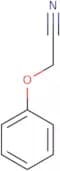
CAS:<p>Phenoxyacetonitrile is an efficient method for the synthesis of ethylene diamine by the reaction of hydrochloric acid, chloride and a carbon source. The nitro group can be reduced to an amine or a hydroxyl group by hydrogen chloride in acetonitrile. This method has been used in the synthesis of drugs such as acyclovir and penciclovir. Phenoxyacetonitrile also inhibits growth factor production, which may be due to its inhibitory properties on the enzyme houben-hoesch reaction.</p>Formula:C8H7NOPurity:Min. 95%Molecular weight:133.15 g/mol4-Cyanophenylacetic acid
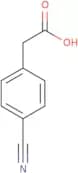
CAS:<p>4-Cyanophenylacetic acid is a thiolated organic compound that can act as a framework for the attachment of other functional groups. The synthesis of this compound has been developed in various ways, such as through the use of photoluminescence or coordination chemistry.</p>Formula:C9H7NO2Purity:Min. 95%Color and Shape:PowderMolecular weight:161.16 g/molMesitylacetonitrile
CAS:<p>Mesitylacetonitrile is a mesityl-substituted acetonitrile. It is used in organic synthesis as a Grignard reagent, which is an organometallic compound containing an alkyl or other carbon group bound to magnesium. Mesitylacetonitrile has been shown to react with chlorides to produce furyl chlorides and chloride. Mesitylacetonitrile can be synthesized by reacting phenylacetonitrile (a byproduct of the synthesis of acetone) with chlorine gas and hydrogen in the presence of a catalyst such as copper(II) chloride. This reaction produces mesitylacetonitrile and hydrogen chloride gas as byproducts. The compound has been used to synthesize corticotropin-releasing factor receptor antagonists that have potential therapeutic applications for the treatment of stress-related disorders.</p>Formula:C11H13NPurity:Min. 95%Color and Shape:PowderMolecular weight:159.23 g/mol3-Hydroxybenzylamine hydrochloride
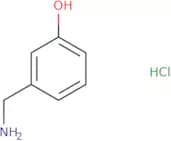
CAS:<p>3-Hydroxybenzylamine hydrochloride (3HBH) is a chemical compound that has been used as a reagent and in the synthesis of other compounds. It is also known to be a useful scaffold for complex compounds, and can be used as a building block for the synthesis of fine chemicals. 3HBH has been found to have many applications in research, such as being an intermediate for pharmaceuticals, pesticides, dyes, and agrochemicals. 3HBH is also useful in organic syntheses where it has been found to react with nitriles and amides to form esters and amides respectively.</p>Formula:C7H9NO·HClPurity:Min. 95%Color and Shape:PowderMolecular weight:159.61 g/mol[(4-Methylphenyl)sulfonyl]acetonitrile
CAS:<p>[(4-Methylphenyl)sulfonyl]acetonitrile is a synthetic compound that has been shown to inhibit the enzyme SHP2. This inhibition leads to decreased proliferation of cells and may be useful in the treatment of degenerative diseases. [(4-Methylphenyl)sulfonyl]acetonitrile is an organic solvent and a nucleophilic reagent that reacts with metal carbonates, such as calcium carbonate, to form carbanions. The carbanion intermediate can react with nucleophiles, such as acetonitrile, to form a new compound that is structurally related to the original starting material.</p>Formula:C9H9SNO2Purity:Min. 95%Molecular weight:195.24 g/mol4-Aminophenylacetonitrile
CAS:<p>4-Aminophenylacetonitrile is a molecule that is structurally similar to nitrobenzene. 4-Aminophenylacetonitrile has been shown to be an efficient method for inhibiting faecalis growth and secretory phospholipase A2 (sPLA2) activity in vitro. It also inhibits the population growth of E. coli in vivo, which can be attributed to its ability to inhibit the enzyme catalysed by hydrogen bond formation.</p>Formula:C8H8N2Purity:Min. 95%Color and Shape:PowderMolecular weight:132.16 g/mol3,4-Difluoro-5-nitrobenzonitrile
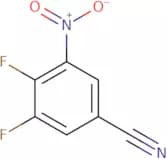
CAS:<p>3,4-Difluoro-5-nitrobenzonitrile is a hepatotoxic compound that is found in the environment. It has been shown to cause cirrhosis and overgrowth of the liver. 3,4-Difluoro-5-nitrobenzonitrile also inhibits hepatic encephalopathy and may be used to treat liver disease. This toxicant has been detected in the bowel and duodenum of humans with nonalcoholic steatohepatitis, as well as in the jejunum and duodenum of mice with spontaneous steatohepatitis. It also causes nonalcoholic steatohepatitis when given orally to rats.</p>Formula:C7H2F2N2O2Purity:Min. 95%Color and Shape:Yellow PowderMolecular weight:184.1 g/molDodeca 2E,4E,8Z,10E,Z-tetraenoic acid isobutylamide - ca. 10 mg/ml acetonitrile solution
CAS:<p>Dodeca 2E,4E,8Z,10E,Z-tetraenoic acid isobutylamide (DETBA) is a versatile building block that is used in the synthesis of natural products and pharmaceuticals. DETBA can be used as a reaction component in organic synthesis to form complex compounds such as polyesters, polyamides, polyurethanes, and polyimides. It also has high quality and can be used in research or speciality chemical applications.</p>Formula:C16H25NOPurity:Min. 96 Area-%Color and Shape:Clear LiquidMolecular weight:247.38 g/mol4-Cyano-4'-aminobiphenyl
CAS:<p>4-Cyano-4'-aminobiphenyl is a fluorescent dye that exhibits a strong fluorescence under UV irradiation. The dye has an absorption maximum at about 335 nm and a fluorescence emission maximum at about 455 nm, with excitation maxima of 333 nm and 478 nm. It has been used in the development of photocurrent devices, which are used for photochemical reactions and electrochemistry studies. This compound can also be used for the determination of amino groups in organic molecules such as carbostyril. The compound can be synthesized by reacting an amine with an aldehyde in the presence of acid.</p>Formula:C13H10N2Color and Shape:PowderMolecular weight:194.23 g/mol4-Cyanoindole
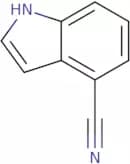
CAS:<p>The 4-cyanoindole is a fluorescent molecule that binds to proteins and affects protein homeostasis. It has been shown to bind to the sodium salt form of proteins, which are typically found in human liver cells. The binding of 4-cyanoindole to these proteins leads to its reduction by borohydride and fluorescence resonance energy transfer (FRET) between the molecule and the protein. This binding can be detected using a fluorescence lifetime spectroscopy technique, which detects changes in the fluorescence's lifetime as well as intensity. The binding of 4-cyanoindole to proteins has been shown to have anti-cancer properties. It has also been used for detection of monoclonal antibodies against cancer cells or for fluorescent labeling of cancer cells for immunofluorescent microscopy.</p>Formula:C9H6N2Color and Shape:White PowderMolecular weight:142.16 g/mol7-(Cyanomethoxy)indole
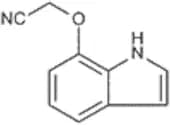
CAS:<p>7-(Cyanomethoxy)indole is a versatile building block that can be used as a scaffold for the synthesis of complex molecules. It has been used as an intermediate in organic synthesis and as a reaction component for the preparation of useful compounds. 7-(Cyanomethoxy)indole is also known to have high quality and is widely used in research laboratories.</p>Formula:C10H8N2OPurity:Min. 95%Molecular weight:172.18 g/mol[3-(2-Methylphenyl)-1,2,4-oxadiazol-5-yl]acetonitrile
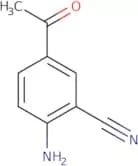
CAS:<p>Please enquire for more information about [3-(2-Methylphenyl)-1,2,4-oxadiazol-5-yl]acetonitrile including the price, delivery time and more detailed product information at the technical inquiry form on this page</p>Formula:C11H9N3OPurity:Min. 95%Color and Shape:PowderMolecular weight:199.21 g/mol5-Acetyl-2-aminobenzonitrile
CAS:<p>5-Acetyl-2-aminobenzonitrile is a versatile building block that can be used as an intermediate in the synthesis of a wide range of chemicals. It has been used to produce pharmaceuticals and other useful compounds, including research chemicals and speciality chemicals. 5-Acetyl-2-aminobenzonitrile is also a useful reagent for the production of organic products. The compound is available at high purity levels.</p>Formula:C9H8N2OPurity:Min. 95%Color and Shape:White PowderMolecular weight:160.17 g/mol



![[(4-Methylphenyl)sulfonyl]acetonitrile](/_next/image/?url=https%3A%2Fstatic.cymitquimica.com%2Fproducts%2F3D%2Fthumb-webp%2FFM58773.webp&w=3840&q=75)



![[3-(2-Methylphenyl)-1,2,4-oxadiazol-5-yl]acetonitrile](/_next/image/?url=https%3A%2Fstatic.cymitquimica.com%2Fproducts%2F3D%2Fthumb-webp%2FFM127089.webp&w=3840&q=75)