Cyano-, Nitrile-
Cyano and nitrile compounds are organic molecules that contain cyano (C≡N) or nitrile groups in their structure, characterized by the presence of nitrogen. These groups play important roles in various chemical reactions and industrial applications. In this category, you will find a wide range of cyano and nitrile compounds, ranging from simple to complex structures. At CymitQuimica, we offer high-quality cyano and nitrile compounds tailored to meet research and industrial needs. Our compounds are suitable for a variety of synthesis and analytical applications.
Found 9618 products of "Cyano-, Nitrile-"
Sort by
Purity (%)
0
100
|
0
|
50
|
90
|
95
|
100
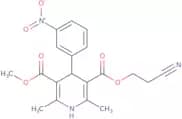
1,4-Dihydro-2,6-dimethyl-4-(3-nitrophenyl)-3,5-pyridinedicarboxylic acid 3-(2-cyanoethyl) 5-methyl ester
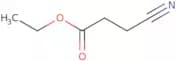
CAS:<p>1,4-Dihydro-2,6-dimethyl-4-(3-nitrophenyl)-3,5-pyridinedicarboxylic acid 3-(2-cyanoethyl) 5-methyl ester is a chemical compound that has the CAS number 75130-24-4. It is a white powder with a melting point of 144°C. This chemical is soluble in acetone, ether and chloroform. It can be used as a building block for organic synthesis due to its versatility and useful scaffold.</p>Formula:C19H19N3O6Purity:Min. 95%Color and Shape:White to yellow solid.Molecular weight:385.37 g/molEthyl 3-cyanopropanoate
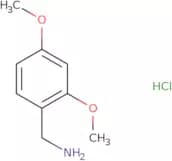
CAS:<p>Ethyl 3-cyanopropanoate is an organic compound with the formula CH3C(O)CH2CN. It is a colorless liquid that boils at 100 °C. It is used in the synthesis of other organic compounds, such as oxazolidinones, cyclopropenes, and quinolizines. The yield can be increased to 98% by using a catalyst such as potassium tert-butoxide or zinc chloride in the reaction. The reaction proceeds through an elimination followed by an acid-catalyzed alkylation to afford the desired product. This process also results in a high yield of ethyl bromoacetate as a side product.</p>Formula:C6H9NO2Purity:Min. 95%Color and Shape:PowderMolecular weight:127.14 g/mol2,4-Dimethoxybenzylamine hydrochloride
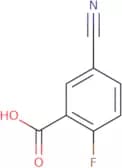
CAS:<p>2,4-Dimethoxybenzylamine hydrochloride is a substrate for glutathione reductase and a competitive inhibitor of dithioerythritol. The reaction mechanism is the same as that of triflic acid, which is generated by the reaction between triflic acid and glutathione. The inhibitory effect of 2,4-dimethoxybenzylamine hydrochloride on glutathione reductase has been studied computationally using molecular docking simulations. It was found that 2,4-dimethoxybenzylamine hydrochloride binds to the active site of glutathione reductase with an affinity comparable to that of triflic acid. This computational study also revealed that 2,4-dimethoxybenzylamine hydrochloride can be converted into triflic acid in vivo.</p>Formula:C9H13NO2HClPurity:Min. 95%Color and Shape:PowderMolecular weight:203.67 g/mol5-Cyano-2-fluorobenzoic acid
CAS:<p>5-Cyano-2-fluorobenzoic acid is a macrocyclization agent that is used in the synthesis of 16-membered macrocycles. It is a nucleophilic reagent that reacts with an electrophile to form a 5,5'-bifluoro-2,2'-dioxodibenzofuranone. This reaction can be performed under mild conditions and proceeds via a 1,4-addition mechanism. The product has two stereogenic centers and four stereoisomers that are formed by the relative configuration of these centers. 5-Cyano-2-fluorobenzoic acid also has application in the clinic as an analogue for fluoroquinolones.</p>Formula:C8H4FNO2Purity:Min. 95%Color and Shape:PowderMolecular weight:165.12 g/mol2-Bromo-4-cyanotoluene
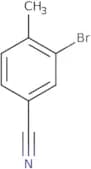
CAS:<p>2-Bromo-4-cyanotoluene is a ligand that is used in cross-coupling reactions. It is used to form complexes with metals, such as palladium and nickel, for the preparation of organometallic reagents. 2-Bromo-4-cyanotoluene has been shown to inhibit secretory phospholipase A2 (sPLA2) and PLA2 activity in a fluorimetric assay. This compound also inhibits the catalytic activity of spla2, which is an enzyme involved in the biosynthesis of arachidonic acid. 2-Bromo-4-cyanotoluene also inhibits piperazine synthesis by reacting with the nitrogen atom on the piperazine ring.</p>Formula:C8H6BrNPurity:Min. 95%Molecular weight:196.04 g/mol2-(2-formyl-6-methoxyphenoxy)acetonitrile
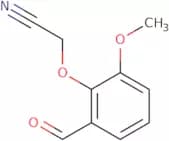
CAS:<p>Please enquire for more information about 2-(2-formyl-6-methoxyphenoxy)acetonitrile including the price, delivery time and more detailed product information at the technical inquiry form on this page</p>Formula:C10H9NO3Purity:Min. 95%Color and Shape:PowderMolecular weight:191.18 g/mol2-Cyanoacetamide
CAS:<p>2-Cyanoacetamide is an organic compound that is used in pharmaceutical preparations. It reacts with malonic acid to form a dioxime, which is a precursor of various drugs. The optimum concentration for the reaction to occur is at 10% (w/v). The reaction mechanism has not been fully elucidated and it involves the transfer of nitrogen from an amide group to a carbonyl group. 2-Cyanoacetamide has shown anti-angiogenic effects in mice by inhibiting the expression of Mcl-1 protein, which is involved in the regulation of apoptosis and inflammation. This drug also has biological functions as a precursor for dopamine, which helps regulate motor and cognitive functions.</p>Formula:C3H4N2OPurity:Min. 98%Color and Shape:White Off-White PowderMolecular weight:84.08 g/molEthyl (2Z)-2-cyano-3-(2-furyl)acrylate
CAS:<p>Please enquire for more information about Ethyl (2Z)-2-cyano-3-(2-furyl)acrylate including the price, delivery time and more detailed product information at the technical inquiry form on this page</p>Formula:C10H9NO3Purity:Min. 95%Molecular weight:191.18 g/molCyanodibenzylamine
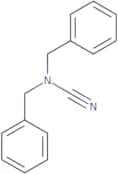
CAS:<p>Cyanodibenzylamine is a synthetic, pharmaceutical preparation. It is an amine that undergoes nucleophilic attack by an amide to form a cyanoguanidine. Cyanodibenzylamine can be used as a stabilizer and additive in pharmaceutical preparations. It also has the ability to bind metal hydroxides, which may be due to the presence of basic fibroblast growth factor and isoquinoline compound. Cyanodibenzylamine is also used as a polymerization initiator in organic chemistry, with hydrocarbon solvents such as benzene or toluene as its solvent.</p>Formula:C15H14N2Purity:Min. 95%Color and Shape:PowderMolecular weight:222.29 g/mol2-Chloro-4-fluorobenzonitrile
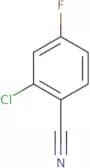
CAS:<p>2-Chloro-4-fluorobenzonitrile is a drug that has been shown to have antitumor effects by binding to the CB2 receptor. It inhibits hydrogenation reduction of the molecule, which may be due to its ability to react with both functional groups. 2-Chloro-4-fluorobenzonitrile has also been shown to inhibit progesterone receptor, which may lead to an increase in progesterone levels and a decrease in estrogen levels. The pharmacokinetic properties of this compound are not yet known.</p>Formula:C7H3ClFNPurity:Min. 95%Color and Shape:White PowderMolecular weight:155.56 g/molEthyl cyanoglyxylate-2-oxyme potassium salt
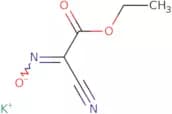
CAS:<p>Ethyl cyanoglyxylate-2-oxyme potassium salt is a high quality reagent for the production of complex compounds that can be used in fine chemicals, pharmaceuticals, and other speciality chemicals. It has been shown to be an intermediate for the synthesis of useful scaffolds and building blocks. The CAS number is 158014-03-0. This compound is a versatile building block that can be used in research chemicals, as well as reaction components for more complex syntheses.</p>Formula:C5H6N2O3KPurity:Min. 95%Color and Shape:PowderMolecular weight:181.21 g/mol5-Cyanoindole-3-carboxaldehyde
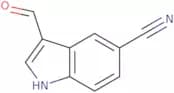
CAS:<p>5-Cyanoindole-3-carboxaldehyde is an aldehyde that is used in synthesis of β-unsaturated aldehydes. It is prepared by the reaction of 3-cyanoindole with formaldehyde. 5-Cyanoindole-3-carboxaldehyde has antibacterial activity against gram positive and gram negative bacteria. It also has a high yield and can be purified by filtration or by condensation with chlorobenzene. 5-Cyanoindole-3-carboxaldehyde can be activated by irradiation, which makes it useful for the production of pharmaceuticals.</p>Formula:C10H6N2OPurity:Min. 95%Molecular weight:170.17 g/molBenzenesulphonylacetonitrile
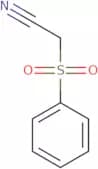
CAS:<p>Benzenesulphonylacetonitrile is an alkanoic acid nucleophile with a benzimidazole derivative. It has shown potential for use as a cancer drug by inhibiting tumor-associated enzymes and inducing apoptosis in cancer cells. Benzenesulphonylacetonitrile is also active against inflammatory diseases such as rheumatoid arthritis, psoriatic arthritis, and Crohn's disease. This drug can be synthesized by the reaction of sodium salts with benzenesulphonylacetone followed by a nucleophilic substitution reaction with methylene chloride. The synthesis of benzenesulphonylacetonitrile requires anhydrous acetonitrile and palladium-catalyzed coupling reactions in the presence of sodium carbonate. Benzenesulphonylacetonitrile has chemical stability in the presence of acids, bases, and heat.br></p>Formula:C8H7NO2SPurity:Min. 95%Color and Shape:PowderMolecular weight:181.21 g/molEthyl acetamidocyanoacetate
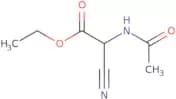
CAS:<p>Ethyl acetamidocyanoacetate is an amide which inhibits the enzyme thrombin. It inhibits the conversion of fibrinogen to fibrin, and thus prevents blood clot formation. Ethyl acetamidocyanoacetate has been shown to inhibit serine protease, one of the most abundant enzymes in the human body. This inhibition causes a decrease in inflammatory diseases caused by these enzymes. Ethyl acetamidocyanoacetate also has analog properties that can be used for solid-phase synthesis.</p>Formula:C7H10N2O3Purity:Min. 98 Area-%Molecular weight:170.17 g/mol2,5-Diaminobenzonitrile
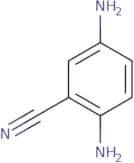
CAS:<p>2,5-Diaminobenzonitrile is a chemical compound with the molecular formula C6H5N3. It is a white crystalline solid that is insoluble in water and soluble in organic solvents such as acetone, chloroform, and ether. 2,5-Diaminobenzonitrile has been shown to be an effective monomer for polymer synthesis due to its stability and high densities. This chemical also has the ability to undergo hydrogen bonding and form hydrogen peroxide when heated to a temperature of 100 °C. The thermal isomerization of 2,5-diaminobenzonitrile can be slowed by adding other amines or nitrites.</p>Formula:C7H7N3Purity:Min. 95%Color and Shape:PowderMolecular weight:133.15 g/mol4-Cyanocinnamic acid
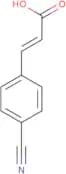
CAS:<p>4-Cyanocinnamic acid is a fatty acid that has been shown to be a substrate for the bacterial enzyme cinnamate 4-hydroxylase. The molecular weight of this compound is 136.16 g/mol, and it has a constant boiling point of 206°C. It can be synthesized from phenylacetic acid and p-coumaric acid using a transesterification reaction. This compound is reactive with carbonyl groups, which makes it useful in the detection of gram-positive bacteria by fluorescent probes or fluorescent dyes. 4-Cyanocinnamic acid is unreactive with esters of carboxylic acids, such as methyl esters, making it useful for the determination of fatty acids in isolates.</p>Formula:C10H7NO2Purity:Min. 95%Color and Shape:PowderMolecular weight:173.17 g/mol2-Benzyloxyphenylacetonitrile
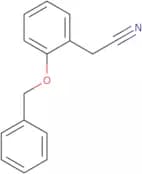
CAS:<p>2-Benzyloxyphenylacetonitrile is a compound that is used in the manufacture of polyester, fibre and crystallized products. It is also used as a solvent for dyes and oils, as well as an industrial chemical intermediate. 2-Benzyloxyphenylacetonitrile can be thermolysed to produce benzoic acid, which can then be oxidized to produce phenol. The residue obtained from this process has been found to have a calorific value of around 2500kcal/kg. This substance has been found to react with oxygen at high temperatures and form an oxygenated product.<br>2-Benzyloxyphenylacetonitrile can be synthesised by reacting benzene with styrene in the presence of water and a catalyst such as sodium hydroxide or calcium oxide. The reaction produces hydrogen gas, benzoic acid and 2-benzyloxyphenylacetonitrile.</p>Formula:C15H13NOPurity:Min. 95%Color and Shape:PowderMolecular weight:223.27 g/molCyano-3-phenoxybenzyl 3-(2,2-dichloroethenyl)-2,2-dimethylcyclopropanecarboxylate
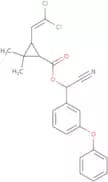
CAS:<p>Cypermethrin is an insecticide that belongs to the family of chemical pesticides. It is used in agriculture and in public health to control malaria-transmitting mosquitoes, head lice, and scabies mites. Cypermethrin disrupts the insect nervous system by inhibiting the function of synapses between nerves, resulting in paralysis and death. The compound also affects signal pathways that regulate locomotor activity and enzyme activities. Cypermethrin has been shown to have a high resistance to degradation by glycol ethers such as ethylene glycol monomethyl ether acetate (EGMEA). It has an optimum concentration of 0.01 ppm for mosquito control and 0.1 ppm for lice control. The analytical method involves liquid chromatography with sodium citrate as an ion-pairing agent and a linear calibration curve using a standard curve generated from known concentrations of cypermethrin.</p>Formula:C22H19Cl2NO3Purity:Min. 95%Color and Shape:Colorless Clear LiquidMolecular weight:416.3 g/mol5-Acetyl-2-aminobenzonitrile
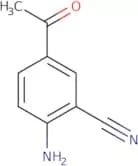
CAS:<p>5-Acetyl-2-aminobenzonitrile is a versatile building block that can be used as an intermediate in the synthesis of a wide range of chemicals. It has been used to produce pharmaceuticals and other useful compounds, including research chemicals and speciality chemicals. 5-Acetyl-2-aminobenzonitrile is also a useful reagent for the production of organic products. The compound is available at high purity levels.</p>Formula:C9H8N2OPurity:Min. 95%Color and Shape:White PowderMolecular weight:160.17 g/mol(S,E)-3-(6-Bromopyridin-2-yl)-2-cyano-N-(1-phenylethyl)acrylamide
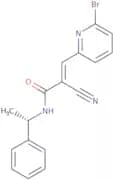
CAS:<p>(S,E)-3-(6-Bromopyridin-2-yl)-2-cyano-N-(1-phenylethyl)acrylamide (MBI-23) is a potential antineoplastic agent that has been shown to induce regression of bladder cancer in mice. MBI-23 induces apoptosis by inhibiting the proliferation of cancer cells and inducing differentiation of cancer stem cells. It is also shown to inhibit tumor growth and progression in glioma and prostate cancer models. MBI-23 binds to the KDR receptor subtype, which is activated by organic acids and inhibited by inorganic compounds. This binding leads to constitutive activation of the KDR receptor, thereby inducing apoptosis. The tautomers and stereoisomers of MBI-23 have not been fully elucidated yet.</p>Formula:C17H14ON3BrPurity:Min. 98 Area-%Color and Shape:White PowderMolecular weight:356.22 g/mol