Cyano-, Nitrile-
Cyano and nitrile compounds are organic molecules that contain cyano (C≡N) or nitrile groups in their structure, characterized by the presence of nitrogen. These groups play important roles in various chemical reactions and industrial applications. In this category, you will find a wide range of cyano and nitrile compounds, ranging from simple to complex structures. At CymitQuimica, we offer high-quality cyano and nitrile compounds tailored to meet research and industrial needs. Our compounds are suitable for a variety of synthesis and analytical applications.
Found 9618 products of "Cyano-, Nitrile-"
Sort by
Purity (%)
0
100
|
0
|
50
|
90
|
95
|
100
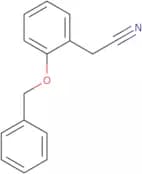
2-Benzyloxyphenylacetonitrile
CAS:<p>2-Benzyloxyphenylacetonitrile is a compound that is used in the manufacture of polyester, fibre and crystallized products. It is also used as a solvent for dyes and oils, as well as an industrial chemical intermediate. 2-Benzyloxyphenylacetonitrile can be thermolysed to produce benzoic acid, which can then be oxidized to produce phenol. The residue obtained from this process has been found to have a calorific value of around 2500kcal/kg. This substance has been found to react with oxygen at high temperatures and form an oxygenated product.<br>2-Benzyloxyphenylacetonitrile can be synthesised by reacting benzene with styrene in the presence of water and a catalyst such as sodium hydroxide or calcium oxide. The reaction produces hydrogen gas, benzoic acid and 2-benzyloxyphenylacetonitrile.</p>Formula:C15H13NOPurity:Min. 95%Color and Shape:PowderMolecular weight:223.27 g/molEthyl (3-amino-3-cyanopropyl)methylphosphinate
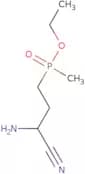
CAS:<p>Ethyl (3-amino-3-cyanopropyl)methylphosphinate is a versatile building block that can be used as a reagent, speciality chemical, or research chemical. It is useful as an intermediate for complex compounds and can be used as a reaction component in the synthesis of high quality compounds. Ethyl (3-amino-3-cyanopropyl)methylphosphinate is also a useful scaffold in organic synthesis.</p>Formula:C7H15N2O2PPurity:Min. 95%Color and Shape:PowderMolecular weight:190.18 g/mol3-Acetylbenzonitrile
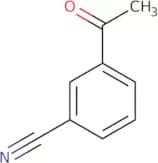
CAS:<p>3-Acetylbenzonitrile is an isomeric, asymmetric synthesis that has been synthesised in the presence of copper complex and salicylic acid. The reaction was carried out with a gaseous phase, where the chalcone was formed. The experimental techniques used were cross-coupling reactions and molecular modeling techniques. 3-Acetylbenzonitrile has been synthesised by a rationalized enthalpic approach that includes alcohol dehydrogenases and molecular modeling techniques.</p>Formula:C9H7NOPurity:Min. 95%Color and Shape:PowderMolecular weight:145.16 g/mol2,6-Difluorobenzonitrile
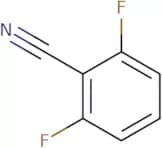
CAS:<p>2,6-Difluorobenzonitrile is a nucleophilic compound that reacts with inorganic acids to form new chemical structures. It has been shown to react with hydrochloric acid, sodium carbonate and phosphotungstic acid. The FT-IR spectroscopy of 2,6-difluorobenzonitrile shows a reaction product with a proton. This means that the molecule is able to transfer a hydrogen ion from one site to another. The reaction between 2,6-difluorobenzonitrile and sodium carbonate produces an insoluble precipitate of sodium phosphate and sodium chloride, which can be analyzed gravimetrically. 2,6-Difluorobenzonitrile has also been shown to have fluorescence properties that are activated by ultraviolet light and naphthalene.</p>Formula:C7H3F2NPurity:Min. 95%Color and Shape:PowderMolecular weight:139.1 g/molBarium tetracyanoplatinate(II) hydrate
CAS:Controlled Product<p>Please enquire for more information about Barium tetracyanoplatinate(II) hydrate including the price, delivery time and more detailed product information at the technical inquiry form on this page</p>Formula:C4H2BaN4OPtPurity:Min. 95%Molecular weight:454.5 g/molCyanodibenzylamine
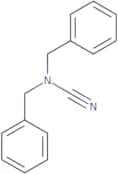
CAS:<p>Cyanodibenzylamine is a synthetic, pharmaceutical preparation. It is an amine that undergoes nucleophilic attack by an amide to form a cyanoguanidine. Cyanodibenzylamine can be used as a stabilizer and additive in pharmaceutical preparations. It also has the ability to bind metal hydroxides, which may be due to the presence of basic fibroblast growth factor and isoquinoline compound. Cyanodibenzylamine is also used as a polymerization initiator in organic chemistry, with hydrocarbon solvents such as benzene or toluene as its solvent.</p>Formula:C15H14N2Purity:Min. 95%Color and Shape:PowderMolecular weight:222.29 g/molEthyl 3-cyanopropanoate
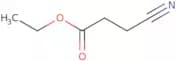
CAS:<p>Ethyl 3-cyanopropanoate is an organic compound with the formula CH3C(O)CH2CN. It is a colorless liquid that boils at 100 °C. It is used in the synthesis of other organic compounds, such as oxazolidinones, cyclopropenes, and quinolizines. The yield can be increased to 98% by using a catalyst such as potassium tert-butoxide or zinc chloride in the reaction. The reaction proceeds through an elimination followed by an acid-catalyzed alkylation to afford the desired product. This process also results in a high yield of ethyl bromoacetate as a side product.</p>Formula:C6H9NO2Purity:Min. 95%Color and Shape:PowderMolecular weight:127.14 g/mol4-Mercaptobenzonitrile
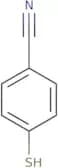
CAS:<p>4-mercaptobenzonitrile (4MBN) is a typical compound used in many spectroscopic experiments. The addition of 4-mercaptobenzonitrile to metal surfaces is used to create self-assembled monolayers with metals. For numerous reasons, it can difficult to immbolize certain chemical groups on surfaces. The addition of 4-mercaptobenzonitrile forms a modified metal surface that enhances technique sensitivity and serves as tool for a better understanding of the interfaces. In recent years, the use of 4-mercaptobenzonitrile together with other molecules on metal nanoparticles has been explored for biomedicinal purposes, serving as a tool for creating surface-enhanced Raman scattering tags (SER tags), useful as cancer biomarker imaging (Li, 2018).</p>Formula:C7H5NSPurity:Min. 95%Color and Shape:PowderMolecular weight:135.19 g/molEthyl cyanoglyxylate-2-oxyme potassium salt
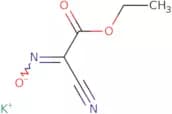
CAS:<p>Ethyl cyanoglyxylate-2-oxyme potassium salt is a high quality reagent for the production of complex compounds that can be used in fine chemicals, pharmaceuticals, and other speciality chemicals. It has been shown to be an intermediate for the synthesis of useful scaffolds and building blocks. The CAS number is 158014-03-0. This compound is a versatile building block that can be used in research chemicals, as well as reaction components for more complex syntheses.</p>Formula:C5H6N2O3KPurity:Min. 95%Color and Shape:PowderMolecular weight:181.21 g/mol1,4-Diamino-2,3-dicyanoanthraquinone
CAS:<p>1,4-Diamino-2,3-dicyanoanthraquinone is a chemical compound that belongs to the amines group. It has transcription-polymerase chain activity and inhibits the growth of cancer cells by regulating blood pressure and stimulating the production of growth factors. The effect on cancer cells is due to its ability to inhibit kinases. 1,4-Diamino-2,3-dicyanoanthraquinone has shown an inhibitory effect on glutamate decarboxylase and fatty acid synthase, which are enzymes that regulate cell metabolism. This chemical compound also exhibits quinoline derivatives with a redox potential that can be used as hydrogen chloride in organic synthesis reactions.</p>Formula:C16H8N4O2Purity:Min. 95%Color and Shape:Blue PowderMolecular weight:288.26 g/mol4-Octylbenzylamine
CAS:<p>4-Octylbenzylamine is a hydrophobic molecule that is soluble in organic solvents. In simulations, it was shown to have affinity for anions and aromatic hydrocarbons, as well as the ability to be immobilized on surfaces. 4-Octylbenzylamine is also a chromatographic stationary phase that can be used to separate solutes with similar properties. This molecule has been oriented so that it binds to the hydrated surface of the column, which improves its affinity for anions and aromatic hydrocarbons. The high-performance liquid chromatography (HPLC) technique utilizes this property to separate molecules of different affinities from one another in a systematic manner.</p>Formula:C15H25NPurity:Min. 95%Color and Shape:PowderMolecular weight:219.37 g/mol2-Chloro-4-fluorobenzonitrile
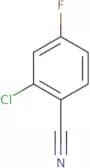
CAS:<p>2-Chloro-4-fluorobenzonitrile is a drug that has been shown to have antitumor effects by binding to the CB2 receptor. It inhibits hydrogenation reduction of the molecule, which may be due to its ability to react with both functional groups. 2-Chloro-4-fluorobenzonitrile has also been shown to inhibit progesterone receptor, which may lead to an increase in progesterone levels and a decrease in estrogen levels. The pharmacokinetic properties of this compound are not yet known.</p>Formula:C7H3ClFNPurity:Min. 95%Color and Shape:White PowderMolecular weight:155.56 g/mol4-Hydroxy-3-methoxybenzylamine hydrochloride
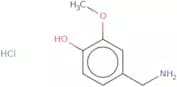
CAS:<p>4-Hydroxy-3-methoxybenzylamine hydrochloride is a reagent, complex compound and useful intermediate for the production of speciality chemicals. CAS No. 7149-10-2 is not a hazardous chemical and does not pose any significant risk to human health or the environment when used as intended. This chemical has many uses including being a useful scaffold in organic synthesis, a useful building block for the preparation of other compounds, and a versatile building block for the preparation of various compounds. It also has many applications in research such as being an intermediate for the synthesis of other compounds, or as a reactant in various reactions.</p>Formula:C8H12NO2ClPurity:Min. 98 Area-%Color and Shape:White PowderMolecular weight:189.64 g/mol4-Cyanoindole
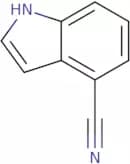
CAS:<p>The 4-cyanoindole is a fluorescent molecule that binds to proteins and affects protein homeostasis. It has been shown to bind to the sodium salt form of proteins, which are typically found in human liver cells. The binding of 4-cyanoindole to these proteins leads to its reduction by borohydride and fluorescence resonance energy transfer (FRET) between the molecule and the protein. This binding can be detected using a fluorescence lifetime spectroscopy technique, which detects changes in the fluorescence's lifetime as well as intensity. The binding of 4-cyanoindole to proteins has been shown to have anti-cancer properties. It has also been used for detection of monoclonal antibodies against cancer cells or for fluorescent labeling of cancer cells for immunofluorescent microscopy.</p>Formula:C9H6N2Color and Shape:White PowderMolecular weight:142.16 g/mol2-Chloro-5-hydroxybenzonitrile
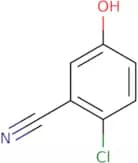
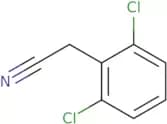
CAS:<p>2-Chloro-5-hydroxybenzonitrile is a versatile, building block chemical that can be used as a reactant or intermediate in the synthesis of other compounds. It is also an excellent research chemical with a high quality and purity. 2-Chloro-5-hydroxybenzonitrile has many uses, such as being a reagent for organic synthesis, a speciality chemical, and a useful intermediate. This compound is suitable for complex synthesis and has been shown to be useful as a building block or scaffold in the production of other chemicals.</p>Formula:C7H4ClNOPurity:Min. 95%Color and Shape:Off-White PowderMolecular weight:153.57 g/mol2,6-Dichlorophenylacetonitrile
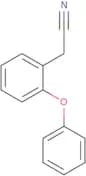
CAS:<p>2,6-Dichlorophenylacetonitrile (2,6-DCPA) is a cyanide herbicide that controls weed growth. 2,6-DCPA is used as a preemergent herbicide and is applied to the soil before planting. It can be mixed with calcium oxide or other materials to form a dust, which is then applied to the soil surface. 2,6-DCPA inhibits plant growth by interfering with the photosynthesis process, which may be due to its high cytotoxicity. The exact mechanism of action has not been determined but it may be due to interference with chloride transport or ethyl esters production in plants. This chemical has also been shown to inhibit amine metabolism in plants and animals.<br>2,6-DCPA has two isomers: cis and trans. They differ only in the position of the chlorine atom on the benzene ring: cis (left) and trans (right).</p>Formula:C8H5Cl2NPurity:Min. 95%Color and Shape:White PowderMolecular weight:186.04 g/mol2-Phenoxyphenylacetonitrile
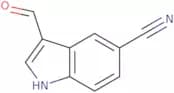
CAS:<p>2-Phenoxyphenylacetonitrile is a pyrethroid n-oxide that is chemically related to other insecticides that are used in agriculture and against insects such as mosquitoes. 2-Phenoxyphenylacetonitrile is a synthetic compound that has been shown to have an optimum pH of 5.5, which makes it difficult to dissolve in water. The compound's high stability at low pH levels means that it can be used in acidic environments. It also has been shown to have strong activity against human serum and food composition, with no detectable activity against bacteria or fungi.</p>Formula:C14H11NOPurity:Min. 95%Color and Shape:Clear LiquidMolecular weight:209.24 g/mol5-Cyanoindole-3-carboxaldehyde
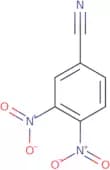
CAS:<p>5-Cyanoindole-3-carboxaldehyde is an aldehyde that is used in synthesis of β-unsaturated aldehydes. It is prepared by the reaction of 3-cyanoindole with formaldehyde. 5-Cyanoindole-3-carboxaldehyde has antibacterial activity against gram positive and gram negative bacteria. It also has a high yield and can be purified by filtration or by condensation with chlorobenzene. 5-Cyanoindole-3-carboxaldehyde can be activated by irradiation, which makes it useful for the production of pharmaceuticals.</p>Formula:C10H6N2OPurity:Min. 95%Molecular weight:170.17 g/mol3,4-Dinitrobenzonitrile
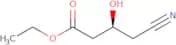
CAS:<p>3,4-Dinitrobenzonitrile is a fine chemical that is used as a versatile building block in the synthesis of complex organic compounds. It is also used as a research chemical and a reaction component in organic synthesis. 3,4-Dinitrobenzonitrile is stable against oxidation and hydrolysis, making it an ideal intermediate for other reactions. CAS No. 4248-33-3</p>Formula:C7H3N3O4Purity:Min. 95%Color and Shape:PowderMolecular weight:193.12 g/molEthyl S-(+)-4-cyano-3-hydroxybutyrate
CAS:<p>Ethyl S-(+)-4-cyano-3-hydroxybutyrate is a chiral molecule that can be used as a catalyst in the transesterification reaction. It acts by binding to the enzyme and immobilizing it on a solid support, which increases its catalytic activity. The hydroxybutanoate is converted into butyric acid, which is produced at high yield using this method. This process of immobilization increases the kinetic rate of the reaction, making it possible for the product to be obtained more quickly.</p>Formula:C7H11NO3Purity:Min. 95%Molecular weight:157.17 g/mol