Cyano-, Nitrile-
Cyano and nitrile compounds are organic molecules that contain cyano (C≡N) or nitrile groups in their structure, characterized by the presence of nitrogen. These groups play important roles in various chemical reactions and industrial applications. In this category, you will find a wide range of cyano and nitrile compounds, ranging from simple to complex structures. At CymitQuimica, we offer high-quality cyano and nitrile compounds tailored to meet research and industrial needs. Our compounds are suitable for a variety of synthesis and analytical applications.
Found 9618 products of "Cyano-, Nitrile-"
Sort by
Purity (%)
0
100
|
0
|
50
|
90
|
95
|
100
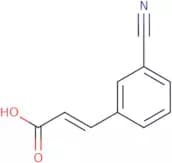
3-Cyanocinnamic acid
CAS:<p>3-Cyanocinnamic acid is a reactive, unreactive, and stepwise cycloaddition compound. It can participate in photochemical reactions with other compounds to form photodimers. 3-Cyanocinnamic acid has an optimal reaction temperature of 100°C and a reaction time of 5 minutes. The diradical nature of 3-cyanocinnamic acid makes it sensitive to UV light, and the photochemical reactions are simulated by quantum mechanics calculations. Photodimerisation simulations show that 3-cyanocinnamic acid is capable of forming photodimers with 2-cyanocinnamic acid or 4-cyanocinnamic acid at room temperature.</p>Formula:C10H7NO2Purity:Min. 95%Color and Shape:PowderMolecular weight:173.17 g/mol4-Hydroxy-3-methoxybenzylamine hydrochloride
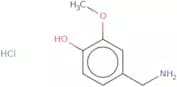
CAS:<p>4-Hydroxy-3-methoxybenzylamine hydrochloride is a reagent, complex compound and useful intermediate for the production of speciality chemicals. CAS No. 7149-10-2 is not a hazardous chemical and does not pose any significant risk to human health or the environment when used as intended. This chemical has many uses including being a useful scaffold in organic synthesis, a useful building block for the preparation of other compounds, and a versatile building block for the preparation of various compounds. It also has many applications in research such as being an intermediate for the synthesis of other compounds, or as a reactant in various reactions.</p>Formula:C8H12NO2ClPurity:Min. 98 Area-%Color and Shape:White PowderMolecular weight:189.64 g/molEthyl S-(+)-4-cyano-3-hydroxybutyrate
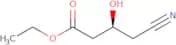
CAS:<p>Ethyl S-(+)-4-cyano-3-hydroxybutyrate is a chiral molecule that can be used as a catalyst in the transesterification reaction. It acts by binding to the enzyme and immobilizing it on a solid support, which increases its catalytic activity. The hydroxybutanoate is converted into butyric acid, which is produced at high yield using this method. This process of immobilization increases the kinetic rate of the reaction, making it possible for the product to be obtained more quickly.</p>Formula:C7H11NO3Purity:Min. 95%Molecular weight:157.17 g/mol2,6-Dichlorophenylacetonitrile
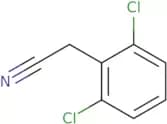
CAS:<p>2,6-Dichlorophenylacetonitrile (2,6-DCPA) is a cyanide herbicide that controls weed growth. 2,6-DCPA is used as a preemergent herbicide and is applied to the soil before planting. It can be mixed with calcium oxide or other materials to form a dust, which is then applied to the soil surface. 2,6-DCPA inhibits plant growth by interfering with the photosynthesis process, which may be due to its high cytotoxicity. The exact mechanism of action has not been determined but it may be due to interference with chloride transport or ethyl esters production in plants. This chemical has also been shown to inhibit amine metabolism in plants and animals.<br>2,6-DCPA has two isomers: cis and trans. They differ only in the position of the chlorine atom on the benzene ring: cis (left) and trans (right).</p>Formula:C8H5Cl2NPurity:Min. 95%Color and Shape:White PowderMolecular weight:186.04 g/mol2-Chloro-5-hydroxybenzonitrile
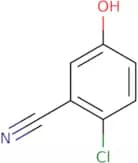
CAS:<p>2-Chloro-5-hydroxybenzonitrile is a versatile, building block chemical that can be used as a reactant or intermediate in the synthesis of other compounds. It is also an excellent research chemical with a high quality and purity. 2-Chloro-5-hydroxybenzonitrile has many uses, such as being a reagent for organic synthesis, a speciality chemical, and a useful intermediate. This compound is suitable for complex synthesis and has been shown to be useful as a building block or scaffold in the production of other chemicals.</p>Formula:C7H4ClNOPurity:Min. 95%Color and Shape:Off-White PowderMolecular weight:153.57 g/mol2-Phenoxyphenylacetonitrile
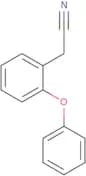
CAS:<p>2-Phenoxyphenylacetonitrile is a pyrethroid n-oxide that is chemically related to other insecticides that are used in agriculture and against insects such as mosquitoes. 2-Phenoxyphenylacetonitrile is a synthetic compound that has been shown to have an optimum pH of 5.5, which makes it difficult to dissolve in water. The compound's high stability at low pH levels means that it can be used in acidic environments. It also has been shown to have strong activity against human serum and food composition, with no detectable activity against bacteria or fungi.</p>Formula:C14H11NOPurity:Min. 95%Color and Shape:Clear LiquidMolecular weight:209.24 g/mol2-Chloro-4-fluorobenzonitrile
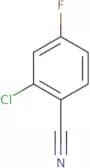
CAS:<p>2-Chloro-4-fluorobenzonitrile is a drug that has been shown to have antitumor effects by binding to the CB2 receptor. It inhibits hydrogenation reduction of the molecule, which may be due to its ability to react with both functional groups. 2-Chloro-4-fluorobenzonitrile has also been shown to inhibit progesterone receptor, which may lead to an increase in progesterone levels and a decrease in estrogen levels. The pharmacokinetic properties of this compound are not yet known.</p>Formula:C7H3ClFNPurity:Min. 95%Color and Shape:White PowderMolecular weight:155.56 g/mol1,4-Dihydro-2,6-dimethyl-4-(3-nitrophenyl)-3,5-pyridinedicarboxylic acid 3-(2-cyanoethyl) 5-methyl ester
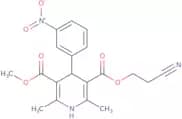
CAS:<p>1,4-Dihydro-2,6-dimethyl-4-(3-nitrophenyl)-3,5-pyridinedicarboxylic acid 3-(2-cyanoethyl) 5-methyl ester is a chemical compound that has the CAS number 75130-24-4. It is a white powder with a melting point of 144°C. This chemical is soluble in acetone, ether and chloroform. It can be used as a building block for organic synthesis due to its versatility and useful scaffold.</p>Formula:C19H19N3O6Purity:Min. 95%Color and Shape:White to yellow solid.Molecular weight:385.37 g/mol2-Hydroxy-2-(3-phenoxyphenyl)acetonitrile
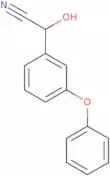
CAS:<p>2-Hydroxy-2-(3-phenoxyphenyl)acetonitrile is an organic compound that is synthesized by the reaction of 3-phenoxybenzaldehyde with nitrous acid in aqueous solution. This compound can be racemized by the enzyme lipase and esterified to form an ester linkage. 2-Hydroxy-2-(3-phenoxyphenyl)acetonitrile has been shown to exhibit insecticidal activity against various strains of bacteria, including Bacillus subtilis, Staphylococcus aureus, and Escherichia coli. 2HPA is a pyrethroid insecticide that has been shown to inhibit lipid synthesis by binding to phospholipids in the bacterial cell membrane. This inhibits the production of fatty acids and glycerol phosphate, inhibiting the growth of the bacteria.</p>Formula:C14H11NO2Purity:Min. 95%Color and Shape:Clear LiquidMolecular weight:225.24 g/mol3-Cyanobenzamide
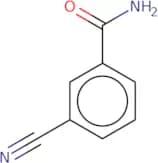
CAS:<p>3-Cyanobenzamide is an organic compound with the formula CHC(N)NH. It is a white crystalline solid that can be obtained by reacting benzamide with cyanoacetylene. There are three possible isomers of 3-cyanobenzamide: 3-cyano-1-(substituted phenyl)benzamide, 3-cyano-2-(substituted phenyl)benzamide, and 3-cyano-3-(substituted phenyl)benzamide. The optimal reaction conditions for the synthesis of 3-cyanobenzamide are in the presence of hydrogen bonding, such as n-hexane, amide, and phase equilibrium. Studies have determined that 3-cyanobenzamide has the potential to cause cancer or liver toxicity in humans. In addition, this chemical has been shown to be an effective inhibitor of alpha glucosidase enzymes in vitro and in vivo.</p>Formula:C8H6N2OPurity:Min. 90%Molecular weight:146.15 g/mol4-Chloro-3-nitrobenzonitrile
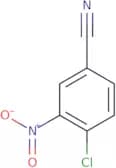
CAS:<p>4-Chloro-3-nitrobenzonitrile is a molecule with potent antibacterial activity. It is synthesized by the reaction of sodium carbonate, hydrogen chloride, and 4-chlorobenzonitrile. 4-Chloro-3-nitrobenzonitrile has shown antimicrobial properties against a wide range of bacteria, including methicillin resistant Staphylococcus aureus (MRSA) and Enterococcus faecium. This compound has been used in the treatment of infections caused by these bacteria. 4-Chloro-3-nitrobenzonitrile also has the ability to inhibit the synthesis of fatty acids and lipids in bacterial cells, which may be responsible for its antimicrobial effects.</p>Formula:C7H3ClN2O2Purity:Min. 95%Color and Shape:PowderMolecular weight:182.56 g/molN-(5-Cyano-2-chlorophenyl)acetamide
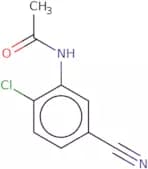
CAS:<p>N-(5-Cyano-2-chlorophenyl)acetamide is a high quality, reagent, and versatile building block. It is a fine chemical that can be used as a building block for the synthesis of other compounds. N-(5-Cyano-2-chlorophenyl)acetamide is also a speciality chemical that can be used in research or as a reaction component. It has been found to be useful as an intermediate in the synthesis of complex compounds.<br>END></p>Formula:C9H7ClN2OPurity:Min. 95%Molecular weight:194.62 g/mol3-Cyano-4,6-dimethylcoumarin
CAS:<p>3-Cyano-4,6-dimethylcoumarin is a phenolic compound with potent inhibitory activity against bacteria. It has been shown to bind to the hydroxyl group of the coumarin ring and inhibit the growth of Gram-negative and Gram-positive bacteria. 3-Cyano-4,6-dimethylcoumarin also inhibits the growth of fungi by binding to the hydroxyl group on a phenolic hydroxyl substituent. 3-Cyano-4,6-dimethylcoumarin can be used as an antimicrobial agent for various types of infections.</p>Formula:C12H9NO2Purity:Min. 95%Color and Shape:PowderMolecular weight:199.21 g/mol2,5-Dimethoxybenzonitrile
CAS:<p>2,5-Dimethoxybenzonitrile is a polymerized organic compound that belongs to the class of benzene compounds. It is a monomer with two methyl groups on either side of the benzene ring. 2,5-Dimethoxybenzonitrile has been studied in terms of its transition and optimization properties using techniques such as IR and NMR spectroscopy. The frequencies of the chemical bonds have been analyzed, and it has been found that the molecule is centrosymmetric. 2,5-Dimethoxybenzonitrile can also be used to form polymers with other molecules by linking them together through covalent bonds.</p>Formula:C9H9NO2Purity:Min. 95%Color and Shape:PowderMolecular weight:163.17 g/mol2-Acetoxybenzonitrile
CAS:<p>2-Acetoxybenzonitrile is an atypical, acidic organic compound with a molecular weight of 136.06 g/mol. It has a melting point of -5.5 °C and decomposes spontaneously at high temperatures to form benzonitrile, carbon dioxide, and water. 2-Acetoxybenzonitrile is able to act as a competitive inhibitor of acetylsalicylic acid (ASA) in the kinetic determination of ASA using acetylation as the rate-determining step. In this experiment, 2-acetoxybenzonitrile was found to be an effective inhibitor of acetylation with a KI value of 1.8 x 10 M. The spectrometer can be used to determine the molecular weight and purity of 2-acetoxybenzonitrile by measuring its absorbance in the ultraviolet region.<br>2-Acetoxybenzonitrile binds metal cations such as Cu(II), Fe(</p>Formula:C9H7NO2Purity:Min. 95%Color and Shape:Clear LiquidMolecular weight:161.16 g/mol4-Chloro-3,5-dinitrobenzonitrile
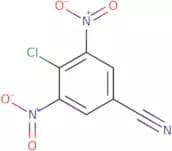
CAS:<p>4-Chloro-3,5-dinitrobenzonitrile is a mesomeric compound that has four amines and one nitro group. It is a dipole with chloride as the negative end and amine as the positive end. The reaction mechanism of this chemical is nucleophilic substitution. 4-Chloro-3,5-dinitrobenzonitrile reacts with an organic solvent to form a buffer. A buffer is an ionized solution that resists changes in pH when acid or base are added to it. This chemical also reacts with thionyl chloride to form hydrochloric acid, which can be used to leishmania parasites. 4-Chloro-3,5-dinitrobenzonitrile also reacts with an anion such as ClO4− or NO2− to form a salt such as chlorate or nitrate respectively.</p>Formula:C7H2ClN3O4Purity:Min. 95%Color and Shape:PowderMolecular weight:227.56 g/mol32-Carboxycyanocobalamin
CAS:<p>32-Carboxycyanocobalamin is a fine chemical that is used in the synthesis of complex compounds. It is a versatile building block, which can be used in reactions to synthesize other compounds and as a scaffold for drug discovery. 32-Carboxycyanocobalamin is also a reagent that has been used in organic chemistry and analytical chemistry. CAS No. 121483-62-3</p>Formula:C63H87CoN13O15PPurity:Min. 95%Molecular weight:1,356.35 g/molEthyl (2Z)-2-cyano-3-(2-furyl)acrylate
CAS:<p>Please enquire for more information about Ethyl (2Z)-2-cyano-3-(2-furyl)acrylate including the price, delivery time and more detailed product information at the technical inquiry form on this page</p>Formula:C10H9NO3Purity:Min. 95%Molecular weight:191.18 g/mol2,4,6-Trimethoxybenzonitrile
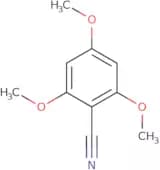
CAS:<p>2,4,6-Trimethoxybenzonitrile is a ligand that forms coordination complexes with metal ions. It can be used to make N-oxide compounds and reaction products with aryl chlorides. The 2,4,6-trimethoxybenzonitrile ligand has been shown to form cross-coupling complexes with benzotriazolyl. This compound is soluble in organic solvents and has a vapor pressure of 0.0025 mm Hg at 25°C. The molecular weight of this compound is 196.2 g/mol and its melting point is 190°C. 2,4,6-Trimethoxybenzonitrile has a symmetric molecule in the gas phase and an asymmetric molecule in solution due to the interactions of hydrogen bonding and van der Waals forces.</p>Formula:C10H11NO3Purity:Min. 95%Color and Shape:PowderMolecular weight:193.2 g/mol2,6-Difluorobenzonitrile
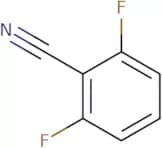
CAS:<p>2,6-Difluorobenzonitrile is a nucleophilic compound that reacts with inorganic acids to form new chemical structures. It has been shown to react with hydrochloric acid, sodium carbonate and phosphotungstic acid. The FT-IR spectroscopy of 2,6-difluorobenzonitrile shows a reaction product with a proton. This means that the molecule is able to transfer a hydrogen ion from one site to another. The reaction between 2,6-difluorobenzonitrile and sodium carbonate produces an insoluble precipitate of sodium phosphate and sodium chloride, which can be analyzed gravimetrically. 2,6-Difluorobenzonitrile has also been shown to have fluorescence properties that are activated by ultraviolet light and naphthalene.</p>Formula:C7H3F2NPurity:Min. 95%Color and Shape:PowderMolecular weight:139.1 g/mol