Cyano-, Nitrile-
Cyano and nitrile compounds are organic molecules that contain cyano (C≡N) or nitrile groups in their structure, characterized by the presence of nitrogen. These groups play important roles in various chemical reactions and industrial applications. In this category, you will find a wide range of cyano and nitrile compounds, ranging from simple to complex structures. At CymitQuimica, we offer high-quality cyano and nitrile compounds tailored to meet research and industrial needs. Our compounds are suitable for a variety of synthesis and analytical applications.
Found 9618 products of "Cyano-, Nitrile-"
Sort by
Purity (%)
0
100
|
0
|
50
|
90
|
95
|
100
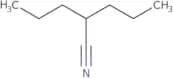
4-Cyanoheptane
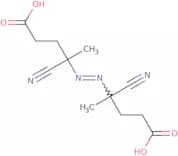
CAS:<p>4-Cyanoheptane is a liquid that has been decarboxylated, which means it contains no CO2 molecules. It is an organic solvent with a boiling point of -2°C and a density of 0.7 g/mL. This product is used in the hydrolysis of carboxylic acids to form carboxylates. 4-Cyanoheptane has been shown to be able to hydrolyze amides, carbones, phenoxy groups, and functional groups as well as produce alkylation reactions with high concentrations.</p>Formula:C8H15NPurity:Min. 95%Color and Shape:Clear LiquidMolecular weight:125.21 g/mol4,4'-Azobis(4-cyanovaleric acid)
CAS:<p>Azobis(4-cyanovaleric acid) is a chemical compound that has reactive functional groups. It is a particle that is soluble in acetate extract and hydrochloric acid. The synthesis of Azobis(4-cyanovaleric acid) involves the reaction of 4-cyanoacrylic acid with 2,2'-azobis(2-methylpropionitrile). It is used as an intermediate in the preparation of polymers. Azobis(4-cyanovaleric acid) is used for the treatment of infectious diseases such as tuberculosis and malaria. The production of chain reactions with other molecules makes this chemical reactive and unstable. Azobis(4-cyanovaleric acid) also reacts with nucleophilic groups, such as hydroxyl groups, to form a covalent bond. This process can be reversed by adding a strong base or oxidant.</p>Formula:C12H16N4O4Purity:Min. 95 Area-%Color and Shape:PowderMolecular weight:280.28 g/mol1,2-Diphenyl-1-cyanoethylene
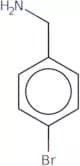
CAS:<p>1,2-Diphenyl-1-cyanoethylene is a molecule that is involved in the cancer process. It has been shown to inhibit the growth of skin cancer cells and other types of cancer cells by binding to mitochondria and inhibiting the formation of proton gradients across mitochondrial membranes. This inhibition leads to a decrease in cellular ATP production and an increase in reactive oxygen species (ROS), resulting in cell death. 1,2-Diphenyl-1-cyanoethylene also has anticancer activity due to its ability to induce light emission from the skin and interfere with the optical properties of holothuria, which are sea cucumbers.</p>Formula:C15H11NPurity:Min. 95%Color and Shape:PowderMolecular weight:205.25 g/mol4-Bromobenzylamine
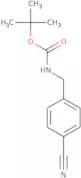
CAS:<p>4-Bromobenzylamine is a chemical compound that has been used to study the process optimization of sephadex g-100. It is also used as a chemotherapeutic treatment for cancer. 4-Bromobenzylamine binds to intracellular targets, such as nitrogen atoms and cell lysis, with physiological levels found in fetal bovine serum. The nitrogen atom is an essential structural component of 4-bromobenzylamine that is necessary for its biological activity and may be involved in binding to DNA polymerase. This drug has been shown to inhibit the growth of metastatic colorectal cancer cells by inhibiting cellular proliferation. Structural analysis has revealed that 4-bromobenzylamine interacts with the polymerase chain reaction (PCR) enzyme and inhibits the ability of DNA polymerases to add nucleotides to the growing strand of DNA.</p>Formula:C7H8BrNPurity:Min. 95%Color and Shape:PowderMolecular weight:186.05 g/moltert-Butyl 4-cyanobenzylcarbamate
CAS:<p>tert-Butyl 4-cyanobenzylcarbamate (tB4Cbz) is a high quality chemical that can be used as a reagent, complex compound, or useful intermediate in the production of fine chemicals. Tert-Butyl 4-cyanobenzylcarbamate is also a useful scaffold for the synthesis of speciality chemicals and research chemicals. It can be used as a versatile building block for reactions involving amides, nitriles, esters, and amines.</p>Formula:C13H16N2O2Purity:Min. 95%Color and Shape:PowderMolecular weight:232.28 g/molCyanodibenzylamine
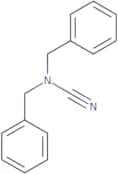
CAS:<p>Cyanodibenzylamine is a synthetic, pharmaceutical preparation. It is an amine that undergoes nucleophilic attack by an amide to form a cyanoguanidine. Cyanodibenzylamine can be used as a stabilizer and additive in pharmaceutical preparations. It also has the ability to bind metal hydroxides, which may be due to the presence of basic fibroblast growth factor and isoquinoline compound. Cyanodibenzylamine is also used as a polymerization initiator in organic chemistry, with hydrocarbon solvents such as benzene or toluene as its solvent.</p>Formula:C15H14N2Purity:Min. 95%Color and Shape:PowderMolecular weight:222.29 g/mol3-Cyanophenylacetic acid
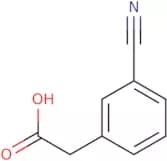
CAS:<p>3-Cyanophenylacetic acid is a versatile building block and useful intermediate that can be used in the synthesis of a wide range of organic compounds. 3-Cyanophenylacetic acid is a fine chemical with CAS No. 1878-71-3 that can be used as a research chemical, reaction component, or speciality chemical. It is an important reagent for making complex organic compounds. 3-Cyanophenylacetic acid is a high quality product with the following characteristics: <br>1) Colorless crystals; <br>2) Soluble in water; <br>3) Soluble in acetone; <br>4) Slightly soluble in ether; <br>5) Reactivity: stable to heat, light, and air; <br>6) pH (1% solution): 2.0 - 4.0; <br>7) Melting point: 129 °C; <br>8) Boiling point: 188 °C at 760 mmH</p>Formula:C9H7NO2Purity:Min. 95%Molecular weight:161.16 g/molN-Cyanopiperidine
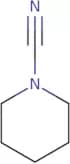
CAS:<p>N-Cyanopiperidine is a cyclohexane ring with a trifluoroacetic acid group. It is used in the synthesis of pharmaceutical preparations and has been shown to be stable in low-energy environments, such as when mixed with glycol ethers or chlorides. N-Cyanopiperidine is also used as an intermediate for the preparation of other compounds, such as metal carbonyl complexes and derivatives. N-Cyanopiperidine can be synthesized by reacting anhydrous hydrogen cyanide with piperidinium chloride in the presence of metal hydroxides. This reaction mechanism is known to produce two products: 1) a stable complex with a metal ion, and 2) a reaction product that contains the desired product and hydrogen cyanide.</p>Formula:C6H10N2Purity:Min. 95%Color and Shape:PowderMolecular weight:110.16 g/molXylene cyanol
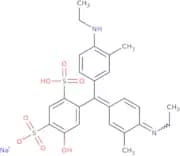
CAS:<p>Xylene cyanol is a chemical compound that belongs to the group of phenols. It has been shown to be active in vitro against human skin cancer cells, and induces cell lysis. Xylene cyanol has also been found to bind to the BCR-ABL kinase domain, which is an enzyme that plays a crucial role in the development of leukemia and other autoimmune diseases. Xylene cyanol binds to dna binding domains on the protein surface and forms an adduct with bcr-abl kinase, which inhibits its activity. This inhibition prevents activation of this enzyme and leads to cell death by preventing DNA synthesis.</p>Formula:C25H27N2O7S2•NaPurity:Min. 90%Color and Shape:PowderMolecular weight:554.61 g/mol1-(4-Cyanophenyl)-2-nitropropene
<p>Please enquire for more information about 1-(4-Cyanophenyl)-2-nitropropene including the price, delivery time and more detailed product information at the technical inquiry form on this page</p>Formula:C10H8N2O2Purity:Min. 95%Molecular weight:188.18 g/molN-Nitrosodibenzylamine
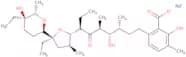
CAS:<p>N-Nitrosodibenzylamine is a chemical compound that has genotoxic effects. It is used as an analytical method to identify the presence of amines and to measure their concentration, as well as in the preparation of sodium salts. N-Nitrosodibenzylamine was found to cause damage to DNA in animals and cells in culture. The matrix effect, which is the difference in response between a sample contained in an organic solvent and one contained in water, was investigated using multi-walled carbon nanotubes (MWCNTs). The results showed that MWCNTs produce a significant matrix effect when compared with other solvents. This study also showed that MWNTs have a higher capacity for nitrosamine adsorption than do other solvents.</p>Formula:C14H14N2OPurity:Min. 96 Area-%Color and Shape:Off-White PowderMolecular weight:226.27 g/molLasalocid A sodium salt - 0.1mg/ml, in acetonitrile
CAS:<p>Lasalocid A sodium salt is a sodium salt of lasalocid, which is a macrolide antibiotic that inhibits bacterial growth by binding to the 50S ribosomal subunit. Lasalocid A sodium salt has intramolecular hydrogen bonds and exhibits high solubility in acetonitrile. The experimental solubility data was obtained using an analytical method with quillaja saponaria as a model system. Lasalocid A sodium salt has been used as an experimental model for congestive heart failure and is also used in biological samples such as blood, urine, or tissue. This drug is highly resistant to degradation by bacteria.</p>Formula:C34H53NaO8Purity:Min. 90 Area-%Color and Shape:Colorless Clear LiquidMolecular weight:612.77 g/molPyridine-3-acetonitrile
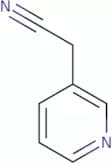
CAS:<p>Pyridine-3-acetonitrile is a coordination complex that can be used for the treatment of diabetes. It has been shown to have a high affinity for plasma glucose and to be selective for biological samples containing amino acids, such as proteins. The molecule is able to bind with carbon disulphide in order to form the active methylene, which has been shown to be an effective bifunctional ligand. The compound has also been shown to have a ph optimum of 9.8 - 10.2 and exhibits an atomic orbital with a molecular electrostatic potential of 0.5 eV. Pyridine-3-acetonitrile binds strongly to nucleophilic groups, such as amines and hydroxyls, making it suitable for use as a ligand in metal complexes. This compound may also have some interesting properties related to its morphology, which can be further investigated using functional theory and molecular electrostatic potential.br>br> br>br></p>Formula:C7H6N2Purity:Min. 95%Color and Shape:Clear LiquidMolecular weight:118.14 g/mol2-Hydroxy-4-nitrobenzonitrile
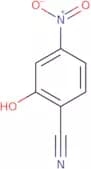
CAS:<p>2-Hydroxy-4-nitrobenzonitrile is a nitrile derivative that has an antibacterial activity. This compound interacts with the pyochelin, a siderophore in Pseudomonas aeruginosa. The antibiotic inhibits the uptake of pyochelin by the bacteria and causes cell death by inhibiting the synthesis of proteins necessary for bacterial growth. 2-Hydroxy-4-nitrobenzonitrile can be used as a potential stabilizer for materials such as polystyrene and polyurethane which are susceptible to degradation by hydrolysis or oxidation. In addition, this compound is also useful in gram-negative bacterium due to its ability to inhibit their growth by binding to their ribosomes. The conformational studies have been shown to be important for understanding the biological properties of this molecule.</p>Formula:C7H4N2O3Purity:Min. 95%Color and Shape:PowderMolecular weight:164.12 g/mol5-Cyano-2-fluorobenzoic acid
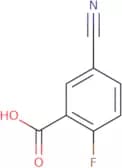
CAS:<p>5-Cyano-2-fluorobenzoic acid is a macrocyclization agent that is used in the synthesis of 16-membered macrocycles. It is a nucleophilic reagent that reacts with an electrophile to form a 5,5'-bifluoro-2,2'-dioxodibenzofuranone. This reaction can be performed under mild conditions and proceeds via a 1,4-addition mechanism. The product has two stereogenic centers and four stereoisomers that are formed by the relative configuration of these centers. 5-Cyano-2-fluorobenzoic acid also has application in the clinic as an analogue for fluoroquinolones.</p>Formula:C8H4FNO2Purity:Min. 95%Color and Shape:PowderMolecular weight:165.12 g/mol4-Hydroxyphenylacetonitrile
CAS:<p>4-Hydroxyphenylacetonitrile (HPA) is a chemical compound that belongs to the group of nitriles. It is a precursor to the pigment sinalbin, which is found in corynebacterium and related bacteria. HPA has been shown to have an apoptotic effect on human cells, which may be due to its ability to inhibit protein synthesis and induce DNA fragmentation. The synthetic pathway for HPA starts with the conversion of L-phenylalanine into 4-hydroxyphenylpyruvic acid by a wild-type strain or bacterial strain. The 4-hydroxyphenylpyruvic acid is then converted into 4-hydroxybenzaldehyde through polymerase chain reactions or expression plasmids in corynebacterium glutamicum. This molecule can then be transformed into HPA by hydrolysis with hydrochloric acid or enzymatic activity. HPA has also been shown to stimulate</p>Formula:C8H7NOPurity:Min. 95%Color and Shape:PowderMolecular weight:133.15 g/mol4-Cyanobenzamide
CAS:<p>4-Cyanobenzamide is a naphthalene derivative that is both reactive and intramolecular. It has been shown to react with the amino group of peptides, forming a ruthenium complex. The functional groups are acceptors and donors that can be used in assays for the detection of anions or cations. 4-Cyanobenzamide reacts with water to release hydrogen gas, which can be used to measure its hydration ability. This compound has been synthesized using solid-phase synthesis and it has amide bonds that vibrate at a specific frequency.</p>Formula:C8H6N2OPurity:Min. 95%Color and Shape:PowderMolecular weight:146.15 g/mol(3-Methoxyphenyl)acetonitrile
CAS:<p>3-Methoxyphenylacetonitrile (3MPAN) is a small molecule that has been shown to inhibit the activity of kinases, which are enzymes that transfer phosphate groups from ATP onto other substrates. 3MPAN has been found to be selective for the estrogen receptor alpha (ERα), with little or no effect on ERβ, and shows promise as a potential drug for hormone-dependent breast cancer. It also inhibits fatty acid synthesis and is active against some viruses. 3MPAN binds to the enzyme's ATP binding site and blocks phosphorylation by preventing access of ATP. This prevents DNA synthesis and protein synthesis, leading to cell death.</p>Formula:C9H9NOPurity:Min. 95%Color and Shape:PowderMolecular weight:147.17 g/mol2-Amino-4-cyano-phenol
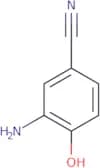
CAS:<p>2-Amino-4-cyano-phenol is a compound that has been shown to have antitubercular activity. It modulates the activity of cromakalim, which is a drug used for the treatment of tuberculosis. 2-Amino-4-cyano-phenol is also an antibacterial agent and has been shown to activate bacterial DNA replication and protein synthesis. The mechanism of action of this compound is thought to be due in part to its ability to bind with the ribosomes on the outside surface of cells and inhibit their function. 2-Amino-4-cyano-phenol has also been shown to have structural similarities with phenylephrine, which inhibits bacterial growth by binding to DNA gyrase, thereby preventing transcription and replication.</p>Formula:C7H6N2OPurity:Min. 95%Color and Shape:PowderMolecular weight:134.14 g/mol4-Fluorobenzylamine
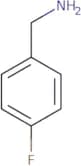
CAS:<p>4-Fluorobenzylamine is a chemical compound with the molecular formula CHF. It has been shown to radiosensitize tumor cells by inhibiting the synthesis of cyclin D2, which is required for cell proliferation. 4-Fluorobenzylamine can also be used in asymmetric synthesis reactions such as nitration and trifluoroacetic acid hydrolysis. 4-Fluorobenzylamine has been shown to have synergistic effects on cells when paired with flupirtine or maleate. This synergistic effect is primarily due to its ability to inhibit DNA repair, which leads to cell death through apoptosis or necrosis.</p>Formula:C7H8FNPurity:Min. 98 Area-%Color and Shape:Colourless To Pale Yellow LiquidMolecular weight:125.14 g/mol