Cyano-, Nitrile-
Cyano and nitrile compounds are organic molecules that contain cyano (C≡N) or nitrile groups in their structure, characterized by the presence of nitrogen. These groups play important roles in various chemical reactions and industrial applications. In this category, you will find a wide range of cyano and nitrile compounds, ranging from simple to complex structures. At CymitQuimica, we offer high-quality cyano and nitrile compounds tailored to meet research and industrial needs. Our compounds are suitable for a variety of synthesis and analytical applications.
Found 9618 products of "Cyano-, Nitrile-"
Sort by
Purity (%)
0
100
|
0
|
50
|
90
|
95
|
100
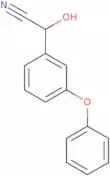
2-Hydroxy-2-(3-phenoxyphenyl)acetonitrile
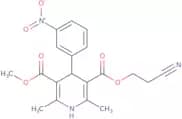
CAS:<p>2-Hydroxy-2-(3-phenoxyphenyl)acetonitrile is an organic compound that is synthesized by the reaction of 3-phenoxybenzaldehyde with nitrous acid in aqueous solution. This compound can be racemized by the enzyme lipase and esterified to form an ester linkage. 2-Hydroxy-2-(3-phenoxyphenyl)acetonitrile has been shown to exhibit insecticidal activity against various strains of bacteria, including Bacillus subtilis, Staphylococcus aureus, and Escherichia coli. 2HPA is a pyrethroid insecticide that has been shown to inhibit lipid synthesis by binding to phospholipids in the bacterial cell membrane. This inhibits the production of fatty acids and glycerol phosphate, inhibiting the growth of the bacteria.</p>Formula:C14H11NO2Purity:Min. 95%Color and Shape:Clear LiquidMolecular weight:225.24 g/mol1,4-Dihydro-2,6-dimethyl-4-(3-nitrophenyl)-3,5-pyridinedicarboxylic acid 3-(2-cyanoethyl) 5-methyl ester
CAS:<p>1,4-Dihydro-2,6-dimethyl-4-(3-nitrophenyl)-3,5-pyridinedicarboxylic acid 3-(2-cyanoethyl) 5-methyl ester is a chemical compound that has the CAS number 75130-24-4. It is a white powder with a melting point of 144°C. This chemical is soluble in acetone, ether and chloroform. It can be used as a building block for organic synthesis due to its versatility and useful scaffold.</p>Formula:C19H19N3O6Purity:Min. 95%Color and Shape:White to yellow solid.Molecular weight:385.37 g/mol2-Acetoxybenzonitrile
CAS:<p>2-Acetoxybenzonitrile is an atypical, acidic organic compound with a molecular weight of 136.06 g/mol. It has a melting point of -5.5 °C and decomposes spontaneously at high temperatures to form benzonitrile, carbon dioxide, and water. 2-Acetoxybenzonitrile is able to act as a competitive inhibitor of acetylsalicylic acid (ASA) in the kinetic determination of ASA using acetylation as the rate-determining step. In this experiment, 2-acetoxybenzonitrile was found to be an effective inhibitor of acetylation with a KI value of 1.8 x 10 M. The spectrometer can be used to determine the molecular weight and purity of 2-acetoxybenzonitrile by measuring its absorbance in the ultraviolet region.<br>2-Acetoxybenzonitrile binds metal cations such as Cu(II), Fe(</p>Formula:C9H7NO2Purity:Min. 95%Color and Shape:Clear LiquidMolecular weight:161.16 g/mol2,5-Dimethoxybenzonitrile
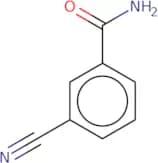
CAS:<p>2,5-Dimethoxybenzonitrile is a polymerized organic compound that belongs to the class of benzene compounds. It is a monomer with two methyl groups on either side of the benzene ring. 2,5-Dimethoxybenzonitrile has been studied in terms of its transition and optimization properties using techniques such as IR and NMR spectroscopy. The frequencies of the chemical bonds have been analyzed, and it has been found that the molecule is centrosymmetric. 2,5-Dimethoxybenzonitrile can also be used to form polymers with other molecules by linking them together through covalent bonds.</p>Formula:C9H9NO2Purity:Min. 95%Color and Shape:PowderMolecular weight:163.17 g/mol3-Cyanobenzamide
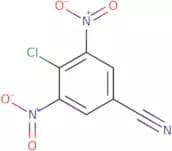
CAS:<p>3-Cyanobenzamide is an organic compound with the formula CHC(N)NH. It is a white crystalline solid that can be obtained by reacting benzamide with cyanoacetylene. There are three possible isomers of 3-cyanobenzamide: 3-cyano-1-(substituted phenyl)benzamide, 3-cyano-2-(substituted phenyl)benzamide, and 3-cyano-3-(substituted phenyl)benzamide. The optimal reaction conditions for the synthesis of 3-cyanobenzamide are in the presence of hydrogen bonding, such as n-hexane, amide, and phase equilibrium. Studies have determined that 3-cyanobenzamide has the potential to cause cancer or liver toxicity in humans. In addition, this chemical has been shown to be an effective inhibitor of alpha glucosidase enzymes in vitro and in vivo.</p>Formula:C8H6N2OPurity:Min. 90%Molecular weight:146.15 g/mol4-Chloro-3,5-dinitrobenzonitrile
CAS:<p>4-Chloro-3,5-dinitrobenzonitrile is a mesomeric compound that has four amines and one nitro group. It is a dipole with chloride as the negative end and amine as the positive end. The reaction mechanism of this chemical is nucleophilic substitution. 4-Chloro-3,5-dinitrobenzonitrile reacts with an organic solvent to form a buffer. A buffer is an ionized solution that resists changes in pH when acid or base are added to it. This chemical also reacts with thionyl chloride to form hydrochloric acid, which can be used to leishmania parasites. 4-Chloro-3,5-dinitrobenzonitrile also reacts with an anion such as ClO4− or NO2− to form a salt such as chlorate or nitrate respectively.</p>Formula:C7H2ClN3O4Purity:Min. 95%Color and Shape:PowderMolecular weight:227.56 g/molButyl cyanoacrylate
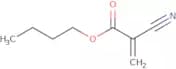
CAS:<p>Butyl cyanoacrylate is a cyanoacrylate, a type of monomer that reacts with water to form a polymer. Cyanoacrylates are used in sealants and tissue adhesives because they form strong bonds with tissues and are biocompatible. Butyl cyanoacrylate has been shown to have an exothermic reaction when it is mixed with water, which can cause burns if the user is not careful. This product also has toxicological studies on fetal bovine and mammalian tissue. Butyl cyanoacrylate has been shown to inhibit vasoactive intestinal peptide release in the nervous system, which may be due to its ability to interfere with fatty acid metabolism.</p>Formula:C8H11NO2Purity:Min. 95%Color and Shape:Clear LiquidMolecular weight:153.18 g/mol3-Cyanobenzoic acid ethyl ester
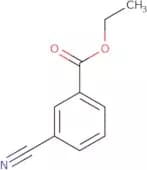
CAS:<p>3-Cyanobenzoic acid ethyl ester is a reaction component that is used in organic synthesis. It is a versatile building block, useful intermediate, and useful building block. 3-Cyanobenzoic acid ethyl ester is a fine chemical that can be used as a reagent for the preparation of other compounds. This compound has been assigned CAS No. 2463-16-3 and has the molecular formula C7H6O2.</p>Formula:C10H9NO2Purity:Min. 95%Color and Shape:PowderMolecular weight:175.18 g/mol32-Carboxycyanocobalamin
CAS:<p>32-Carboxycyanocobalamin is a fine chemical that is used in the synthesis of complex compounds. It is a versatile building block, which can be used in reactions to synthesize other compounds and as a scaffold for drug discovery. 32-Carboxycyanocobalamin is also a reagent that has been used in organic chemistry and analytical chemistry. CAS No. 121483-62-3</p>Formula:C63H87CoN13O15PPurity:Min. 95%Molecular weight:1,356.35 g/mol4-Amino-2-bromobenzonitrile
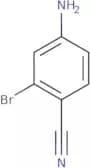
CAS:<p>4-Amino-2-bromobenzonitrile is a crystallized ligand with a molecular formula of C6H7BrN. It belongs to the cationic class of ligands and has been shown to form intermolecular hydrogen bonds with aromatic rings. The crystal has a hexagonal unit cell and space group P-1. 4-Amino-2-bromobenzonitrile has been used as an elemental analysis reagent in the determination of copper, lead, zinc, and cadmium.</p>Formula:C7H5BrN2Purity:Min. 95%Color and Shape:PowderMolecular weight:197.03 g/mol3-Aminobenzonitrile
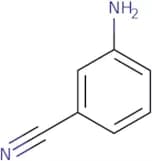
CAS:<p>3-Aminobenzonitrile is an amine that has been shown to inhibit the growth of bacteria. It was synthesized by the reaction of nitrobenzene with benzamide in the presence of acetic acid. The chemical structure of 3-aminobenzonitrile is similar to that of a group of natural amino acids, including cysteine and tryptophan, which are known inhibitors of bacterial growth. This compound is soluble in organic solvents and can be used as an injection solution. 3-Aminobenzonitrile has been evaluated by kinetic studies and found to have a high affinity for bacterial cells, with an inhibition constant (Ki) value of 0.37 mM. It is also active against other microorganisms such as yeast or mold fungi, but not against plant or animal cells. 3-Aminobenzonitrile inhibits the synthesis of proteins by binding to a number of different sites on the ribosomes where</p>Purity:Min. 95%Color and Shape:Yellow PowderMolecular weight:118.14 g/mol2-Phenoxyphenylacetonitrile
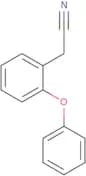
CAS:<p>2-Phenoxyphenylacetonitrile is a pyrethroid n-oxide that is chemically related to other insecticides that are used in agriculture and against insects such as mosquitoes. 2-Phenoxyphenylacetonitrile is a synthetic compound that has been shown to have an optimum pH of 5.5, which makes it difficult to dissolve in water. The compound's high stability at low pH levels means that it can be used in acidic environments. It also has been shown to have strong activity against human serum and food composition, with no detectable activity against bacteria or fungi.</p>Formula:C14H11NOPurity:Min. 95%Color and Shape:Clear LiquidMolecular weight:209.24 g/mol3,4-Dihydroxybenzylamine hydrobromide
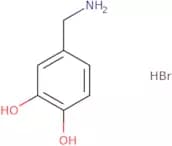
CAS:<p>3,4-Dihydroxybenzylamine hydrobromide is a chemical that reacts with hydrogen peroxide to produce light. It is used as a nutrient for the chemiluminescent reaction in a nutrient solution to detect dopamine, chlorogenic acids, and trifluoroacetic acid. 3,4-Dihydroxybenzylamine hydrobromide can also be used as an analytical method for the measurement of cortisol concentration in plasma and saliva samples. This chemical analogically reacts with monoamine neurotransmitters such as dopamine and gamma-aminobutyric acid (GABA) to form fluorescent probes. 3,4-Dihydroxybenzylamine hydrobromide is not toxic or mutagenic and has been shown to be safe for use in humans.</p>Formula:C7H10BrNO2Purity:Min. 95%Color and Shape:PowderMolecular weight:220.06 g/mol2-Chloro-5-hydroxybenzonitrile
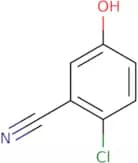
CAS:<p>2-Chloro-5-hydroxybenzonitrile is a versatile, building block chemical that can be used as a reactant or intermediate in the synthesis of other compounds. It is also an excellent research chemical with a high quality and purity. 2-Chloro-5-hydroxybenzonitrile has many uses, such as being a reagent for organic synthesis, a speciality chemical, and a useful intermediate. This compound is suitable for complex synthesis and has been shown to be useful as a building block or scaffold in the production of other chemicals.</p>Formula:C7H4ClNOPurity:Min. 95%Color and Shape:Off-White PowderMolecular weight:153.57 g/mol2,6-Dichlorophenylacetonitrile
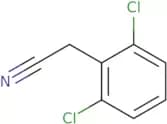
CAS:<p>2,6-Dichlorophenylacetonitrile (2,6-DCPA) is a cyanide herbicide that controls weed growth. 2,6-DCPA is used as a preemergent herbicide and is applied to the soil before planting. It can be mixed with calcium oxide or other materials to form a dust, which is then applied to the soil surface. 2,6-DCPA inhibits plant growth by interfering with the photosynthesis process, which may be due to its high cytotoxicity. The exact mechanism of action has not been determined but it may be due to interference with chloride transport or ethyl esters production in plants. This chemical has also been shown to inhibit amine metabolism in plants and animals.<br>2,6-DCPA has two isomers: cis and trans. They differ only in the position of the chlorine atom on the benzene ring: cis (left) and trans (right).</p>Formula:C8H5Cl2NPurity:Min. 95%Color and Shape:White PowderMolecular weight:186.04 g/mol4-Bromo-3-cyanotoluene
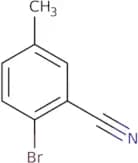
CAS:<p>4-Bromo-3-cyanotoluene is a quinazolinone that can be synthesized by reacting 2-bromotoluene with nitric acid. It is a substrate for the synthesis of other quinazolinones.</p>Formula:C8H6BrNPurity:Min. 95%Molecular weight:196.04 g/mol2-Amino-4-fluorobenzylamine dihydrochloride
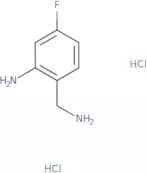
CAS:<p>2-Amino-4-fluorobenzylamine dihydrochloride is a research chemical that is used as a reactant in organic synthesis. 2-Amino-4-fluorobenzylamine dihydrochloride is an intermediate for the preparation of other chemicals and can also be used as a building block for more complex compounds. This chemical has been shown to have good quality and can be used in many different types of research.<br>2-Amino-4-fluorobenzylamine dihydrochloride has CAS number 606139-20-2.</p>Formula:C7H9FN2·2HClPurity:Min. 95 Area-%Color and Shape:PowderMolecular weight:213.08 g/molEthyl 4-cyano-3-nitrobenzoate
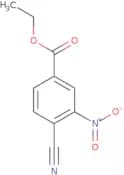
CAS:<p>Ethyl 4-cyano-3-nitrobenzoate is a chemical compound with the structural formula of CHNO. It is a building block for organic synthesis and can be used in the production of high quality research chemicals and speciality chemicals. Ethyl 4-cyano-3-nitrobenzoate has been shown to react with a variety of amines to form urea derivatives that are useful as versatile building blocks or complex compounds. This reagent is also useful as an intermediate in the synthesis of various pharmaceuticals. CAS No. 321162-58-7</p>Formula:C10H8N2O4Purity:Min. 95%Color and Shape:PowderMolecular weight:220.18 g/mol2-Amino-4-cyano-phenol
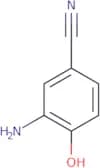
CAS:<p>2-Amino-4-cyano-phenol is a compound that has been shown to have antitubercular activity. It modulates the activity of cromakalim, which is a drug used for the treatment of tuberculosis. 2-Amino-4-cyano-phenol is also an antibacterial agent and has been shown to activate bacterial DNA replication and protein synthesis. The mechanism of action of this compound is thought to be due in part to its ability to bind with the ribosomes on the outside surface of cells and inhibit their function. 2-Amino-4-cyano-phenol has also been shown to have structural similarities with phenylephrine, which inhibits bacterial growth by binding to DNA gyrase, thereby preventing transcription and replication.</p>Formula:C7H6N2OPurity:Min. 95%Color and Shape:PowderMolecular weight:134.14 g/mol4-Cyanobenzylamine HCl
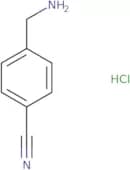
CAS:<p>4-Cyanobenzylamine HCl is a degradable polymer that has been shown to inhibit colonic adenocarcinoma in mice. This compound was synthesized by the reaction of 4-cyanobenzylamine with 3-mercaptopropionic acid and was characterized using IR, 1H NMR, and 13C NMR spectroscopy. It also showed an inhibitory effect on the proliferation of human colon cancer cells. The polymer was found to gel when mixed with different concentrations of acrylamide and methylene bisacrylamide. Gelation occurred at a lower concentration of acrylamide than the amount used in previous studies. This may be due to its functional groups and morphology, which could have contributed to the inhibition of cell growth.</p>Formula:C8H8N2·HClPurity:Min. 95%Color and Shape:PowderMolecular weight:168.62 g/mol