Cyano-, Nitrile-
Found 9675 products of "Cyano-, Nitrile-"
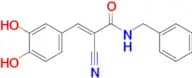
N-Benzyl-2-cyano-3-(3,4-dihydroxyphenyl)acrylamide
CAS:Purity:99.0%Molecular weight:294.309997558593752-[4-(Trifluoromethoxy)phenoxy]isonicotinonitrile
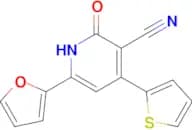
CAS:Purity:97.0%Molecular weight:280.205993652343756-(Furan-2-yl)-2-oxo-4-(thiophen-2-yl)-1,2-dihydropyridine-3-carbonitrile
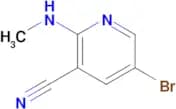
CAS:Purity:95.0%Molecular weight:268.29000854492195-Bromo-2-(methylamino)nicotinonitrile
CAS:Purity:95.0%Color and Shape:SolidMolecular weight:212.0500030517578Ref: 10-F518430
Discontinued productRef: 10-F300776
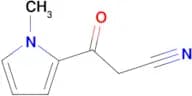
Discontinued product3-(1-methyl-1H-pyrrol-2-yl)-3-oxopropanenitrile
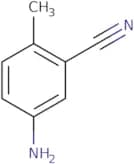
CAS:Purity:95.0%Color and Shape:SolidMolecular weight:148.16499328613284-Amino-2-cyanotoluene
CAS:4-Amino-2-cyanotoluene is a quinazoline compound that inhibits the synthesis of thymine, which is necessary for DNA replication. This compound binds to the enzyme thymidylate synthetase, thereby inhibiting the synthesis of thymine. The inhibitory effect has been shown in a study using calf thymus DNA. 4-Amino-2-cyanotoluene also inhibits the synthesis of other nucleic acids such as adenine and guanine.
Formula:C8H8N2Purity:Min. 95%Color and Shape:PowderMolecular weight:132.16 g/molRef: 3D-FA55035
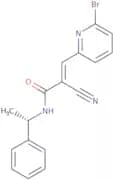
Discontinued product(S,E)-3-(6-Bromopyridin-2-yl)-2-cyano-N-(1-phenylethyl)acrylamide
CAS:(S,E)-3-(6-Bromopyridin-2-yl)-2-cyano-N-(1-phenylethyl)acrylamide (MBI-23) is a potential antineoplastic agent that has been shown to induce regression of bladder cancer in mice. MBI-23 induces apoptosis by inhibiting the proliferation of cancer cells and inducing differentiation of cancer stem cells. It is also shown to inhibit tumor growth and progression in glioma and prostate cancer models. MBI-23 binds to the KDR receptor subtype, which is activated by organic acids and inhibited by inorganic compounds. This binding leads to constitutive activation of the KDR receptor, thereby inducing apoptosis. The tautomers and stereoisomers of MBI-23 have not been fully elucidated yet.Formula:C17H14ON3BrPurity:Min. 98 Area-%Color and Shape:White PowderMolecular weight:356.22 g/molRef: 3D-FB34118
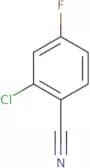
Discontinued product2-Chloro-4-fluorobenzonitrile
CAS:2-Chloro-4-fluorobenzonitrile is a drug that has been shown to have antitumor effects by binding to the CB2 receptor. It inhibits hydrogenation reduction of the molecule, which may be due to its ability to react with both functional groups. 2-Chloro-4-fluorobenzonitrile has also been shown to inhibit progesterone receptor, which may lead to an increase in progesterone levels and a decrease in estrogen levels. The pharmacokinetic properties of this compound are not yet known.
Formula:C7H3ClFNPurity:Min. 95%Color and Shape:White PowderMolecular weight:155.56 g/molRef: 3D-FC35486
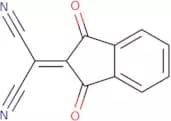
Discontinued product2-(Dicyanomethylene)indan-1,3-dione
CAS:2-(Dicyanomethylene)indan-1,3-dione is a zwitterion that can be used as an acceptor in organic synthesis. It reacts with nucleophiles (e.g., amines) to form the corresponding adducts and is reversibly hydrolyzed by water or alkali. 2-(Dicyanomethylene)indan-1,3-dione is also known for its ability to undergo nucleophilic attack of the carbonyl group and react with anilines to form the corresponding azine derivatives. This molecule has been shown to be a good candidate for use in uv irradiation due to its high absorption coefficient at 260 nm.
Formula:C12H4N2O2Purity:Min. 95%Color and Shape:PowderMolecular weight:208.17 g/molRef: 3D-FD168900
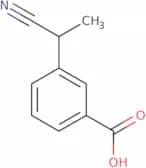
Discontinued product3-Cyanoethylbenzoic acid
CAS:3-Cyanoethylbenzoic acid is an anthropogenic compound that is produced by the Friedel-Crafts reaction between benzoyl chloride and acrylonitrile in the presence of a base. 3-Cyanoethylbenzoic acid is used as a solvent for chromatographic methods, such as gradient elution, ion exchange, and reversed phase. 3-Cyanoethylbenzoic acid has been used to determine the optical purity of benzoate salts and amides. This compound can be taken orally in solid oral dosage form or enterically in liquid oral dosage form. 3-Cyanoethylbenzoic acid interacts with other drugs that are metabolized by CYP3A4, such as erythromycin, to produce an active metabolite (N-desmethyldesipramide).
Formula:C10H9NO2Purity:Min. 95%Color and Shape:PowderMolecular weight:175.18 g/molRef: 3D-FC05759
Discontinued product

![(imidazo[1,2-a]pyridin-6-ylmethylene)malononitrile](/_next/image/?url=https%3A%2Fstatic.cymitquimica.com%2Fproducts%2F10%2Fthumb-webp%2FF518021.webp&w=3840&q=75)
![2-[4-(Trifluoromethoxy)phenoxy]isonicotinonitrile](/_next/image/?url=https%3A%2Fstatic.cymitquimica.com%2Fproducts%2F10%2Fthumb-webp%2FF403465.webp&w=3840&q=75)
![3-Iodoimidazo[1,2-a]pyridine-6-carbonitrile](/_next/image/?url=https%3A%2Fstatic.cymitquimica.com%2Fproducts%2F10%2Fthumb-webp%2FF457188.webp&w=3840&q=75)
![3-[(4-methylpiperidin-1-yl)methyl]benzonitrile](/_next/image/?url=https%3A%2Fstatic.cymitquimica.com%2Fproducts%2F10%2Fthumb-webp%2FF542431.webp&w=3840&q=75)
![Bicyclo[4.2.0]octa-1,3,5-triene-7-carbonitrile](/_next/image/?url=https%3A%2Fstatic.cymitquimica.com%2Fproducts%2F10%2Fthumb-webp%2FF069104.webp&w=3840&q=75)