Cyano-, Nitrile-
Cyano and nitrile compounds are organic molecules that contain cyano (C≡N) or nitrile groups in their structure, characterized by the presence of nitrogen. These groups play important roles in various chemical reactions and industrial applications. In this category, you will find a wide range of cyano and nitrile compounds, ranging from simple to complex structures. At CymitQuimica, we offer high-quality cyano and nitrile compounds tailored to meet research and industrial needs. Our compounds are suitable for a variety of synthesis and analytical applications.
Found 9624 products of "Cyano-, Nitrile-"
Sort by
Purity (%)
0
100
|
0
|
50
|
90
|
95
|
100
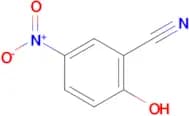
2-Hydroxy-5-nitrobenzonitrile
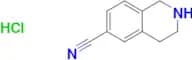
CAS:Formula:C7H4N2O3Purity:98%Color and Shape:SolidMolecular weight:164.121,2,3,4-Tetrahydroisoquinoline-6-carbonitrile hydrochloride
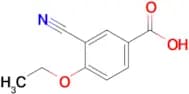
CAS:Formula:C10H11ClN2Purity:95%Color and Shape:SolidMolecular weight:194.663-Cyano-4-ethoxybenzoic acid
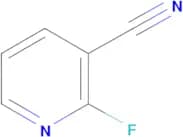
CAS:Formula:C10H9NO3Purity:98%Color and Shape:SolidMolecular weight:191.1863-Cyano-2-fluoropyridine
CAS:Formula:C6H3FN2Purity:98%Color and Shape:Low Melting SolidMolecular weight:122.102ethyl 1-(2-cyano-4-nitrophenyl)piperidine-4-carboxylate
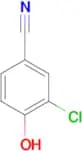
CAS:Formula:C15H17N3O4Purity:97%Molecular weight:303.3183-Chloro-4-hydroxybenzonitrile
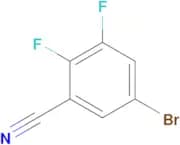
CAS:Formula:C7H4ClNOPurity:97%Color and Shape:SolidMolecular weight:153.575-Bromo-2,3-difluorobenzonitrile
CAS:Formula:C7H2BrF2NPurity:97%Color and Shape:SolidMolecular weight:218.0015-Chloro-1H-pyrrolo[2,3-b]pyridine-3-carbonitrile
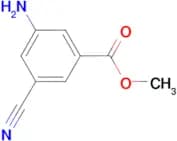
CAS:Purity:97%Color and Shape:SolidMolecular weight:177.5899963Methyl 3-Amino-5-cyanobenzoate
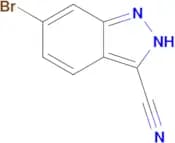
CAS:Formula:C9H8N2O2Purity:95%Color and Shape:Brown powderMolecular weight:176.1756-Bromo-1H-indazole-3-carbonitrile
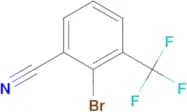
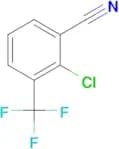
CAS:Formula:C8H4BrN3Purity:95%Color and Shape:SolidMolecular weight:222.0452-Bromo-3-(trifluoromethyl)benzonitrile
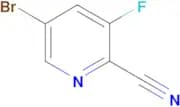
CAS:Formula:C8H3BrF3NPurity:97%Color and Shape:White powderMolecular weight:250.0185-Bromo-3-fluoropicolinonitrile
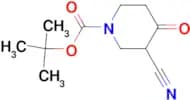
CAS:Formula:C6H2BrFN2Purity:95%Color and Shape:SolidMolecular weight:200.9983-Cyano-4-oxo-piperidine-1-carboxylic acid tert-butyl ester
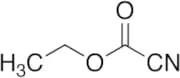
CAS:Formula:C11H16N2O3Purity:95%Color and Shape:SolidMolecular weight:224.26Ethyl Cyanoformate
CAS:Controlled Product<p>Applications Ethyl Cyanoformate (cas# 623-49-4) is a compound useful in organic synthesis.<br></p>Formula:C4H5NO2Color and Shape:NeatMolecular weight:99.091,2-Dicyanobenzene
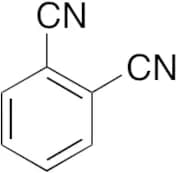
CAS:Controlled Product<p>Applications Phthalodinitrile monomers can be polymerized thermally in the presence of small amounts of curing agents into thermosetting polymers. Phthalodinitrile is a precursor to phthalocyanine which is used as a dye or pigment.<br>References Sastri, S. B. and Keller, T. M.: J. Polym. Sci. A Polym. Chem., 36, 1885-1890(1998), Löbbert, G. Phthalocyanines. In Ullmann's Encyclopedia of Industrial Chemistry, (Ed.)., (2000).<br></p>Formula:C8H4N2Color and Shape:NeatMolecular weight:128.131Diethyl Cyanophosphonate
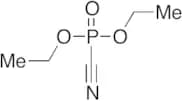
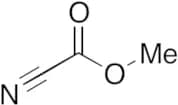
CAS:Controlled ProductFormula:C5H10NO3PColor and Shape:NeatMolecular weight:163.11Methyl Cyanoformate
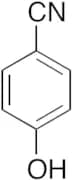
CAS:Controlled Product<p>Applications Methyl cyanoformate is a reagent that is used in the preparation of XEN907, which is a spiro-oxindole blocker of Nav1.7 for the treatment of pain.<br> Not a dangerous good if item is equal to or less than 1g/ml and there is less than 100g/ml in the package<br>References Chowdhury, S., et al.: Bioorg. Med. Chem. Lett., 21, 3676 (2011);<br></p>Formula:C3H3NO2Color and Shape:NeatMolecular weight:85.064-Cyanophenol
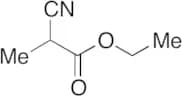
CAS:Controlled Product<p>Applications 4-Cyanophenol is used in a study to assess chemical uptake into human stratum corneum.<br>References Stinchcomb, A.L., et. al.: Pharm. Res., 16, 1288 (1999)<br></p>Formula:C7H5NOColor and Shape:WhiteMolecular weight:119.12Ethyl 2-Cyanopropanoate
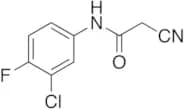
CAS:Controlled Product<p>Applications Ethyl 2-Cyanopropanoate is a building block used in many organic reactions such as the preparation of highly substituted benzenes.<br>References Zhang, X., et. al.: Organic Lett., 13, 5024 (2011)<br></p>Formula:C21H26N2OColor and Shape:NeatMolecular weight:322.444N-(3-Chloro-4-fluorophenyl)-2-cyanoacetamide
CAS:Controlled Product<p>Applications N-(3-Chloro-4-fluorophenyl)-2-cyanoacetamide (cas# 219529-31-4) is a compound useful in organic synthesis.<br></p>Formula:C9H6ClFN2OColor and Shape:NeatMolecular weight:212.612-Cyano-N-((furan-2-ylmethyl)carbamoyl)acetamide
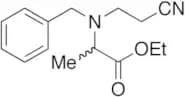
CAS:Controlled Product<p>Applications 2-Cyano-N-((furan-2-ylmethyl)carbamoyl)acetamide is an intermediate in the synthesis of novel 1- and 8-substituted-3-furfuryl xanthines as adenosine receptor antagonists.<br>References Balo, M. C., et al.: Bioorg. Med. Chem., 17, 6755 (2009);<br></p>Formula:C7H14O6·C3H8OColor and Shape:NeatMolecular weight:254.278N-(β-Cyanoethyl)-N-(ethoxycarbonylethyl)benzylamine
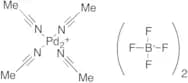
CAS:Controlled Product<p>Applications N-(β-Cyanoethyl)-N-(ethoxycarbonylethyl)benzylamine is a compound useful in organic synthesis.<br> Not a dangerous good if item is equal to or less than 1g/ml and there is less than 100g/ml in the package<br></p>Formula:C15H20N2O2Color and Shape:NeatMolecular weight:260.33Tetrakis(acetonitrile)palladium Bis(tetrafluoroborate)
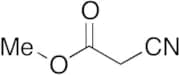
CAS:Controlled Product<p>Applications Tetrakis(acetonitrile)palladium Bis(tetrafluoroborate) is used to prepare an α-Diimine-transition metal complex, which is used as a catalyst for polymerization of olefins. It is also a catalyst used in cross coupling reaction for C-C, C-O, and C-N bond formation.<br>References Feldman, J., et al.: Organometallics, 16, 1514 (1997); Johnson, L., et al.: PCT Int. Appl., WO 9623010 A2 19960801 (1996); Poppenbery, J., et al.: Surface Sci., 2011; Pijnenburg, N., et al.: Dalton Transactions, 40, 8896 (2011); Kilpin, K., et al.: Inorg. Chem., 50, 6334 (2011)<br></p>Formula:C8H12B2F8N4PdColor and Shape:NeatMolecular weight:444.24Methyl Cyanoacetate
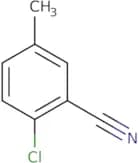
CAS:Controlled Product<p>Applications Methyl Cyanoacetate is often used as a nucleophile in the electrochemical oxidation of catechols. Methyl Cyanoacetate is also a reagent in the synthesis of Methyl 2-Amino-4-trifluoromethylthiophene-3-carboxylate (M287290); a compound used in the synthesis of DPP-IV inhibitors for treating type 2 diabetes.<br>References Rafiee, M., et al.: J. Electroanal. Chem., 626, 36 (2009); Deng, J., et al.: Eur. J. Med. Chem., 46, 71 (2010)<br></p>Formula:C4H5NO2Color and Shape:NeatMolecular weight:99.092-Chloro-5-methylbenzonitrile
CAS:<p>2-Chloro-5-methylbenzonitrile (2C5MB) is a versatile building block that is used in the production of fine chemicals, specialty chemicals, and pharmaceuticals. It is also used as a reagent for organic synthesis and as a speciality chemical. 2C5MB can be used in the synthesis of various complex compounds and research chemicals. The compound has been shown to have high reactivity and has been used as a reaction component or scaffold for the synthesis of other products.</p>Formula:C8H6ClNPurity:Min. 95%Color and Shape:PowderMolecular weight:151.59 g/mol2-Cyanopyridine
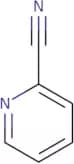
CAS:<p>2-Cyanopyridine is a chelate ligand that is structurally related to picolinic acid. It binds to the active site of IDO1 and prevents the enzyme from converting tryptophan into kynurenine. This leads to an increase in tryptophan levels, which can then be used for protein synthesis. 2-Cyanopyridine has been shown to have antimicrobial activity against Gram-positive bacteria in vitro and in vivo. It also inhibits the growth of Gram-negative bacteria, yeast, and fungi by binding to the iron atom of their heme molecules. 2-Cyanopyridine has shown potential as a pharmacological agent or as a biochemical probe for transfer reactions.</p>Formula:C6H4N2Purity:Min. 95%Color and Shape:PowderMolecular weight:104.11 g/mol2-Cyanobenzylamine hydrochloride
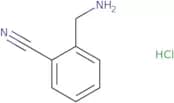
CAS:<p>2-Cyanobenzylamine hydrochloride is a chemical building block and intermediate that can be used in the synthesis of many different compounds. It is also a useful reagent for reactions involving nitro compounds. 2-Cyanobenzylamine hydrochloride is a fine chemical that is registered with the Chemical Abstract Service (CAS No. 1134529-25-1). It has been identified as a versatile building block and useful intermediate in the synthesis of pharmaceuticals, agrochemicals, and other organic chemicals.</p>Formula:C8H8N2·HClPurity:Min. 95%Color and Shape:White/Off-White SolidMolecular weight:168.62 g/mola-Cyanocinnamic acid
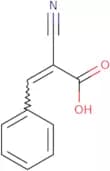
CAS:<p>a-Cyanocinnamic acid is a 3-hydroxycinnamic acid that can be found in coffee. It has been shown to inhibit the growth of colorectal adenocarcinoma cells and other cancer cells by binding to an inhibitor site on fatty acid synthesis enzymes, such as pyruvate carboxylase, hydroxylase, and acetyl-CoA carboxylase. This inhibition leads to decreased levels of fatty acids and increased levels of pyruvate and hydrogen peroxide, which inhibits cell proliferation. In addition, a-cyanocinnamic acid has been shown to have a hypoxic tumor selectivity index of 10.7%, which means it selectively targets tumors with low oxygen levels.</p>Formula:C10H7NO2Purity:Min. 95%Color and Shape:White PowderMolecular weight:173.17 g/molN-Cyanopyrrolidine
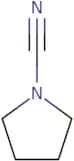
CAS:<p>N-Cyanopyrrolidine is a compound that targets enzymes, such as histone deacetylases (HDACs) and protein kinase C. It is a chemical ionization reagent that reacts with hydroxyl groups on the target molecule. This leads to the formation of covalent bonds between the target and the reagent, which results in an irreversible reaction. N-Cyanopyrrolidine has been shown to have antidiabetic effects in diabetic patients and hiv infection by decreasing levels of glucose in the blood. It also inhibits cancer cell growth by inhibiting dpp-IV, which is an enzyme that causes cancer cells to proliferate.</p>Formula:C5H8N2Purity:Min. 95%Color and Shape:Clear LiquidMolecular weight:96.13 g/mol2-Amino-1,1,3-tricyano-1-propene
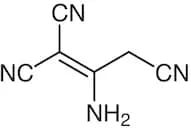
CAS:Formula:C6H4N4Purity:>98.0%(T)Color and Shape:White to Gray to Brown powder to crystalMolecular weight:132.133-Cyanomethylbenzoic acid methyl ester
CAS:<p>3-Cyanomethylbenzoic acid methyl ester is a synthetic chemical compound that is used as an intermediate in the production of other chemicals. It is a chlorination agent that reacts with toluene and methanol in the presence of chlorine to produce 3-chloromethylbenzoic acid methyl ester. This reaction also produces a byproduct called sulphone, which can be converted into acylation reagents for use in organic synthesis. The chloride ion can be used for cyanation reactions, which are useful for producing dyes or pharmaceuticals.</p>Formula:C10H9NO2Purity:Min. 95%Color and Shape:SolidMolecular weight:175.18 g/mol


![5-Chloro-1H-pyrrolo[2,3-b]pyridine-3-carbonitrile](/_next/image/?url=https%3A%2Fstatic.cymitquimica.com%2Fproducts%2F10%2Fthumb-webp%2FF600415.webp&w=3840&q=75)

![Ethyl 8-cyano-3-iodoimidazo[1,2-a]pyridine-2-carboxylate](/_next/image/?url=https%3A%2Fstatic.cymitquimica.com%2Fproducts%2F10%2Fthumb-webp%2FF936970.webp&w=3840&q=75)