Cyano-, Nitrile-
Cyano and nitrile compounds are organic molecules that contain cyano (C≡N) or nitrile groups in their structure, characterized by the presence of nitrogen. These groups play important roles in various chemical reactions and industrial applications. In this category, you will find a wide range of cyano and nitrile compounds, ranging from simple to complex structures. At CymitQuimica, we offer high-quality cyano and nitrile compounds tailored to meet research and industrial needs. Our compounds are suitable for a variety of synthesis and analytical applications.
Found 9624 products of "Cyano-, Nitrile-"
Sort by
Purity (%)
0
100
|
0
|
50
|
90
|
95
|
100
3-Chloro-2-fluorobenzonitrile
CAS:Formula:C7H3ClFNPurity:98%Color and Shape:SolidMolecular weight:155.562-Hydrazino-5-cyanopyridine
CAS:Formula:C6H6N4Purity:98%Color and Shape:SolidMolecular weight:134.1425-CHLORO-1-METHYL-1H-PYRROLO[2,3-C]PYRIDINE-3-CARBONITRILE
CAS:Purity:98%Molecular weight:191.61999512-[(5′-BROMO-[2,2′-BITHIOPHEN]-5-YL)METHYLENE]MALONONITRILE
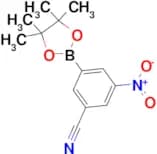
CAS:Purity:98%Molecular weight:321.20999153-Nitro-5-(4,4,5,5-tetramethyl-1,3,2-dioxaborolan-2-yl)benzonitrile
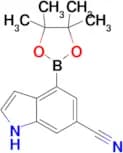
CAS:Purity:98%Molecular weight:274.07998661H-INDOLE-6-CARBONITRILE, 4-(4,4,5,5-TETRAMETHYL-1,3,2-DIOXABOROLAN-2-YL)-
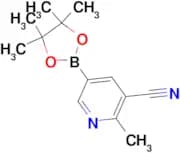
CAS:Purity:97%Molecular weight:268.11999512-METHYL-5-(4,4,5,5-TETRAMETHYL-1,3,2-DIOXABOROLAN-2-YL)NICOTINONITRILE
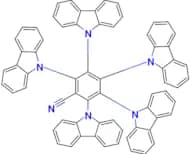
CAS:Purity:97%Molecular weight:244.10000612,3,4,5,6-Penta(9H-carbazol-9-yl)benzonitrile
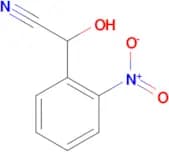
CAS:Purity:98%Color and Shape:SolidMolecular weight:929.0989992-Hydroxy-2-(2-nitrophenyl)acetonitrile
CAS:Purity:98%Color and Shape:SolidMolecular weight:178.1470032Ref: 10-F695435
1g313.00€5g848.00€10g1,439.00€2.5g506.00€50mg92.00€100mg122.00€250mg171.00€500mg259.00€N-(3-Chloro-4-fluorophenyl)-2-cyanoacetamide
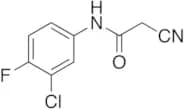
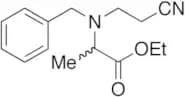
CAS:Controlled Product<p>Applications N-(3-Chloro-4-fluorophenyl)-2-cyanoacetamide (cas# 219529-31-4) is a compound useful in organic synthesis.<br></p>Formula:C9H6ClFN2OColor and Shape:NeatMolecular weight:212.61N-(β-Cyanoethyl)-N-(ethoxycarbonylethyl)benzylamine
CAS:Controlled Product<p>Applications N-(β-Cyanoethyl)-N-(ethoxycarbonylethyl)benzylamine is a compound useful in organic synthesis.<br> Not a dangerous good if item is equal to or less than 1g/ml and there is less than 100g/ml in the package<br></p>Formula:C15H20N2O2Color and Shape:NeatMolecular weight:260.33Ethyl 2-Cyanopropanoate
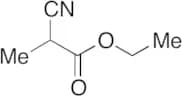
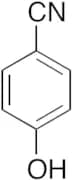
CAS:Controlled Product<p>Applications Ethyl 2-Cyanopropanoate is a building block used in many organic reactions such as the preparation of highly substituted benzenes.<br>References Zhang, X., et. al.: Organic Lett., 13, 5024 (2011)<br></p>Formula:C21H26N2OColor and Shape:NeatMolecular weight:322.4444-Cyanophenol
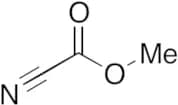
CAS:Controlled Product<p>Applications 4-Cyanophenol is used in a study to assess chemical uptake into human stratum corneum.<br>References Stinchcomb, A.L., et. al.: Pharm. Res., 16, 1288 (1999)<br></p>Formula:C7H5NOColor and Shape:WhiteMolecular weight:119.12Methyl Cyanoformate
CAS:Controlled Product<p>Applications Methyl cyanoformate is a reagent that is used in the preparation of XEN907, which is a spiro-oxindole blocker of Nav1.7 for the treatment of pain.<br> Not a dangerous good if item is equal to or less than 1g/ml and there is less than 100g/ml in the package<br>References Chowdhury, S., et al.: Bioorg. Med. Chem. Lett., 21, 3676 (2011);<br></p>Formula:C3H3NO2Color and Shape:NeatMolecular weight:85.06Tetrakis(acetonitrile)palladium Bis(tetrafluoroborate)
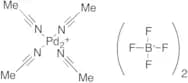
CAS:Controlled Product<p>Applications Tetrakis(acetonitrile)palladium Bis(tetrafluoroborate) is used to prepare an α-Diimine-transition metal complex, which is used as a catalyst for polymerization of olefins. It is also a catalyst used in cross coupling reaction for C-C, C-O, and C-N bond formation.<br>References Feldman, J., et al.: Organometallics, 16, 1514 (1997); Johnson, L., et al.: PCT Int. Appl., WO 9623010 A2 19960801 (1996); Poppenbery, J., et al.: Surface Sci., 2011; Pijnenburg, N., et al.: Dalton Transactions, 40, 8896 (2011); Kilpin, K., et al.: Inorg. Chem., 50, 6334 (2011)<br></p>Formula:C8H12B2F8N4PdColor and Shape:NeatMolecular weight:444.24Methyl Cyanoacetate
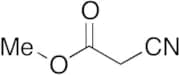
CAS:Controlled Product<p>Applications Methyl Cyanoacetate is often used as a nucleophile in the electrochemical oxidation of catechols. Methyl Cyanoacetate is also a reagent in the synthesis of Methyl 2-Amino-4-trifluoromethylthiophene-3-carboxylate (M287290); a compound used in the synthesis of DPP-IV inhibitors for treating type 2 diabetes.<br>References Rafiee, M., et al.: J. Electroanal. Chem., 626, 36 (2009); Deng, J., et al.: Eur. J. Med. Chem., 46, 71 (2010)<br></p>Formula:C4H5NO2Color and Shape:NeatMolecular weight:99.09Ethyl Cyanoformate
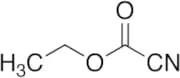
CAS:Controlled Product<p>Applications Ethyl Cyanoformate (cas# 623-49-4) is a compound useful in organic synthesis.<br></p>Formula:C4H5NO2Color and Shape:NeatMolecular weight:99.09Diethyl Cyanophosphonate
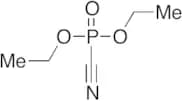
CAS:Controlled ProductFormula:C5H10NO3PColor and Shape:NeatMolecular weight:163.112-Cyano-N-((furan-2-ylmethyl)carbamoyl)acetamide
CAS:Controlled Product<p>Applications 2-Cyano-N-((furan-2-ylmethyl)carbamoyl)acetamide is an intermediate in the synthesis of novel 1- and 8-substituted-3-furfuryl xanthines as adenosine receptor antagonists.<br>References Balo, M. C., et al.: Bioorg. Med. Chem., 17, 6755 (2009);<br></p>Formula:C7H14O6·C3H8OColor and Shape:NeatMolecular weight:254.2781,2-Dicyanobenzene
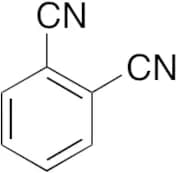
CAS:Controlled Product<p>Applications Phthalodinitrile monomers can be polymerized thermally in the presence of small amounts of curing agents into thermosetting polymers. Phthalodinitrile is a precursor to phthalocyanine which is used as a dye or pigment.<br>References Sastri, S. B. and Keller, T. M.: J. Polym. Sci. A Polym. Chem., 36, 1885-1890(1998), Löbbert, G. Phthalocyanines. In Ullmann's Encyclopedia of Industrial Chemistry, (Ed.)., (2000).<br></p>Formula:C8H4N2Color and Shape:NeatMolecular weight:128.1312,5-Dichlorobenzonitrile
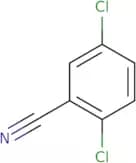
CAS:<p>2,5-Dichlorobenzonitrile is a chemical compound that contains a nitrile group. It is used as an intermediate in organic synthesis, as well as for the production of various pharmaceuticals and pesticides. 2,5-Dichlorobenzonitrile is oxidized to form 2,5-dichlorophenol which can be further converted to 2,5-dichloroquinone. This redox cycle is reversible and can be used to synthesize other compounds. The reaction time of this process is about one hour at room temperature. Maleate has been shown to inhibit the hepatic metabolism of 2,5-Dichlorobenzonitrile. This may lead to accumulation of 2,5-Dichlorobenzonitrile in the liver and potentially cause hepatitis or even liver cancer. Chloromethylation of 2,5-Dichlorobenzonitrile leads to the formation of chlor</p>Formula:C7H3Cl2NPurity:Min. 95%Color and Shape:PowderMolecular weight:172.01 g/molTetrachlorophthalonitrile
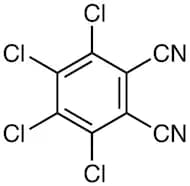
CAS:Formula:C8Cl4N2Purity:>96.0%(GC)(N)Color and Shape:White to Almost white powder to crystalMolecular weight:265.903-Bromobenzylamine
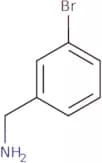
CAS:<p>3-Bromobenzylamine is a chemical compound that belongs to the class of amines. It is used as an intermediate in organic synthesis, and its derivative 3-bromobenzylamine hydrochloride is used in pharmaceuticals as a heart stimulant. 3-Bromobenzylamine can be synthesized by reacting an amine with phosgene and then brominating it. This chemical has been shown to have inhibitory activity against cancer cells and can be used for the treatment of cancer. 3-Bromobenzylamine has also been shown to inhibit the growth of bacteria, fungi, and viruses in vitro. 3-Bromobenzylamine may also be useful for treating psoriasis due to its ability to inhibit prostaglandin synthesis.</p>Formula:C7H8BrNPurity:Min. 95%Color and Shape:Colorless PowderMolecular weight:186.04 g/mol5-Cyanophthalide
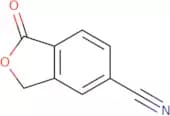
CAS:<p>5-Cyanophthalide is an inorganic acid that is a white solid. It has a molecular weight of 114.07 g/mol and a melting point of -43 degrees Celsius. 5-Cyanophthalide can be synthesized by reacting 5-carboxyphthalide with chlorine gas in the presence of an inert solvent and heat. The product is then purified by crystallization or recrystallization. The biological properties of 5-cyanophthalide are unknown, but it has been shown to have amide and chloride groups on either side of the molecule's carbon backbone. Mass spectrometry reveals that this compound exists as an enantiomer, meaning that it exists as two mirror images that are not superimposable on each other. This means there are two different forms: one left-handed and one right-handed form.</p>Formula:C9H5NO2Purity:Min. 95%Color and Shape:PowderMolecular weight:159.14 g/mol1,2,2,3-Propanetetracarbonitrile
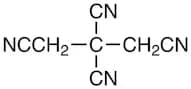
CAS:Formula:C7H4N4Purity:>96.0%(GC)Color and Shape:White to Light yellow to Light orange powder to crystalMolecular weight:144.14p-Xylylene Dithiocyanate
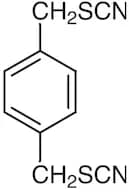
CAS:Formula:C10H8N2S2Purity:>98.0%(GC)Color and Shape:White to Almost white powder to crystalineMolecular weight:220.313,4-Difluorophenylacetonitrile
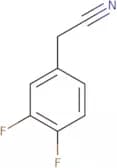
CAS:<p>3,4-Difluorophenylacetonitrile is a fine chemical that is used as a reagent for the synthesis of complex compounds. It can be used as a useful intermediate for the production of fine chemicals and speciality chemicals. 3,4-Difluorophenylacetonitrile has been shown to be useful in the synthesis of versatile building blocks, which are reaction components that can be used in many different reactions. This compound has also been shown to be an excellent scaffold for the development of new drugs that target cancer cells.</p>Formula:C8H5F2NPurity:Min. 95%Color and Shape:Clear LiquidMolecular weight:153.13 g/mol




![5-CHLORO-1-METHYL-1H-PYRROLO[2,3-C]PYRIDINE-3-CARBONITRILE](/_next/image/?url=https%3A%2Fstatic.cymitquimica.com%2Fproducts%2F10%2Fthumb-webp%2FF854157.webp&w=3840&q=75)
![2-[(5′-BROMO-[2,2′-BITHIOPHEN]-5-YL)METHYLENE]MALONONITRILE](/_next/image/?url=https%3A%2Fstatic.cymitquimica.com%2Fproducts%2F10%2Fthumb-webp%2FF827869.webp&w=3840&q=75)


![5-Oxo-4,5-dihydropyrazolo[1,5-a]pyrimidine-3-carbonitrile](/_next/image/?url=https%3A%2Fstatic.cymitquimica.com%2Fproducts%2F10%2Fthumb-webp%2FF979826.webp&w=3840&q=75)