Cyano-, Nitrile-
Cyano and nitrile compounds are organic molecules that contain cyano (C≡N) or nitrile groups in their structure, characterized by the presence of nitrogen. These groups play important roles in various chemical reactions and industrial applications. In this category, you will find a wide range of cyano and nitrile compounds, ranging from simple to complex structures. At CymitQuimica, we offer high-quality cyano and nitrile compounds tailored to meet research and industrial needs. Our compounds are suitable for a variety of synthesis and analytical applications.
Found 9624 products of "Cyano-, Nitrile-"
Sort by
Purity (%)
0
100
|
0
|
50
|
90
|
95
|
100
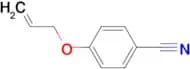
4-Allyloxybenzonitrile
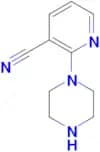
CAS:Formula:C10H9NOPurity:97.0%Color and Shape:Liquid, No data available.Molecular weight:159.1882-(1-Piperazinyl)-3-pyridinecarbonitrile
CAS:Formula:C10H12N4Purity:97.0%Color and Shape:Solid, Colourless to pale yellow solidMolecular weight:188.2344-AMINO-3-BROMO-2-FLUOROBENZONITRILE
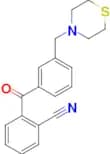
CAS:Formula:C7H4BrFN2Purity:95%Color and Shape:Liquid, No data available.Molecular weight:215.0252-cyano-3′-thiomorpholinomethyl benzophenone
CAS:Formula:C19H18N2OSPurity:97.0%Molecular weight:322.434-chloro-1-methyl-1H-pyrazole-3-carbonitrile
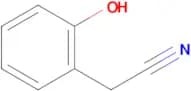
CAS:Formula:C5H4ClN3Color and Shape:SolidMolecular weight:141.562-(2-Hydroxyphenyl)acetonitrile
CAS:Formula:C8H7NOPurity:97%Color and Shape:SolidMolecular weight:133.154-Bromobenzenesulphonylacetonitrile
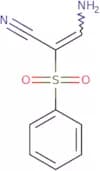
CAS:<p>Please enquire for more information about 4-Bromobenzenesulphonylacetonitrile including the price, delivery time and more detailed product information at the technical inquiry form on this page</p>Formula:C8H6BrNO2SPurity:Min. 95%Color and Shape:PowderMolecular weight:260.11 g/mol2-(Aminomethylene)phenylsulphonyl acetonitrile
CAS:<p>2-(Aminomethylene)phenylsulphonyl acetonitrile is an allylating agent. It reacts with hydrochloric acid to form allyl isothiocyanate, which can be used for the synthesis of thiazoline derivatives. 2-(Aminomethylene)phenylsulphonyl acetonitrile is a reagent that has been used in multicenter trials to study the effects of allylation on cancerous cells.</p>Formula:C9H8N2O2SPurity:Min. 95%Color and Shape:PowderMolecular weight:208.24 g/mol