Cyano-, Nitrile-
Cyano and nitrile compounds are organic molecules that contain cyano (C≡N) or nitrile groups in their structure, characterized by the presence of nitrogen. These groups play important roles in various chemical reactions and industrial applications. In this category, you will find a wide range of cyano and nitrile compounds, ranging from simple to complex structures. At CymitQuimica, we offer high-quality cyano and nitrile compounds tailored to meet research and industrial needs. Our compounds are suitable for a variety of synthesis and analytical applications.
Found 9624 products of "Cyano-, Nitrile-"
Sort by
Purity (%)
0
100
|
0
|
50
|
90
|
95
|
100
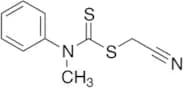
Cyanomethyl Methyl(phenyl)carbamodithioate
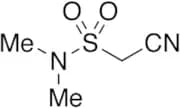
CAS:Controlled Product<p>Applications Cyanomethyl Methyl(phenyl)carbamodithioate (cas# 76926-16-4) is a useful research chemical.<br></p>Formula:C10H10N2S2Color and Shape:NeatMolecular weight:222.321-Cyano-N,N-dimethylmethanesulfonamide
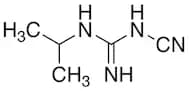
CAS:Controlled ProductFormula:C4H8N2O2SColor and Shape:NeatMolecular weight:148.1841-Cyano-3-isopropylguanidine
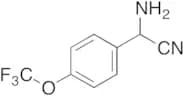
CAS:Controlled Product<p>Impurity Proguanil EP Impurity A<br>Applications 1-Cyano-3-isopropylguanidine (Proguanil EP Impurity A) is an intermediate commonly used for the synthesis of guanide derivatives.An Impurity in the synthesis of Chlorguanide (C329500).<br>References Jensen, N., et al.: J. Med. Chem., 44, 3925 (2001), Paci, A., et al.: J. Pharm. Biomed. Anal., 27, 1 (2002),<br></p>Formula:C5H10N4Color and Shape:NeatMolecular weight:126.16α-Amino-4-(trifluoromethoxy)benzeneacetonitrile Hydrochloride
CAS:Controlled ProductFormula:C9H7F3N2OColor and Shape:NeatMolecular weight:216.16(2-Isocyanoethyl)-benzene
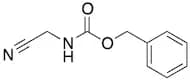
CAS:<p>Applications (2-Isocyanoethyl)-benzene is a useful synthetic intermediate. It is a reagent used in Ugi reactions to synthesize various compounds such as tetrazole and bisamide.<br>References Zhao, T., et al.: Org. Lett., 15, 639 (2013); Brockmeyer, F., et al.: Helv. Chim. Acta., 95, 1857 (2012)<br></p>Formula:C9H9NColor and Shape:NeatMolecular weight:131.1745Benzyl Cyanomethylcarbamate
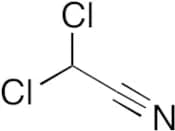
CAS:Controlled Product<p>Applications BENZYL CYANOMETHYLCARBAMATE (cas# 3589-41-1) is a useful research chemical.<br></p>Formula:C10H10N2O2Color and Shape:NeatMolecular weight:190.19Dichloroacetonitrile
CAS:Controlled Product<p>Applications Dichloroacetonitrile is commonly used with gas chromatography-mass spectrometry instrument to evaluate and quantify the common halogenated disinfection by products using the headspace technique.<br> Not a dangerous good if item is equal to or less than 1g/ml and there is less than 100g/ml in the package<br>References Montesinos, I., et al.: J. Chromatogr. A., 1310 113 (2013)<br></p>Formula:C2HCl2NColor and Shape:NeatMolecular weight:109.94(3,5-Dimethoxyphenyl)acetonitrile
CAS:Controlled Product<p>Applications (3,5-Dimethoxyphenyl)acetonitrile (cas# 13388-75-5) is a compound useful in organic synthesis.<br></p>Formula:C10H11NO2Color and Shape:NeatMolecular weight:177.22-Amino-4-cyano-phenol
CAS:Controlled Product<p>Stability Air Sensitive, Light Sensitive<br>Applications 2-Amino-4-cyano-phenol<br></p>Formula:C7H6N2OColor and Shape:NeatMolecular weight:134.14(5-Benzyloxyindol-3-yl)acetonitrile
CAS:Controlled ProductFormula:C17H14N2OColor and Shape:NeatMolecular weight:262.306Ethyl 2,3-Dicyanopropionate
CAS:Controlled Product<p>Applications An intermediate for insecticide.<br>References Cole, L., et al.: Pestic. Biochem. Physiol., 46, 47 (1993), Cole, L., et al.: Life Sci., 56, 757 (1995), Hosie, A., et al.: Br. J. Pharmacol., 115, 909 (1995),<br></p>Formula:C7H8N2O2Color and Shape:NeatMolecular weight:152.152-Phenyl-2-[(trimethylsilyl)oxy]acetonitrile (90%)
CAS:Controlled Product<p>Stability Moisture Sensitive<br>Applications 2-phenyl-2-[(trimethylsilyl)oxy]acetonitrile (cas# 25438-37-3) is a useful research chemical.<br></p>Formula:C11H15NOSiPurity:90%Color and Shape:NeatMolecular weight:205.33N-[[(2R,3S,4R)-4-[Bis[(3-cyanophenyl)methyl]amino]-3-hydroxyoxolan-2-yl]methyl]cyclopropanecarboxamide
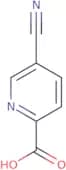
CAS:Controlled ProductFormula:C25H26N4O3Color and Shape:NeatMolecular weight:430.4995-Cyanopyridine-2-carboxylic acid
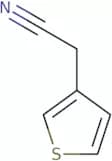
CAS:<p>5-Cyanopyridine-2-carboxylic acid is a small molecule that has been found to have significant biological activity in a number of different areas, including neurotherapeutics. It is the result of a scalable synthesis and is soluble in water. The molecule has two chiral centers and can exist as four different stereoisomers (enantiomers). In vitro studies show that 5-cyanopyridine-2-carboxylic acid inhibits fatty acid uptake by blocking the proton pump, which transports lipids into cells. This compound also binds to the cytosolic protein pyrazine 2-carboxylic acid receptor 1 (PYZR1), which may provide an explanation for its effects on fatty acid uptake.</p>Formula:C7H4N2O2Purity:Min. 95%Molecular weight:148.12 g/molThiophene-3-acetonitrile
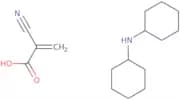
CAS:<p>Thiophene-3-acetonitrile is a reactive intermediate that is used in the synthesis of active enzymes. It has been shown to be an efficient method for the synthesis of antitubercular agents, such as rifamycins and other drugs. Thiophene-3-acetonitrile is an electron acceptor and can be used to generate active enzymes, such as those involved in DNA replication and transcription. This compound also has a variety of functional groups, which can be used for a number of techniques, including coordination geometry studies.</p>Formula:C6H5NSPurity:Min. 95%Color and Shape:Clear LiquidMolecular weight:123.18 g/molDicyclohexylamine 2-cyanoacrylate
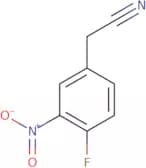
CAS:Controlled Product<p>Please enquire for more information about Dicyclohexylamine 2-cyanoacrylate including the price, delivery time and more detailed product information at the technical inquiry form on this page</p>Formula:C16H26N2O2Purity:Min. 95%Molecular weight:278.39 g/mol(4-Fluoro-3-Nitrophenyl)Acetonitrile
CAS:<p>4-Fluoro-3-nitrophenylacetonitrile is a monomer that can be synthesised from the reaction of carbamic acid and diphenyl ether. It is chiral, stereoselective and nucleophilic. 4-Fluoro-3-nitrophenylacetonitrile can also be synthesised by reacting fluoroacetamide with sodium cyanide in water, forming the corresponding amide, which reacts with acetonitrile to form the nitro compound. The anti-cancer properties of 4-fluoro-3 nitrophenylacetonitrile have been studied in vitro and in vivo. This substance has been shown to inhibit growth of cancer cells and induce apoptosis. In addition, this substance has been used as a synthetic strategy for dihydroisoquinolines, which are important for their anti-cancer properties.</p>Formula:C8H5FN2O2Purity:Min. 95%Molecular weight:180.14 g/mol3-Cyanopropionic acid methyl ester
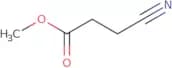
CAS:<p>3-Cyanopropionic acid methyl ester is a compound that belongs to the class of aliphatic carboxylic acids. It is an intermediate in the production of adiponitrile and acrylonitrile. This compound is used as a feedstock for the manufacture of vinylene, which can be used to produce c1-6 alkyl. 3-Cyanopropionic acid methyl ester can be produced from propylene and hydrogen cyanide in a high salt, activated reaction system. It has been shown that this compound may have metabolic disorders due to its ability to inhibit fatty acid oxidation and increase viscosity. 3-Cyanopropionic acid methyl ester is a colorless liquid at room temperature with a boiling point of 154°C and a molecular weight of 98.14 g/mol.</p>Formula:C5H7NO2Purity:Min. 95%Color and Shape:Clear LiquidMolecular weight:113.11 g/molEthyl (R)-(-)-4-cyano-3-hydroxybutyrate
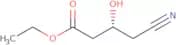
CAS:<p>Ethyl (R)-(-)-4-cyano-3-hydroxybutyrate is an asymmetric synthesis of D-(+)-glyceraldehyde. This compound is an acidic, high cholesterol substrate that binds to disaccharides and has hydroxyl groups. It has been shown to reduce low density lipoprotein levels in the blood by inhibiting the production of cholesterol in the liver. The reaction solution is immobilized on a solid support and is used for kinetic studies. Kinetic measurements were performed at different concentrations of hydrochloric acid and immobilized cells as a function of time. The reaction yield was determined using UV absorbance at 275 nm, which was plotted against time.</p>Purity:Min. 95%3-Cyano-1-azetidinesulfonyl chloride
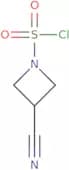
CAS:<p>Please enquire for more information about 3-Cyano-1-azetidinesulfonyl chloride including the price, delivery time and more detailed product information at the technical inquiry form on this page</p>Formula:C4H5ClN2O2SPurity:Min. 95%Molecular weight:180.61 g/mol




![2-Phenyl-2-[(trimethylsilyl)oxy]acetonitrile (90%)](/_next/image/?url=https%3A%2Fstatic.cymitquimica.com%2Fproducts%2FTR%2Fthumb-webp%2FP321065.webp&w=3840&q=75)
![N-[[(2R,3S,4R)-4-[Bis[(3-cyanophenyl)methyl]amino]-3-hydroxyoxolan-2-yl]methyl]cyclopropanecarboxa…](/_next/image/?url=https%3A%2Fstatic.cymitquimica.com%2Fproducts%2FTR%2Fthumb-webp%2FB400145.webp&w=3840&q=75)