Cyano-, Nitrile-
Cyano and nitrile compounds are organic molecules that contain cyano (C≡N) or nitrile groups in their structure, characterized by the presence of nitrogen. These groups play important roles in various chemical reactions and industrial applications. In this category, you will find a wide range of cyano and nitrile compounds, ranging from simple to complex structures. At CymitQuimica, we offer high-quality cyano and nitrile compounds tailored to meet research and industrial needs. Our compounds are suitable for a variety of synthesis and analytical applications.
Found 9624 products of "Cyano-, Nitrile-"
Sort by
Purity (%)
0
100
|
0
|
50
|
90
|
95
|
100
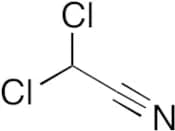
Dichloroacetonitrile
CAS:Controlled Product<p>Applications Dichloroacetonitrile is commonly used with gas chromatography-mass spectrometry instrument to evaluate and quantify the common halogenated disinfection by products using the headspace technique.<br> Not a dangerous good if item is equal to or less than 1g/ml and there is less than 100g/ml in the package<br>References Montesinos, I., et al.: J. Chromatogr. A., 1310 113 (2013)<br></p>Formula:C2HCl2NColor and Shape:NeatMolecular weight:109.94N-[4-Cyano-3-(trifluoromethyl)phenyl]-2-oxopropanamide
CAS:Controlled Product<p>Applications N-[4-Cyano-3-(trifluoromethyl)phenyl]-2-oxopropanamide (cas# 87310-69-8) is a compound useful in organic synthesis.<br></p>Formula:C11H7F3N2O2Color and Shape:NeatMolecular weight:256.18Benzoylacetonitrile
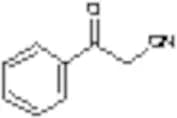
CAS:Controlled Product<p>Applications Used as a building block for the preparation of 4H-pyrans, 2-pyridones, furans and carbocyclics.<br>References Herschhorn, A., et al.: J. Med. Chem., 50, 3402 (2007),<br></p>Formula:C9H7NOColor and Shape:NeatMolecular weight:145.163-Cyanobenzoic Acid
CAS:Controlled Product<p>Applications 3-Cyanobenzoic Acid, is a building block used for the synthesis of a variety of 3,5-disubstituted 1,2,4-oxadiazoles from carboxylic acids, that can be used for the synthesis of a metabotropic glutamate subtype 5 (mGlu5) receptor antagonist.<br>References Ramu, T., et al.: Chem. Lett., 42, 722 (2013);<br></p>Formula:C8H5NO2Color and Shape:NeatMolecular weight:147.13Diethyl (2-cyanoethyl)phosphonate
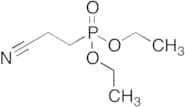
CAS:Controlled Product<p>Applications Diethyl (2-cyanoethyl)phosphonate, is a useful reactant used in various chemical synthesis such as in synthesis of lipophilic oxoamides with activity against phospholipase A2, Triose phosphate isomerase of muscle inhibitors, and also in base-catalyzed stereospecific anti-Markovnikov addition.<br></p>Formula:C7H14NO3PColor and Shape:NeatMolecular weight:191.164-Cyano-4-[(ethylsulfanylthiocarbonyl)sulfanyl]pentanoic Acid
CAS:Controlled Product<p>Applications 4-CYANO-4-[(ETHYLSULFANYLTHIOCARBONYL)SULFANYL]PENTANOIC ACID (cas# 1137725-46-2) is a useful research chemical.<br></p>Formula:C9H13NO2S3Color and Shape:NeatMolecular weight:263.4Methyl 3-Cyanoropionate
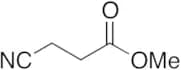
CAS:Controlled Product<p>Applications Methyl 3-Cyanoropionate is used in the preparation of anticancer agents. Also used in the design of the ‘dipeptoid’ analogs of cholecystokinin.<br>References Graham, L. et al.: J. Med. Chem., 55, 7817 (2012); Boden, P. et al.: Eur. J. Med. Chem., 28, 47 (1993);<br></p>Formula:C5H7NO2Color and Shape:NeatMolecular weight:113.11Ethyl 2,3-Dicyanopropionate
CAS:Controlled Product<p>Applications An intermediate for insecticide.<br>References Cole, L., et al.: Pestic. Biochem. Physiol., 46, 47 (1993), Cole, L., et al.: Life Sci., 56, 757 (1995), Hosie, A., et al.: Br. J. Pharmacol., 115, 909 (1995),<br></p>Formula:C7H8N2O2Color and Shape:NeatMolecular weight:152.15p-Cyanobenzoic Acid Trimer
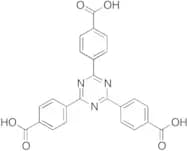
CAS:Controlled Product<p>Applications p-Cyanobenzoic Acid Trimer is used in the synthetic preparation of Terbium Triazinetribenzoate Formate Metal Organic Framework (MOF).<br>References Han, Y., et al.: J. Mater. Chem. A Mater. Energy Sustain., 3, 24525 (2015)<br></p>Formula:C24H15N3O6Color and Shape:NeatMolecular weight:441.39Methyl Isocyanoacetate
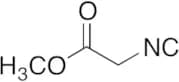
CAS:Controlled Product<p>Applications Methyl Isocyanoacetate, is used in the Cu-catalyzed, diastereoselective synthesis of oxazolines (O846550).<br> Not a dangerous good if item is equal to or less than 1g/ml and there is less than 100g/ml in the package<br>References Ideguchi, T., et al.: J. American Chem. Soc., 135, 12568 (2013);<br></p>Formula:C4H5NO2Color and Shape:NeatMolecular weight:99.094-Cyano-N,N-dimethylbenzamide
CAS:Controlled Product<p>Applications 4-cyano-N,N-dimethylbenzamide (cas# 24167-50-8) is a useful research chemical.<br></p>Formula:C10H10N2OColor and Shape:NeatMolecular weight:174.19(3,5-Dimethoxyphenyl)acetonitrile
CAS:Controlled Product<p>Applications (3,5-Dimethoxyphenyl)acetonitrile (cas# 13388-75-5) is a compound useful in organic synthesis.<br></p>Formula:C10H11NO2Color and Shape:NeatMolecular weight:177.24-(Cyanophenyl)boronic Acid Pinacol Ester
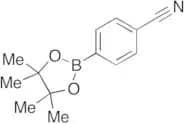
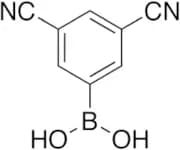
CAS:Controlled Product<p>Applications 4-(Cyanophenyl)boronic Acid Pinacol Ester is used to prepare arylparacyclophanes via Suzuki aryl cross-coupling of bromoparacyclophane with arylboronic acid and arylboronates. It’s also used to prepare tyrosine-modified analogs of α4β7 integrin inhibitor biotin-R8ERY.<br>References Roche, A., et al.: Org. Biomol. Chem.,, 3, 515 (2005); Papst, S., et al.: Bioorg. Med. Chem., 20, 5139 (2012)<br></p>Formula:C13H16BNO2Color and Shape:NeatMolecular weight:229.083,5-Dicyanophenylboronic Acid
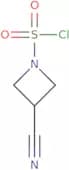
CAS:Controlled ProductFormula:C8H5BN2O2Color and Shape:NeatMolecular weight:171.9483-Cyano-1-azetidinesulfonyl chloride
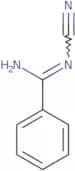
CAS:<p>Please enquire for more information about 3-Cyano-1-azetidinesulfonyl chloride including the price, delivery time and more detailed product information at the technical inquiry form on this page</p>Formula:C4H5ClN2O2SPurity:Min. 95%Molecular weight:180.61 g/molN'-Cyanobenzenecarboximidamide hydrochloride
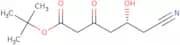
CAS:<p>N-Cyanobenzenecarboximidamide hydrochloride (NCBCH) is an intermediate for the synthesis of azomethine dyes. It can be used to produce azo dyes with a methoxy group at the 3 position and a hydrogen atom at the 4 position. NCBCH is also an excellent substrate for chemical reactions involving fragmentation, extraction, or elimination. NCBCH can be synthesized from methyl ether and benzonitrile in the presence of benzamidine. The product is then treated with methanol to give a tautomeric mixture of benzyl and methyl ether.</p>Formula:C8H7N3Purity:Min. 95%Molecular weight:145.16 g/mol(5R)-6-Cyano-5-hydroxy-3-oxo-hexanoic acid tert-butyl ester
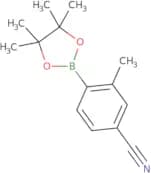
CAS:<p>Please enquire for more information about (5R)-6-Cyano-5-hydroxy-3-oxo-hexanoic acid tert-butyl ester including the price, delivery time and more detailed product information at the technical inquiry form on this page</p>Formula:C11H17NO4Purity:Min. 95%Molecular weight:227.26 g/mol4-Cyano-2-methylphenylboronic acid, pinacol ester
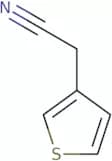
CAS:<p>Please enquire for more information about 4-Cyano-2-methylphenylboronic acid, pinacol ester including the price, delivery time and more detailed product information at the technical inquiry form on this page</p>Formula:C14H18BNO2Purity:Min. 95%Molecular weight:243.11 g/molThiophene-3-acetonitrile
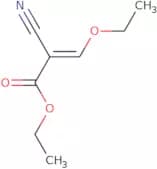
CAS:<p>Thiophene-3-acetonitrile is a reactive intermediate that is used in the synthesis of active enzymes. It has been shown to be an efficient method for the synthesis of antitubercular agents, such as rifamycins and other drugs. Thiophene-3-acetonitrile is an electron acceptor and can be used to generate active enzymes, such as those involved in DNA replication and transcription. This compound also has a variety of functional groups, which can be used for a number of techniques, including coordination geometry studies.</p>Formula:C6H5NSPurity:Min. 95%Color and Shape:Clear LiquidMolecular weight:123.18 g/molEthyl (ethoxymethylene) cyanoacetate
CAS:<p>Ethyl (Ethoxymethylene) cyanoacetate is a chemical compound that belongs to the family of aldehyde compounds. It is a colorless liquid at room temperature, with an odor similar to that of acetic acid. The compound has been used in the synthesis of epidermal growth factor and diazonium salts. It has also been used in the production of anti-cancer drugs such as malonic acid, which inhibits tumor growth by inhibiting protein synthesis. Ethyl (Ethoxymethylene) cyanoacetate reacts with quinoline derivatives to form carbon disulphide, which can be used as an antimicrobial agent and insecticide.</p>Formula:C8H11NO3Purity:Min. 95%Color and Shape:PowderMolecular weight:169.18 g/mol

![N-[4-Cyano-3-(trifluoromethyl)phenyl]-2-oxopropanamide](/_next/image/?url=https%3A%2Fstatic.cymitquimica.com%2Fproducts%2FTR%2Fthumb-webp%2FC982160.webp&w=3840&q=75)

![4-Cyano-4-[(ethylsulfanylthiocarbonyl)sulfanyl]pentanoic Acid](/_next/image/?url=https%3A%2Fstatic.cymitquimica.com%2Fproducts%2FTR%2Fthumb-webp%2FC998578.webp&w=3840&q=75)