Cyano-, Nitrile-
Cyano and nitrile compounds are organic molecules that contain cyano (C≡N) or nitrile groups in their structure, characterized by the presence of nitrogen. These groups play important roles in various chemical reactions and industrial applications. In this category, you will find a wide range of cyano and nitrile compounds, ranging from simple to complex structures. At CymitQuimica, we offer high-quality cyano and nitrile compounds tailored to meet research and industrial needs. Our compounds are suitable for a variety of synthesis and analytical applications.
Found 9624 products of "Cyano-, Nitrile-"
Sort by
Purity (%)
0
100
|
0
|
50
|
90
|
95
|
100
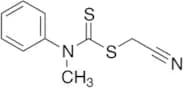
Cyanomethyl Methyl(phenyl)carbamodithioate
CAS:Controlled Product<p>Applications Cyanomethyl Methyl(phenyl)carbamodithioate (cas# 76926-16-4) is a useful research chemical.<br></p>Formula:C10H10N2S2Color and Shape:NeatMolecular weight:222.32Methyl 2-cyanobenzoate
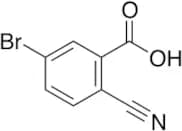
CAS:Controlled Product<p>Applications Methyl 2-cyanobenzoate<br></p>Formula:C9H7NO2Color and Shape:NeatMolecular weight:161.165-Bromo-2-cyanobenzoic Acid
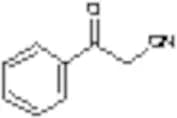
CAS:Controlled ProductFormula:C8H4BrNO2Color and Shape:NeatMolecular weight:226.027Benzoylacetonitrile
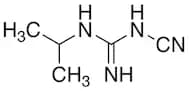
CAS:Controlled Product<p>Applications Used as a building block for the preparation of 4H-pyrans, 2-pyridones, furans and carbocyclics.<br>References Herschhorn, A., et al.: J. Med. Chem., 50, 3402 (2007),<br></p>Formula:C9H7NOColor and Shape:NeatMolecular weight:145.161-Cyano-3-isopropylguanidine
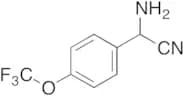
CAS:Controlled Product<p>Impurity Proguanil EP Impurity A<br>Applications 1-Cyano-3-isopropylguanidine (Proguanil EP Impurity A) is an intermediate commonly used for the synthesis of guanide derivatives.An Impurity in the synthesis of Chlorguanide (C329500).<br>References Jensen, N., et al.: J. Med. Chem., 44, 3925 (2001), Paci, A., et al.: J. Pharm. Biomed. Anal., 27, 1 (2002),<br></p>Formula:C5H10N4Color and Shape:NeatMolecular weight:126.16α-Amino-4-(trifluoromethoxy)benzeneacetonitrile Hydrochloride
CAS:Controlled ProductFormula:C9H7F3N2OColor and Shape:NeatMolecular weight:216.16Ethyl 2,3-Dicyanopropionate
CAS:Controlled Product<p>Applications An intermediate for insecticide.<br>References Cole, L., et al.: Pestic. Biochem. Physiol., 46, 47 (1993), Cole, L., et al.: Life Sci., 56, 757 (1995), Hosie, A., et al.: Br. J. Pharmacol., 115, 909 (1995),<br></p>Formula:C7H8N2O2Color and Shape:NeatMolecular weight:152.152-Amino-4-cyano-phenol
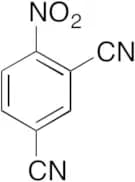
CAS:Controlled Product<p>Stability Air Sensitive, Light Sensitive<br>Applications 2-Amino-4-cyano-phenol<br></p>Formula:C7H6N2OColor and Shape:NeatMolecular weight:134.142,4-Dicyanonitrobenzene
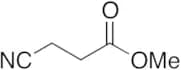
CAS:Controlled ProductFormula:C8H3N3O2Color and Shape:NeatMolecular weight:173.128Methyl 3-Cyanoropionate
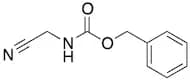
CAS:Controlled Product<p>Applications Methyl 3-Cyanoropionate is used in the preparation of anticancer agents. Also used in the design of the ‘dipeptoid’ analogs of cholecystokinin.<br>References Graham, L. et al.: J. Med. Chem., 55, 7817 (2012); Boden, P. et al.: Eur. J. Med. Chem., 28, 47 (1993);<br></p>Formula:C5H7NO2Color and Shape:NeatMolecular weight:113.11Benzyl Cyanomethylcarbamate
CAS:Controlled Product<p>Applications BENZYL CYANOMETHYLCARBAMATE (cas# 3589-41-1) is a useful research chemical.<br></p>Formula:C10H10N2O2Color and Shape:NeatMolecular weight:190.193-Cyanobenzoic Acid
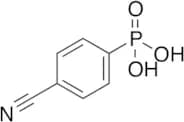
CAS:Controlled Product<p>Applications 3-Cyanobenzoic Acid, is a building block used for the synthesis of a variety of 3,5-disubstituted 1,2,4-oxadiazoles from carboxylic acids, that can be used for the synthesis of a metabotropic glutamate subtype 5 (mGlu5) receptor antagonist.<br>References Ramu, T., et al.: Chem. Lett., 42, 722 (2013);<br></p>Formula:C8H5NO2Color and Shape:NeatMolecular weight:147.134-Cyanophenylphosphonic Acid
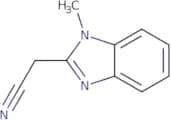
CAS:Controlled ProductFormula:C7H6NO3PColor and Shape:NeatMolecular weight:183.101(1-Methyl-1H-benzoimidazol-2-yl)-acetonitrile
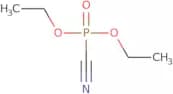
CAS:Controlled Product<p>(1-Methyl-1H-benzoimidazol-2-yl)-acetonitrile is a nucleophilic compound that reacts with carbanions to form alkyl benzoates. It can also act as an electrophile in the formation of nitroalkenes and amides, as well as an intermediate in the synthesis of phenazines. The potassium salt of this compound is used as a reagent in organic synthesis. (1-Methyl-1H-benzoimidazol-2-yl)-acetonitrile has been shown to react with methylene and aromatize to produce ethyl cyanoacetate, which can be used for the production of malononitrile. This reaction is catalyzed by potassium carbonate and esters.</p>Formula:C10H9N3Purity:Min. 95%Molecular weight:171.2 g/molDiethyl cyanophosphonate
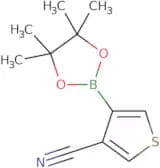
CAS:<p>Diethyl cyanophosphonate is a compound that is used as a fluorescence probe for amides and pyrazole rings. It binds to the ester form of the amide, which can then be detected with a fluorescence detector. The chemical reaction between diethyl cyanophosphonate and the ester form is reversible, so it can be used as a hypoglycemic agent. Diethyl cyanophosphonate has potent antitumor activity and binds to nerve cells, causing them to become electrically active.</p>Formula:C5H10NO3PPurity:Min. 95%Color and Shape:PowderMolecular weight:163.11 g/mol3-Cyanothiophene-4-boronic acid pinacol ester
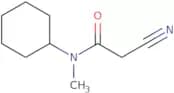
CAS:<p>Please enquire for more information about 3-Cyanothiophene-4-boronic acid pinacol ester including the price, delivery time and more detailed product information at the technical inquiry form on this page</p>Formula:C11H14BNO2SPurity:Min. 95%Molecular weight:235.11 g/mol2-Cyano-N-cyclohexyl-N-methylacetamide
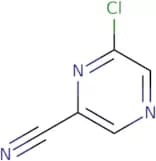
CAS:<p>Please enquire for more information about 2-Cyano-N-cyclohexyl-N-methylacetamide including the price, delivery time and more detailed product information at the technical inquiry form on this page</p>Formula:C10H16N2OPurity:Min. 95%Molecular weight:180.25 g/mol2-Chloro-6-cyanopyrazine
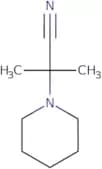
CAS:<p>2-Chloro-6-cyanopyrazine is a compound that has been shown to have antimycobacterial activity against Mycobacterium avium. It may also have tuberculostatic activity and be useful for the treatment of tuberculosis. 2-Chloro-6-cyanopyrazine inhibits bacterial growth by binding to DNA, RNA, and protein synthesis in mycobacteria. The antibacterial effect is due to its ability to inhibit amidation and alkylation reactions, as well as its nucleophilic properties. 2-Chloro-6-cyanopyrazine is an acidic compound with a pKa of 3.2, which makes it more soluble in water than hydrophobic compounds such as alkanoic acids.</p>Formula:C5H2ClN3Purity:Min. 95%Molecular weight:139.54 g/mola,a-Dimethyl-1-piperidineacetonitrile
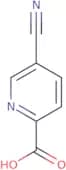
CAS:Controlled Product<p>Dimethylcyanamide is an organic compound that can be synthesized from cyanide or cyanic acid. Dimethylcyanamide is a colorless liquid with a strong odor. It has been used in the past as a precursor to other compounds, but it has since been replaced by cheaper and more convenient methods. Dimethylcyanamide reacts with primary amines to form nitriles, which are useful intermediates in organic synthesis. In addition, the reaction of dimethylcyanamide with secondary amines leads to the formation of primary amines. The transamination of dimethylamine-N-oxide yields a-dimethylaminopropionitrile as an intermediate product. The elimination reaction mechanism for this process involves the conversion of ammonia into hydroxide ions and hydrogen gas. This reaction produces high yields for both products and does not require high temperatures or pressures.</p>Formula:C9H16N2Purity:Min. 95%Molecular weight:152.24 g/mol5-Cyanopyridine-2-carboxylic acid
CAS:<p>5-Cyanopyridine-2-carboxylic acid is a small molecule that has been found to have significant biological activity in a number of different areas, including neurotherapeutics. It is the result of a scalable synthesis and is soluble in water. The molecule has two chiral centers and can exist as four different stereoisomers (enantiomers). In vitro studies show that 5-cyanopyridine-2-carboxylic acid inhibits fatty acid uptake by blocking the proton pump, which transports lipids into cells. This compound also binds to the cytosolic protein pyrazine 2-carboxylic acid receptor 1 (PYZR1), which may provide an explanation for its effects on fatty acid uptake.</p>Formula:C7H4N2O2Purity:Min. 95%Molecular weight:148.12 g/mol