Cyano-, Nitrile-
Cyano and nitrile compounds are organic molecules that contain cyano (C≡N) or nitrile groups in their structure, characterized by the presence of nitrogen. These groups play important roles in various chemical reactions and industrial applications. In this category, you will find a wide range of cyano and nitrile compounds, ranging from simple to complex structures. At CymitQuimica, we offer high-quality cyano and nitrile compounds tailored to meet research and industrial needs. Our compounds are suitable for a variety of synthesis and analytical applications.
Found 9624 products of "Cyano-, Nitrile-"
Sort by
Purity (%)
0
100
|
0
|
50
|
90
|
95
|
100
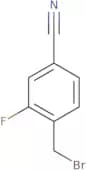
4-Cyano-2-fluorobenzyl bromide
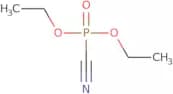
CAS:<p>4-Cyano-2-fluorobenzyl bromide is a methyl ester that can be used as a reagent for the synthesis of chiral α-amino acids. It can also be used as an enantioselective methylating agent for the synthesis of γ-secretase inhibitors. The methodology for the convergent synthesis of this compound includes alkylation with glycine followed by an enantioselective hydrolysis, which results in optically pure 4-cyano-2-fluorobenzyl bromide.</p>Formula:C8H5BrFNPurity:Min. 95%Color and Shape:PowderMolecular weight:214.03 g/molDiethyl cyanophosphonate
CAS:<p>Diethyl cyanophosphonate is a compound that is used as a fluorescence probe for amides and pyrazole rings. It binds to the ester form of the amide, which can then be detected with a fluorescence detector. The chemical reaction between diethyl cyanophosphonate and the ester form is reversible, so it can be used as a hypoglycemic agent. Diethyl cyanophosphonate has potent antitumor activity and binds to nerve cells, causing them to become electrically active.</p>Formula:C5H10NO3PPurity:Min. 95%Color and Shape:PowderMolecular weight:163.11 g/molEthyl cyanoformate
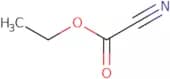
CAS:<p>Ethyl cyanoformate is a reactive compound that is used in organic synthesis. It has been shown to cause muscle cell proliferation and inhibit the production of gamma-aminobutyric acid, which is responsible for regulating neurotransmitter release. Ethyl cyanoformate also has antimicrobial properties due to its ability to form an oxygenated n-oxide tautomer. The reaction mechanism of ethyl cyanoformate involves the formation of a covalent bond with the sulfhydryl group on the enzyme gamma-aminobutyric acid receptor. This prevents the binding of GABA, inhibiting nerve impulses and reducing inflammation in the bowel.</p>Formula:C4H5NO2Purity:Min. 95%Color and Shape:Clear LiquidMolecular weight:99.09 g/mol3-Cyanoethylbenzoic acid
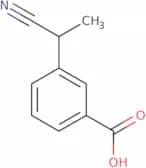
CAS:<p>3-Cyanoethylbenzoic acid is an anthropogenic compound that is produced by the Friedel-Crafts reaction between benzoyl chloride and acrylonitrile in the presence of a base. 3-Cyanoethylbenzoic acid is used as a solvent for chromatographic methods, such as gradient elution, ion exchange, and reversed phase. 3-Cyanoethylbenzoic acid has been used to determine the optical purity of benzoate salts and amides. This compound can be taken orally in solid oral dosage form or enterically in liquid oral dosage form. 3-Cyanoethylbenzoic acid interacts with other drugs that are metabolized by CYP3A4, such as erythromycin, to produce an active metabolite (N-desmethyldesipramide).</p>Formula:C10H9NO2Purity:Min. 95%Color and Shape:PowderMolecular weight:175.18 g/molFmoc-b-cyano-L-alanine
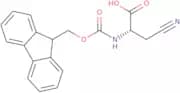
CAS:<p>Please enquire for more information about Fmoc-b-cyano-L-alanine including the price, delivery time and more detailed product information at the technical inquiry form on this page</p>Formula:C19H16N2O4Purity:Min. 95%Molecular weight:336.34 g/molIsocyanomethyl resin (200-400 mesh)
<p>Please enquire for more information about Isocyanomethyl resin (200-400 mesh) including the price, delivery time and more detailed product information at the technical inquiry form on this page</p>Purity:Min. 95%Color and Shape:Powderp-(Methylthio)phenylacetonitrile
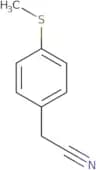
CAS:<p>p-(Methylthio)phenylacetonitrile (p-MTPA) is a synthetic analgesic that belongs to the group of benzyl derivatives. It has analgesic, antiinflammatory and antipyretic properties. p-MTPA is used in organic synthesis as a hydrolysis reagent for benzyl halides. The drug has been shown to be an inhibitor of cyclooxygenase-2 (COX-2) and exerts its effects by decreasing prostaglandin production. P-MTPA is also decarboxylated to produce benzoic acid and phenylacetic acid, which have acidic properties.</p>Formula:C9H9NSPurity:Min. 95%Molecular weight:163.24 g/mol3-(2-Cyanopropan-2-yl)benzoic acid
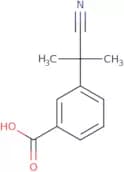
CAS:<p>Please enquire for more information about 3-(2-Cyanopropan-2-yl)benzoic acid including the price, delivery time and more detailed product information at the technical inquiry form on this page</p>Formula:C11H11NO2Purity:Min. 95%Molecular weight:189.21 g/molN-2-Cyanoethyl-Val-Leu-anilide
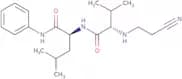
CAS:<p>Please enquire for more information about N-2-Cyanoethyl-Val-Leu-anilide including the price, delivery time and more detailed product information at the technical inquiry form on this page</p>Formula:C20H30N4O2Purity:Min. 95%Molecular weight:358.48 g/mol2-Chlorobenzonitrile
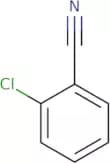
CAS:<p>2-Chlorobenzonitrile is a white solid that is soluble in organic solvents. It is an aryl halide and has a chemical structure of C6ClCN. 2-Chlorobenzonitrile is used as a raw material for the production of dyes and pharmaceuticals. This compound reacts with hydrochloric acid to form 4-chlorobenzonitrile, which can be used in the synthesis of other chemicals. 2-Chlorobenzonitrile can also react with n-dimethyl formamide in an optimal reaction solution to form 4-chlorobenzonitrile. The FTIR spectroscopy on this compound shows that it has a chloride group at 795 cm−1. The optimum reaction temperature for this compound is between 100 and 120 °C, but it will react with inorganic acids such as sulfuric acid or phosphoric acid at higher temperatures. Synthesis of this compound can be done by reacting</p>Formula:C7H4ClNPurity:Min. 95%Color and Shape:White PowderMolecular weight:137.57 g/mol2,2'-(Perchloro-1,2-phenylene)diacetonitrile
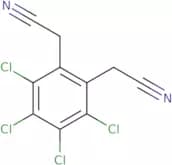
CAS:<p>Please enquire for more information about 2,2'-(Perchloro-1,2-phenylene)diacetonitrile including the price, delivery time and more detailed product information at the technical inquiry form on this page</p>Formula:C10H4Cl4N2Purity:Min. 95%Molecular weight:293.96 g/mol2,4,5-Trimethoxybenzylamine
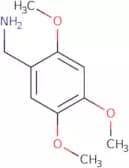
CAS:<p>2,4,5-Trimethoxybenzylamine is a synthetic compound that can be used as a precursor to the synthesis of other chemicals. It is prepared by reacting phenol with deuterium gas in a process called amination. This reaction is followed by reductive quaternization with cyanide. 2,4,5-Trimethoxybenzylamine is often used as an intermediate for the synthesis of drugs such as tamoxifen and clonidine.</p>Formula:C10H15NO3Purity:Min. 95%Color and Shape:PowderMolecular weight:197.23 g/molEthyl-2-ethoxy-1-[[(2'-cyanobiphenyl-4-yl) methyl] benzimidazole-7-carboxylate
CAS:<p>Candesartan is a selective angiotensin II receptor antagonist that inhibits the binding of angiotensin II to its receptors, which in turn decreases the activity of angiotensin-converting enzyme. Candesartan cilexetil is an ester prodrug that has been shown to be effective in the treatment of high blood pressure. In the crystalline form, candesartan cilexetil is a white powder with a melting point of 130–135 °C and a solubility in water of >1 g/L. The molecular weight of candesartan cilexetil is 393.8 g/mol and it has a molecular formula C17H21NO2S. The chemical structure consists of two benzimidazole rings coupled together through an ethyl-2-ethoxy linker and attached to a carboxylate group on one end and an amide group on the other</p>Formula:C26H23N3O3Purity:Min. 95%Molecular weight:425.48 g/mol3-Fluoro-4-hydroxybenzonitrile
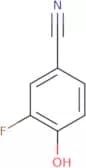
CAS:<p>3-Fluoro-4-hydroxybenzonitrile is a compound with an acidic ph and a strain that is dispersive, desorptive, and polyacrylamide gel. It is a colorless liquid at room temperature. 3-Fluoro-4-hydroxybenzonitrile has been shown to react with dodecyl inorganic base and hydrochloric acid to produce 3-fluoroaniline. The localization of the reaction yield is on hydrotalcite activated by fluorine. This chemical has been shown to react at temperatures between 0°C and 140°C.</p>Formula:C7H4FNOPurity:Min. 95%Color and Shape:White PowderMolecular weight:137.11 g/molEthyl 2,3-dicyanopropionate
CAS:<p>Ethyl 2,3-dicyanopropionate is a white crystalline solid that is soluble in organic solvents. It has the molecular formula CHClNOS and the molecular weight of 138.1 g/mol. This compound has a melting point of 92 °C and can be purchased as a mixture of cis and trans isomers. The cis form melts at 93 °C and the trans form melts at 88 °C. Ethyl 2,3-dicyanopropionate is synthesized from chlorobenzene by dehydrating it with hydrochloric acid in an organic solvent. It can also be prepared by reacting ethyl cyanoacetate with ammonia in an inert atmosphere. Impurities may include chloride, sulfoxide, or imine.</p>Formula:C7H8N2O2Purity:Min. 95%Molecular weight:152.15 g/mol3-Cyano-2-methylphenylboronic acid
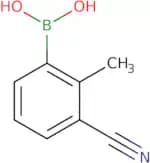
CAS:<p>3-Cyano-2-methylphenylboronic acid is a high quality compound that can be used as a reagent, intermediate, or building block in the synthesis of complex compounds. This chemical is also useful as a speciality chemical and research chemical. 3-Cyano-2-methylphenylboronic acid has versatile uses in organic synthesis due to its versatility in reactions and building blocks.</p>Formula:C8H8BNO2Purity:Min. 95%Color and Shape:PowderMolecular weight:160.97 g/molIminodiacetonitrile
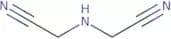
CAS:<p>Iminodiacetonitrile is a chemical compound that is used in wastewater treatment. It is a nitrite-oxidizing agent that reacts with nitrite ion to form nitric acid, which can be then used to oxidize hexamethylenetetramine and iminodiacetic acid to produce ammonia and cyanide ions. Iminodiacetonitrile has an optimum pH of 7.5, so it will not react at higher or lower pH levels. This reaction occurs in the presence of hydroxide solution, hydrochloric acid, and inorganic acids such as sulfuric acid or phosphoric acid. The reaction mechanism for this process is shown below: C6H11N2O2 + HNO3 → C6H11N2O4 + H+ + NO2- C6H11N2O4 → NH3 + HCN</p>Formula:C4H5N3Purity:Min. 95%Color and Shape:Light (Or Pale) Yellow To Brown SolidMolecular weight:95.1 g/mol4-Isopropylphenylacetonitrile
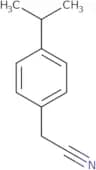
CAS:<p>4-Isopropylphenylacetonitrile is a nicotinic receptor agonist. It has high affinity for the nicotinic acid receptor, and potentiates the response to other nicotinic receptor agonists. 4-Isopropylphenylacetonitrile was discovered by screening for acid binding compounds and allosteric potentiators of the nicotinic acid receptor. This compound binds to the ion channel in the central nervous system, which leads to increased neuronal excitability and decreased pain sensation. 4-Isopropylphenylacetonitrile also displays antiinflammatory properties due to its ability to inhibit prostaglandin synthesis.</p>Formula:C11H13NPurity:Min. 95%Molecular weight:159.23 g/mol4-Bromo-3-cyanoanisole
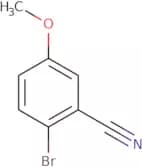
CAS:<p>4-Bromo-3-cyanoanisole is a potent inhibitor of the tyrosine kinase receptor. The functional theory behind this drug's mechanism of action is that it binds to the ATP binding site of the receptor and blocks ATP from binding, preventing downstream signaling. 4-Bromo-3-cyanoanisole has been shown to be an effective inhibitor of cancer cell proliferation. This drug has also been shown to inhibit microtubule assembly and disrupt cellular function by inhibiting protein synthesis.</p>Formula:C8H6BrNOPurity:Min. 95%Color and Shape:PowderMolecular weight:212.04 g/mol3,5-Bis(trifluoromethyl)phenylacetonitrile
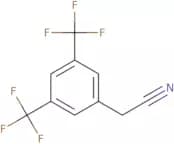
CAS:<p>3,5-Bis(trifluoromethyl)phenylacetonitrile (3,5-BTFAPN) is a compound that has anticancer activity. It can be used to treat cancer by inhibiting the growth of cancer cells. 3,5-BTFAPN has been shown to be effective against some human cancer cell lines in vitro and in vivo. The drug was found to have cytotoxic effects by inducing apoptosis through changes in mitochondrial membrane potential and cytochrome c release. 3,5-BTFAPN also binds to DNA and forms adducts with guanine residues, which may explain its anticancer activity.</p>Formula:C10H5F6NPurity:Min. 98 Area-%Color and Shape:Colorless Yellow Clear LiquidMolecular weight:253.14 g/mol


![Ethyl-2-ethoxy-1-[[(2'-cyanobiphenyl-4-yl) methyl] benzimidazole-7-carboxylate](/_next/image/?url=https%3A%2Fstatic.cymitquimica.com%2Fproducts%2F3D%2Fthumb-webp%2FFE31863.webp&w=3840&q=75)