Ethers
Ethers are organic compounds containing an ether functional group, characterized by an oxygen atom bonded to two hydrocarbon radicals. These compounds are valuable in synthesis and serve as solvents in various chemical reactions. At CymitQuimica, we offer a selection of high-quality ethers to support your research and industrial applications, ensuring reliable and effective results. Our range of ethers meets diverse laboratory requirements, from routine experiments to advanced research.
Found 40729 products of "Ethers"
Sort by
Purity (%)
0
100
|
0
|
50
|
90
|
95
|
100
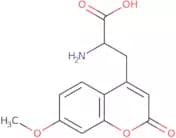
H-β-(7-Methoxycoumarin-4-yl)-Ala-OH
CAS:<p>Please enquire for more information about H-beta-(7-Methoxycoumarin-4-yl)-Ala-OH including the price, delivery time and more detailed product information at the technical inquiry form on this page</p>Formula:C13H13NO5Purity:Min. 95%Molecular weight:263.25 g/molFmoc-L-Lys[Oct-(otBu)-Glu-(otBu)-AEEA-AEEA]-OH
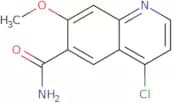
CAS:<p>Please enquire for more information about Fmoc-L-Lys[Oct-(otBu)-Glu-(otBu)-AEEA-AEEA]-OH including the price, delivery time and more detailed product information at the technical inquiry form on this page</p>Formula:C64H101N5O16Purity:Min. 95%Molecular weight:1,196.51 g/mol4-Chloro-7-methoxyquinoline-6-carboxamide
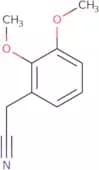
CAS:<p>Intermediate in the synthesis of lenvatinib</p>Formula:C11H9ClN2O2Purity:Min. 95%Molecular weight:236.65 g/mol2,3-(Dimethoxyphenyl)acetonitrile
CAS:<p>2,3-(Dimethoxyphenyl)acetonitrile is a chemical intermediate that is used in the synthesis of pharmaceuticals and specialty chemicals. It can be used as a reaction component and reagent for the synthesis of other chemicals. This compound has a high quality and is also a versatile building block for complex compounds. 2,3-(Dimethoxyphenyl)acetonitrile has been shown to be useful in the production of fine chemicals such as pharmaceuticals, agrochemicals, and dyes. The CAS number for this compound is 4468-57-9.</p>Formula:C10H11NO2Purity:Min. 95%Molecular weight:177.2 g/molN-Methoxymethyl-N-(trimethylsilylmethyl)benzylamine
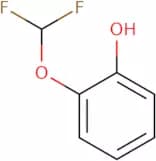
CAS:<p>N-Methoxymethyl-N-(trimethylsilylmethyl)benzylamine is a chiral, electron deficient reagent that reacts with aldehydes and boronic esters to form products with high chemical yields. This compound can be used as a catalyst for acylation reactions, such as the synthesis of p-nitrophenol. N-Methoxymethyl-N-(trimethylsilylmethyl)benzylamine is synthesized by the reaction of trifluoroacetic acid and an amine, followed by chloroformate displacement. The product is then reacted with acylating agents in the presence of catalysts.</p>Formula:C13H23NOSiPurity:Min. 95%Color and Shape:Clear Colourless To Pale Yellow LiquidMolecular weight:237.41 g/mol2-(Difluoromethoxy)Phenol
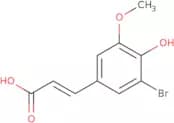
CAS:<p>2-(Difluoromethoxy)Phenol is a purine derivative and pyrimidine derivative. It has been shown to inhibit the growth of cancer cells in vitro and in vivo. 2-(Difluoromethoxy)phenol inhibits multidrug resistance by inhibiting the transport of drugs into cells and thereby preventing their accumulation. As a result, it suppresses inflammatory diseases and autoimmune diseases. The hydroxyl group in this compound can be replaced with fluorine or nitro groups to generate new derivatives with different properties. Piperidine can also be added to this molecule to create an analogue that is more potent than 2-(difluoromethoxy)phenol and has a longer duration of action.</p>Formula:C7H6F2O2Purity:Min. 95%Molecular weight:160.12 g/mol3-(3-Bromo-4-hydroxy-5-methoxyphenyl)acrylic acid
CAS:<p>3-(3-Bromo-4-hydroxy-5-methoxyphenyl)acrylic acid is a polyphenol that can be found in plants and food. It has been shown to have antimicrobial properties against certain bacteria and fungi, such as Staphylococcus aureus, Clostridium perfringens, and Candida albicans. 3-(3-Bromo-4-hydroxy-5-methoxyphenyl)acrylic acid is synthesized by means of the condensation of p-coumaric acid with acrylic acid in the presence of a base catalyst. This compound undergoes biotransformations such as hydroxylation and oxidation to form 3-(3,4′-dihydroxyphenyl)acrylic acid (DHPAA). The compound is also able to react with other phenolic compounds such as cinnamic acid under certain conditions.</p>Formula:C10H9BrO4Purity:Min. 95%Color and Shape:PowderMolecular weight:273.08 g/molN-(4-Methoxyphenylazoformyl)-Arg-OH·HCl
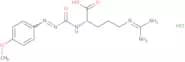
CAS:<p>Please enquire for more information about N-(4-Methoxyphenylazoformyl)-Arg-OH·HCl including the price, delivery time and more detailed product information at the technical inquiry form on this page</p>Formula:C14H20N6O4·HClPurity:Min. 95%Color and Shape:Orange Red SolidMolecular weight:372.81 g/mol2-Methoxyethyl acetoacetate
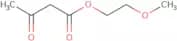
CAS:<p>2-Methoxyethyl acetoacetate is used as a raw material for coatings. It has been shown to be an effective calcium antagonist in the treatment of leukemia and other cancers. 2-Methoxyethyl acetoacetate has also been shown to inhibit the growth of HL-60 cells when it is incubated with these cells in the presence of hydrochloric acid, malonic acid, and quinoline derivatives. The reaction produces chlorine gas, which is toxic to cells.</p>Formula:C7H12O4Purity:Min. 95%Color and Shape:Clear LiquidMolecular weight:160.17 g/molMethoxyacetaldehyde diethyl acetal
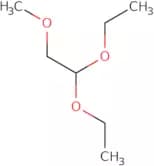
CAS:<p>Methoxyacetaldehyde diethyl acetal is a viscous liquid with a low vapor pressure. This substance is stable at high temperatures and has a high resistance to chemical interactions. It is also hydrophobic in nature. Methoxyacetaldehyde diethyl acetal has been shown to interact with the aminoglycoside antibiotics, erythromycin, streptomycin, and neomycin. The interaction of this substance with these antibiotics may be due to the fact that it has proton resonances similar to those of amino acids, as well as its ability to form hydrogen bonds with the antibiotic molecules. Methoxyacetaldehyde diethyl acetal also interacts with triethyl orthoformate, which can lead to the formation of an ester bond between them.</p>Formula:C7H16O3Purity:Min. 95%Color and Shape:Colorless Clear LiquidMolecular weight:148.2 g/mol1-(2,4-Dihydroxy-5-methoxyphenyl)-2-(4-hydroxyphenyl)-3,3-dimethoxy-1-propanone
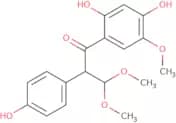
CAS:<p>Please enquire for more information about 1-(2,4-Dihydroxy-5-methoxyphenyl)-2-(4-hydroxyphenyl)-3,3-dimethoxy-1-propanone including the price, delivery time and more detailed product information at the technical inquiry form on this page</p>Formula:C18H20O7Purity:Min. 95%Molecular weight:348.35 g/molH-D-Cys(4-methoxytrityl)-2-chlorotrityl resin (200-400 mesh)
<p>Please enquire for more information about H-D-Cys(4-methoxytrityl)-2-chlorotrityl resin (200-400 mesh) including the price, delivery time and more detailed product information at the technical inquiry form on this page</p>Purity:Min. 95%2-Chloro-3-methoxybenzaldehyde
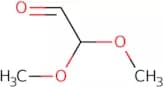
CAS:<p>Please enquire for more information about 2-Chloro-3-methoxybenzaldehyde including the price, delivery time and more detailed product information at the technical inquiry form on this page</p>Formula:C8H7ClO2Purity:Min. 95%Molecular weight:170.59 g/mol2,2-Dimethoxyacetaldehyde - About 60% water solution
CAS:<p>2,2-Dimethoxyacetaldehyde is an inhibitor of the enzyme DNA polymerase. It has been shown to inhibit replication of the herpes simplex virus type 1 and 2 (HSV-1, HSV-2) in cell cultures. 2,2-Dimethoxyacetaldehyde has also been shown to inhibit the replication of HIV in cells and is a potential antiviral agent. This compound is also used as a building block for other drugs such as amide and ester hydrochloride. It is synthesized from 2,2-dimethoxypropane and formaldehyde with a two step process that starts with an asymmetric synthesis reaction between formaldehyde and methoxide ion followed by an ester hydrochloride formation reaction with methylamine. The product can be purified by recrystallization from water or acetone solution.</p>Formula:C4H8O3Purity:Min. 95%Molecular weight:104.1 g/mol3-(4-Methoxybenzoyl)acrylic acid
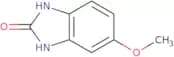
CAS:<p>Please enquire for more information about 3-(4-Methoxybenzoyl)acrylic acid including the price, delivery time and more detailed product information at the technical inquiry form on this page</p>Formula:C11H10O4Purity:Min. 95%Color and Shape:PowderMolecular weight:206.19 g/mol2-Hydroxy-5-methoxybenzimidazole
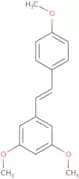
CAS:<p>Please enquire for more information about 2-Hydroxy-5-methoxybenzimidazole including the price, delivery time and more detailed product information at the technical inquiry form on this page</p>Formula:C8H8N2O2Purity:Min. 95%Molecular weight:164.16 g/mol3,4',5-Trimethoxystilbene
CAS:<p>3,4',5-Trimethoxystilbene is a coumarin derivative that has been found to have inhibitory properties for mitochondrial functions. It also inhibits the production of epidermal growth factor and collagen synthesis in cells. 3,4',5-Trimethoxystilbene may be useful in treating skin conditions such as psoriasis and ichthyosis. This compound has been shown to bind to protein targets in the mitochondria and inhibit mitochondrial membrane potential by hydroxyl group reaction with proteins. 3,4',5-Trimethoxystilbene also binds to dna duplexes, which may affect its biological properties.</p>Formula:C17H18O3Purity:Min. 95%Molecular weight:270.32 g/mol4-Fluoro-2-methoxy-5-nitroaniline
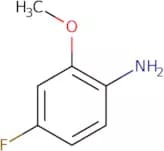
CAS:<p>Intermediate in the synthesis of osimertinib (AZD9291)</p>Formula:C7H7FN2O3Purity:Min. 95%Molecular weight:186.14 g/mol4-Fluoro-2-methoxyaniline
CAS:<p>4-Fluoro-2-methoxyaniline is an inhibitor of tyrosine kinase. It is a molecule that has been isolated from the ground leaves of erythroxylon coca and is used in the treatment of diabetes mellitus. 4-Fluoro-2-methoxyaniline inhibits the growth factor receptor, epidermal growth factor (EGF), and its receptor, EGF receptor. This inhibition leads to decreased proliferation of epidermal cells and decreased insulin production by pancreatic beta cells. 4-Fluoro-2-methoxyaniline also has antioxidant properties, which may be due to its ability to scavenge free radicals.</p>Formula:C7H8FNOPurity:Min. 95%Color and Shape:Light Brown To Brown LiquidMolecular weight:141.14 g/molN-(4-Methoxybenzylidene)-4-butylaniline
CAS:<p>N-(4-Methoxybenzylidene)-4-butylaniline is an organic compound that belongs to the group of liquid crystals. It has been used in the study of phase transitions and thermal properties. The melting point of N-(4-methoxybenzylidene)-4-butylaniline is between -80 and -90 °C, depending on the solvent. This compound has a low proton affinity, but it can be oxidized to form a radical cation.</p>Formula:C18H21NOPurity:Min. 95%Molecular weight:267.37 g/mol

![Fmoc-L-Lys[Oct-(otBu)-Glu-(otBu)-AEEA-AEEA]-OH](/_next/image/?url=https%3A%2Fstatic.cymitquimica.com%2Fproducts%2F3D%2Fthumb-webp%2FFC165871.webp&w=3840&q=75)