


Ethers
Ethers are organic compounds containing an ether functional group, characterized by an oxygen atom bonded to two hydrocarbon radicals. These compounds are valuable in synthesis and serve as solvents in various chemical reactions. At CymitQuimica, we offer a selection of high-quality ethers to support your research and industrial applications, ensuring reliable and effective results. Our range of ethers meets diverse laboratory requirements, from routine experiments to advanced research.
Found 40729 products of "Ethers"
Sort by
Purity (%)
0
100
|
0
|
50
|
90
|
95
|
100
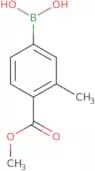
(4-(Methoxycarbonyl)-3-Methylphenyl)boronic acid
CAS:<p>Please enquire for more information about (4-(Methoxycarbonyl)-3-Methylphenyl)boronic acid including the price, delivery time and more detailed product information at the technical inquiry form on this page</p>Formula:C9H11BO4Purity:Min. 95%Molecular weight:193.99 g/mol2,6-Dimethoxytoluene
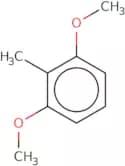
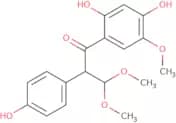
CAS:<p>2,6-Dimethoxytoluene is a regiospecific pentafluorophenyl compound with a thermal isomerization. It is an extractive yield that can be isolated from the reaction of acetaldehyde and formaldehyde in the presence of an imine. The process of making 2,6-dimethoxytoluene begins by reacting chloromethane with oxygenated tetrafluorobenzyne to make an intermediate. Then, this intermediate reacts with methoxylated fatty acids to create the final product. This reaction is stereoselective because it produces only one stereoisomer of 2,6-dimethoxytoluene.</p>Formula:C9H12O2Purity:Min. 95%Color and Shape:PowderMolecular weight:152.19 g/mol1-(2,4-Dihydroxy-5-methoxyphenyl)-2-(4-hydroxyphenyl)-3,3-dimethoxy-1-propanone
CAS:<p>Please enquire for more information about 1-(2,4-Dihydroxy-5-methoxyphenyl)-2-(4-hydroxyphenyl)-3,3-dimethoxy-1-propanone including the price, delivery time and more detailed product information at the technical inquiry form on this page</p>Formula:C18H20O7Purity:Min. 95%Molecular weight:348.35 g/mol4-[(4-chlorophenyl)-2-pyridinylmethoxy]-1-piperidinecarboxylic acid ethylester
CAS:<p>Please enquire for more information about 4-[(4-chlorophenyl)-2-pyridinylmethoxy]-1-piperidinecarboxylic acid ethylester including the price, delivery time and more detailed product information at the technical inquiry form on this page</p>Formula:C20H23ClN2O3Purity:Min. 95%Molecular weight:374.86 g/molFmoc-4-methoxy-4'-(gamma-carboxypropyloxy)-benzhydrylamine linked to Alanyl-aminomethyl resin (200-400 mesh)
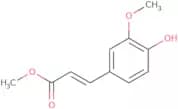
<p>Please enquire for more information about Fmoc-4-methoxy-4'-(gamma-carboxypropyloxy)-benzhydrylamine linked to Alanyl-aminomethyl resin (200-400 mesh) including the price, delivery time and more detailed product information at the technical inquiry form on this page</p>Purity:Min. 95%Methyl (2E)-3-(4-hydroxy-3-methoxyphenyl)acrylate
CAS:<p>Methyl (2E)-3-(4-hydroxy-3-methoxyphenyl)acrylate is a natural compound, which belongs to the group of ferulate esters. It has been shown that methyl (2E)-3-(4-hydroxy-3-methoxyphenyl)acrylate inhibits the activity of esterases, which are enzymes that hydrolyze esters. This inhibition leads to an accumulation of ferulic acid in the blood, which is associated with bowel disease. Methyl (2E)-3-(4-hydroxy-3-methoxyphenyl)acrylate has been shown to be effective against murine hepatoma cells and polymorphonuclear leucocytes, which are white blood cells that can be found in the blood and other tissues. The inhibitory effect on these cells may be due to its ability to bind to ferulic acid and caffeic acids.</p>Formula:C11H12O4Purity:Min. 95%Color and Shape:White PowderMolecular weight:208.21 g/molDibenzoyl-(-)-p-methoxy-L-tartaric acid
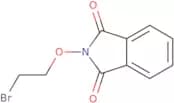
CAS:<p>Dibenzoyl-(-)-p-methoxy-L-tartaric acid is a chiral compound that has been extracted from plants and synthesized. It has a bitter taste and can be used as an enantiomer to treat schistosomiasis, a disease caused by parasitic flatworms. Dibenzoyl-(-)-p-methoxy-L-tartaric acid can be used as an enantiomer to treat schistosomiasis, which is caused by parasitic flatworms. The chemical is an anionic β-cyclodextrin derivative that binds to the parasites in the host's body and prevents them from releasing eggs into the water supply. This chemical also has pharmacological properties, such as antiinflammatory activities.</p>Formula:C20H18O10Purity:Min. 95%Color and Shape:White PowderMolecular weight:418.35 g/molN-(2-Bromoethoxy)phthalimide
CAS:<p>N-(2-Bromoethoxy)phthalimide is a chemical compound that has been shown to inhibit the activity of histone deacetylases. Histones are proteins that regulate gene expression and play an important role in the regulation of DNA transcription. The enzyme histone deacetylase (HDAC) removes acetyl groups from these proteins, which can lead to changes in gene expression and misregulation of cellular processes. HDACs have been linked to autoimmune diseases, such as arthritis and multiple sclerosis, because they can cause inflammation by affecting the production of inflammatory cytokines. N-(2-Bromoethoxy)phthalimide is able to inhibit HDACs by forming covalent bonds with the lysine residues on these enzymes. This inhibition causes modifications that affect the interaction between HDACs and their substrates, preventing them from modifying histones or interacting with other proteins.</p>Formula:C10H8BrNO3Purity:Min. 95%Molecular weight:270.08 g/mol2-Hydroxy-5-[(4-{[(6-methoxypyridazin-3-yl)amino]sulfonyl}phenyl)diazenyl]benzoic acid
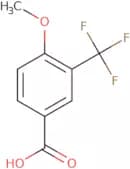
CAS:<p>Used in treatment of nonspecific ulcerative colitis</p>Formula:C18H15N5O6SPurity:Min. 95%Color and Shape:PowderMolecular weight:429.41 g/mol4-Methoxy-3-(trifluoromethyl)benzoic acid
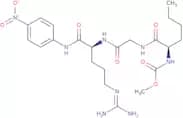
CAS:<p>4-Methoxy-3-(trifluoromethyl)benzoic acid is a useful scaffold that can be used as a building block for the synthesis of complex compounds. It has been shown to react with various reagents and is a versatile building block that can be used in organic synthesis. 4-Methoxy-3-(trifluoromethyl)benzoic acid is a high quality chemical and has been classified as speciality chemicals. This product is also known by the CAS number 213598-09-5.</p>Formula:C9H7F3O3Purity:Min. 98 Area-%Color and Shape:PowderMolecular weight:220.15 g/molMethoxycarbonyl-D-Nle-Gly-Arg-pNA acetate salt
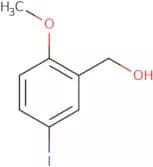
CAS:<p>Please enquire for more information about Methoxycarbonyl-D-Nle-Gly-Arg-pNA acetate salt including the price, delivery time and more detailed product information at the technical inquiry form on this page</p>Formula:C22H34N8O7Purity:Min. 95%Molecular weight:522.56 g/mol5-Iodo-2-methoxybenzyl alcohol
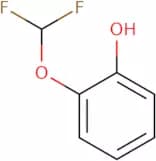
CAS:<p>5-Iodo-2-methoxybenzyl alcohol (5IMB) is a conjugate that inhibits tubulin polymerization and mitochondrial membrane integrity. It has significant inhibitory effects on colchicine-induced apoptosis in colon cancer cells, inducing apoptotic cell death by the activation of caspase 3 and annexin. 5IMB also has an inhibitory effect on mitochondria, leading to mitochondrial membrane depolarization and apoptotic cell death. This conjugate also induces the death of human cancer cells, specifically mcf-7, which are involved in tumour growth and metastasis. The mechanism of action for 5IMB is through its ability to induce mitochondrial membrane depolarization, leading to apoptotic cell death.</p>Formula:C8H9O2IPurity:Min. 95%Molecular weight:264.06 g/mol2-(Difluoromethoxy)Phenol
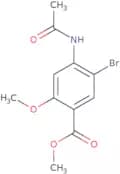
CAS:<p>2-(Difluoromethoxy)Phenol is a purine derivative and pyrimidine derivative. It has been shown to inhibit the growth of cancer cells in vitro and in vivo. 2-(Difluoromethoxy)phenol inhibits multidrug resistance by inhibiting the transport of drugs into cells and thereby preventing their accumulation. As a result, it suppresses inflammatory diseases and autoimmune diseases. The hydroxyl group in this compound can be replaced with fluorine or nitro groups to generate new derivatives with different properties. Piperidine can also be added to this molecule to create an analogue that is more potent than 2-(difluoromethoxy)phenol and has a longer duration of action.</p>Formula:C7H6F2O2Purity:Min. 95%Molecular weight:160.12 g/mol4-Acetylamino-5-bromo-2-methoxy-benzoic acid methylester
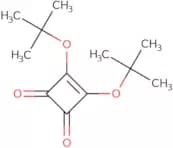
CAS:<p>Please enquire for more information about 4-Acetylamino-5-bromo-2-methoxy-benzoic acid methylester including the price, delivery time and more detailed product information at the technical inquiry form on this page</p>Formula:C11H12BrNO4Purity:Min. 95%Color and Shape:PowderMolecular weight:302.12 g/mol3,4-Bis(1,1-dimethylethoxy)-3-cyclobutene-1,2-dione
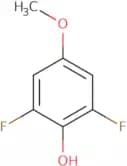
CAS:Please enquire for more information about 3,4-Bis(1,1-dimethylethoxy)-3-cyclobutene-1,2-dione including the price, delivery time and more detailed product information at the technical inquiry form on this pageFormula:C12H18O4Purity:Min. 95%Molecular weight:226.27 g/mol2,6-Difluoro-4-methoxyphenol
CAS:<p>Please enquire for more information about 2,6-Difluoro-4-methoxyphenol including the price, delivery time and more detailed product information at the technical inquiry form on this page</p>Formula:C7H6F2O2Purity:Min. 95%Color and Shape:PowderMolecular weight:160.12 g/mol4-[2-[[(1S)-1-(2-Aminophenyl)-3-methylbutyl]amino]-2-oxoethyl]-2-ethoxybenzoic acid
CAS:<p>Bosentan is a potent inhibitor of the uptake of organic anions. It is used in the treatment of pulmonary arterial hypertension and has been shown to be effective against pravastatin-resistant HIV protease inhibitors, such as saquinavir, quinidine, and rosuvastatin. Bosentan inhibits uptake by binding to the transporter protein at a site that does not overlap with the binding site for organic anion substrates. This leads to a change in kinetic parameters for substrates, such as pravastatin and saquinavir. The binding site on bosentan may also be elucidated through monolayer experiments with efflux transporters.</p>Formula:C22H28N2O4Purity:Min. 95%Molecular weight:384.47 g/mol3,4-Diethoxybenzylalcohol
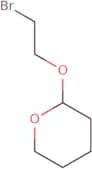
CAS:<p>3,4-Diethoxybenzylalcohol is a metabolite produced by the fungus Ustilago maydis. It has been shown to have pleiotropic effects on the metabolism of the organism. 3,4-Diethoxybenzylalcohol is involved in lignin biosynthesis and bond cleavage reactions. In addition to functioning as an intermediate in the pentose phosphate pathway, it is involved in the nature of the basidiomycete cell wall and also plays a role in carbon source utilization.</p>Formula:C11H16O3Purity:Min. 95%Color and Shape:PowderMolecular weight:196.24 g/mol2-(2-Bromoethoxy)tetrahydro-2H-pyran
CAS:<p>2-(2-Bromoethoxy)tetrahydro-2H-pyran is a synthetic molecule that has been shown to act as an estrogen receptor modulator, which has the potential to be used for the treatment of hormone-sensitive diseases such as breast cancer. This compound is chemically very similar to other compounds that have been shown to be effective in treating breast cancer. 2-(2-Bromoethoxy)tetrahydro-2H-pyran has a cavity and 6 hydroxyl groups that can form hydrogen bonds with water molecules, leading to its gelling properties. In addition, this compound is thermoreversible and can reversibly gel when heated or cooled. The gelation property of 2-(2-Bromoethoxy)tetrahydro-2H-pyran makes it a promising candidate for use in vaginal tablets, which could potentially lead to treatments for vaginal dryness and atrophy.</p>Formula:C7H13BrO2Purity:Min. 95%Color and Shape:Clear LiquidMolecular weight:209.08 g/mol3'-[2- Cyanoethyl N, N- bis(1- methylethyl) phosphoramidite]-5'- O- [bis(4- methoxyphenyl) phenylmethyl] - 2'- O- methyl- N- [2- [4- (1- methylethyl) phenoxy] acetyl] -guanosine
CAS:<p>Please enquire for more information about 3'-[2- Cyanoethyl N, N- bis(1- methylethyl) phosphoramidite]-5'- O- [bis(4- methoxyphenyl) phenylmethyl] - 2'- O- methyl- N- [2- [4- (1- methylethyl) phenoxy] acetyl] -guanosine including the price, delivery time and more detailed product information at the technical inquiry form on this page</p>Formula:C52H62N7O10PPurity:Min. 95%Molecular weight:976.06 g/mol

![4-[(4-chlorophenyl)-2-pyridinylmethoxy]-1-piperidinecarboxylic acid ethylester](/_next/image/?url=https%3A%2Fstatic.cymitquimica.com%2Fproducts%2F3D%2Fthumb-webp%2FFP152183.webp&w=3840&q=75)

![2-Hydroxy-5-[(4-{[(6-methoxypyridazin-3-yl)amino]sulfonyl}phenyl)diazenyl]benzoic acid](/_next/image/?url=https%3A%2Fstatic.cymitquimica.com%2Fproducts%2F3D%2Fthumb-webp%2FFH134950.webp&w=3840&q=75)
![4-[2-[[(1S)-1-(2-Aminophenyl)-3-methylbutyl]amino]-2-oxoethyl]-2-ethoxybenzoic acid](/_next/image/?url=https%3A%2Fstatic.cymitquimica.com%2Fproducts%2F3D%2Fthumb-webp%2FFD21379.webp&w=3840&q=75)

![3'-[2- Cyanoethyl N, N- bis(1- methylethyl) phosphoramidite]-5'- O- [bis(4- methoxyphenyl) phenylm…](/_next/image/?url=https%3A%2Fstatic.cymitquimica.com%2Fproducts%2F3D%2Fthumb-webp%2FFC165570.webp&w=3840&q=75)