Ethers
Ethers are organic compounds containing an ether functional group, characterized by an oxygen atom bonded to two hydrocarbon radicals. These compounds are valuable in synthesis and serve as solvents in various chemical reactions. At CymitQuimica, we offer a selection of high-quality ethers to support your research and industrial applications, ensuring reliable and effective results. Our range of ethers meets diverse laboratory requirements, from routine experiments to advanced research.
Found 40712 products of "Ethers"
Sort by
Purity (%)
0
100
|
0
|
50
|
90
|
95
|
100
4-Acetoxy-3-methoxybenzaldehyde
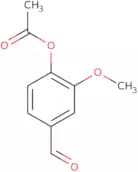
CAS:<p>4-Acetoxy-3-methoxybenzaldehyde is an antimicrobial agent that is used specifically for the treatment of lemongrass oil and eugenol. It has been shown to be effective against a wide range of microorganisms, such as Escherichia coli, Pseudomonas aeruginosa, Salmonella enterica, Staphylococcus aureus, and Streptococcus pneumoniae. 4-Acetoxy-3-methoxybenzaldehyde has been shown to inhibit the growth of bacteria by binding to the 50S ribosomal subunit. The molecule also has hydroxyl group which can react with potassium dichromate and sodium carbonate. This reaction results in the formation of 4-acetoxy-3-hydroxybenzaldehyde through an S N 2 substitution mechanism.</p>Formula:C10H10O4Purity:Min. 95%Color and Shape:PowderMolecular weight:194.18 g/mol3,5-Dimethoxy-4-hydroxyphenylacetic acid
CAS:<p>3,5-Dimethoxy-4-hydroxyphenylacetic acid is a phenolic compound that is found in the leaves of plants. It is a major component of the essential oil from the bark of the cinnamon tree. 3,5-Dimethoxy-4-hydroxyphenylacetic acid has been shown to be a potent inhibitor of plant growth and an effective herbicide for weed control in tobacco. 3,5-Dimethoxy-4-hydroxyphenylacetic acid has also been shown to have antiplatelet activity and may be useful in treating thrombosis.</p>Formula:C10H12O5Purity:Min. 95%Color and Shape:Brown PowderMolecular weight:212.2 g/mol4-Amino-5-chloro-2-ethoxybenzoic acid
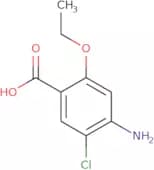
CAS:<p>4-Amino-5-chloro-2-ethoxybenzoic acid is a phenoxy compound that is synthesized in the laboratory. The chemical structure of this compound has been studied using high performance liquid chromatography and it was found to have pharmacokinetic properties that are consistent with those of other drugs in its class. This drug is being developed as an anti-depressant, targeting the 5HT4 receptor. The bioactive metabolite of 4-amino-5-chloro-2-ethoxybenzoic acid is 4-(4′ hydroxybutyl)phenol, which has been shown to be a potent inhibitor of phosphodiesterase activity.</p>Formula:C9H10ClNO3Purity:Min. 95%Color and Shape:White Off-White PowderMolecular weight:215.63 g/mol3-Methoxy-4-methylphenylacetone
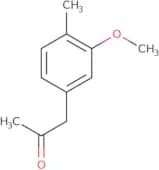
CAS:<p>3-Methoxy-4-methylphenylacetone is a reagent that can be used as a useful intermediate for the synthesis of complex organic compounds. It is soluble in water, but insoluble in most organic solvents. 3-Methoxy-4-methylphenylacetone is also a fine chemical with CAS No. 51814-28-9 and has been shown to be an effective building block for synthetic chemistry. It is used in the synthesis of speciality chemicals and research chemicals, such as pharmaceuticals and agrochemicals. This compound can be used as a versatile building block in many reactions and has been shown to react with epoxide, nitrile, amine, thioether, amide, alcohols, carboxylic acids or esters.</p>Formula:C11H14O2Purity:Min. 95%Color and Shape:PowderMolecular weight:178.23 g/mol2-Ethoxybenzaldehyde
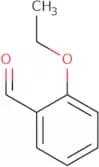
CAS:<p>2-Ethoxybenzaldehyde is an organic compound that has been found to be a potential anticancer agent. It inhibits the growth of tumor cells in vitro, by inhibiting the PI3K/Akt signaling pathway. 2-Ethoxybenzaldehyde also has antibacterial activity against Gram-positive bacteria, such as P. aeruginosa, by binding to the nitrogen atoms on the cell wall and disrupting their function. The molecule has a functional group that reacts with metal cations, which helps to explain its chemical nature and its reaction mechanism. The molecule is soluble in water but not in organic solvents. 2-Ethoxybenzaldehyde crystallizes as a white solid with a monoclinic crystal system and can react with salicylaldehyde to produce benzalmalonic acid.</p>Formula:C9H10O2Purity:Min. 97 Area-%Color and Shape:Clear LiquidMolecular weight:150.17 g/mol3,4-Dimethoxy-2-hydroxymethylpyridine
CAS:<p>Pantoprazole is a proton pump inhibitor (PPI) that blocks the production of stomach acid by inhibiting the H+/K+-ATPase enzyme in gastric parietal cells. The chemical compound 3,4-Dimethoxy-2-hydroxymethylpyridine is a sodium salt of pantoprazole. It is commercially available as the anhydrous form, which is a white crystalline powder. This chemical has been used to regulate the amount of water in industrial processes and to salify materials such as lead oxide. Pantoprazole sodium chloride can be prepared by evaporating and drying with anhydrous sodium chloride or by heating an aqueous solution of pantoprazole sulfate.</p>Formula:C8H11NO3Purity:Min. 95%Color and Shape:PowderMolecular weight:169.18 g/mol3,5-Dimethyl-4-methoxybenzonitrile
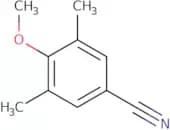
CAS:<p>3,5-Dimethyl-4-methoxybenzonitrile is a chemical that can be used as an intermediate for the synthesis of organic compounds. It is also useful for research purposes. 3,5-Dimethyl-4-methoxybenzonitrile has a CAS number of 152775-45-6 and can be found in the chemical catalog at Acros Organics. This compound is a reactive building block that can undergo many reactions to produce other chemicals. 3,5-Dimethyl-4-methoxybenzonitrile is a complex compound with high purity and quality.</p>Formula:C10H11NOPurity:Min. 95%Color and Shape:PowderMolecular weight:161.2 g/molRetigabine
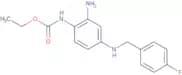
CAS:Controlled Product<p>Retigabine is a carbamate that binds to the benzodiazepine binding site of the gamma-aminobutyric acid receptor. It has been shown to have analgesic properties in animal studies, and has also been investigated as a potential treatment for epilepsy. Retigabine may be used in combination with other drugs, such as flumazenil, which can reverse its effects. The structural analog of retigabine is flumazenil, a drug that can reverse the effects of benzodiazepines such as diazepam and midazolam. Retigabine also interacts with other drugs through significant effects on their pharmacokinetics and pharmacodynamics.</p>Formula:C16H18FN3O2Purity:Min. 98 Area-%Color and Shape:White PowderMolecular weight:303.33 g/mol2-Fluoro-5-methoxybenzonitrile
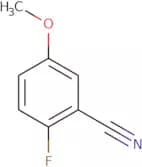
CAS:<p>2-Fluoro-5-methoxybenzonitrile is a metal catalyst that has been shown to be effective in the synthesis of various organic compounds. The use of ultrasound can increase the yields of reactions involving 2-fluoro-5-methoxybenzonitrile. 2-Fluoro-5-methoxybenzonitrile has also been demonstrated as a pharmacological agent with a number of potential applications. It inhibits the activity of phosphodiesterase 4, which may lead to an improved therapeutic profile for conditions such as asthma and erectile dysfunction. 2-Fluoro-5-methoxybenzonitrile is also used in photochemical reactions, where it acts as an inhibitor to prevent the formation of undesired products.</p>Formula:C8H6FNOPurity:Min. 95%Color and Shape:PowderMolecular weight:151.14 g/mol1,4-Dimethoxy-2,5-diacetylbenzene
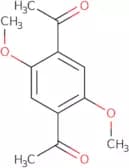
CAS:<p>1,4-Dimethoxy-2,5-diacetylbenzene is a versatile building block that can be used in the synthesis of many organic compounds. It has a high quality and is a useful intermediate for research chemicals, pharmaceuticals, and speciality chemicals. It can be used as a reaction component in the synthesis of complex compounds, such as amino acids and glycosides. 1,4-Dimethoxy-2,5-diacetylbenzene is also a useful scaffold for the synthesis of new fine chemicals.</p>Formula:C12H14O4Purity:Min. 95%Color and Shape:PowderMolecular weight:222.24 g/mol7-Methoxycoumarin-3-carboxylicacid
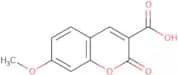
CAS:<p>7-Methoxycoumarin-3-carboxylic acid (MC) is a potent inhibitor of metalloendopeptidases and cyclic peptide receptors. MC has been shown to inhibit protein synthesis, leading to apoptotic cell death. It has also been reported to have anti-inflammatory properties, which may be due to its inhibition of prostaglandin synthesis. The fluorophore 7-methoxycoumarin is derived from the natural product coumarin and can be used as a fluorescent probe for hydrogen bonding in molecular modeling studies.</p>Formula:C11H8O5Purity:Min. 95%Color and Shape:PowderMolecular weight:220.18 g/mol6,7-Dimethoxyquinazoline-2,4-dione
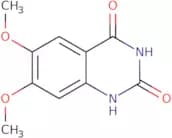
CAS:<p>6,7-Dimethoxyquinazoline-2,4-dione is a chemical compound that can be synthesized by reacting amide and formaldehyde. It has been investigated as an efficient method for the synthesis of amides. 6,7-Dimethoxyquinazoline-2,4-dione is also a potential antibacterial agent which may prevent bacterial growth by inhibiting choline uptake or by binding to ribosomes and blocking protein synthesis. The reaction mechanism of this compound is not well understood, but it may involve hydrolysis of cyanate to produce hydrogen cyanide (HCN), which then reacts with the amide to form the quinazoline ring.</p>Formula:C10H10N2O4Purity:Min. 95%Color and Shape:PowderMolecular weight:222.2 g/mol2-(4,5-Dimethoxy-2-(indolin-1-ylsulfonyl)phenyl)acetic acid
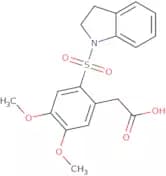
CAS:<p>Please enquire for more information about 2-(4,5-Dimethoxy-2-(indolin-1-ylsulfonyl)phenyl)acetic acid including the price, delivery time and more detailed product information at the technical inquiry form on this page</p>Purity:Min. 95%Poly[2-methoxy-5-(2-ethylhexyloxy)-1,4-phenylenevinylene - M.W. average 40,000-70,000
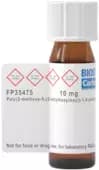
CAS:<p>Poly[2-methoxy-5-(2-ethylhexyloxy)-1,4-phenylenevinylene] is a polymeric material that is soluble in various organic solvents. It has a high refractive index and can be used as an optical filter or polarizer. Poly[2-methoxy-5-(2-ethylhexyloxy)-1,4-phenylenevinylene] particles are monodisperse with an average size of 40,000 to 70,000 daltons. This material has been shown to have excellent light absorption properties and can be made into nanoparticles for use in biomedical applications.</p>Formula:(C18H28O2)nPurity:Min. 95%Color and Shape:Powder5-Methoxy-3-methylbenzonitrile
CAS:<p>5-Methoxy-3-methylbenzonitrile is a versatile chemical with a wide range of applications in pharmaceuticals, agrochemicals, and other industries. It is used as a reaction component in the synthesis of drugs such as indomethacin and methotrexate. It is also useful for the production of high-quality research chemicals. 5-Methoxy-3-methylbenzonitrile has been shown to be an efficient building block for the synthesis of complex compounds with diverse structures.</p>Formula:C9H9NOPurity:Min. 95%Color and Shape:PowderMolecular weight:147.17 g/mol4-Methoxybenzaldehyde
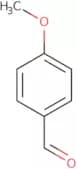
CAS:<p>4-Methoxybenzaldehyde is a surfactant with a Langmuir adsorption isotherm. It can be used in analytical methods for the determination of sodium carbonate at concentrations of 1 mg/mL and higher. The redox potentials of 4-methoxybenzaldehyde are +0.37 and -0.35 volts, which corresponds to group P2. The reaction mechanism for 4-methoxybenzaldehyde is the oxidation of the compound by potassium permanganate (KMnO4) in aqueous solution to form 4-hydroxybenzoic acid (4HB). The fluorescent derivative of 4-methoxybenzaldehyde is magnesium salt, which has been shown to react with ryanodine receptors in skeletal muscle cells, leading to a decrease in calcium release from the sarcoplasmic reticulum. Process optimization may be necessary for this product due to its limited applications in analytical chemistry.</p>Formula:C8H8O2Purity:Min. 95%Color and Shape:Colorless Clear LiquidMolecular weight:136.15 g/mol1-(3-((5-Chloro-2-methoxyphenyl)amino)-5-methyl-2,4-thiazolyl)ethan-1-one
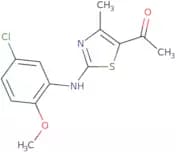
CAS:<p>Please enquire for more information about 1-(3-((5-Chloro-2-methoxyphenyl)amino)-5-methyl-2,4-thiazolyl)ethan-1-one including the price, delivery time and more detailed product information at the technical inquiry form on this page</p>Formula:C13H13ClN2O2SPurity:Min. 95%Molecular weight:296.77 g/mol(2-(3,4-dimethoxyphenyl)ethyl)(phenylsulfonyl)amine
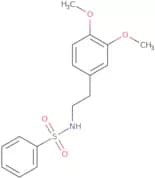
CAS:<p>Please enquire for more information about (2-(3,4-dimethoxyphenyl)ethyl)(phenylsulfonyl)amine including the price, delivery time and more detailed product information at the technical inquiry form on this page</p>Purity:Min. 95%4-Hydroxy-3-methoxystilbene
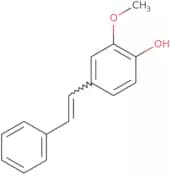
CAS:<p>4-Hydroxy-3-methoxystilbene is a natural phenolic compound found in plants. It is an olefinic peroxide that is unreactive and pressurized under normal conditions. It has been isolated from the leaves of the plant, Stilbocarpa erythrophylla, which grows in the tropical forests of Malaysia. The structure of 4-hydroxy-3-methoxystilbene was determined by chromatographic analysis and hydrogen peroxide plates. Phase chromatography was used to separate 4-hydroxy-3-methoxystilbene from other compounds with similar structures, such as acetylated flavonoids or hydroxylated flavonoids. The melting point of 4-hydroxy-3-methoxystilbene was determined by temperature measurements, and its ultraviolet spectrophotometry was used to detect the presence of a hydroxyl group in its chemical structure.</p>Formula:C15H14O2Purity:Min. 95%Color and Shape:PowderMolecular weight:226.27 g/mol2-(4-Trifluoromethoxyphenyl)propionic acid
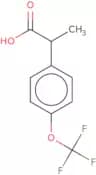
CAS:<p>Please enquire for more information about 2-(4-Trifluoromethoxyphenyl)propionic acid including the price, delivery time and more detailed product information at the technical inquiry form on this page</p>Formula:C10H9F3O3Purity:Min. 95%Molecular weight:234.17 g/mol