Ethers
Ethers are organic compounds containing an ether functional group, characterized by an oxygen atom bonded to two hydrocarbon radicals. These compounds are valuable in synthesis and serve as solvents in various chemical reactions. At CymitQuimica, we offer a selection of high-quality ethers to support your research and industrial applications, ensuring reliable and effective results. Our range of ethers meets diverse laboratory requirements, from routine experiments to advanced research.
Found 40729 products of "Ethers"
Sort by
Purity (%)
0
100
|
0
|
50
|
90
|
95
|
100
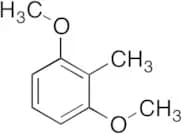
2,6-Dimethoxytoluene
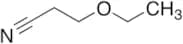
CAS:Controlled Product<p>Applications 2,6-Dimethoxytoluene is an organic synthesis intermediate.<br>References Liu, C., et al.: Bioorg. Med. Chem., 24, 4263 (2016); Della S., et al.: J. Org. Chem., 81, 5726 (2016); Zhang, M., et al.: Asian J. Org. Chem., 4, 1047 (2015); Peixoto, P. A., et al.: J. Am. Chem. Soc., 136, 15248 (2014)<br></p>Formula:C9H12O2Color and Shape:NeatMolecular weight:152.193-Ethoxypropionitrile
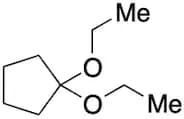
CAS:Controlled Product<p>Applications 3-Ethoxypropionitrile (cas# 2141-62-0) is a useful research chemical.<br></p>Formula:C5H9NOColor and Shape:NeatMolecular weight:99.131,1-Diethoxycyclopentane
CAS:Controlled Product<p>Applications 1,1-Diethoxycyclopentane is a reagent that is used in the synthesis of Quinbolone (Q670150), which is a cyclopentenyl ether derivative of Boldenone (B675100) and also its active metabolite. Quinbolone shows weak androgenic activity.<br>References Balestreri, R. et al.: Arch. Maragl. Patol. Clin., 22, 369 (1966); Galletti, F. et al.: Steroids, 18, 39 (1971);<br></p>Formula:C9H18O2Color and Shape:NeatMolecular weight:158.241,2-Dimethoxyethane
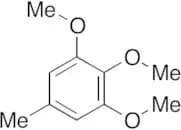
CAS:Controlled Product<p>Stability Hygroscopic<br>Applications 1,2-Dimethoxyethane is used in the synthesis of potent ligands for the central nicotinic acetylcholine receptor. Also used in the synthesis of new ruthenium sensitizers fo the production of highly efficient dye-sensitized solar cells.<br> Not a dangerous good if item is equal to or less than 1g/ml and there is less than 100g/ml in the package<br>References Nielsen, S. et al.: J. Med. Chem., 43, 2217, (2000); Shi, Y. et al.: ACS. App. Mat. Int., 5, 144 (2013);<br></p>Formula:C4H10O2Color and Shape:ColourlessMolecular weight:90.123,4,5-Trimethoxytoluene
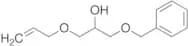
CAS:<p>Applications 3,4,5-Trimethoxytoluene is a reagent for oxadiazolylindazole sodium channel modulators which are neuroprotective toward hippocampal neurons.<br>References Clutterbuck, L. A., et al.: J. Med. Chem., 52, 2694 (2009);<br></p>Formula:C10H14O3Color and Shape:NeatMolecular weight:182.221-(Phenylmethoxy)-3-(2-propen-1-yloxy)-2-propanol
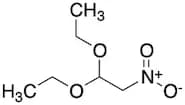
CAS:Controlled Product<p>Applications 1-(Phenylmethoxy)-3-(2-propen-1-yloxy)-2-propanol (cas# 83016-75-5) is a compound useful in organic synthesis.<br></p>Formula:C13H18O3Color and Shape:NeatMolecular weight:222.281,1-Diethoxy-2-nitroethane
CAS:Controlled Product<p>Applications 1,1-diethoxy-2-nitroethane (cas# 34560-16-2) is a useful research chemical.<br></p>Formula:C6H13NO4Color and Shape:NeatMolecular weight:163.17Chlorotriethoxysilane
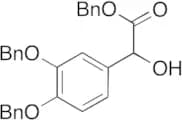
CAS:Controlled Product<p>Stability Moisture Sensitive<br>Applications Chlorotriethoxysilane (cas# 4667-99-6) is a useful research chemical.<br></p>Formula:C6H15ClO3SiColor and Shape:NeatMolecular weight:198.72α-Hydroxy-3,4-bis(phenylmethoxy)benzeneacetic Acid Phenylmethyl Ester
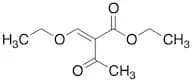
CAS:Controlled Product<p>Applications α-Hydroxy-3,4-bis(phenylmethoxy)benzeneacetic Acid Phenylmethyl Ester is an protected intermediate in the synthesis of metabolites of Catecholamines.<br></p>Formula:C29H26O5Color and Shape:NeatMolecular weight:454.51Ethyl 2-(Ethoxymethylene)acetoacetate
CAS:Controlled Product<p>Applications Ethyl 2-(ethoxymethylene)acetoacetate<br></p>Formula:C9H14O4Color and Shape:NeatMolecular weight:186.21cis-1-Ethoxy-2-(tributylstannyl)ethene
CAS:Controlled Product<p>Applications cis-1-Ethoxy-2-(tributylstannyl)ethene is used in the synthesis of (+)-pleuromutilin (P610500), an antibiotic substance produced by the basidiomycetes Pleurotus mutilus.<br> Not a dangerous good if item is equal to or less than 1g/ml and there is less than 100g/ml in the package<br>References Fazakerley, N.J., et. al.: Chem. Eur. J., 19, 6718 (2013)<br></p>Formula:C16H34OSnColor and Shape:NeatMolecular weight:361.152-(4-Methoxyphenoxy)benzaldehyde
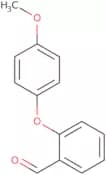
CAS:<p>2-(4-Methoxyphenoxy)benzaldehyde is a fine chemical that is used as a versatile building block in the synthesis of complex compounds and research chemicals. 2-(4-Methoxyphenoxy)benzaldehyde is also a reagent that can be used to synthesize speciality chemicals, useful building blocks, and reaction components. This chemical may be used as an intermediate for the synthesis of high-quality pharmaceuticals or other useful scaffolds. It has CAS number 19434-36-7.</p>Formula:C14H12O3Purity:Min. 95%Color and Shape:White To Brown SolidMolecular weight:228.24 g/mol4,5-Dimethoxy-2-nitroaniline
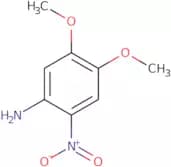
CAS:Controlled Product<p>4,5-Dimethoxy-2-nitroaniline (DMNA) is a nucleophilic compound that reacts with glyoxylate to form formic acid. DMNA has been shown to be an effective anti-malarial agent, as it inhibits the growth of leishmania and related protozoans. The mechanism of action is not fully understood but may be due to its ability to produce reactive oxygen species. DMNA also inhibits bacterial growth in vitro by interfering with DNA synthesis and protein synthesis. DMNA has been shown to have a cytotoxic effect on mammalian cells, which may be due to the production of free radicals from its reaction with formic acid.</p>Formula:C8H10N2O4Color and Shape:PowderMolecular weight:198.18 g/mol3-Ethoxy-4-hydroxyphenylnitroethene
CAS:<p>3-Ethoxy-4-hydroxyphenylnitroethene is a fine chemical with the CAS number 90922-85-3. It is a versatile building block that can be used for research, as a reagent, or as a speciality chemical. This compound has many applications in synthesis due to its high quality and complex nature. It is also an intermediate in the production of other compounds.</p>Formula:C10H11NO4Purity:Min. 95%Color and Shape:PowderMolecular weight:209.2 g/mol3-Bromo-5-methoxybenzoic acid
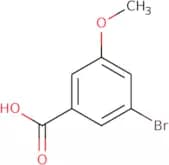
CAS:<p>3-Bromo-5-methoxybenzoic acid is a cytotoxic agent that inhibits the activity of acid transporter, which is involved in the transport of organic acids from the cell to the blood. It is used as an antineoplastic agent for animal studies and has been shown to have a safety profile similar to benzbromarone. 3-Bromo-5-methoxybenzoic acid also inhibits uricosuric activity in mouse hepatocytes and metabolic activation in mice. This compound has inhibitory effects on mouse liver cells and can be used for the treatment of liver cancer.</p>Formula:C8H7BrO3Purity:Min. 95%Molecular weight:231.04 g/mol4-Methoxy-3,5-dimethyl-2-pyridinecarboxaldehyde
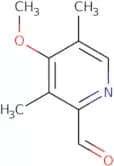
CAS:<p>4-Methoxy-3,5-dimethyl-2-pyridinecarboxaldehyde is a trifunctional molecule that has been shown to suppress the growth of cancer cells in mice. This compound is an inhibitor of acid synthesis and has also been shown to be an antirheumatic drug. 4-Methoxy-3,5-dimethyl-2-pyridinecarboxaldehyde inhibits the activity of three enzymes: synthetase, an enzyme that synthesizes fatty acids; 3-ketoacyl CoA synthase, which synthesizes ketones; and enoyl CoA reductase, which produces fatty acids. The long term efficacy of this molecule has not yet been studied in humans.</p>Formula:C9H11NO2Purity:Min. 95%Color and Shape:Colourless LiquidMolecular weight:165.19 g/mol2-(2-Bromo-1,1,2,2-tetrafluoroethoxy)-1,1,1,2,3,3-hexafluoro-3-(pentafluoroethoxy)propane
CAS:Formula:C7BrF15O2Purity:>98.0%(GC)Color and Shape:Colorless to Almost colorless clear liquidMolecular weight:480.963-Methoxybenzenamine
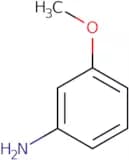
CAS:<p>3-Methoxybenzenamine is a molecule that can be synthesized by an asymmetric reaction. It has carcinogenic potential and is classified as a chemical substance. 3-Methoxybenzenamine reacts with hydrochloric acid to form hydrogen chloride gas and methoxybenzene. The hydroxyl group on the molecule reacts with l-tartaric acid to form an ester, which then undergoes hydrolysis to produce 3-hydroxybutanoic acid. This reaction also produces water, which may result in a decrease of the concentration of the reactants. 3-Methoxybenzenamine can also react with amines to form quaternary ammonium salts, which are highly soluble in water and have a high detection sensitivity.</p>Formula:C7H9NOPurity:Min. 95%Color and Shape:Clear LiquidMolecular weight:123.15 g/mol2-Ethoxy-4-methoxycinnamic acid
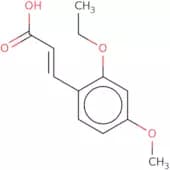
CAS:<p>2-Ethoxy-4-methoxycinnamic acid is a synthetic chemical with the CAS number 1372859-34-1. It is a versatile building block that can be used for the synthesis of many complex compounds. 2-Ethoxy-4-methoxycinnamic acid is one of a number of scaffolds that are useful for creating fine chemicals and research chemicals. This compound is also an intermediate in many reactions and can be used as a reagent to produce other substances.</p>Formula:C12H14O4Purity:Min. 95%Molecular weight:222.24 g/molTris(2-methoxyphenyl)bismuth dichloride
CAS:<p>Tris(2-methoxyphenyl)bismuth dichloride is a coordination compound with the chemical formula BiCl(OMeCH). It crystallizes in the triclinic crystal system and its molecular structure is trigonal. Tris(2-methoxyphenyl)bismuth dichloride has been characterized by X-ray and infrared spectroscopy, as well as by analysis of the axial, apical, and trigonal coordinates. The compound has been shown to form perchlorate and diperchlorate salts. The presence of bismuth atoms in this molecule produces a bright yellow color.</p>Formula:C21H21BiCl2O3Purity:Min. 95%Color and Shape:Off-White PowderMolecular weight:601.28 g/mol