Ethers
Ethers are organic compounds containing an ether functional group, characterized by an oxygen atom bonded to two hydrocarbon radicals. These compounds are valuable in synthesis and serve as solvents in various chemical reactions. At CymitQuimica, we offer a selection of high-quality ethers to support your research and industrial applications, ensuring reliable and effective results. Our range of ethers meets diverse laboratory requirements, from routine experiments to advanced research.
Found 40729 products of "Ethers"
Sort by
Purity (%)
0
100
|
0
|
50
|
90
|
95
|
100
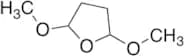
2,5-Dimethoxytetrahydrofuran
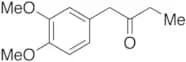
CAS:Controlled Product<p>Applications 2,5-DIMETHOXYTETRAHYDROFURAN (cas# 696-59-3) is a useful research chemical.<br> Not a dangerous good if item is equal to or less than 1g/ml and there is less than 100g/ml in the package<br></p>Formula:C6H12O3Color and Shape:NeatMolecular weight:132.161-(3,4-Dimethoxyphenyl)-2-butanone
CAS:Controlled Product<p>Applications 1-(3,4-Dimethoxyphenyl)-2-butanone (cas# 884-06-0) is a compound useful in organic synthesis.<br></p>Formula:C12H16O3Color and Shape:NeatMolecular weight:208.25cis-1-Ethoxy-2-(tributylstannyl)ethene
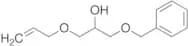
CAS:Controlled Product<p>Applications cis-1-Ethoxy-2-(tributylstannyl)ethene is used in the synthesis of (+)-pleuromutilin (P610500), an antibiotic substance produced by the basidiomycetes Pleurotus mutilus.<br> Not a dangerous good if item is equal to or less than 1g/ml and there is less than 100g/ml in the package<br>References Fazakerley, N.J., et. al.: Chem. Eur. J., 19, 6718 (2013)<br></p>Formula:C16H34OSnColor and Shape:NeatMolecular weight:361.151-(Phenylmethoxy)-3-(2-propen-1-yloxy)-2-propanol
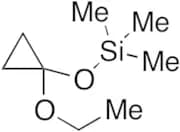
CAS:Controlled Product<p>Applications 1-(Phenylmethoxy)-3-(2-propen-1-yloxy)-2-propanol (cas# 83016-75-5) is a compound useful in organic synthesis.<br></p>Formula:C13H18O3Color and Shape:NeatMolecular weight:222.28(1-Ethoxycyclopropoxy)trimethylsilane
CAS:Controlled Product<p>Applications (1-Ethoxycyclopropoxy)trimethylsilane used as a reactant in the synthesis of di-, tri- and tetracyclopropylhydrazines. Also used as reagent in the synthesis of g elsemoxonine which is found in gelsemium plant species that is used in traditional asian medicine.<br> Not a dangerous good if item is equal to or less than 1g/ml and there is less than 100g/ml in the package<br>References Shestakov, A., et al.: Chem. Commun., 52, 2398 (2016); Diethelm, S., et al.: J. Am. Chem. Soc., 137, 6084 (2015);<br></p>Formula:C8H18O2SiColor and Shape:NeatMolecular weight:174.31(E)-1-Ethoxy-1-penten-3-one (>90%)
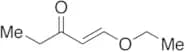
CAS:Controlled Product<p>Applications (E)-1-Ethoxy-1-penten-3-one (>90%) (cas# 79317-83-2) is a compound useful in organic synthesis.<br></p>Formula:C7H12O2Purity:>90%Color and Shape:NeatMolecular weight:128.17Triethyl Phosphite
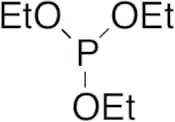
CAS:Controlled Product<p>Stability Air Sensitive, Moisture Sensitive<br>Applications Triethoxyphosphine is an common reagent used as a soft ligand in coordination chemistry and homogenous catalysis.<br> Not a dangerous good if item is equal to or less than 1g/ml and there is less than 100g/ml in the package<br>References Xiong, J.Y., et al.: Materials. Sci. Forum., 618 (2009); Mcpherson, A., et al. J. Structural. Biol., 156, 387 (2006);<br></p>Formula:C6H15O3PColor and Shape:NeatMolecular weight:166.16α-Hydroxy-3,4-bis(phenylmethoxy)benzeneacetic Acid Phenylmethyl Ester
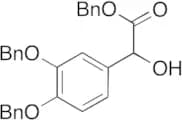
CAS:Controlled Product<p>Applications α-Hydroxy-3,4-bis(phenylmethoxy)benzeneacetic Acid Phenylmethyl Ester is an protected intermediate in the synthesis of metabolites of Catecholamines.<br></p>Formula:C29H26O5Color and Shape:NeatMolecular weight:454.513-Ethoxypropionitrile
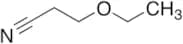
CAS:Controlled Product<p>Applications 3-Ethoxypropionitrile (cas# 2141-62-0) is a useful research chemical.<br></p>Formula:C5H9NOColor and Shape:NeatMolecular weight:99.13(Z)-2-(Methoxyimino)-3-oxo-butanoic Acid
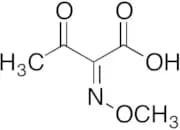
CAS:Controlled Product<p>Applications (Z)-2-(Methoxyimino)-3-oxo-butanoic Acid is an intermediate used in the synthesis of Cefotaxime Bromoacetyl Analogue (C242940), which is an impurity of Cefotaxime (C242950), a broad spectrum third generation cephalosporin antibiotic<br>References Wise, R., et al.: Antimicrob. Agents Chemother., 14, 807 (1978), Muhtadi, F.J., et al.: Anal. Profiles Drug Subs., 11, 139 (1982),<br></p>Formula:C5H7NO4Color and Shape:NeatMolecular weight:145.114-Methoxy-2-methylphenylacetone
CAS:<p>4-Methoxy-2-methylphenylacetone (4MMPA) is a reagent that is used as an intermediate for the synthesis of high quality fine chemicals. It is also a useful scaffold and building block in organic synthesis. 4MMPA is a versatile building block, which can be used in the synthesis of speciality chemicals, research chemicals, and reaction components. 4MMPA has CAS number 16882-24-9.</p>Formula:C11H14O2Purity:Min. 95%Molecular weight:178.23 g/mol10-Methoxy carbamazepine
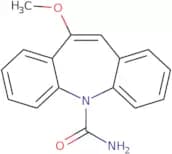
CAS:Controlled Product<p>10-Methoxy carbamazepine is a drug that belongs to the group of anticonvulsants. It inhibits neuronal excitability by blocking voltage-sensitive sodium channels, which are membrane channels that allow sodium ions to enter the neuron. 10-Methoxy carbamazepine is used for the treatment of trigeminal neuralgia and other types of pain. The effective dose of 10-methoxy carbamazepine varies from person to person, but it can be measured using blood sampling. 10-Methoxy carbamazepine has an acidic pH and should not be taken with milk or dairy products because this will cause its absorption to be reduced. This drug should not be taken by women who are pregnant or breastfeeding without medical supervision because it can cause injury or death to a developing fetus. 10-Methoxy carbamazepine may also interact with other drugs, including antidepressants, antipsychotics, and antihistamines, which can lead to serious side</p>Formula:C16H14N2O2Purity:Min. 95%Color and Shape:PowderMolecular weight:266.29 g/molEthyl 3,3-diethoxypropionate
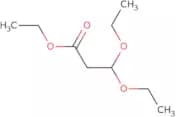
CAS:<p>Ethyl 3,3-diethoxypropionate is an organic compound that is synthesized from the reaction of diethyl malonate and chloroacetic acid in the presence of a base catalyst. This product has been shown to be an effective inhibitor of mitochondrial cytochrome c oxidase in vitro studies. Ethyl 3,3-diethoxypropionate also has been found to inhibit quinoline derivatives, such as erythromycin and tetracycline, which are involved in bacterial DNA synthesis. Furthermore, this product inhibits β-unsaturated aldehydes and allylation.</p>Formula:C9H18O4Purity:Min. 95%Color and Shape:Colorless Clear LiquidMolecular weight:190.24 g/mol3-Bromo-5-methoxybenzoic acid
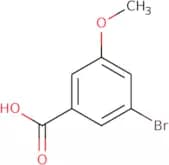
CAS:<p>3-Bromo-5-methoxybenzoic acid is a cytotoxic agent that inhibits the activity of acid transporter, which is involved in the transport of organic acids from the cell to the blood. It is used as an antineoplastic agent for animal studies and has been shown to have a safety profile similar to benzbromarone. 3-Bromo-5-methoxybenzoic acid also inhibits uricosuric activity in mouse hepatocytes and metabolic activation in mice. This compound has inhibitory effects on mouse liver cells and can be used for the treatment of liver cancer.</p>Formula:C8H7BrO3Purity:Min. 95%Molecular weight:231.04 g/mol2-(4-Methoxyphenoxy)acetonitrile
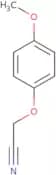
CAS:<p>2-(4-Methoxyphenoxy)acetonitrile is a chemical compound that is used to synthesize acetobromoglucose. It undergoes transformation and condensation reactions with acetobromoglucose to form 4-methoxyaceto bromoglucose.</p>Formula:C9H9NO2Purity:Min. 95%Molecular weight:163.17 g/mol1-(3-Hydroxy-4-methoxyphenyl)-2-nitroethane
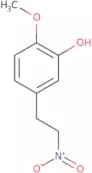
CAS:<p>1-(3-Hydroxy-4-methoxyphenyl)-2-nitroethane is a chemical intermediate that can be used in the synthesis of other compounds. It is a fine chemical with many potential uses, as well as being a versatile building block for organic synthesis. As an example, 1-(3-Hydroxy-4-methoxyphenyl)-2-nitroethane can be used to synthesize the drug erythromycin. This chemical has been shown to have antihistamine and antiinflammatory properties.</p>Formula:C9H11NO4Purity:Min. 95%Molecular weight:197.19 g/mol4-Methoxydiphenyliodonium chloride
CAS:<p>4-Methoxydiphenyliodonium chloride is a versatile building block with many uses in research and industry. It is used as a reagent to synthesize organic compounds, as well as a speciality chemical and an intermediate. 4-Methoxydiphenyliodonium chloride has been shown to be useful in the synthesis of complex compounds, such as pharmaceuticals, agrochemicals, and pesticides. This compound can also be used in the preparation of high quality products, such as fine chemicals.</p>Formula:C13H12IO·ClPurity:Min. 95%Molecular weight:346.59 g/mol3,4-Diethoxyphenylacetone
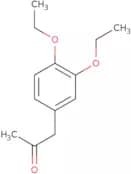
CAS:<p>3,4-Diethoxyphenylacetone is a chemical compound that is used as a building block for research and as an intermediate in the synthesis of other chemicals. This compound is also used as a reagent. 3,4-Diethoxyphenylacetone has CAS number 93635-48-4.</p>Formula:C13H18O3Purity:Min. 95%Molecular weight:222.28 g/mol3-(Ethoxycarbonylamino)phenothiazine
CAS:<p>3-(Ethoxycarbonylamino)phenothiazine is a chemical compound that belongs to the group of speciality chemicals. It is an intermediate for the synthesis of other compounds and can be used in the production of fine chemicals, reagents, and complex compounds. 3-(Ethoxycarbonylamino)phenothiazine has been shown to have a high reactivity and is useful as a building block in organic chemistry. This product also has versatile uses in research, which includes drug discovery and development.</p>Purity:Min. 95%3,5-Dimethoxycinnamide
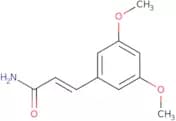
CAS:<p>3,5-Dimethoxycinnamide is a compound that has been shown to inhibit the C1-4 alkoxy and C1-4 alkyl esterase activity of the enzyme secretase. This enzyme is involved in the production of amyloid beta peptides and is thought to be an important contributor to Alzheimer's Disease. 3,5-Dimethoxycinnamide also inhibits the aspartyl protease activity of aspartyl proteases, which are enzymes that may play a role in Alzheimer's disease. 3,5-Dimethoxycinnamide binds to the hydrophobic region of these enzymes and prevents them from binding to their substrates. The affinity of this compound for these enzymes precludes its ability to bind with other proteins in the brain, thereby reducing its potential toxicity. 3,5-Dimethoxycinnamide can be labeled with halogeno groups or other chemical moieties for profiling purposes.</p>Formula:C11H13NO3Purity:Min. 95%Molecular weight:207.23 g/mol