Ethers
Ethers are organic compounds containing an ether functional group, characterized by an oxygen atom bonded to two hydrocarbon radicals. These compounds are valuable in synthesis and serve as solvents in various chemical reactions. At CymitQuimica, we offer a selection of high-quality ethers to support your research and industrial applications, ensuring reliable and effective results. Our range of ethers meets diverse laboratory requirements, from routine experiments to advanced research.
Found 40729 products of "Ethers"
Sort by
Purity (%)
0
100
|
0
|
50
|
90
|
95
|
100
N-(Methoxymethyl)-N-[(trimethylsilyl)methyl]benzenemethanamine (>90%)
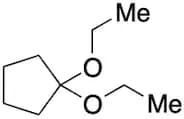
CAS:Controlled Product<p>Applications N-(Methoxymethyl)-N-[(trimethylsilyl)methyl]benzenemethanamine is used in the synthesis of pyrrolidine derivatives as novel sodium channel blockers used to treat ischemic related ailments.<br>References Seki, M. et al.: Bioorg. Med. Chem. Lett., 23, 4230 (2013);<br></p>Formula:C13H23NOSiPurity:>90%Color and Shape:NeatMolecular weight:237.411,1-Diethoxycyclopentane
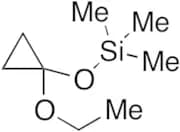
CAS:Controlled Product<p>Applications 1,1-Diethoxycyclopentane is a reagent that is used in the synthesis of Quinbolone (Q670150), which is a cyclopentenyl ether derivative of Boldenone (B675100) and also its active metabolite. Quinbolone shows weak androgenic activity.<br>References Balestreri, R. et al.: Arch. Maragl. Patol. Clin., 22, 369 (1966); Galletti, F. et al.: Steroids, 18, 39 (1971);<br></p>Formula:C9H18O2Color and Shape:NeatMolecular weight:158.24(1-Ethoxycyclopropoxy)trimethylsilane
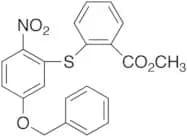
CAS:Controlled Product<p>Applications (1-Ethoxycyclopropoxy)trimethylsilane used as a reactant in the synthesis of di-, tri- and tetracyclopropylhydrazines. Also used as reagent in the synthesis of g elsemoxonine which is found in gelsemium plant species that is used in traditional asian medicine.<br> Not a dangerous good if item is equal to or less than 1g/ml and there is less than 100g/ml in the package<br>References Shestakov, A., et al.: Chem. Commun., 52, 2398 (2016); Diethelm, S., et al.: J. Am. Chem. Soc., 137, 6084 (2015);<br></p>Formula:C8H18O2SiColor and Shape:NeatMolecular weight:174.314-Benzyloxy-2-(2’-carbomethoxy)thiophenylnitrobenzene
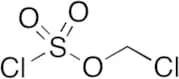
CAS:Controlled Product<p>Applications 4-Benzyloxy-2-(2’-carbomethoxy)thiophenylnitrobenzene (cas# 329217-03-0) is a compound useful in organic synthesis.<br></p>Formula:C21H17NO5SColor and Shape:YellowMolecular weight:395.43Chloromethoxysulfonyl Chloride
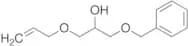
CAS:Controlled Product<p>Stability Moisture Sensitive<br>Applications Chloromethoxysulfonyl Chloride is a useful intermediate for organic synthesis. Chloromethoxysulfonyl Chloride is a useful reagent for the preparation of HIV-attachment inhibitor BMS-663068, and in the synthesis of water soluble benzimidazole derivatives useful for treatment of fasciolosis.<br>References Fox, R. J., et al.; Org. Process Res. Dev., 21, 1095 (2017); Flores-Ramos, M., et al.: Bioorg. Med. Chem. Lett., 24, 5814 (2014); Zheng, B., et al.: Org. Process Res. Dev., 16, 1827 (2012)<br></p>Formula:CH2Cl2O3SColor and Shape:NeatMolecular weight:164.9961-(Phenylmethoxy)-3-(2-propen-1-yloxy)-2-propanol
CAS:Controlled Product<p>Applications 1-(Phenylmethoxy)-3-(2-propen-1-yloxy)-2-propanol (cas# 83016-75-5) is a compound useful in organic synthesis.<br></p>Formula:C13H18O3Color and Shape:NeatMolecular weight:222.28N-[(1,1-Dimethylethoxy)carbonyl]-L-homoserine 1,1-Dimethylethyl Ester Methanesulfonate
CAS:Controlled Product<p>Applications N-[(1,1-Dimethylethoxy)carbonyl]-L-homoserine 1,1-Dimethylethyl Ester Methanesulfonate is an intermediate in synthesizing L-Methionine-34S (M260443). It is a labelled L-Methionine, an essential aminoacid for human development. Hepatoprotectant; antidote (acetominophen poisoning); urinary acidifier.<br>References Benevenga, N.J., et al.: J. Agric. Food Chem., 22, 2 (1974); Fleisher, L.D., et al.: Clin. Endocrinol. Metab., 3, 37 (1974); Meinnel, T., et al.: Biochimie, 75, 1061 (1993)<br></p>Formula:C14H27NO7SColor and Shape:NeatMolecular weight:353.432-Amino-4,5,7,8-tetrahydro-6-(N-carbethoxy)thiazolo[5,4-d]azepine
CAS:Controlled Product<p>Applications 2-Amino-4,5,7,8-tetrahydro-6-(N-carbethoxy)thiazolo[5,4-d]azepine (cas# 887352-57-0) is a compound useful in organic synthesis.<br></p>Formula:C10H15N3O2SColor and Shape:NeatMolecular weight:241.312,5-Dimethoxytetrahydrofuran
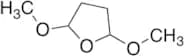
CAS:Controlled Product<p>Applications 2,5-DIMETHOXYTETRAHYDROFURAN (cas# 696-59-3) is a useful research chemical.<br> Not a dangerous good if item is equal to or less than 1g/ml and there is less than 100g/ml in the package<br></p>Formula:C6H12O3Color and Shape:NeatMolecular weight:132.161,2-Dimethoxyethane
CAS:Controlled Product<p>Stability Hygroscopic<br>Applications 1,2-Dimethoxyethane is used in the synthesis of potent ligands for the central nicotinic acetylcholine receptor. Also used in the synthesis of new ruthenium sensitizers fo the production of highly efficient dye-sensitized solar cells.<br> Not a dangerous good if item is equal to or less than 1g/ml and there is less than 100g/ml in the package<br>References Nielsen, S. et al.: J. Med. Chem., 43, 2217, (2000); Shi, Y. et al.: ACS. App. Mat. Int., 5, 144 (2013);<br></p>Formula:C4H10O2Color and Shape:ColourlessMolecular weight:90.124-Bromo-2-methoxytoluene
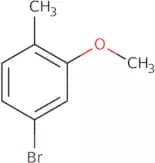
CAS:<p>4-Bromo-2-methoxytoluene is a lactone compound that has been shown to have bioactivities. It is also known as methoxy, an aromatic organic compound with one methyl substituent and two hydroxyl substituents on a benzene ring. 4-Bromo-2-methoxytoluene is found in the natural products cephalotaxaceae and cephalotaxus. This compound can be synthesized by reacting diisopropylamine with formylation of bromobenzene in the presence of acetic acid followed by treatment with sodium acetate. The chemical structure forms a skeleton containing four carbon atoms and six hydrogen atoms, which are arranged in three rings (a cyclic system). This compound exists as two isomers, namely cis and trans.</p>Formula:C8H9BrOPurity:Min. 95%Color and Shape:PowderMolecular weight:201.06 g/mol6-Ethoxypurine
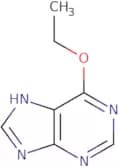
CAS:<p>6-Ethoxypurine is a nucleoside analog that inhibits the enzyme ribonucleotide reductase, which converts ribonucleotides to deoxyribonucleotides. It is used in cell culture to measure the effects of radiation and hydrochloric acid on the production of ATP. 6-Ethoxypurine has been shown to inhibit influenza virus replication with an IC50 of 10 μM. This compound has reactive hydroxyl groups that allow it to participate in hydrogen bonding, which can be beneficial for interactions with other molecules. 6-Ethoxypurine also exhibits nucleophilic properties, which allows it to react with other chemical species and can be useful for generating new chemical compounds.</p>Formula:C7H8N4OPurity:Min. 95%Color and Shape:PowderMolecular weight:164.16 g/mol3,4'-Dimethoxy-2'-hydroxychalcone
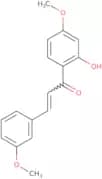
CAS:<p>3,4'-Dimethoxy-2'-hydroxychalcone is a reaction component and useful scaffold for the synthesis of complex compounds. This chemical is an intermediate in the synthesis of various pharmaceuticals, such as anti-tuberculosis drugs, cancer chemotherapeutics and antibiotics. 3,4'-Dimethoxy-2'-hydroxychalcone has been shown to be a versatile building block that can be used to synthesize both natural products and pharmaceuticals. This compound also has a wide range of applications in the production of fine chemicals.</p>Formula:C17H16O4Purity:Min. 95%Molecular weight:284.31 g/mol2-Chloro-7-methoxyquinazoline
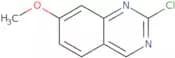
CAS:<p>2-Chloro-7-methoxyquinazoline is a useful chemical that is used in the production of other compounds. It can be used as a building block for the synthesis of various organic compounds, such as pharmaceuticals and pesticides. This compound has been shown to have useful properties, such as high purity and low cost.</p>Formula:C9H7ClN2OPurity:Min. 95%Color and Shape:Yellow PowderMolecular weight:194.62 g/molReserpiline
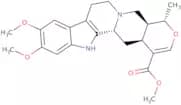
CAS:<p>Methyl (3beta,19alpha,20alpha)-16,17-didehydro-10,11-dimethoxy-19-methyloxayohimban-16-carboxylate is a trifluoroacetate ester of apocynin. It is used to treat bowel disease by reducing inflammation and stimulating the growth of new cells in the epithelium. Apocynin has been shown to inhibit the release of inflammatory cytokines such as epidermal growth factor (EGF) in vitro. In vivo studies have shown that it reduces symptoms of bowel disease and prevents ulceration. Apocynin has been shown to be a potent analog for EGF and has been studied for its potential use in the treatment of cancer. However, it has also been found to cause psychosis when administered at high doses. The toxicity studies on apocynin show that it is not toxic at lower doses but becomes more toxic at higher doses due</p>Formula:C23H28N2O5Purity:Min. 95%Color and Shape:PowderMolecular weight:412.48 g/mol5-Methoxy-2-nitrophenylamine
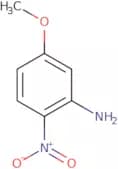
CAS:<p>5-Methoxy-2-nitrophenylamine (5MN) is a synthetic compound. It has been shown to produce an inhibitory effect on Alzheimer's disease and Leishmania infantum by inhibiting the formation of amyloid beta (Aβ) and leishmanicidal alpha-ketoglutarate, respectively. 5MN has also been observed to stabilize supramolecular structures in magnetic resonance spectroscopy experiments. This chemical is synthesized from 4-amino-3-nitrophenol and methylamine by reacting them in the presence of sodium hydroxide and sulfuric acid under refluxing conditions. The reaction products are analyzed using FTIR spectroscopy, as shown below:</p>Formula:C7H8N2O3Purity:Min. 95%Color and Shape:PowderMolecular weight:168.15 g/mol5-Methoxy-3-(1,2,5,6-tetrahydro-4-pyridinyl)-1H-indole hemisuccinate
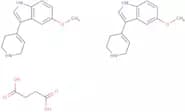
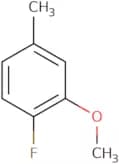
CAS:<p>5-Methoxy-3-(1,2,5,6-tetrahydro-4-pyridinyl)-1H-indole hemisuccinate is a serotonin receptor agonist that has been shown to stimulate the 5HT1A receptor. It stimulates insulin secretion and glucose uptake in rats and inhibits feeding behavior in mice. It has also been shown to have antihypertensive effects on rats by blocking the 5HT2 receptors. In addition, it stimulates regeneration of injured nerve cells. This drug has potential uses as a treatment for neurological diseases such as Parkinson's disease and depression.</p>Formula:C14H16N2O•(C4H6O4)0Purity:Min. 95%Color and Shape:Yellow solid.Molecular weight:287.33 g/mol4-Fluoro-3-methoxytoluene
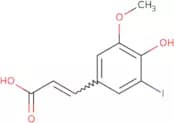
CAS:<p>4-Fluoro-3-methoxytoluene (4FMET) is a polymeric organic compound that has an index of refraction of 1.5. It is soluble in common solvents, such as chloroform, acetone and ethanol, but insoluble in water. 4FMET can be used as a copolymerization additive to improve the chemical stability of polymers and plastics. It also has antibacterial properties that are due to its ability to disrupt bacterial membranes and inhibit protein synthesis. 4FMET is FDA approved for use in ophthalmic solutions that transmit ultraviolet light, such as UV-A or UV-B radiation.</p>Formula:C8H9FOPurity:Min. 95%Color and Shape:Clear LiquidMolecular weight:140.15 g/mol3-(5-Iodo-4-hydroxy-3-methoxy)cinnamic acid
CAS:<p>3-(5-Iodo-4-hydroxy-3-methoxy)cinnamic acid is a chemical compound that can be used as a starting material for synthesis of complex compounds. It is a white solid with a melting point of about 100°C, and it is soluble in water. This product is an excellent reagent for the synthesis of new chemicals, and it has been widely used as a reaction component in organic syntheses. 3-(5-Iodo-4-hydroxy-3-methoxy)cinnamic acid also has antibacterial properties.</p>Formula:C10H9IO4Purity:Min. 95%Molecular weight:320.08 g/mol8-Methoxycarbonyloctanol
CAS:<p>8-Methoxycarbonyloctanol (8MCO) is a fatty acid molecule that has been shown to have significant inhibitory activities against Streptococcus pneumoniae in human serum. 8MCO is a synthetic molecule that can be synthesized from galactose and chloride. It has been found to have a molecular weight of 190.08 g/mol, melting point of -2°C, and boiling point of 217°C at 1 mmHg. 8MCO is soluble in water, methanol, and ethanol. This molecule can be used as an analytical tool for the detection of fatty acids by gas chromatography-mass spectrometry (GC-MS). It also exhibits enzymatic activity when incorporated into enzyme preparations such as esterases and lipases. 8MCO contains functional groups such as carbonyl (-CO), hydroxyl (-OH), carboxylic acid (-COOH), ether (-O-) and alcohol (-</p>Formula:C10H20O3Purity:Min. 95%Color and Shape:Clear LiquidMolecular weight:188.26 g/mol
![N-(Methoxymethyl)-N-[(trimethylsilyl)methyl]benzenemethanamine (>90%)](/_next/image/?url=https%3A%2Fstatic.cymitquimica.com%2Fproducts%2FTR%2Fthumb-webp%2FM264620.webp&w=3840&q=75)

![N-[(1,1-Dimethylethoxy)carbonyl]-L-homoserine 1,1-Dimethylethyl Ester Methanesulfonate](/_next/image/?url=https%3A%2Fstatic.cymitquimica.com%2Fproducts%2FTR%2Fthumb-webp%2FD679508.webp&w=3840&q=75)
![2-Amino-4,5,7,8-tetrahydro-6-(N-carbethoxy)thiazolo[5,4-d]azepine](/_next/image/?url=https%3A%2Fstatic.cymitquimica.com%2Fproducts%2FTR%2Fthumb-webp%2FA629920.webp&w=3840&q=75)