Ethers
Ethers are organic compounds containing an ether functional group, characterized by an oxygen atom bonded to two hydrocarbon radicals. These compounds are valuable in synthesis and serve as solvents in various chemical reactions. At CymitQuimica, we offer a selection of high-quality ethers to support your research and industrial applications, ensuring reliable and effective results. Our range of ethers meets diverse laboratory requirements, from routine experiments to advanced research.
Found 40729 products of "Ethers"
Sort by
Purity (%)
0
100
|
0
|
50
|
90
|
95
|
100
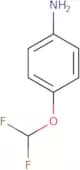
4-Difluoromethoxyaniline
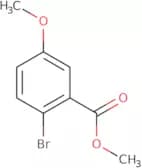
CAS:<p>4-Difluoromethoxyaniline is an allosteric modulator for glutamate receptors. It is a chemical compound that can be used to modify glutamate receptors to act as either metabotropic or ionotropic. 4-Difluoromethoxyaniline is used in the treatment of Parkinson's disease and other movement disorders, such as dyskinesia. It has been shown that 4-difluoromethoxyaniline increases the activity of activated glutamate receptors, which leads to increased levels of the neurotransmitter dopamine in the brain. This drug may also inhibit nitric oxide production and corticotropin-releasing hormone (CRH) synthesis.</p>Formula:C7H7F2NOPurity:Min. 95%Molecular weight:159.13 g/mol2-Bromo-5-methoxybenzoic acid methyl ester
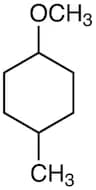
CAS:<p>2-Bromo-5-methoxybenzoic acid methyl ester is an antibiotic with a broad spectrum of activity against bacteria, including Staphylococcus aureus and Pseudomonas aeruginosa. 2-Bromo-5-methoxybenzoic acid methyl ester is an inhibitor of the enzyme benzohydrazide, which is involved in the production of prostaglandins. This drug also has antioxidant activity and can inhibit the growth of Escherichia coli and Cereus. 2-Bromo-5-methoxybenzoic acid methyl ester has analgesic properties and was shown to have analgesic activities in animal tests.</p>Formula:C9H9BrO3Purity:Min. 95%Color and Shape:Clear LiquidMolecular weight:245.07 g/mol1-Methoxy-4-methylcyclohexane (cis- and trans- mixture)
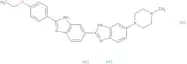
CAS:Formula:C8H16OPurity:>98.0%(GC)Color and Shape:Colorless to Almost colorless clear liquidMolecular weight:128.22Hoechst 33342
CAS:<p>2'-(4-Ethoxyphenyl)-5-(4-methyl-1-piperazinyl)-2,5'-bi-1H-benzimidazole trihydrochloride (EPMB) is a DNA binding agent that is used in tumor detection and research into apoptosis. It has been shown to inhibit the activity of p-glycoprotein, which is an efflux pump protein, and Bcl-2 protein. EPMB has also been shown to cause apoptosis in human squamous cell carcinoma cells in a concentration dependent manner. This compound has shown potential as a treatment for cancer because it inhibits the ability of cancer cells to proliferate by binding to the NMDA receptor.</p>Formula:C27H28N6O·3HCl·xH2OPurity:Min. 95%Color and Shape:Yellow PowderMolecular weight:561.93 g/mol2-Iodo-N-(4-methoxyphenyl)-N-methylbenzamide
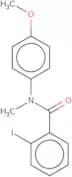
CAS:<p>2-Iodo-N-(4-methoxyphenyl)-N-methylbenzamide is a versatile building block that can be used in research and as a reagent. It is a high quality chemical and useful as a building block or intermediate for the synthesis of more complex compounds. This chemical is also a useful scaffold for the synthesis of more complex molecules.</p>Formula:C15H14INO2Purity:Min. 95%Molecular weight:367.18 g/mol4,6-Dimethoxy-1H-1,3,5-triazin-2-one
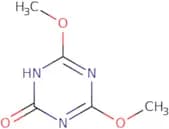
CAS:<p>4,6-Dimethoxy-1H-1,3,5-triazin-2-one is a conjugate of pyridinium with an amide. The compound has been used as a disinfectant for surfaces and in the treatment of wounds. It is also used as a biocide in water treatment. This compound has shown to be effective against Staphylococcus aureus and other bacteria, as well as some fungi. 4,6-Dimethoxy-1H-1,3,5-triazin-2-one can be synthesized from 2-(4'-methoxyphenyl)acetonitrile and chloral hydrate. The compound contains functionalities such as amines and oligosaccharides that are important for its antimicrobial activity.</p>Formula:C5H7N3O3Purity:Min. 95%Color and Shape:PowderMolecular weight:157.13 g/mol3-[2-(1,3-Dioxolan-2-yl)ethyl]-7,8-dimethoxy-1,3,4,5-tetrahydro-2H-3-benzazepin-2-one
CAS:<p>Please enquire for more information about 3-[2-(1,3-Dioxolan-2-yl)ethyl]-7,8-dimethoxy-1,3,4,5-tetrahydro-2H-3-benzazepin-2-one including the price, delivery time and more detailed product information at the technical inquiry form on this page</p>Formula:C17H23NO5Purity:Min. 95%Color and Shape:PowderMolecular weight:321.37 g/mol2-Methoxy-2-phenylethanol
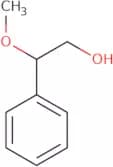
CAS:<p>2-Methoxy-2-phenylethanol is a molecule that has been found to be a good catalyst for the ring-opening of epoxides. It is also used as a solid catalyst in kinetic studies and as an additive in organic syntheses. 2-Methoxy-2-phenylethanol is soluble in water and reacts with fatty acids to form acetylated products. This molecule has been shown to have an inhibitory effect on human liver alcohol dehydrogenase, which may be due to it's ability to bind to the enzyme's active site.</p>Formula:C9H12O2Purity:Min. 95%Color and Shape:Colorless Clear LiquidMolecular weight:152.19 g/mol5-Ethoxy-2(5H)-furanone
CAS:<p>5-Ethoxy-2(5H)-furanone is an oxidation product of 5-ethoxy-2(5H)-furanone. It has an isomeric, stereospecific, regiospecifically, and a tautomeric relationship with furfural. 5-Ethoxy-2(5H)-furanone can be produced by the oxidation of furfural with boron trifluoride etherate in the presence of iodosobenzene. The reaction mechanism involves the addition of hydrogen peroxide to the boron trifluoride etherate to form hydroperoxydiborane. This compound then reacts with iodosobenzene to produce 5-ethoxy-2(5H)-furanone and 2,5-dihydroxybenzaldehyde. The reaction produces a mixture of diastereomers that contain different numbers of carbon atoms due to the regiospecific</p>Formula:C6H8O3Purity:Min. 95%Color and Shape:PowderMolecular weight:128.13 g/mol4-Iodo-N-(4-methoxyphenyl)-N-methylbenzamide
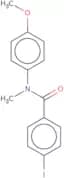
CAS:<p>4-Iodo-N-(4-methoxyphenyl)-N-methylbenzamide is a useful scaffold that can be used in the synthesis of complex compounds. It is also a versatile building block and has been found to be useful as an intermediate and building block. 4-Iodo-N-(4-methoxyphenyl)-N-methylbenzamide is a fine chemical with CAS No. 320734-40-5. This reagent is high quality, research chemicals, and can be used in the synthesis of speciality chemicals.</p>Formula:C15H14INO2Purity:Min. 95%Molecular weight:367.18 g/mol3-(1,1,2,2-Tetrafluoroethoxy)phenol
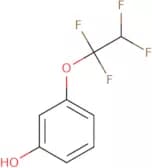
CAS:<p>3-(1,1,2,2-Tetrafluoroethoxy)phenol is a versatile building block that can be used in the synthesis of complex compounds. It is also a reagent and speciality chemical and has CAS No. 53997-99-2. 3-(1,1,2,2-Tetrafluoroethoxy)phenol is a useful building block for organic synthesis and has been used as a reaction component or scaffold.</p>Formula:C8H6F4O2Purity:Min. 95%Molecular weight:210.13 g/mol5-Chloro-2-methoxybenzaldehyde
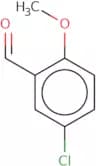
CAS:<p>5-Chloro-2-methoxybenzaldehyde is a potent inhibitor of the bacterial enzyme acetylcholinesterase. It has been shown to have an interaction with biomolecules, such as chalcones, and can be used in the manufacture of antibacterial agents. 5-Chloro-2-methoxybenzaldehyde has been found to have potent inhibitory activity against organocatalytic aldehydes and atypical aldehydes and can be used as an active ingredient in the synthesis of novel compounds with antibacterial activity.</p>Formula:C8H7ClO2Purity:Min. 95%Color and Shape:PowderMolecular weight:170.59 g/mol3,3'-Dimethoxyazoxybenzene
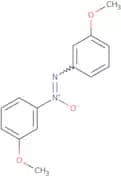
CAS:<p>3,3'-Dimethoxyazoxybenzene is a nitroarene that has electron-donating properties. It reacts with primary amines to form azoxy groups in the presence of alkoxide. 3,3'-Dimethoxyazoxybenzene can be used for the synthesis of nitrophenyl and aniline derivatives by reaction with nitroarenes, alcohols, or amines. It can also serve as a photoreduced molecule in mechanistic studies.</p>Formula:C14H14N2O3Purity:Min. 95%Molecular weight:258.27 g/mol2-Chloro-5-methoxybenzoic acid
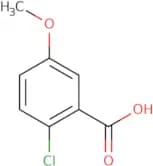
CAS:<p>2-Chloro-5-methoxybenzoic acid (2CMB) is a copper chelator that has been shown to have antagonistic properties against microglia cells. 2CMB is synthesized from 2,5-dichlorobenzoic acid and methoxylamine. It has been shown to inhibit the synthesis of inflammatory mediators in rat spinal cord microglia cells by inhibiting the activity of polyphosphoric acid, anions and additives. 2CMB also has a high affinity for chloride ions and can be used as a tracer to measure chloride profiles. 2CMB reacts with copper ions at a slow rate and can be used as an indicator for the presence of microglia cells.</p>Formula:C8H7ClO3Purity:Min. 95%Molecular weight:186.59 g/mol5-Methoxy-1-methyl-1H-indole-3-carbaldehyde
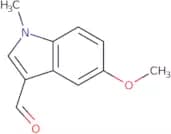
CAS:<p>5-Methoxy-1-methyl-1H-indole-3-carbaldehyde is a synthetic compound that has been shown to inhibit the growth of human tumour cells in vitro. This compound is a regioisomeric mixture of two enantiomers, with the (S) isomer being the more potent inhibitor. The (R) isomer was found to be less active against human tumour cells and may have an antimicrobial activity. 5-Methoxy-1-methyl-1H-indole-3-carbaldehyde has been shown to be bioreductive towards electron donors such as NADPH and glutathione. It also inhibits dt diaphorase and aerobic metabolism in human tumour cells.</p>Formula:C11H11NO2Purity:Min. 95%Color and Shape:Off-White PowderMolecular weight:189.21 g/mol4-(Trifluoromethoxy)phenyl isocyanate
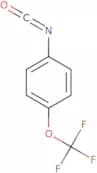
CAS:<p>4-(Trifluoromethoxy)phenyl isocyanate (4-TFPC) is a potent antagonist of the platelet P2Y12 receptor. It inhibits platelet aggregation and adhesion, as well as prevents the formation of blood clots. 4-TFPC has a low molecular weight and can be administered orally. It also has been shown to increase insulin sensitivity and reduce blood glucose levels in mice with type 2 diabetes. This antiplatelet agent binds to receptors on the surface of platelets, preventing activation. 4-TFPC is also an inhibitor of protein kinase C and phosphodiesterases, which are enzymes that regulate cell signalling pathways. In vitro studies have shown that 4-TFPC inhibits cycloheptyl (CPH)-induced aggregation in human platelets in a dose-dependent manner with an IC50 value of 0.5 μM.END></p>Formula:C8H4F3NO2Purity:Min. 95%Color and Shape:Colorless Clear LiquidMolecular weight:203.12 g/mol(3,4-Dimethoxy-5-hydroxyphenyl)acetone
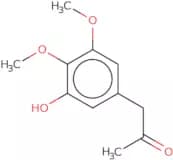
CAS:<p>(3,4-Dimethoxy-5-hydroxyphenyl)acetone is a fine chemical that belongs to the class of compounds known as reagents. It has been used in research and development as a building block or intermediate for the synthesis of other chemicals. It is also used as a versatile building block in complex organic syntheses, such as pharmaceuticals. The chemical is soluble in organic solvents and reacts with many other chemicals, making it useful for synthetic chemistry. This compound has been shown to be high quality and can be used to synthesize other chemicals with diverse properties.</p>Formula:C11H14O4Purity:Min. 95%Molecular weight:210.23 g/mol1-(3-Fluoro-4-methoxyphenyl)-2-nitropropene
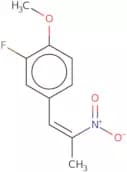
CAS:<p>1-(3-Fluoro-4-methoxyphenyl)-2-nitropropene is a chemical compound with the molecular formula CHNO. It is a high quality reagent that is useful for preparing complex compounds, scaffolds and building blocks for use in research and development. 1-(3-Fluoro-4-methoxyphenyl)-2-nitropropene is a fine chemical that can be used as a versatile building block in reactions.</p>Formula:C10H10FNO3Purity:Min. 95%Molecular weight:211.19 g/mol4-Methoxyphenyl 4-Hydroxybenzoate
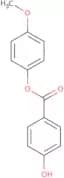
CAS:<p>4-Methoxyphenyl 4-hydroxybenzoate is a thermodynamic monomer with the molecular formula CHCOOH. It is a colorless to white solid that is soluble in water, methanol, and acetone. 4-Methoxyphenyl 4-hydroxybenzoate polymerizes under high pressure and temperature to form homopolymers and copolymers with phenoxy, trifluoromethyl, and amide groups. This compound has been used to make polyoxyethylene surfactants with a variety of properties including surface tension, viscosity, and efficiency.</p>Formula:C14H12O4Purity:Min. 95%Molecular weight:244.24 g/mol3-Aminopropyltriethoxysilane
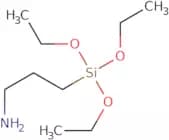
CAS:<p>3-Aminopropyltriethoxysilane is a liquid that has a phase transition temperature of -88.3°C. It is soluble in water at 1 g/L and in ethanol at 0.1 g/L. 3-Aminopropyltriethoxysilane has been shown to inhibit the production of prostaglandin E2 and leukotrienes by inhibiting cyclooxygenase activity in red blood cells, which may be due to its ability to chelate metal ions such as iron or copper. 3-Aminopropyltriethoxysilane also inhibits the production of prostaglandin E2 and leukotrienes by inhibiting cyclooxygenase activity in red blood cells, which may be due to its ability to chelate metal ions such as iron or copper. The compound also inhibits the production of prostaglandin E2 and leukotrienes by inhibiting</p>Formula:C9H23NO3SiPurity:Min. 97 Area-%Color and Shape:Colorless Clear LiquidMolecular weight:221.37 g/mol


![3-[2-(1,3-Dioxolan-2-yl)ethyl]-7,8-dimethoxy-1,3,4,5-tetrahydro-2H-3-benzazepin-2-one](/_next/image/?url=https%3A%2Fstatic.cymitquimica.com%2Fproducts%2F3D%2Fthumb-webp%2FFD149999.webp&w=3840&q=75)