Ethers
Ethers are organic compounds containing an ether functional group, characterized by an oxygen atom bonded to two hydrocarbon radicals. These compounds are valuable in synthesis and serve as solvents in various chemical reactions. At CymitQuimica, we offer a selection of high-quality ethers to support your research and industrial applications, ensuring reliable and effective results. Our range of ethers meets diverse laboratory requirements, from routine experiments to advanced research.
Found 40729 products of "Ethers"
Sort by
Purity (%)
0
100
|
0
|
50
|
90
|
95
|
100
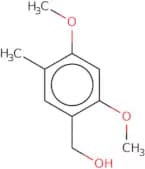
2,4-Dimethoxy-5-methylbenzyl alcohol
CAS:<p>2,4-Dimethoxy-5-methylbenzyl alcohol is a high quality chemical that is used as an intermediate for the synthesis of complex compounds. It has been used as a reagent and as a building block for the synthesis of other chemicals. This compound can be used to produce fine chemicals and research chemicals. 2,4-Dimethoxy-5-methylbenzyl alcohol has been shown to be useful in the production of versatile building blocks and reaction components.</p>Formula:C10H14O3Purity:Min. 95%Molecular weight:182.22 g/mol3-Methoxyphenylmethylcarbinol
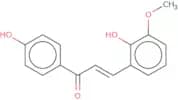
CAS:<p>3-Methoxyphenylmethylcarbinol is a hydrogen tartrate that can be used as an intermediate in the Friedel-Crafts reaction. It is also an imine, which is formed when a nitrogen atom of an amine reacts with a carbon atom of formaldehyde. 3-Methoxyphenylmethylcarbinol has been shown to have stereoselective properties in the Friedel-Crafts reaction, which means that only one product is produced from two reactants. In this case, the hydrogen tartrate and phosphorus oxychloride are reacted to produce oxone and chloride compounds. The selectivity of 3-methoxyphenylmethylcarbinol can be increased by adding triphosgene or dimethylamine to the reaction mixture. This compound dissociates easily into its component parts and can be regenerated by adding ethyl formate or ferrocene.</p>Formula:C9H12O2Purity:Min. 95%Color and Shape:PowderMolecular weight:152.19 g/mol4',2-Dihydroxy-3-methoxychalcone
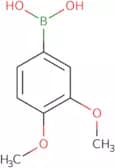
CAS:<p>4,2-Dihydroxy-3-methoxychalcone is a fine chemical that is useful in the synthesis of various pharmaceuticals and other chemicals. It is a versatile building block that can be used as a reaction component or intermediate in the synthesis of complex compounds. 4,2-Dihydroxy-3-methoxychalcone has been shown to be a high quality reagent for use in the synthesis of speciality chemicals and research chemicals. This compound is also useful as a scaffold for the development of new drugs.</p>Formula:C16H14O4Purity:Min. 95%Molecular weight:270.28 g/mol3,4-Dimethoxyphenylboronic acid
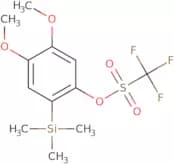
CAS:<p>3,4-Dimethoxyphenylboronic acid is a boronate ester that has been shown to be an effective coupling partner for the Suzuki reaction. It has also been used in cancer therapy and as a photochemical probe for the study of biological properties. 3,4-Dimethoxyphenylboronic acid has been shown to demethylate DNA and inhibit methionine aminopeptidase activity. It also cross-couples with halides, such as chlorides or iodides, and activates tertiary alcohols. 3,4-Dimethoxyphenylboronic acid is soluble in organic solvents and can be used in supramolecular chemistry.</p>Formula:C8H11BO4Purity:Min. 95%Color and Shape:White PowderMolecular weight:181.98 g/mol4,5-Dimethoxy-2-(trimethylsilyl)phenyl trifluoromethanesulfonate
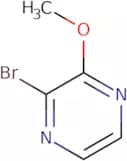
CAS:<p>4,5-Dimethoxy-2-(trimethylsilyl)phenyl trifluoromethanesulfonate is a reagent for the synthesis of propiolates. It is prepared by reacting methyl propiolate with tetrachloride, hexachloroethane, or tetrabromide in acetonitrile. The reactants are heated to reflux under argon and then cooled to room temperature. This product is an ionic liquid that can be used as a solvent. 4,5-Dimethoxy-2-(trimethylsilyl)phenyl trifluoromethanesulfonate is a zwitterion and reacts with amines to form quaternary ammonium salts. It can also be used for the synthesis of unactivated transition metal complexes by reacting it with palladium and amines.</p>Formula:C12H17F3O5SSiPurity:Min. 95%Color and Shape:Colorless PowderMolecular weight:358.41 g/mol2-Bromo-3-methoxypyrazine
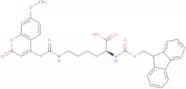
CAS:<p>2-Bromo-3-methoxypyrazine is a chemical compound that is used as a precursor in the biosynthesis of geosmin. Geosmin, also known as 2-methylisoborneol or 2-MIB, is a volatile organic compound which has a musty or earthy smell. It is produced by some species of bacteria, including Myxobacterium and Chondromyces crocatus. It can be found in soil and water samples from areas with high levels of organic matter. 2-Bromo-3-methoxypyrazine was first isolated from cultures of M. crocatus in 1950. It can be synthesized from 3,4,5-trimethoxybenzaldehyde via bromination followed by reduction with sodium hydrosulfide. This process creates an intermediate called 2-(2'-bromoethyl)pyrazine, which undergoes methylation to create 2</p>Formula:C5H5BrN2OPurity:Min. 95%Color and Shape:White Off-White PowderMolecular weight:189.01 g/molN-α-Fmoc-Nε-7-methoxycoumarin-4-acetyl-L-lysine
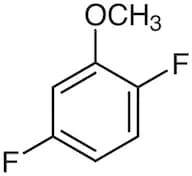
CAS:<p>N-alpha-Fmoc-Nepsilon-7-methoxycoumarin-4-acetyl-L-lysine is a fluorogenic molecule that is synthesized by the solid phase method. It is an analog of lysine, which is a bioactive amino acid. This compound binds to copper and exhibits fluorescence emission at 585 nm when excited at 488 nm. N-alpha-Fmoc-Nepsilon-7-methoxycoumarin-4-acetyl-L-lysine can be used as a substrate for bone growth in vitro and in vivo. It can also be used as a labeling reagent for bone tissue, such as bone sections or cells. It has been shown to produce osteogenic activity in vitro and in vivo.</p>Formula:C33H32N2O8Purity:Min. 97 Area-%Color and Shape:PowderMolecular weight:584.62 g/mol2,5-Difluoroanisole
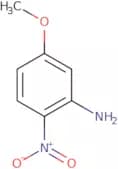
CAS:Formula:C7H6F2OPurity:>98.0%(GC)Color and Shape:Colorless to Almost colorless clear liquidMolecular weight:144.125-Methoxy-2-nitrophenylamine
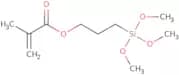
CAS:<p>5-Methoxy-2-nitrophenylamine (5MN) is a synthetic compound. It has been shown to produce an inhibitory effect on Alzheimer's disease and Leishmania infantum by inhibiting the formation of amyloid beta (Aβ) and leishmanicidal alpha-ketoglutarate, respectively. 5MN has also been observed to stabilize supramolecular structures in magnetic resonance spectroscopy experiments. This chemical is synthesized from 4-amino-3-nitrophenol and methylamine by reacting them in the presence of sodium hydroxide and sulfuric acid under refluxing conditions. The reaction products are analyzed using FTIR spectroscopy, as shown below:</p>Formula:C7H8N2O3Purity:Min. 95%Color and Shape:PowderMolecular weight:168.15 g/mol3-Methacryloxypropyltrimethoxysilane
CAS:<p>3-Methacryloxypropyltrimethoxysilane is a silane that has been modified with an acrylic group. It is used as an additive for the production of coatings, adhesives, and sealants. 3-Methacryloxypropyltrimethoxysilane is resistant to hydrochloric acid and other chemicals. It is also stable in water and light exposure. This product has shown to have high adsorption properties, which may be due to its hydroxyl groups. 3-Methacryloxypropyltrimethoxysilane has also been shown to have coupling properties that are advantageous for use with polymers and plastics.</p>Formula:C10H20O5SiPurity:Min. 95%Color and Shape:Colorless Clear LiquidMolecular weight:248.35 g/mol2-Chloro-5-(4-chloro-5-difluoromethoxy-1-methylpyrazol-3-yl)-4-fluorophenoxyacetic acid monohydrate
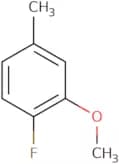
CAS:<p>2-Chloro-5-(4-chloro-5-difluoromethoxy-1-methylpyrazol-3-yl)-4-fluorophenoxyacetic acid monohydrate (2,4,5P) is a phenoxy herbicide that has been shown to be an effective broadleaf and grass weed control agent. 2,4,5P is a granule formulation that can be applied by helicopter or ground equipment. It has synergistic effects with glyphosate when applied together to soybean plants and can be used in combination with other herbicides for more effective weed control.</p>Formula:C13H9Cl2F3N2O·H2OPurity:Min. 95%Color and Shape:White PowderMolecular weight:355.14 g/mol4-Fluoro-3-methoxytoluene
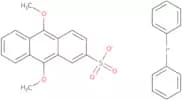
CAS:<p>4-Fluoro-3-methoxytoluene (4FMET) is a polymeric organic compound that has an index of refraction of 1.5. It is soluble in common solvents, such as chloroform, acetone and ethanol, but insoluble in water. 4FMET can be used as a copolymerization additive to improve the chemical stability of polymers and plastics. It also has antibacterial properties that are due to its ability to disrupt bacterial membranes and inhibit protein synthesis. 4FMET is FDA approved for use in ophthalmic solutions that transmit ultraviolet light, such as UV-A or UV-B radiation.</p>Formula:C8H9FOPurity:Min. 95%Color and Shape:Clear LiquidMolecular weight:140.15 g/molDiphenyliodanium 9,10-dimethoxyanthracene-2-sulfonate
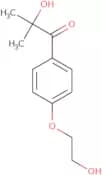
CAS:<p>Diphenyliodanium 9,10-dimethoxyanthracene-2-sulfonate is an organic compound that belongs to the class of vinyl ethers. It can be used as a photosensitive material in photolithography. The mechanism of the photoinduced crosslinking reaction has been studied by mechanistic study and shown to proceed through a Friedel-Crafts type reaction followed by a transfer mechanism. This compound can also be prepared by irradiating an ammonium formate solution with ultraviolet light. Diphenyliodanium 9,10-dimethoxyanthracene-2-sulfonate is soluble in hydroxide solution and reacts with uv irradiation to produce radicals at the carbonyl group.</p>Formula:C28H23IO5SPurity:Min. 95%Molecular weight:598.45 g/mol2-Hydroxy-4'-(2-hydroxyethoxy) -2-methylpropiophenone
CAS:<p>2-Hydroxy-4'-(2-hydroxyethoxy)-2-methylpropiophenone is a reactive chemical substance that has been shown to have significant cytotoxicity and biological properties. It is used in the treatment of cervical cancer and has been shown to inhibit the growth of cancer cells. This compound is found in a number of commercial products, including sunscreens and hair dyes, but its use may be limited due to its photochemical reactivity. The structure of 2HEPP was determined using nuclear magnetic resonance (NMR) spectroscopy and mass spectrometry. The chemical formula for 2HEPP is C10H14O3. It has a molecular weight of 192.22 g/mol and an empirical formula of C10H14O3. 2HEPP is soluble in methanol, acetone, ether, chloroform, benzene, ethanol, ethyl acetate, diethyl ether, and aceton</p>Formula:C12H16O4Purity:Min. 95%Color and Shape:White PowderMolecular weight:224.25 g/mol3-(3-Fluoro-4-methoxybenzoyl)propionic acid
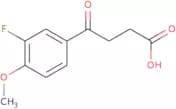
CAS:<p>3-(3-Fluoro-4-methoxybenzoyl)propionic acid is a versatile building block that is used in the synthesis of many organic compounds. 3-(3-Fluoro-4-methoxybenzoyl)propionic acid has been used as a reagent in the synthesis of pharmaceuticals and other chemicals. 3-(3-Fluoro-4-methoxybenzoyl)propionic acid can be used to produce high quality research chemicals, speciality chemicals, and fine chemicals. This compound is also used to produce complex compounds and useful intermediates. 3-(3-Fluoro-4-methoxybenzoyl)propionic acid is available through chemical suppliers such as Sigma Aldrich or Acros Organics.</p>Formula:C11H11FO4Purity:Min. 95%Molecular weight:226.2 g/molMethyl 4-methoxy-2-indolecarboxylate
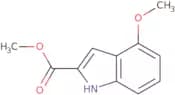
CAS:<p>Methyl 4-methoxy-2-indolecarboxylate is a natural product that has been shown to have cytotoxic and anticancer activity. It was first isolated from the leaves of Picrasma excelsa, which is a plant native to Southeast Asia. Methyl 4-methoxy-2-indolecarboxylate has been found to be effective against breast cancer cell lines and human cancer cells in culture. The anticancer effects may be due to its ability to inhibit protein synthesis by inhibiting the ribosome. This compound also inhibits dehydrocrenatine, which is a precursor of the hormone crenatine, thus leading to decreased production of this hormone.</p>Formula:C11H11NO3Purity:Min. 95%Color and Shape:PowderMolecular weight:205.21 g/mol5-Methoxymethylacicerone
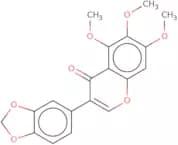
CAS:<p>5-Methoxymethylacicerone (5MMA) is an organic compound that is used in the production of polymers. It has a viscosity of approximately 12,000 cP and can be used as a thermoplastic at temperatures up to 400°C. 5MMA is also used as a viscosite component in automotive fluids and as an optical component in customized items. It is soluble in natural gas and forms a hydrophilic film on water surfaces, causing eutrophication. 5MMA can be found in natural products such as Griffonia simplicifolia.</p>Formula:C19H16O7Purity:Min. 95%Molecular weight:356.33 g/mol3'-(Tetrafluoroethoxy)-β-methyl-β-nitrostyrene
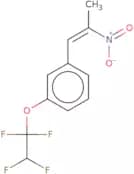
CAS:<p>3'-(Tetrafluoroethoxy)-beta-methyl-beta-nitrostyrene is a versatile building block that can be used as a reaction component for the synthesis of more complex compounds. This compound is also known to have speciality chemical and research chemical properties. 3'-(Tetrafluoroethoxy)-beta-methyl-beta-nitrostyrene has been shown to be an effective reagent for the synthesis of high quality complex compounds.</p>Formula:C11H9F4NO3Purity:Min. 95%Molecular weight:279.19 g/mol4-(2-Methoxyphenoxy)benzoic acid
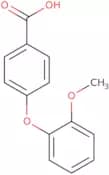
CAS:<p>4-(2-Methoxyphenoxy)benzoic acid is a white crystalline solid with a melting point of 50°C. It is soluble in water, ethanol, ether, and chloroform. 4-(2-Methoxyphenoxy)benzoic acid has been used as a starting material for the synthesis of pharmaceuticals such as carbamazepine (Tegretol). The compound has two methoxy groups on the phenyl ring that are susceptible to nucleophilic attack by strong bases. This reaction occurs at room temperature and can be reversed by heating the solution to 150°C. The compound also undergoes polycondensation reactions when heated in the presence of an oxidizing agent.</p>Formula:C14H12O4Purity:Min. 95%Color and Shape:White PowderMolecular weight:244.24 g/mol5-Amino-N-(3-amino-2,2-dimethyl-3-oxopropyl)-4-hydroxy-2-isopropyl-7-[4-methoxy-3-(3-methoxypropoxy)benzyl]-8-methylnonanamide fumar ate
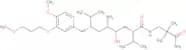
CAS:<p>5-Amino-N-(3-amino-2,2-dimethyl-3-oxopropyl)-4-hydroxy-2-isopropyl-7-[4-methoxy-3-(3-methoxypropoxy)benzyl]-8-methylnonanamide fumar ate is a drug that inhibits the activity of angiotensin II, which is a hormone produced by the body. It is used as monotherapy for treatment of hypertension. 5AMINO has been shown to be effective in lowering blood pressure when administered alone and has been shown to be well tolerated. For this drug, the most frequently reported adverse reactions are nausea and dizziness. This drug should not be taken with other antihypertensive drugs or nonsteroidal antiinflammatory drugs such as ibuprofen (Motrin®). In addition, patients with diabetes should monitor their blood sugar levels carefully while taking this medication.</p>Formula:C30H53N3O6Purity:Min. 95%Color and Shape:PowderMolecular weight:551.76 g/mol