Ethers
Ethers are organic compounds containing an ether functional group, characterized by an oxygen atom bonded to two hydrocarbon radicals. These compounds are valuable in synthesis and serve as solvents in various chemical reactions. At CymitQuimica, we offer a selection of high-quality ethers to support your research and industrial applications, ensuring reliable and effective results. Our range of ethers meets diverse laboratory requirements, from routine experiments to advanced research.
Found 40729 products of "Ethers"
Sort by
Purity (%)
0
100
|
0
|
50
|
90
|
95
|
100
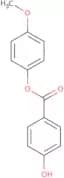
4-Methoxyphenyl 4-Hydroxybenzoate
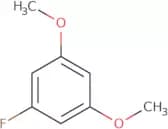
CAS:<p>4-Methoxyphenyl 4-hydroxybenzoate is a thermodynamic monomer with the molecular formula CHCOOH. It is a colorless to white solid that is soluble in water, methanol, and acetone. 4-Methoxyphenyl 4-hydroxybenzoate polymerizes under high pressure and temperature to form homopolymers and copolymers with phenoxy, trifluoromethyl, and amide groups. This compound has been used to make polyoxyethylene surfactants with a variety of properties including surface tension, viscosity, and efficiency.</p>Formula:C14H12O4Purity:Min. 95%Molecular weight:244.24 g/mol1-Fluoro-3,5-dimethoxybenzene
CAS:<p>1-Fluoro-3,5-dimethoxybenzene has been shown to be a ferroelectric material with a dielectric constant of approximately 3000. It is soluble in organic solvents and can be isolated as an oil or solid. The crystalline form of 1-fluoro-3,5-dimethoxybenzene is obtained by sublimation at −20 °C. The compound has a molecular weight of 204.17 and melting point of 155 °C. This compound is used as a starting material for the synthesis of fluorotriphenylmethane analogs that are potential CB2 receptor agonists and other organic compounds, including tetrahydrocannabinol (THC) and its analogues. 1-Fluoro-3,5-dimethoxybenzene also reacts with chloride to form difluorobenzene (DFB). DFB's ability to bind aluminium ions allows it to cataly</p>Formula:C8H9FO2Purity:Min. 98 Area-%Color and Shape:Clear LiquidMolecular weight:156.15 g/mol6-Methoxy-1H-indol-5-ol
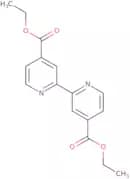
CAS:<p>6-Methoxy-1H-indol-5-ol, also known as 5-hydroxytryptophan (5HTP) is a natural amino acid that is found in the human body. It is converted into serotonin by the enzyme tryptophan hydroxylase and becomes an intermediate in the metabolic pathway of serotonin (5HT). Serotonin affects mood and behavior and is used to treat depression. 6-Methoxy-1H-indol-5-ol has been shown to be effective in treating depression and obesity. This drug has a number of side effects, including nausea, vomiting, diarrhea, dizziness, anxiety, agitation, headache, insomnia, tachycardia (fast heartbeat), high blood pressure, mania or psychosis.</p>Formula:C9H9NO2Purity:Min. 95%Molecular weight:163.17 g/mol4,4'-Bis(ethoxycarbonyl)-2,2'-bipyridine
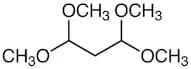
CAS:4,4'-Bis(ethoxycarbonyl)-2,2'-bipyridine (BEBCP) is a dithiolate chromophore. BEBCP has a redox potential of 1.3 volts and the electronic interaction of the carbonyl groups with the electron cloud of the bipyridine nucleus is responsible for this property. The photochemical properties of BEBCP can be systematically studied by using electrochemical data such as voltammetry and cyclic voltammetry. These methods are useful in determining the nature and constant of BEBCP as well as its interaction with ligands.Formula:C16H16N2O4Purity:Min. 95%Color and Shape:PowderMolecular weight:300.31 g/mol1,1,3,3-Tetramethoxypropane
CAS:Formula:C7H16O4Purity:>98.0%(GC)Color and Shape:Colorless to Light yellow clear liquidMolecular weight:164.203,5-Dimethyl-4-methoxybenzoic acid
CAS:<p>3,5-Dimethyl-4-methoxybenzoic acid is a disulphide monomer with the chemical formula C7H8O2S. It can be used as a building block for organic synthesis. This compound has been widely studied because it contains a benzyl group, which is the simplest aromatic system. The symmetric and asymmetric vibrational frequencies of 3,5-dimethyl-4-methoxybenzoic acid have been measured by nmr spectroscopy and theory. The thermodynamic properties of this compound have also been studied by molecular dynamics simulations and quantum chemical calculations.</p>Formula:C10H12O3Purity:Min. 95%Molecular weight:180.2 g/mol2-(2-Bromo-1,1,2,2-tetrafluoroethoxy)-1,1,1,2,3,3-hexafluoro-3-(pentafluoroethoxy)propane
CAS:Formula:C7BrF15O2Purity:>98.0%(GC)Color and Shape:Colorless to Almost colorless clear liquidMolecular weight:480.96Octadecyl Vinyl Ether
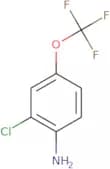
CAS:Formula:C20H40OPurity:>85.0%(GC)Color and Shape:White to Almost white powder to lumpMolecular weight:296.542-Chloro-4-(trifluoromethoxy)aniline
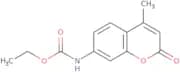
CAS:<p>2-Chloro-4-(trifluoromethoxy)aniline is a chemical reagent that is used in organic synthesis. It has a variety of uses including as a building block for complex compounds, an intermediate for the synthesis of other chemicals, and a reagent for the production of pharmaceuticals. 2-Chloro-4-(trifluoromethoxy)aniline is also useful in research to study the mechanism of certain reactions. The high quality and versatility of this compound make it a speciality chemical with many applications.</p>Formula:C7H5ClF3NOMolecular weight:211.57 g/mol7-Carbethoxyamino-4-methylcoumarin
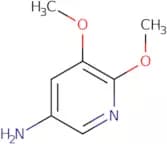
CAS:<p>7-Carbethoxyamido-4-methylcoumarin is a aminocoumarin that exhibits anticancer activity. It is able to inhibit the activity of DPP-IV, an enzyme that degrades insulin in the body.<br>7-Carbethoxyamido-4-methylcoumarin has been shown to inhibit cancer cells and lung cancer cell lines, as well as breast cancer cells and cells with diabetes. This compound has also been shown to have anticancer activity in vivo in rats.</p>Formula:C13H13NO4Purity:Min. 90%Color and Shape:PowderMolecular weight:247.25 g/mol5,6-Dimethoxypyridin-3-amine
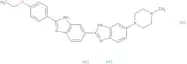
CAS:<p>5,6-Dimethoxypyridin-3-amine is an organic compound with the formula CHN. It is a versatile building block in organic chemistry. 5,6-Dimethoxypyridin-3-amine can be used as a reagent in the synthesis of other compounds or as a reactant to form new compounds. 5,6-Dimethoxypyridin-3-amine is soluble in organic solvents and reacts with most common electrophiles to give substituted products. 5,6-Dimethoxypyridin-3-amine has been found to be useful as an intermediate in the synthesis of a variety of natural products and pharmaceuticals.</p>Formula:C7H10N2O2Purity:Min. 95%Color and Shape:Purple PowderMolecular weight:154.17 g/molHoechst 33342
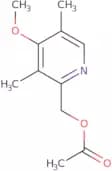
CAS:<p>2'-(4-Ethoxyphenyl)-5-(4-methyl-1-piperazinyl)-2,5'-bi-1H-benzimidazole trihydrochloride (EPMB) is a DNA binding agent that is used in tumor detection and research into apoptosis. It has been shown to inhibit the activity of p-glycoprotein, which is an efflux pump protein, and Bcl-2 protein. EPMB has also been shown to cause apoptosis in human squamous cell carcinoma cells in a concentration dependent manner. This compound has shown potential as a treatment for cancer because it inhibits the ability of cancer cells to proliferate by binding to the NMDA receptor.</p>Formula:C27H28N6O·3HCl·xH2OPurity:Min. 95%Color and Shape:Yellow PowderMolecular weight:561.93 g/mol4-Methoxy-3,5-dimethyl-pyridin-2-yl)methyl acetate
CAS:<p>4-Methoxy-3,5-dimethyl-pyridin-2-yl)methyl acetate is a chemical intermediate that is used in the manufacture of pharmaceuticals and other fine chemicals. It has been found to be a useful scaffold for the synthesis of other compounds. This compound may also be used as a building block or reaction component in research. 4-Methoxy-3,5-dimethyl-pyridin-2-yl)methyl acetate has a CAS number of 91219-90-8 and can be purchased from suppliers such as TCI America.</p>Formula:C11H15NO3Purity:Min. 95%Color and Shape:White PowderMolecular weight:209.24 g/mol3-(Difluoromethoxy)benzyl amine
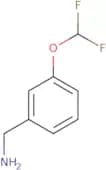
CAS:<p>3-(Difluoromethoxy)benzyl amine is a high-quality reagent that is used as an intermediate in the synthesis of complex compounds. 3-(Difluoromethoxy)benzyl amine is also a useful building block for the synthesis of speciality chemicals and research chemicals. This compound can be used as a versatile building block, which can be used to synthesize different functional groups. 3-(Difluoromethoxy)benzyl amine is soluble in many organic solvents and has a boiling point of 193 °C.</p>Formula:C8H9F2NOPurity:Min. 95%Molecular weight:173.16 g/mol1-Bromo-2-chloro-4-methoxybenzene
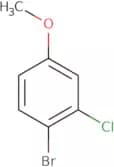
CAS:<p>1-Bromo-2-chloro-4-methoxybenzene is a polychlorinated bromoarene. It is used as a precursor to produce the hydroxamic acid, 1-bromo-2,4-dichlorobenzene. This compound has been shown to be a powerful inhibitor of bacterial growth in activated sludge and soil bacteria. It also inhibits plant growth and has been used as an herbicide. The synthesis of this compound starts with acetonitrile and phenol, which are heated together to produce the desired product in high yields. The solvents are then removed by vacuum distillation or crystallization.</p>Formula:C7H6BrClOPurity:Min. 95%Molecular weight:221.48 g/mol4-Bromo-2-methoxytoluene
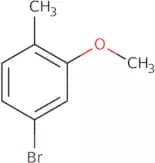
CAS:<p>4-Bromo-2-methoxytoluene is a lactone compound that has been shown to have bioactivities. It is also known as methoxy, an aromatic organic compound with one methyl substituent and two hydroxyl substituents on a benzene ring. 4-Bromo-2-methoxytoluene is found in the natural products cephalotaxaceae and cephalotaxus. This compound can be synthesized by reacting diisopropylamine with formylation of bromobenzene in the presence of acetic acid followed by treatment with sodium acetate. The chemical structure forms a skeleton containing four carbon atoms and six hydrogen atoms, which are arranged in three rings (a cyclic system). This compound exists as two isomers, namely cis and trans.</p>Formula:C8H9BrOPurity:Min. 95%Color and Shape:PowderMolecular weight:201.06 g/mol3-Ethoxy-4-hydroxyphenylnitroethene
CAS:<p>3-Ethoxy-4-hydroxyphenylnitroethene is a fine chemical with the CAS number 90922-85-3. It is a versatile building block that can be used for research, as a reagent, or as a speciality chemical. This compound has many applications in synthesis due to its high quality and complex nature. It is also an intermediate in the production of other compounds.</p>Formula:C10H11NO4Purity:Min. 95%Color and Shape:PowderMolecular weight:209.2 g/mol3-Methoxy-4-(difluoromethoxy)benzaldehyde
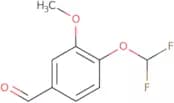
CAS:<p>3-Methoxy-4-(difluoromethoxy)benzaldehyde is a chemical compound that has been found to have anti-tumor properties. It inhibits tumor cells by inducing cell apoptosis. 3-Methoxy-4-(difluoromethoxy)benzaldehyde induces apoptosis in human carcinoma cells, with optimal activity at doses of 10 micromolar and higher. This chemical can be used as an anti-tumor agent because it shows no genotoxic effects, and has high yield with a low toxicity profile. When this compound is exposed to UV radiation, the formation of reactive oxygen species (ROS) increases the rate of cell death. 3-Methoxy-4-(difluoromethoxy)benzaldehyde also has anti-inflammatory properties, which may be due to its ability to inhibit prostaglandin synthesis.</p>Formula:C9H8F2O3Purity:Min. 95%Color and Shape:Colourless To Pale Yellow LiquidMolecular weight:202.15 g/mol2-Ethoxyphenylacetic acid
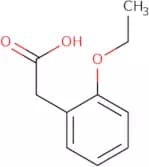
CAS:<p>2-Ethoxyphenylacetic acid (2EPA) is a drug that has been used in the treatment of cancer. It is a hydrophobic molecule that can inhibit the activity of various enzymes, such as sildenafil and triazolone. 2EPA has shown to be an antagonist at the active site of quinazolinone, which is a molecule involved in erectile dysfunction. The physicochemical properties of 2EPA have been studied using molecular dynamics simulations and quantum mechanical computations. This drug is able to form hydrophobic interactions with the active site of quinazolinone, which may account for its antagonistic activity.</p>Formula:C10H12O3Purity:90%Color and Shape:PowderMolecular weight:180.2 g/mol4,4',4''-Trimethoxytrityl chloride
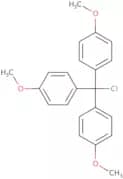
CAS:<p>4,4',4''-Trimethoxytrityl chloride is a carbonyl compound that reacts with alkenyloxy groups to form alkaloids. It also reacts with halogen atoms to form halogenated products. 4,4',4''-Trimethoxytrityl chloride is used in the synthesis of ecteinascidins and acyl group compounds. This chemical can be used in the synthesis of alkaloids and alkenyloxy compounds. It has a reactive carbon atom that can be substituted by other organic groups.</p>Formula:C22H21ClO3Purity:Min. 95%Color and Shape:Off-White PowderMolecular weight:368.85 g/mol