Ethers
Ethers are organic compounds containing an ether functional group, characterized by an oxygen atom bonded to two hydrocarbon radicals. These compounds are valuable in synthesis and serve as solvents in various chemical reactions. At CymitQuimica, we offer a selection of high-quality ethers to support your research and industrial applications, ensuring reliable and effective results. Our range of ethers meets diverse laboratory requirements, from routine experiments to advanced research.
Found 40729 products of "Ethers"
Sort by
Purity (%)
0
100
|
0
|
50
|
90
|
95
|
100
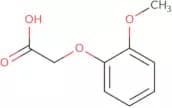
(2-Methoxyphenoxy)acetic acid
CAS:<p>2-Methoxyphenoxyacetic acid is an organic compound that is used as a plant growth regulator and insecticide. It belongs to the group of phenoxyacetic acids and has a molecular weight of 152.2 g/mol. The chemical formula for 2-methoxyphenoxyacetic acid is C8H10O3. This compound is used as a control agent in pest control, where it is applied to crops to prevent damage from insects and mites. 2-Methoxyphenoxyacetic acid can be synthesized by reacting 5-carboxyvanillic acid with methanol in the presence of an oxidizing agent such as potassium permanganate or hydrogen peroxide. This chemical can also be prepared by oxidation of syringyl alcohols with chromium(VI) oxide in the presence of a reducing agent such as sodium bisulfite.<br>2-Methoxyphenoxyacetic acid can be detected</p>Formula:C9H10O4Purity:Min. 95%Color and Shape:PowderMolecular weight:182.17 g/mol2-Chloro-5-(4-chloro-5-difluoromethoxy-1-methylpyrazol-3-yl)-4-fluorophenoxyacetic acid monohydrate
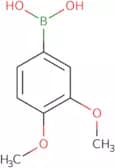
CAS:<p>2-Chloro-5-(4-chloro-5-difluoromethoxy-1-methylpyrazol-3-yl)-4-fluorophenoxyacetic acid monohydrate (2,4,5P) is a phenoxy herbicide that has been shown to be an effective broadleaf and grass weed control agent. 2,4,5P is a granule formulation that can be applied by helicopter or ground equipment. It has synergistic effects with glyphosate when applied together to soybean plants and can be used in combination with other herbicides for more effective weed control.</p>Formula:C13H9Cl2F3N2O·H2OPurity:Min. 95%Color and Shape:White PowderMolecular weight:355.14 g/mol3,4-Dimethoxyphenylboronic acid
CAS:<p>3,4-Dimethoxyphenylboronic acid is a boronate ester that has been shown to be an effective coupling partner for the Suzuki reaction. It has also been used in cancer therapy and as a photochemical probe for the study of biological properties. 3,4-Dimethoxyphenylboronic acid has been shown to demethylate DNA and inhibit methionine aminopeptidase activity. It also cross-couples with halides, such as chlorides or iodides, and activates tertiary alcohols. 3,4-Dimethoxyphenylboronic acid is soluble in organic solvents and can be used in supramolecular chemistry.</p>Formula:C8H11BO4Purity:Min. 95%Color and Shape:White PowderMolecular weight:181.98 g/mol2-Bromo-3-methoxypyrazine
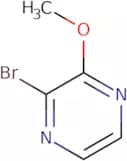
CAS:<p>2-Bromo-3-methoxypyrazine is a chemical compound that is used as a precursor in the biosynthesis of geosmin. Geosmin, also known as 2-methylisoborneol or 2-MIB, is a volatile organic compound which has a musty or earthy smell. It is produced by some species of bacteria, including Myxobacterium and Chondromyces crocatus. It can be found in soil and water samples from areas with high levels of organic matter. 2-Bromo-3-methoxypyrazine was first isolated from cultures of M. crocatus in 1950. It can be synthesized from 3,4,5-trimethoxybenzaldehyde via bromination followed by reduction with sodium hydrosulfide. This process creates an intermediate called 2-(2'-bromoethyl)pyrazine, which undergoes methylation to create 2</p>Formula:C5H5BrN2OPurity:Min. 95%Color and Shape:White Off-White PowderMolecular weight:189.01 g/mol2,5-Difluoroanisole
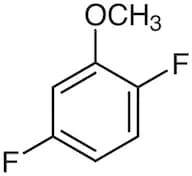
CAS:Formula:C7H6F2OPurity:>98.0%(GC)Color and Shape:Colorless to Almost colorless clear liquidMolecular weight:144.123-(Trifluoromethoxy)iodobenzene
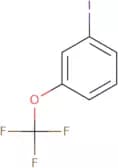
CAS:<p>3-(Trifluoromethoxy)iodobenzene is a reagent for organic synthesis that has a high quality and versatile reactivity. It can be used in the preparation of useful scaffolds, which are novel and useful building blocks. 3-(Trifluoromethoxy)iodobenzene is also a useful intermediate for the synthesis of complex compounds. 3-(Trifluoromethoxy)iodobenzene has been shown to have antioxidant properties and can be used as a fine chemical.</p>Formula:C7H4F3IOPurity:Min. 95%Color and Shape:Clear LiquidMolecular weight:288.01 g/mol4,4'-Bis(methoxycarbonyl)-2,2'-bipyridine
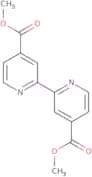
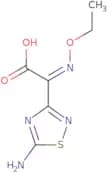
CAS:<p>4,4'-Bis(methoxycarbonyl)-2,2'-bipyridine is a ligand that can be used in cross-coupling reactions. It has been shown to bind to metal ions and form complexes with the ligands. 4,4'-Bis(methoxycarbonyl)-2,2'-bipyridine has a constant value for maximizing the yield of the reaction and is luminescent. This product also has photophysical properties that allow it to be utilized in voltammetry studies. The transfer of this product can be optimized by using chromophores or catalysis. 4,4'-Bis(methoxycarbonyl)-2,2'-bipyridine provides a means for cross-coupling reactions using electrochemical studies and dichroism.</p>Formula:C14H12N2O4Purity:Min. 95%Color and Shape:PowderMolecular weight:272.26 g/mol(Z)-2-(5-Amino-1,2,4-thiadiazol-3-yl)-2-(ethoxyimino)acetic acid
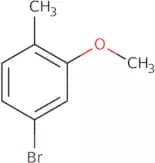
CAS:<p>(Z)-2-(5-Amino-1,2,4-thiadiazol-3-yl)-2-(ethoxyimino)acetic acid is a synthetic compound that can be used as an antibiotic. It is synthesized from acetonitrile and phosphorus oxychloride in the presence of hydroxyl groups. This reaction yields a mixture of amides and cyanoacetamide derivatives. The amides are then converted to their respective alkyl chlorides with methyl iodide, which are then reacted with dimethyl acetylenedicarboxylate to form the desired product. The final step is to hydrolyze the ester group with hydrochloric acid to yield (Z)-2-(5-amino-1,2,4-thiadiazol-3-yl)-2-(ethoxyimino)acetic acid. This chemical has been shown to have antibacterial properties against some strains of bacteria such as</p>Formula:C6H8N4O3SPurity:Min. 95%Color and Shape:PowderMolecular weight:216.22 g/mol4-Bromo-2-methoxytoluene
CAS:<p>4-Bromo-2-methoxytoluene is a lactone compound that has been shown to have bioactivities. It is also known as methoxy, an aromatic organic compound with one methyl substituent and two hydroxyl substituents on a benzene ring. 4-Bromo-2-methoxytoluene is found in the natural products cephalotaxaceae and cephalotaxus. This compound can be synthesized by reacting diisopropylamine with formylation of bromobenzene in the presence of acetic acid followed by treatment with sodium acetate. The chemical structure forms a skeleton containing four carbon atoms and six hydrogen atoms, which are arranged in three rings (a cyclic system). This compound exists as two isomers, namely cis and trans.</p>Formula:C8H9BrOPurity:Min. 95%Color and Shape:PowderMolecular weight:201.06 g/mol3-Methoxyphenylmethylcarbinol
CAS:<p>3-Methoxyphenylmethylcarbinol is a hydrogen tartrate that can be used as an intermediate in the Friedel-Crafts reaction. It is also an imine, which is formed when a nitrogen atom of an amine reacts with a carbon atom of formaldehyde. 3-Methoxyphenylmethylcarbinol has been shown to have stereoselective properties in the Friedel-Crafts reaction, which means that only one product is produced from two reactants. In this case, the hydrogen tartrate and phosphorus oxychloride are reacted to produce oxone and chloride compounds. The selectivity of 3-methoxyphenylmethylcarbinol can be increased by adding triphosgene or dimethylamine to the reaction mixture. This compound dissociates easily into its component parts and can be regenerated by adding ethyl formate or ferrocene.</p>Formula:C9H12O2Purity:Min. 95%Color and Shape:PowderMolecular weight:152.19 g/mol3-Chloro-4-methoxybenzoic acid
CAS:<p>3-Chloro-4-methoxybenzoic acid is a hydroxamic acid that is synthesized by the reaction of 3-chloro-4-methoxybenzaldehyde with hydroxylamine. It has anticancer activity and can inhibit the growth of cancer cells. 3-Chloro-4-methoxybenzoic acid has a low potency, which means that it needs to be used in high concentrations in order to be effective as an anticancer agent. The drug is also structurally similar to sorafenib, but has less potent anticancer activity.</p>Formula:C8H7ClO3Purity:Min. 95%Molecular weight:186.59 g/mol2-(1-Ethoxyethoxy)ethyl)benzene
CAS:<p>2-(1-Ethoxyethoxy)ethyl)benzene is a versatile building block that is used in the synthesis of many organic compounds. It can be used as a reagent, speciality chemical, and research chemical for making new substances. 2-(1-Ethoxyethoxy)ethyl)benzene is also useful as an intermediate for other reactions or as a scaffold for complex molecules. It is soluble in most solvents and has a high purity level.</p>Formula:C12H18O2Purity:Min. 95%Color and Shape:Colorless PowderMolecular weight:194.27 g/mol2-(Trifluoromethoxy)phenylboronic acid
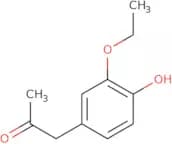
CAS:<p>2-(Trifluoromethoxy)phenylboronic acid (2-TFB) is a boronic acid that is used in cross-coupling reactions. It has been shown to be an effective inhibitor of the Vismodegib pathway, which may offer therapeutic benefits for cancer patients. 2-TFB has also been shown to inhibit the activity of other pathways involved in cancer development, such as the benzamide and suzuki pathways. 2-TFB is metabolized through filtration, which can lead to significant pharmacokinetic properties. This compound can be recycled and reused in cross-coupling reactions, which reduces waste production and costs.</p>Formula:C7H6BF3O3Purity:Min. 95%Color and Shape:PowderMolecular weight:205.93 g/mol3-Ethoxy-4-hydroxyphenylacetone
CAS:<p>3-Ethoxy-4-hydroxyphenylacetone is a fine chemical that can be used as a versatile building block and useful intermediate. It has a CAS number of 88659-82-9. 3-Ethoxy-4-hydroxyphenylacetone is a complex compound with many uses, such as research chemicals, reaction component, or speciality chemical. It is water soluble and has been shown to be non toxic. The purity of the product is high quality.</p>Formula:C11H14O3Purity:Min. 95%Molecular weight:194.23 g/molBis(2-bromoethyl) Ether
CAS:Formula:C4H8Br2OPurity:>98.0%(GC)Color and Shape:Colorless to Yellow clear liquidMolecular weight:231.923-Chloro-4-methoxybenzylamine hydrochloride
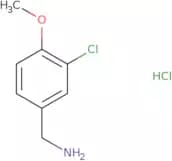
CAS:<p>3-Chloro-4-methoxybenzylamine hydrochloride is a quinoline derivative that inhibits the activity of phosphodiesterase 5, an enzyme that breaks down cGMP in the brain. This drug has been shown to increase levels of cGMP and decrease levels of low energy (i.e., low ATP) in synaptosomes. 3-Chloro-4-methoxybenzylamine hydrochloride may be useful for the treatment of Alzheimer's disease, as it has been shown to improve cognitive function and memory in animal models. The mechanism of action is not fully understood but may involve inhibition of cholinergic neurotransmission or activation of nitric oxide synthase.</p>Formula:C8H10ClNO•HClPurity:Min. 95%Color and Shape:PowderMolecular weight:208.08 g/mol2,4,6-Trimethoxybenzoic acid methyl ester
CAS:<p>2,4,6-Trimethoxybenzoic acid methyl ester is a yellow crystalline solid that can be dissolved in acetone, chloroform, ether, and benzene. It has a molecular weight of 164.3 g/mol and its chemical name is 2,4,6-trimethoxybenzoic acid methyl ester. It has a melting point of 144 °C and can be found in the hexanones group. This product is manufactured in Australia and its registry number is 135949-06-8.</p>Formula:C11H14O5Purity:Min. 95%Molecular weight:226.23 g/mol2-[(4-Chlorophenyl)-2-pyridinylmethoxy]-N,N-dimethylethanamine maleate salt
CAS:Controlled Product<p>2-[(4-Chlorophenyl)-2-pyridinylmethoxy]-N,N-dimethylethanamine maleate salt (DCLM) is a controlled-release preparation of an antihistamine that is used for the relief of allergic symptoms. It is a prodrug that is hydrolyzed to 2-[(4-chlorophenyl)-2-pyridinylmethoxy]ethanol (DCPEM) in vivo. DCLM has been shown to be effective against viruses and has been found to have receptor activity in human serum. The drug can be administered either orally or by injection. DCLM has also been shown to suppress allergic symptoms in vitro with LC-MS/MS analysis.</p>Formula:C20H23ClN2O5Purity:Min. 95%Color and Shape:White To Off-White SolidMolecular weight:406.86 g/mol3'-(Trimethoxyphenyl)acetone
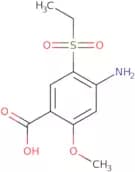
<p>3'-(Trimethoxyphenyl)acetone is a reagent and useful scaffold for the synthesis of complex compounds. It is also used as a reaction component in the preparation of valuable research chemicals, specialty chemicals, and fine chemicals. 3'-(Trimethoxyphenyl)acetone has been shown to be an effective building block for synthesizing complex compounds, such as heterocycles. This chemical has a CAS number of 689-52-3.</p>Purity:Min. 95%2-Methoxy-4-amino-5-ethylsulfonyl benzoic acid
CAS:<p>2-Methoxy-4-amino-5-ethylsulfonyl benzoic acid is a synthetic chemical that is used in wastewater treatment. It is also used as a precursor for the production of other chemicals, such as thiocyanates, peroxides, and bromoethanes. 2-Methoxy-4-amino-5-ethylsulfonyl benzoic acid can be produced by the reaction of hydrochloric acid with thionyl chloride. It reacts with aluminium to produce an acylation reaction that produces 2,2'-dithiodiethanol (DTE). The DTE can be reacted with an organic compound to produce a variety of products, including salicylic acid or bromoethanes.</p>Formula:C10H13NO5SPurity:Min. 95%Color and Shape:PowderMolecular weight:259.28 g/mol








![2-[(4-Chlorophenyl)-2-pyridinylmethoxy]-N,N-dimethylethanamine maleate salt](/_next/image/?url=https%3A%2Fstatic.cymitquimica.com%2Fproducts%2F3D%2Fthumb-webp%2FFC19699.webp&w=3840&q=75)