Ethers
Ethers are organic compounds containing an ether functional group, characterized by an oxygen atom bonded to two hydrocarbon radicals. These compounds are valuable in synthesis and serve as solvents in various chemical reactions. At CymitQuimica, we offer a selection of high-quality ethers to support your research and industrial applications, ensuring reliable and effective results. Our range of ethers meets diverse laboratory requirements, from routine experiments to advanced research.
Found 40729 products of "Ethers"
Sort by
Purity (%)
0
100
|
0
|
50
|
90
|
95
|
100
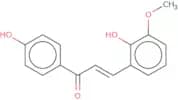
4',2-Dihydroxy-3-methoxychalcone
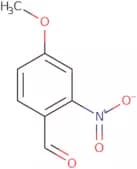
CAS:<p>4,2-Dihydroxy-3-methoxychalcone is a fine chemical that is useful in the synthesis of various pharmaceuticals and other chemicals. It is a versatile building block that can be used as a reaction component or intermediate in the synthesis of complex compounds. 4,2-Dihydroxy-3-methoxychalcone has been shown to be a high quality reagent for use in the synthesis of speciality chemicals and research chemicals. This compound is also useful as a scaffold for the development of new drugs.</p>Formula:C16H14O4Purity:Min. 95%Molecular weight:270.28 g/mol4-Methoxy-2-nitro-benzaldehyde
CAS:<p>4-Methoxy-2-nitrobenzaldehyde is a chemical that is used in the synthesis of many pharmaceuticals. It has been shown to be an effective agent in the treatment of cancer cells and is activated by chloride ions. 4-Methoxy-2-nitrobenzaldehyde reacts with nucleophiles such as hydroxide, amines, or thiols in order to form alkylating agents. This reaction can be used for the synthesis of many drugs including antihistamines, antidiabetic drugs, and antipsychotics. The rate of this reaction increases with increasing temperature. It also undergoes demethylation when exposed to nitrous acid, which may lead to a different product.</p>Formula:C8H7NO4Purity:Min. 95%Molecular weight:181.15 g/mol3,4-Diethoxyphenylacetone
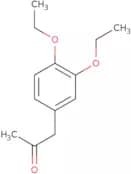
CAS:<p>3,4-Diethoxyphenylacetone is a chemical compound that is used as a building block for research and as an intermediate in the synthesis of other chemicals. This compound is also used as a reagent. 3,4-Diethoxyphenylacetone has CAS number 93635-48-4.</p>Formula:C13H18O3Purity:Min. 95%Molecular weight:222.28 g/molMethyl 3,4,5-trimethoxyphenyl acetate
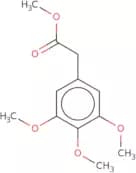
CAS:<p>Methyl 3,4,5-trimethoxyphenyl acetate is an ester that is used as a building block and intermediate in the synthesis of pharmaceuticals. It can also be used as an intermediate in research and as a reagent for chemical analysis. Methyl 3,4,5-trimethoxyphenyl acetate has high purity and is available at competitive prices.</p>Formula:C12H16O5Purity:Min. 95%Molecular weight:240.25 g/mol2-Chloro-4-(trifluoromethoxy)aniline
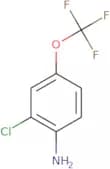
CAS:<p>2-Chloro-4-(trifluoromethoxy)aniline is a chemical reagent that is used in organic synthesis. It has a variety of uses including as a building block for complex compounds, an intermediate for the synthesis of other chemicals, and a reagent for the production of pharmaceuticals. 2-Chloro-4-(trifluoromethoxy)aniline is also useful in research to study the mechanism of certain reactions. The high quality and versatility of this compound make it a speciality chemical with many applications.</p>Formula:C7H5ClF3NOMolecular weight:211.57 g/mol3,5-Dimethyl-4-methoxybenzoic acid
CAS:<p>3,5-Dimethyl-4-methoxybenzoic acid is a disulphide monomer with the chemical formula C7H8O2S. It can be used as a building block for organic synthesis. This compound has been widely studied because it contains a benzyl group, which is the simplest aromatic system. The symmetric and asymmetric vibrational frequencies of 3,5-dimethyl-4-methoxybenzoic acid have been measured by nmr spectroscopy and theory. The thermodynamic properties of this compound have also been studied by molecular dynamics simulations and quantum chemical calculations.</p>Formula:C10H12O3Purity:Min. 95%Molecular weight:180.2 g/mol3,4-Bis(difluoromethoxy) Roflumilast
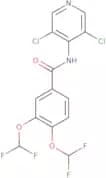
CAS:<p>3,4-Bis(difluoromethoxy) roflumilast is a reagent that is used to synthesize fine chemicals. It is an intermediate for the synthesis of 3,4-bis(difluoromethoxy) roflumilast-1-carboxylic acid and can also be used as a building block for other research chemicals. 3,4-Bis(difluoromethoxy) roflumilast has been shown to be useful in reactions that require versatile building blocks.</p>Formula:C14H8Cl2F4N2O3Purity:Min. 95%Color and Shape:PowderMolecular weight:399.12 g/mol2'-Hydroxy-5'-methoxyacetophenone
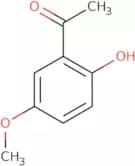
CAS:<p>2'-Hydroxy-5'-methoxyacetophenone is a molecule that has been shown to have anticancer activity. It inhibits the production of molecules in cancer cells, such as carbonic anhydrase and nitric oxide synthase. This molecule also binds to DNA and prevents the transcription of genes involved in cell proliferation, including NF-κB DNA. 2'-Hydroxy-5'-methoxyacetophenone also has inhibitory properties on the growth of cancer cells, including MCF-7 cells.</p>Formula:C9H10O3Purity:Min. 95%Color and Shape:Off-White PowderMolecular weight:166.17 g/mol2-Acetyl-7-methoxybenzofuran
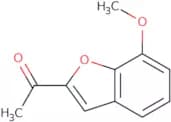
CAS:<p>2-Acetyl-7-methoxybenzofuran is an antibacterial agent that has potent inhibitory activity against methicillin-resistant Staphylococcus aureus and other bacterial species. It also inhibits the growth of endophytic fungus in plants. 2-Acetyl-7-methoxybenzofuran is synthesized by the fungus Cereus, which is used in traditional medicine to treat various ailments. This compound binds to the 16S ribosomal RNA, which inhibits protein synthesis and cell division. 2-Acetyl-7-methoxybenzofuran also shows potent inhibitory activity against methicillin-resistant Staphylococcus aureus, as well as other bacterial species. This antibiotic binds to the 16S ribosomal RNA, inhibiting protein synthesis and cell division.</p>Purity:Min. 95%Color and Shape:PowderMolecular weight:190.2 g/mol(Z)-2-(5-Amino-1,2,4-thiadiazol-3-yl)-2-(ethoxyimino)acetic acid
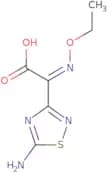
CAS:<p>(Z)-2-(5-Amino-1,2,4-thiadiazol-3-yl)-2-(ethoxyimino)acetic acid is a synthetic compound that can be used as an antibiotic. It is synthesized from acetonitrile and phosphorus oxychloride in the presence of hydroxyl groups. This reaction yields a mixture of amides and cyanoacetamide derivatives. The amides are then converted to their respective alkyl chlorides with methyl iodide, which are then reacted with dimethyl acetylenedicarboxylate to form the desired product. The final step is to hydrolyze the ester group with hydrochloric acid to yield (Z)-2-(5-amino-1,2,4-thiadiazol-3-yl)-2-(ethoxyimino)acetic acid. This chemical has been shown to have antibacterial properties against some strains of bacteria such as</p>Formula:C6H8N4O3SPurity:Min. 95%Color and Shape:PowderMolecular weight:216.22 g/mol4,5-Dimethoxy-2-nitroaniline
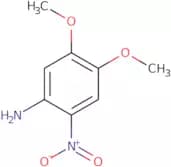
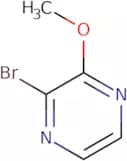
CAS:Controlled Product<p>4,5-Dimethoxy-2-nitroaniline (DMNA) is a nucleophilic compound that reacts with glyoxylate to form formic acid. DMNA has been shown to be an effective anti-malarial agent, as it inhibits the growth of leishmania and related protozoans. The mechanism of action is not fully understood but may be due to its ability to produce reactive oxygen species. DMNA also inhibits bacterial growth in vitro by interfering with DNA synthesis and protein synthesis. DMNA has been shown to have a cytotoxic effect on mammalian cells, which may be due to the production of free radicals from its reaction with formic acid.</p>Formula:C8H10N2O4Color and Shape:PowderMolecular weight:198.18 g/mol2-Bromo-3-methoxypyrazine
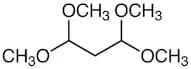
CAS:<p>2-Bromo-3-methoxypyrazine is a chemical compound that is used as a precursor in the biosynthesis of geosmin. Geosmin, also known as 2-methylisoborneol or 2-MIB, is a volatile organic compound which has a musty or earthy smell. It is produced by some species of bacteria, including Myxobacterium and Chondromyces crocatus. It can be found in soil and water samples from areas with high levels of organic matter. 2-Bromo-3-methoxypyrazine was first isolated from cultures of M. crocatus in 1950. It can be synthesized from 3,4,5-trimethoxybenzaldehyde via bromination followed by reduction with sodium hydrosulfide. This process creates an intermediate called 2-(2'-bromoethyl)pyrazine, which undergoes methylation to create 2</p>Formula:C5H5BrN2OPurity:Min. 95%Color and Shape:White Off-White PowderMolecular weight:189.01 g/mol1,1,3,3-Tetramethoxypropane
CAS:Formula:C7H16O4Purity:>98.0%(GC)Color and Shape:Colorless to Light yellow clear liquidMolecular weight:164.202-[(4-Chlorophenyl)-2-pyridinylmethoxy]-N,N-dimethylethanamine maleate salt
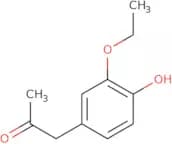
CAS:Controlled Product<p>2-[(4-Chlorophenyl)-2-pyridinylmethoxy]-N,N-dimethylethanamine maleate salt (DCLM) is a controlled-release preparation of an antihistamine that is used for the relief of allergic symptoms. It is a prodrug that is hydrolyzed to 2-[(4-chlorophenyl)-2-pyridinylmethoxy]ethanol (DCPEM) in vivo. DCLM has been shown to be effective against viruses and has been found to have receptor activity in human serum. The drug can be administered either orally or by injection. DCLM has also been shown to suppress allergic symptoms in vitro with LC-MS/MS analysis.</p>Formula:C20H23ClN2O5Purity:Min. 95%Color and Shape:White To Off-White SolidMolecular weight:406.86 g/mol3-Ethoxy-4-hydroxyphenylacetone
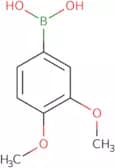
CAS:<p>3-Ethoxy-4-hydroxyphenylacetone is a fine chemical that can be used as a versatile building block and useful intermediate. It has a CAS number of 88659-82-9. 3-Ethoxy-4-hydroxyphenylacetone is a complex compound with many uses, such as research chemicals, reaction component, or speciality chemical. It is water soluble and has been shown to be non toxic. The purity of the product is high quality.</p>Formula:C11H14O3Purity:Min. 95%Molecular weight:194.23 g/mol3,4-Dimethoxyphenylboronic acid
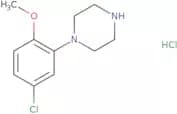
CAS:<p>3,4-Dimethoxyphenylboronic acid is a boronate ester that has been shown to be an effective coupling partner for the Suzuki reaction. It has also been used in cancer therapy and as a photochemical probe for the study of biological properties. 3,4-Dimethoxyphenylboronic acid has been shown to demethylate DNA and inhibit methionine aminopeptidase activity. It also cross-couples with halides, such as chlorides or iodides, and activates tertiary alcohols. 3,4-Dimethoxyphenylboronic acid is soluble in organic solvents and can be used in supramolecular chemistry.</p>Formula:C8H11BO4Purity:Min. 95%Color and Shape:White PowderMolecular weight:181.98 g/mol1-(5-Chloro-2-methoxyphenyl)piperazine HCl
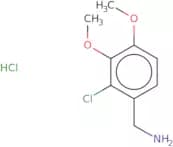
CAS:Controlled Product<p>1-(5-Chloro-2-methoxyphenyl)piperazine HCl is a fine chemical that belongs to the group of research chemicals. It is used as a reagent, speciality chemical and intermediate in organic synthesis. 1-(5-Chloro-2-methoxyphenyl)piperazine HCl is an effective building block for complex compounds, which can be used in reactions involving acetals, amides, nitriles, sulfones, sulfonamides and imines. This compound also has versatile building blocks and is a useful scaffold in organic synthesis.</p>Formula:C11H16Cl2N2OPurity:Min. 95%Color and Shape:Off-White PowderMolecular weight:263.16 g/mol2-Chloro-3,4-dimethoxybenzylamine HCl
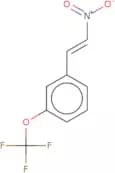
CAS:<p>2-Chloro-3,4-dimethoxybenzylamine HCl is a fine chemical that can be used as a building block to synthesize new compounds. It is also a useful intermediate in the production of pharmaceuticals and other organic chemicals. 2-Chloro-3,4-dimethoxybenzylamine HCl has been used as a reaction component for the synthesis of various complex compounds. This compound has been shown to have high purity and quality.</p>Formula:C9H12ClNO2·HClPurity:Min. 95%Molecular weight:238.11 g/mol1-(3-(Trifluoromethoxy)phenyl)-2-nitroethene
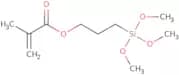
CAS:<p>1-(3-Trifluoromethoxy)phenyl)-2-nitroethene is a fluorinated aromatic compound that can be used as a building block for synthesis of pharmaceuticals, research chemicals, and other specialty chemicals. It is an intermediate that can be used in the production of other compounds. This compound may be used in pharmaceuticals to treat bacterial infections and inflammatory diseases. 1-(3-Trifluoromethoxy)phenyl)-2-nitroethene may also be utilized as a reaction component for synthesizing other organic compounds. It is soluble in solvents such as benzene, ether, chloroform, and acetone.</p>Formula:C9H6F3NO3Purity:Min. 95%Molecular weight:233.14 g/mol3-Methacryloxypropyltrimethoxysilane
CAS:<p>3-Methacryloxypropyltrimethoxysilane is a silane that has been modified with an acrylic group. It is used as an additive for the production of coatings, adhesives, and sealants. 3-Methacryloxypropyltrimethoxysilane is resistant to hydrochloric acid and other chemicals. It is also stable in water and light exposure. This product has shown to have high adsorption properties, which may be due to its hydroxyl groups. 3-Methacryloxypropyltrimethoxysilane has also been shown to have coupling properties that are advantageous for use with polymers and plastics.</p>Formula:C10H20O5SiPurity:Min. 95%Color and Shape:Colorless Clear LiquidMolecular weight:248.35 g/mol



![2-[(4-Chlorophenyl)-2-pyridinylmethoxy]-N,N-dimethylethanamine maleate salt](/_next/image/?url=https%3A%2Fstatic.cymitquimica.com%2Fproducts%2F3D%2Fthumb-webp%2FFC19699.webp&w=3840&q=75)