Ethers
Ethers are organic compounds containing an ether functional group, characterized by an oxygen atom bonded to two hydrocarbon radicals. These compounds are valuable in synthesis and serve as solvents in various chemical reactions. At CymitQuimica, we offer a selection of high-quality ethers to support your research and industrial applications, ensuring reliable and effective results. Our range of ethers meets diverse laboratory requirements, from routine experiments to advanced research.
Found 40729 products of "Ethers"
Sort by
Purity (%)
0
100
|
0
|
50
|
90
|
95
|
100
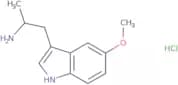
5-Methoxy-3(2-aminopropyl)indole hydrochloride
CAS:Controlled Product<p>5-Methoxy-3(2-aminopropyl)indole hydrochloride is a useful reagent for the synthesis of complex compounds and a versatile building block for the preparation of speciality chemicals. It is used in the production of fine chemicals, such as reagents and intermediates. This compound also has potential use as a research chemical or as a reaction component in organic syntheses.</p>Formula:C12H16N2O·HClPurity:Min. 95%Molecular weight:240.73 g/mol2-Ethoxy-4-methoxycinnamic acid
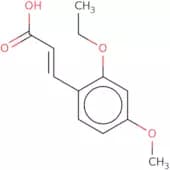
CAS:<p>2-Ethoxy-4-methoxycinnamic acid is a synthetic chemical with the CAS number 1372859-34-1. It is a versatile building block that can be used for the synthesis of many complex compounds. 2-Ethoxy-4-methoxycinnamic acid is one of a number of scaffolds that are useful for creating fine chemicals and research chemicals. This compound is also an intermediate in many reactions and can be used as a reagent to produce other substances.</p>Formula:C12H14O4Purity:Min. 95%Molecular weight:222.24 g/mol4-Iodo-N-(4-methoxyphenyl)-N-methylbenzamide
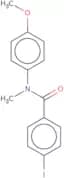
CAS:<p>4-Iodo-N-(4-methoxyphenyl)-N-methylbenzamide is a useful scaffold that can be used in the synthesis of complex compounds. It is also a versatile building block and has been found to be useful as an intermediate and building block. 4-Iodo-N-(4-methoxyphenyl)-N-methylbenzamide is a fine chemical with CAS No. 320734-40-5. This reagent is high quality, research chemicals, and can be used in the synthesis of speciality chemicals.</p>Formula:C15H14INO2Purity:Min. 95%Molecular weight:367.18 g/molGly-pro-4-methoxy-β-naphthylamide
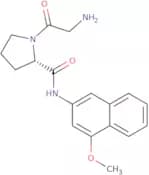
CAS:<p>Gly-pro-4-methoxy-beta-naphthylamide is a synthetic substrate that is used to measure the activity of human plasma phosphatases. Gly-pro-4-methoxy-beta-naphthylamide is synthesized in an organic solvent and then reacted with diazonium salt to form a glycosylated aminophosphonic acid. The product is purified by chromatography and identified by mass spectrometry. Gly-pro-4-methoxy beta naphthylamide has been shown to inhibit the growth of cancer cells in vitro, as well as having antiinflammatory properties. This drug also has been shown to be effective in treating patients with severe hyperbilirubinemia who are undergoing hematopoietic stem cell transplantation.</p>Formula:C18H21N3O3Purity:Min. 95%Molecular weight:327.38 g/mol2-Acetyl-7-methoxybenzofuran
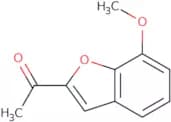
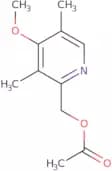
CAS:<p>2-Acetyl-7-methoxybenzofuran is an antibacterial agent that has potent inhibitory activity against methicillin-resistant Staphylococcus aureus and other bacterial species. It also inhibits the growth of endophytic fungus in plants. 2-Acetyl-7-methoxybenzofuran is synthesized by the fungus Cereus, which is used in traditional medicine to treat various ailments. This compound binds to the 16S ribosomal RNA, which inhibits protein synthesis and cell division. 2-Acetyl-7-methoxybenzofuran also shows potent inhibitory activity against methicillin-resistant Staphylococcus aureus, as well as other bacterial species. This antibiotic binds to the 16S ribosomal RNA, inhibiting protein synthesis and cell division.</p>Purity:Min. 95%Color and Shape:PowderMolecular weight:190.2 g/mol4-Methoxy-3,5-dimethyl-pyridin-2-yl)methyl acetate
CAS:<p>4-Methoxy-3,5-dimethyl-pyridin-2-yl)methyl acetate is a chemical intermediate that is used in the manufacture of pharmaceuticals and other fine chemicals. It has been found to be a useful scaffold for the synthesis of other compounds. This compound may also be used as a building block or reaction component in research. 4-Methoxy-3,5-dimethyl-pyridin-2-yl)methyl acetate has a CAS number of 91219-90-8 and can be purchased from suppliers such as TCI America.</p>Formula:C11H15NO3Purity:Min. 95%Color and Shape:White PowderMolecular weight:209.24 g/mol3-(Ethoxycarbonylamino)phenothiazine
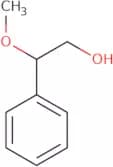
CAS:<p>3-(Ethoxycarbonylamino)phenothiazine is a chemical compound that belongs to the group of speciality chemicals. It is an intermediate for the synthesis of other compounds and can be used in the production of fine chemicals, reagents, and complex compounds. 3-(Ethoxycarbonylamino)phenothiazine has been shown to have a high reactivity and is useful as a building block in organic chemistry. This product also has versatile uses in research, which includes drug discovery and development.</p>Purity:Min. 95%2-Methoxy-2-phenylethanol
CAS:<p>2-Methoxy-2-phenylethanol is a molecule that has been found to be a good catalyst for the ring-opening of epoxides. It is also used as a solid catalyst in kinetic studies and as an additive in organic syntheses. 2-Methoxy-2-phenylethanol is soluble in water and reacts with fatty acids to form acetylated products. This molecule has been shown to have an inhibitory effect on human liver alcohol dehydrogenase, which may be due to it's ability to bind to the enzyme's active site.</p>Formula:C9H12O2Purity:Min. 95%Color and Shape:Colorless Clear LiquidMolecular weight:152.19 g/mol3,4-Difluoro-2-methoxybenzonitrile
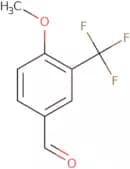
CAS:<p>3,4-Difluoro-2-methoxybenzonitrile is an organic chemical compound that is a useful scaffold for the synthesis of complex compounds. It reacts with nucleophiles such as Grignard reagents to form a wide range of products. 3,4-Difluoro-2-methoxybenzonitrile has been shown to be a versatile building block for the synthesis of high quality and speciality chemicals, including pharmaceuticals and agrochemicals. This chemical is also used as a research chemical, which can be used in drug discovery and development. The CAS number for this chemical is 886496-72-6.</p>Formula:C8H5F2NOPurity:Min. 95%Color and Shape:Clear LiquidMolecular weight:169.13 g/mol4-Methoxy-3-(trifluoromethyl)benzaldehyde
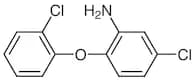
CAS:<p>4-Methoxy-3-(trifluoromethyl)benzaldehyde is a fine chemical that can be used as a building block for pharmaceuticals and other organic compounds. It is also used in research for the synthesis of complex compounds. This chemical has been reported to be a useful intermediate or scaffold for organic syntheses. 4-Methoxy-3-(trifluoromethyl)benzaldehyde is soluble in water and ethanol, and insoluble in ether. It has a melting point of 140°C, boiling point of 249°C, density 1.096 g/cm³, and refractive index (20°C) 1.567.</p>Formula:C9H7F3O2Purity:Min. 95%Molecular weight:204.15 g/mol2-Amino-2',4-dichlorodiphenyl Ether
CAS:Formula:C12H9Cl2NOPurity:>98.0%(GC)(T)Color and Shape:Colorless to Brown clear liquidMolecular weight:254.115-Acetoxy-6-methoxyindole
CAS:<p>5-Acetoxy-6-methoxyindole is a fine chemical, useful building block, and research chemical with CAS No. 112919-69-4. It is a versatile building block and reaction component that can be used as a reagent or speciality chemical in the synthesis of other complex compounds. 5-Acetoxy-6-methoxyindole is also used as an intermediate in the synthesis of drugs and pharmaceuticals. This compound has high purity, making it a high quality product with many uses.</p>Formula:C11H11NO3Purity:Min. 95%Molecular weight:205.21 g/mol2-[2-[4-[Bis(4-fluorophenyl)methyl]piperazin-1-yl]ethoxy]acetic acid HCl
CAS:<p>2-[2-[4-[Bis(4-fluorophenyl)methyl]piperazin-1-yl]ethoxy]acetic acid HCl (BAY-85788) is a drug which acts as a histamine receptor antagonist. It has been shown to be effective in the treatment of idiopathic urticaria. BAY-85788 has also been found to have less potential for drug interactions than other histamine receptor antagonists, and does not cause an increase in blood pressure, unlike other compounds with this activity. This compound is metabolized by cytochrome P450 enzymes and does not contain nitrogen atoms or heterocyclic rings. Experimental studies have shown that orally administered BAY-85788 is absorbed from the GI tract and eliminated unchanged in urine. Studies have also shown that BAY-85788 is active against inflammatory diseases such as atopic dermatitis, asthma, and chronic obstructive pulmonary disease (COPD</p>Formula:C21H24F2N2O3·xHClPurity:Min. 95%Color and Shape:PowderMolecular weight:390.42 g/mol4-Fluoro-3-methoxybenzylamine hydrochloride
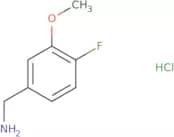
CAS:<p>4-Fluoro-3-methoxybenzylamine hydrochloride is a fine chemical that can be used as a building block in research, as a reagent in the synthesis of complex compounds, and as a versatile scaffold for the synthesis of natural products. This compound is an intermediate for the production of other pharmaceuticals and has been shown to be useful in the production of various drugs. It is also used as a reactant in organic chemistry reactions due to its high quality. 4-Fluoro-3-methoxybenzylamine hydrochloride has CAS No. 869296-41-3 and can be found on the Chemical Abstract Service (CAS) database.</p>Formula:C8H11ClFNOPurity:Min. 95%Molecular weight:191.63 g/mol4,6-Dimethoxypyrimidin-2-amine
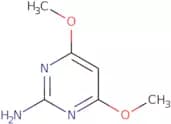
CAS:<p>4,6-Dimethoxypyrimidin-2-amine is a pyrimidine compound with the molecular formula C5H4N4O2. It can be prepared from the reaction of 2,4,6-trichloropyrimidine with formaldehyde and sodium cyanide in an organic solution. The properties of 4,6-Dimethoxypyrimidin-2-amine were studied on bacterial strain and human urine samples. This molecule is soluble in water and reacts with carboxylic acid to form a hydrogen bond. The nitrogen atoms show some reactivity towards copper chloride and hydrogen chloride.</p>Formula:C6H9N3O2Purity:Min. 95%Color and Shape:White PowderMolecular weight:155.15 g/mol2,4-Dibromoanisole
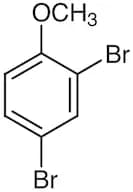
CAS:Formula:C7H6Br2OPurity:>98.0%(GC)Color and Shape:White to Light yellow to Light red powder to crystalMolecular weight:265.931-Bromo-2-chloro-4-methoxybenzene
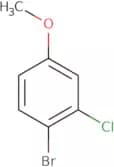
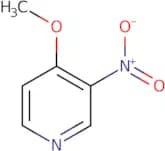
CAS:<p>1-Bromo-2-chloro-4-methoxybenzene is a polychlorinated bromoarene. It is used as a precursor to produce the hydroxamic acid, 1-bromo-2,4-dichlorobenzene. This compound has been shown to be a powerful inhibitor of bacterial growth in activated sludge and soil bacteria. It also inhibits plant growth and has been used as an herbicide. The synthesis of this compound starts with acetonitrile and phenol, which are heated together to produce the desired product in high yields. The solvents are then removed by vacuum distillation or crystallization.</p>Formula:C7H6BrClOPurity:Min. 95%Molecular weight:221.48 g/mol4-Methoxy-3-nitropyridine
CAS:<p>4-Methoxy-3-nitropyridine (4MNOP) is an organic compound that is a white solid at room temperature. 4MNOP has been shown to interact with alkali metals and can be used in the preparation of emulsifying agents. It also has been found to have pharmacokinetic properties, including a low molecular weight, good solubility in water, and a high degree of absorption. The imidazopyridine ring system is susceptible to reductive amination reactions, which may lead to the formation of amine or surfactant residues.</p>Formula:C6H6N2O3Purity:Min. 95%Color and Shape:PowderMolecular weight:154.13 g/mol3'-(Trimethoxyphenyl)acetone
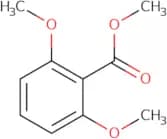
<p>3'-(Trimethoxyphenyl)acetone is a reagent and useful scaffold for the synthesis of complex compounds. It is also used as a reaction component in the preparation of valuable research chemicals, specialty chemicals, and fine chemicals. 3'-(Trimethoxyphenyl)acetone has been shown to be an effective building block for synthesizing complex compounds, such as heterocycles. This chemical has a CAS number of 689-52-3.</p>Purity:Min. 95%Methyl 2,6-dimethoxybenzoate
CAS:<p>Methyl 2,6-dimethoxybenzoate is a synthetic compound with a crystalline structure. It has been used as an antidepressant agent in clinical studies. Methyl 2,6-dimethoxybenzoate binds to the serotonin transporter and inhibits serotonin uptake. This molecule can also inhibit the reuptake of dopamine and norepinephrine by binding to their respective transporters. The compound has been shown to be effective in the treatment of depressive disorders in mice; however, it is not yet approved for use in humans.<br>Methyl 2,6-dimethoxybenzoate is a stereoselective biphenyl that can be oriented so that its methyl group is oriented towards two hydrogen atoms on the opposite side of the plane of symmetry. This asymmetric orientation allows methyl 2,6-dimethoxybenzoate to show different properties depending on which side of the molecule interacts with other molecules. For example, when methyl 2,6-dimeth</p>Formula:C10H12O4Purity:Min. 95%Molecular weight:196.2 g/mol




![2-[2-[4-[Bis(4-fluorophenyl)methyl]piperazin-1-yl]ethoxy]acetic acid HCl](/_next/image/?url=https%3A%2Fstatic.cymitquimica.com%2Fproducts%2F3D%2Fthumb-webp%2FFB98570.webp&w=3840&q=75)