Ethers
Ethers are organic compounds containing an ether functional group, characterized by an oxygen atom bonded to two hydrocarbon radicals. These compounds are valuable in synthesis and serve as solvents in various chemical reactions. At CymitQuimica, we offer a selection of high-quality ethers to support your research and industrial applications, ensuring reliable and effective results. Our range of ethers meets diverse laboratory requirements, from routine experiments to advanced research.
Found 40729 products of "Ethers"
Sort by
Purity (%)
0
100
|
0
|
50
|
90
|
95
|
100
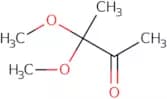
3,3-Dimethoxy-2-butanone
CAS:<p>3,3-Dimethoxy-2-butanone is a synthetic compound that is used as a biodiesel. It can be synthesized by the following synthetic scheme:</p>Formula:C6H12O3Purity:Min. 95%Color and Shape:Clear LiquidMolecular weight:132.16 g/mol5-Methoxy-3(2-aminopropyl)indole hydrochloride
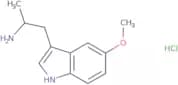
CAS:Controlled Product<p>5-Methoxy-3(2-aminopropyl)indole hydrochloride is a useful reagent for the synthesis of complex compounds and a versatile building block for the preparation of speciality chemicals. It is used in the production of fine chemicals, such as reagents and intermediates. This compound also has potential use as a research chemical or as a reaction component in organic syntheses.</p>Formula:C12H16N2O·HClPurity:Min. 95%Molecular weight:240.73 g/mol2,4-Dimethoxy-5-methylbenzyl alcohol
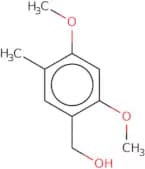
CAS:<p>2,4-Dimethoxy-5-methylbenzyl alcohol is a high quality chemical that is used as an intermediate for the synthesis of complex compounds. It has been used as a reagent and as a building block for the synthesis of other chemicals. This compound can be used to produce fine chemicals and research chemicals. 2,4-Dimethoxy-5-methylbenzyl alcohol has been shown to be useful in the production of versatile building blocks and reaction components.</p>Formula:C10H14O3Purity:Min. 95%Molecular weight:182.22 g/molMethyl 2,6-dimethoxybenzoate
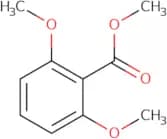
CAS:<p>Methyl 2,6-dimethoxybenzoate is a synthetic compound with a crystalline structure. It has been used as an antidepressant agent in clinical studies. Methyl 2,6-dimethoxybenzoate binds to the serotonin transporter and inhibits serotonin uptake. This molecule can also inhibit the reuptake of dopamine and norepinephrine by binding to their respective transporters. The compound has been shown to be effective in the treatment of depressive disorders in mice; however, it is not yet approved for use in humans.<br>Methyl 2,6-dimethoxybenzoate is a stereoselective biphenyl that can be oriented so that its methyl group is oriented towards two hydrogen atoms on the opposite side of the plane of symmetry. This asymmetric orientation allows methyl 2,6-dimethoxybenzoate to show different properties depending on which side of the molecule interacts with other molecules. For example, when methyl 2,6-dimeth</p>Formula:C10H12O4Purity:Min. 95%Molecular weight:196.2 g/mol2-Methoxy-2-phenylethanol
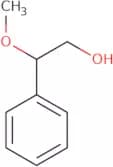
CAS:<p>2-Methoxy-2-phenylethanol is a molecule that has been found to be a good catalyst for the ring-opening of epoxides. It is also used as a solid catalyst in kinetic studies and as an additive in organic syntheses. 2-Methoxy-2-phenylethanol is soluble in water and reacts with fatty acids to form acetylated products. This molecule has been shown to have an inhibitory effect on human liver alcohol dehydrogenase, which may be due to it's ability to bind to the enzyme's active site.</p>Formula:C9H12O2Purity:Min. 95%Color and Shape:Colorless Clear LiquidMolecular weight:152.19 g/mol5-Chloro-2-methoxybenzylamine hydrochloride
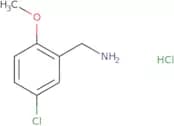
CAS:<p>5-Chloro-2-methoxybenzylamine hydrochloride is a chemical substance that is used as an intermediate in the synthesis of pharmaceuticals and other chemicals. It can be used as a building block to create complex compounds, or it can be used in reactions to produce speciality chemicals. 5-Chloro-2-methoxybenzylamine hydrochloride is a high quality reagent that can be used as a reaction component in research and development.<br>A fine chemical, 5-Chloro-2-methoxybenzylamine hydrochloride has many uses as a versatile building block for organic synthesis. It is also useful for generating research chemicals and complex compounds for use in medicines and other products.</p>Formula:C8H10ClNO·(HCl)Purity:Min. 95%Color and Shape:PowderMolecular weight:208.08 g/molTributyl-(4-methoxy-phenyl)-stannane
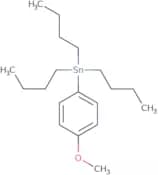
CAS:Controlled Product<p>Tributyl-(4-methoxy-phenyl)-stannane is a nucleophilic compound that can be used to synthesize 5-HT1A receptor agonists. It has been shown to have biochemical, positron and chloride properties. This chemical is synthesised by introducing a sulfur atom into the molecule. The sulfur atom reacts with the chlorine atom in chlorobenzene to form the sulfonation bond. This reaction is efficient and can be used as a method for cleaving bonds and cross-coupling carbon atoms.</p>Formula:C19H34OSnPurity:Min. 95%Color and Shape:PowderMolecular weight:397.18 g/molHoechst 33342
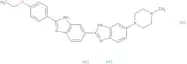
CAS:<p>2'-(4-Ethoxyphenyl)-5-(4-methyl-1-piperazinyl)-2,5'-bi-1H-benzimidazole trihydrochloride (EPMB) is a DNA binding agent that is used in tumor detection and research into apoptosis. It has been shown to inhibit the activity of p-glycoprotein, which is an efflux pump protein, and Bcl-2 protein. EPMB has also been shown to cause apoptosis in human squamous cell carcinoma cells in a concentration dependent manner. This compound has shown potential as a treatment for cancer because it inhibits the ability of cancer cells to proliferate by binding to the NMDA receptor.</p>Formula:C27H28N6O·3HCl·xH2OPurity:Min. 95%Color and Shape:Yellow PowderMolecular weight:561.93 g/mol6-Hydroxy-7-methoxy-3,4-dihydroquinazolin-4-one
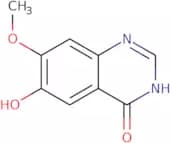
CAS:6-Hydroxy-7-methoxy-3,4-dihydroquinazolin-4-one is an amination of chloropropane and morpholinyl with 3-chloro-4-fluoroaniline. It cyclizes to form a quinazolinone. This compound was synthesized in order to produce a cytotoxic agent for cancer treatment.Formula:C9H8N2O3Purity:Min. 95%Color and Shape:PowderMolecular weight:192.17 g/mol4-Fluoro-3-methoxytoluene
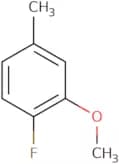
CAS:<p>4-Fluoro-3-methoxytoluene (4FMET) is a polymeric organic compound that has an index of refraction of 1.5. It is soluble in common solvents, such as chloroform, acetone and ethanol, but insoluble in water. 4FMET can be used as a copolymerization additive to improve the chemical stability of polymers and plastics. It also has antibacterial properties that are due to its ability to disrupt bacterial membranes and inhibit protein synthesis. 4FMET is FDA approved for use in ophthalmic solutions that transmit ultraviolet light, such as UV-A or UV-B radiation.</p>Formula:C8H9FOPurity:Min. 95%Color and Shape:Clear LiquidMolecular weight:140.15 g/mol3,4-Difluoro-2-methoxybenzonitrile
CAS:<p>3,4-Difluoro-2-methoxybenzonitrile is an organic chemical compound that is a useful scaffold for the synthesis of complex compounds. It reacts with nucleophiles such as Grignard reagents to form a wide range of products. 3,4-Difluoro-2-methoxybenzonitrile has been shown to be a versatile building block for the synthesis of high quality and speciality chemicals, including pharmaceuticals and agrochemicals. This chemical is also used as a research chemical, which can be used in drug discovery and development. The CAS number for this chemical is 886496-72-6.</p>Formula:C8H5F2NOPurity:Min. 95%Color and Shape:Clear LiquidMolecular weight:169.13 g/mol3-Ethoxy-4-hydroxyphenylnitroethene
CAS:<p>3-Ethoxy-4-hydroxyphenylnitroethene is a fine chemical with the CAS number 90922-85-3. It is a versatile building block that can be used for research, as a reagent, or as a speciality chemical. This compound has many applications in synthesis due to its high quality and complex nature. It is also an intermediate in the production of other compounds.</p>Formula:C10H11NO4Purity:Min. 95%Color and Shape:PowderMolecular weight:209.2 g/mol3-(Trifluoromethoxy)iodobenzene
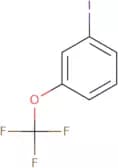
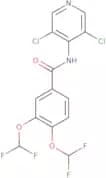
CAS:<p>3-(Trifluoromethoxy)iodobenzene is a reagent for organic synthesis that has a high quality and versatile reactivity. It can be used in the preparation of useful scaffolds, which are novel and useful building blocks. 3-(Trifluoromethoxy)iodobenzene is also a useful intermediate for the synthesis of complex compounds. 3-(Trifluoromethoxy)iodobenzene has been shown to have antioxidant properties and can be used as a fine chemical.</p>Formula:C7H4F3IOPurity:Min. 95%Color and Shape:Clear LiquidMolecular weight:288.01 g/mol3,4-Bis(difluoromethoxy) Roflumilast
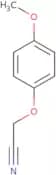
CAS:<p>3,4-Bis(difluoromethoxy) roflumilast is a reagent that is used to synthesize fine chemicals. It is an intermediate for the synthesis of 3,4-bis(difluoromethoxy) roflumilast-1-carboxylic acid and can also be used as a building block for other research chemicals. 3,4-Bis(difluoromethoxy) roflumilast has been shown to be useful in reactions that require versatile building blocks.</p>Formula:C14H8Cl2F4N2O3Purity:Min. 95%Color and Shape:PowderMolecular weight:399.12 g/mol2-(4-Methoxyphenoxy)acetonitrile
CAS:<p>2-(4-Methoxyphenoxy)acetonitrile is a chemical compound that is used to synthesize acetobromoglucose. It undergoes transformation and condensation reactions with acetobromoglucose to form 4-methoxyaceto bromoglucose.</p>Formula:C9H9NO2Purity:Min. 95%Molecular weight:163.17 g/molTris(2-methoxyphenyl)bismuth dichloride
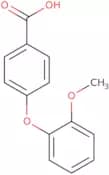
CAS:<p>Tris(2-methoxyphenyl)bismuth dichloride is a coordination compound with the chemical formula BiCl(OMeCH). It crystallizes in the triclinic crystal system and its molecular structure is trigonal. Tris(2-methoxyphenyl)bismuth dichloride has been characterized by X-ray and infrared spectroscopy, as well as by analysis of the axial, apical, and trigonal coordinates. The compound has been shown to form perchlorate and diperchlorate salts. The presence of bismuth atoms in this molecule produces a bright yellow color.</p>Formula:C21H21BiCl2O3Purity:Min. 95%Color and Shape:Off-White PowderMolecular weight:601.28 g/mol4-(2-Methoxyphenoxy)benzoic acid
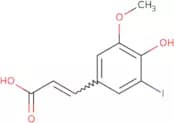
CAS:<p>4-(2-Methoxyphenoxy)benzoic acid is a white crystalline solid with a melting point of 50°C. It is soluble in water, ethanol, ether, and chloroform. 4-(2-Methoxyphenoxy)benzoic acid has been used as a starting material for the synthesis of pharmaceuticals such as carbamazepine (Tegretol). The compound has two methoxy groups on the phenyl ring that are susceptible to nucleophilic attack by strong bases. This reaction occurs at room temperature and can be reversed by heating the solution to 150°C. The compound also undergoes polycondensation reactions when heated in the presence of an oxidizing agent.</p>Formula:C14H12O4Purity:Min. 95%Color and Shape:White PowderMolecular weight:244.24 g/mol3-(5-Iodo-4-hydroxy-3-methoxy)cinnamic acid
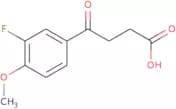
CAS:<p>3-(5-Iodo-4-hydroxy-3-methoxy)cinnamic acid is a chemical compound that can be used as a starting material for synthesis of complex compounds. It is a white solid with a melting point of about 100°C, and it is soluble in water. This product is an excellent reagent for the synthesis of new chemicals, and it has been widely used as a reaction component in organic syntheses. 3-(5-Iodo-4-hydroxy-3-methoxy)cinnamic acid also has antibacterial properties.</p>Formula:C10H9IO4Purity:Min. 95%Molecular weight:320.08 g/mol3-(3-Fluoro-4-methoxybenzoyl)propionic acid
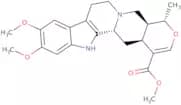
CAS:<p>3-(3-Fluoro-4-methoxybenzoyl)propionic acid is a versatile building block that is used in the synthesis of many organic compounds. 3-(3-Fluoro-4-methoxybenzoyl)propionic acid has been used as a reagent in the synthesis of pharmaceuticals and other chemicals. 3-(3-Fluoro-4-methoxybenzoyl)propionic acid can be used to produce high quality research chemicals, speciality chemicals, and fine chemicals. This compound is also used to produce complex compounds and useful intermediates. 3-(3-Fluoro-4-methoxybenzoyl)propionic acid is available through chemical suppliers such as Sigma Aldrich or Acros Organics.</p>Formula:C11H11FO4Purity:Min. 95%Molecular weight:226.2 g/molReserpiline
CAS:<p>Methyl (3beta,19alpha,20alpha)-16,17-didehydro-10,11-dimethoxy-19-methyloxayohimban-16-carboxylate is a trifluoroacetate ester of apocynin. It is used to treat bowel disease by reducing inflammation and stimulating the growth of new cells in the epithelium. Apocynin has been shown to inhibit the release of inflammatory cytokines such as epidermal growth factor (EGF) in vitro. In vivo studies have shown that it reduces symptoms of bowel disease and prevents ulceration. Apocynin has been shown to be a potent analog for EGF and has been studied for its potential use in the treatment of cancer. However, it has also been found to cause psychosis when administered at high doses. The toxicity studies on apocynin show that it is not toxic at lower doses but becomes more toxic at higher doses due</p>Formula:C23H28N2O5Purity:Min. 95%Color and Shape:PowderMolecular weight:412.48 g/mol(R)-4-METHYL-2-(HYDROXYMETHYL)MORPHOLINE
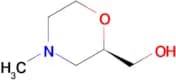
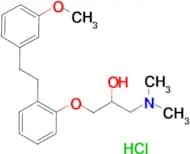
CAS:Formula:C6H13NO2Purity:97%Color and Shape:LiquidMolecular weight:131.1751-(Dimethylamino)-3-(2-(3-methoxyphenethyl)phenoxy)propan-2-ol hydrochloride
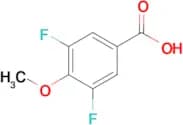
CAS:Formula:C20H28ClNO3Purity:98%Color and Shape:Liquid, No data available.Molecular weight:365.93,5-Difluoro-4-methoxybenzoic acid
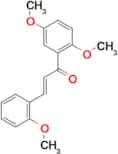
CAS:Formula:C8H6F2O3Purity:98%Color and Shape:White to off-white fine powderMolecular weight:188.13(2E)-1-(2,5-dimethoxyphenyl)-3-(2-methoxyphenyl)prop-2-en-1-one
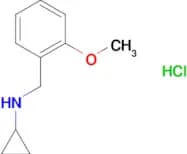
CAS:Formula:C18H18O4Purity:95.0%Molecular weight:298.338N-(2-methoxybenzyl)cyclopropanamine hydrochloride
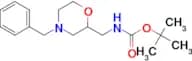
CAS:Formula:C11H16ClNOPurity:95.0%Molecular weight:213.71TERT-BUTYL (4-BENZYLMORPHOLIN-2-YL)METHYLCARBAMATE
CAS:Formula:C17H26N2O3Purity:97%Molecular weight:306.4063-Methyl-4-((6-methylpyridin-3-yl)oxy)aniline
CAS:Formula:C13H14N2OPurity:98%Color and Shape:SolidMolecular weight:214.268[6-[[(3S)-Tetrahydrofuran-3-yl]oxymethyl]-2-pyridyl]methanamine dihydrochloride
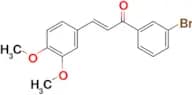
CAS:Purity:98%Molecular weight:281.1799927(2E)-1-(3-bromophenyl)-3-(3,4-dimethoxyphenyl)prop-2-en-1-one
CAS:Formula:C17H15BrO3Purity:95.0%Molecular weight:347.208Methyl 2,5-bis(trifluoroethoxy)benzoate
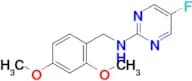
CAS:Formula:C12H10F6O4Purity:>95%Color and Shape:Solid, Low Melting SolidMolecular weight:332.198N-(2,4-DIMETHOXYBENZYL)-5-FLUOROPYRIMIDIN-2-AMINE
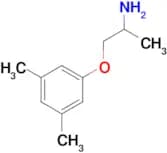
CAS:Formula:C13H14FN3O2Purity:95%Molecular weight:263.2722-(3,5-Dimethyl-phenoxy)-1-methyl-ethylamine
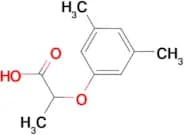
CAS:Formula:C11H17NOPurity:95.0%Color and Shape:SolidMolecular weight:179.2632-(3,5-Dimethyl-phenoxy)-propionic acid
CAS:Formula:C11H14O3Purity:95.0%Color and Shape:Solid, No data available.Molecular weight:194.23








![[6-[[(3S)-Tetrahydrofuran-3-yl]oxymethyl]-2-pyridyl]methanamine dihydrochloride](/_next/image/?url=https%3A%2Fstatic.cymitquimica.com%2Fproducts%2F10%2Fthumb-webp%2FF625417.webp&w=3840&q=75)



![3-[(3-chlorobenzyl)oxy]benzoyl chloride](/_next/image/?url=https%3A%2Fstatic.cymitquimica.com%2Fproducts%2F10%2Fthumb-webp%2FF368884.webp&w=3840&q=75)


![1,8-Dioxa-3-azaspiro[4.5]decan-2-one](/_next/image/?url=https%3A%2Fstatic.cymitquimica.com%2Fproducts%2F10%2Fthumb-webp%2FF647711.webp&w=3840&q=75)