Ethers
Found 40906 products of "Ethers"
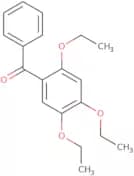
2,4,5-Triethoxybenzophenone
CAS:2,4,5-Triethoxybenzophenone is a regioisomeric carbonyl compound that can be synthesized by reacting phenol with an ester of an aliphatic alcohol and an aromatic hydrocarbon. This product has a variety of uses, including as a precursor for the synthesis of other compounds. 2,4,5-Triethoxybenzophenone is used in the manufacture of benzoates, metal carbonyls, acetophenones, aryl ketones and arylcarbonyls. It has been shown to be effective in the treatment of various skin conditions such as acne and dandruff. The frequency factor for this compound is 5.
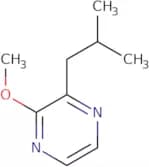
Formula:C19H22O4Purity:Min. 95%Color and Shape:PowderMolecular weight:314.38 g/mol2-Isobutyl-3-methoxypyrazine
CAS:2-Isobutyl-3-methoxypyrazine is a hydrophobic compound that is not soluble in water. It has a bound form and can be titrated with calorimetry. 2-Isobutyl-3-methoxypyrazine is synthesized by reacting 2,2,4-trimethylpentane with methoxyacetone in the presence of sodium methylate. The compound has been detected as an odorant in numerous plant species and is believed to play a role in plant physiology. 2-Isobutyl-3-methoxypyrazine has been shown to have potent antiviral activity against infectious diseases such as HIV, herpes simplex virus type 1 (HSV1), and varicella zoster virus (VZV). This specific antiviral activity may be due to its ability to bind fatty acids by hydrogen bonds, which may interfere with the synthesis of viral membranes.
Formula:C9H14N2OPurity:Min. 95%Molecular weight:166.22 g/molRef: 3D-FI63381
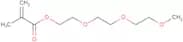
Discontinued productMethoxytriethyleneglycol methacrylate - Contains MEHQ as inhibitor
CAS:Methoxytriethyleneglycol methacrylate is a biocompatible polymer that is used as an antimicrobial agent. It can be used to prevent microbial infection and can be incorporated into polymeric materials, such as microcapsules, to form a model system for the study of drug release kinetics. Methoxytriethyleneglycol methacrylate has shown anti-inflammatory properties in the presence of hydrogen bonds with growth factors and reactive oxygen species. The phosphotungstic acid residue in this molecule has been shown to have antimicrobial activity against several strains of bacteria, including Staphylococcus aureus and Escherichia coli.Formula:C11H20O5Purity:Min. 92 Area-%Color and Shape:Clear LiquidMolecular weight:232.27 g/molRef: 3D-FM139122
Discontinued product3,4-Diethoxybenzylalcohol
CAS:3,4-Diethoxybenzylalcohol is a metabolite produced by the fungus Ustilago maydis. It has been shown to have pleiotropic effects on the metabolism of the organism. 3,4-Diethoxybenzylalcohol is involved in lignin biosynthesis and bond cleavage reactions. In addition to functioning as an intermediate in the pentose phosphate pathway, it is involved in the nature of the basidiomycete cell wall and also plays a role in carbon source utilization.
Formula:C11H16O3Purity:Min. 95%Color and Shape:PowderMolecular weight:196.24 g/molRef: 3D-FD151370
Discontinued product4-[2-[[(1S)-1-(2-Aminophenyl)-3-methylbutyl]amino]-2-oxoethyl]-2-ethoxybenzoic acid
CAS:Bosentan is a potent inhibitor of the uptake of organic anions. It is used in the treatment of pulmonary arterial hypertension and has been shown to be effective against pravastatin-resistant HIV protease inhibitors, such as saquinavir, quinidine, and rosuvastatin. Bosentan inhibits uptake by binding to the transporter protein at a site that does not overlap with the binding site for organic anion substrates. This leads to a change in kinetic parameters for substrates, such as pravastatin and saquinavir. The binding site on bosentan may also be elucidated through monolayer experiments with efflux transporters.
Formula:C22H28N2O4Purity:Min. 95%Molecular weight:384.47 g/molRef: 3D-FD21379
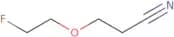
Discontinued product3-(2-Fluoroethoxy)Propanenitrile
CAS:3-(2-Fluoroethoxy)Propanenitrile is a chemical with toxic properties. It is classified as a fluoroacetic acid and has been used in the production of other chemicals. Fluoroacetic acid is toxic to humans, showing signs of skin irritation, respiratory tract irritation, and kidney damage. 3-(2-Fluoroethoxy)Propanenitrile is not found naturally and has been sponsored by many companies.
Formula:C5H8FNOPurity:Min. 95%Molecular weight:117.12 g/molRef: 3D-FF80270
Discontinued product


![4-[2-[[(1S)-1-(2-Aminophenyl)-3-methylbutyl]amino]-2-oxoethyl]-2-ethoxybenzoic acid](/_next/image/?url=https%3A%2Fstatic.cymitquimica.com%2Fproducts%2F3D%2Fthumb-webp%2FFD21379.webp&w=3840&q=75)