Ethers
Ethers are organic compounds containing an ether functional group, characterized by an oxygen atom bonded to two hydrocarbon radicals. These compounds are valuable in synthesis and serve as solvents in various chemical reactions. At CymitQuimica, we offer a selection of high-quality ethers to support your research and industrial applications, ensuring reliable and effective results. Our range of ethers meets diverse laboratory requirements, from routine experiments to advanced research.
Found 40902 products of "Ethers"
Sort by
Purity (%)
0
100
|
0
|
50
|
90
|
95
|
100
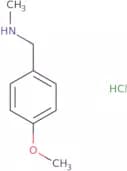
4-Methoxy-N-methylbenzylamine hydrochloride
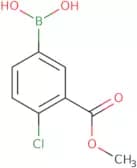
CAS:<p>Please enquire for more information about 4-Methoxy-N-methylbenzylamine hydrochloride including the price, delivery time and more detailed product information at the technical inquiry form on this page</p>Formula:C9H14NOClPurity:Min. 95%Molecular weight:187.67 g/mol(4-Chloro-3-(methoxycarbonyl)phenyl)boronic acid
CAS:<p>Please enquire for more information about (4-Chloro-3-(methoxycarbonyl)phenyl)boronic acid including the price, delivery time and more detailed product information at the technical inquiry form on this page</p>Formula:C8H8BClO4Purity:Min. 95%Molecular weight:214.41 g/mol(5-Methoxy-1-methyl-1H-benzimidazol-2-yl)methanol
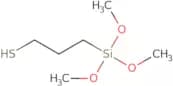
CAS:Controlled ProductPlease enquire for more information about (5-Methoxy-1-methyl-1H-benzimidazol-2-yl)methanol including the price, delivery time and more detailed product information at the technical inquiry form on this pageFormula:C10H12N2O2Purity:Min. 95%Molecular weight:192.21 g/mol(3-Mercaptopropyl)trimethoxysilane
CAS:<p>3-Mercaptopropyl)trimethoxysilane is a molecule made up of three parts: a trimethoxysilane group, a trimethylsilyl group, and a mercapto group. The trimethoxysilane group is hydrophilic in nature and has an electron withdrawing effect on the molecule. The trimethylsilyl group is hydrophobic in nature and has an electron donating effect on the molecule. The mercapto group is reactive in nature and has a high redox potential. 3-Mercaptopropyl)trimethoxysilane can be used as a chemical additive to increase the stability of hydrochloric acid in water vapor by reacting with the hydroxyl groups to form stable compounds. This compound also reacts with hydrogen gas to produce methane gas, which can be used as fuel or as an alternative energy source. 3-Mercaptopropyl)trimethoxysilane also has synergistic</p>Formula:C6H16O3SSiPurity:Min. 98 Area-%Color and Shape:Colorless Clear LiquidMolecular weight:196.34 g/mol7-[(4Methoxyphenyl)methyl]-5-methyl-2H-pyrazolo[3,4-d]pyrimidine-4,6(5H,7H)-dione
CAS:Controlled Product<p>Please enquire for more information about 7-[(4Methoxyphenyl)methyl]-5-methyl-2H-pyrazolo[3,4-d]pyrimidine-4,6(5H,7H)-dione including the price, delivery time and more detailed product information at the technical inquiry form on this page</p>Formula:C14H14N4O3Purity:Min. 95%Molecular weight:286.29 g/mol(9Z)-N-[(3-Methoxyphenyl)methyl]-9-octadecenamide
CAS:<p>Please enquire for more information about (9Z)-N-[(3-Methoxyphenyl)methyl]-9-octadecenamide including the price, delivery time and more detailed product information at the technical inquiry form on this page</p>Formula:C26H43NO2Purity:Min. 95%Molecular weight:401.63 g/molN-(8-Methoxy-4-methylquinazolin-2-yl)guanidine
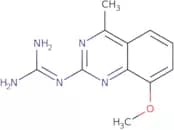
CAS:<p>Please enquire for more information about N-(8-Methoxy-4-methylquinazolin-2-yl)guanidine including the price, delivery time and more detailed product information at the technical inquiry form on this page</p>Formula:C11H13N5OPurity:Min. 95%Molecular weight:231.25 g/mol2-Chloro-4,6-dimethoxypyrimidine
CAS:<p>2-Chloro-4,6-dimethoxypyrimidine is a synthetic compound that is a triazolopyrimidine derivative. It has been shown to have significant antifungal activity against cryptococcus neoformans in toxicity studies. 2-Chloro-4,6-dimethoxypyrimidine is an amine that can be used as a fungicide or pesticide due to its toxicity and effectiveness against fungi. 2-Chloro-4,6-dimethoxypyrimidine has a molecular weight of 196 and contains three functional groups: chlorine, hydrogen chloride, and pyridinium. This compound also has the ability to form covalent bonds with organic molecules such as chloromethyl groups on proteins.</p>Formula:C6H7ClN2O2Purity:Min. 95%Color and Shape:Off-White To Yellow SolidMolecular weight:174.58 g/molBoc-(S)-3-amino-3-(2-methoxyphenyl)propionic acid
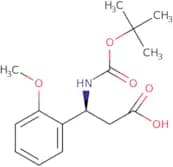
CAS:<p>Please enquire for more information about Boc-(S)-3-amino-3-(2-methoxyphenyl)propionic acid including the price, delivery time and more detailed product information at the technical inquiry form on this page</p>Formula:C15H21NO5Purity:Min. 95%Color and Shape:PowderMolecular weight:295.33 g/mol6,7-Dimethoxy-1,4-dihydro-3H-isochromen-3-one
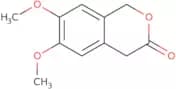
CAS:<p>6,7-Dimethoxy-1,4-dihydro-3H-isochromen-3-one is a hydrazide with the chemical formula C8H8N2O3. It belongs to the family of natural products and has the molecular weight of 172.15. 6,7-Dimethoxy-1,4-dihydro-3H-isochromen-3-one is an isoquinolone derivative that contains two methyl groups on carbons 6 and 7. The compound is a symmetric molecule that can be found as a hydroxy or methoxy derivative. It reacts with 3,4 dimethoxyphenylacetic acid to form yohimbane in the presence of an oxidizing agent such as electrochemical oxidation or maldi tof. 6,7 Dimethoxy 1,4 dihydro 3H isochromen 3 one was obtained from endohedral metalloful</p>Formula:C11H12O4Purity:Min. 95%Molecular weight:208.21 g/mol2-Methyl-4-(trifluoromethoxy)bromobenzene
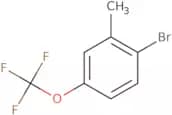
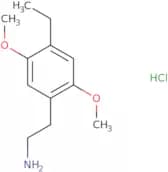
CAS:Please enquire for more information about 2-Methyl-4-(trifluoromethoxy)bromobenzene including the price, delivery time and more detailed product information at the technical inquiry form on this pageFormula:C8H6BrF3OPurity:Min. 95%Color and Shape:Clear LiquidMolecular weight:255.03 g/mol4-Ethyl-2,5-dimethoxy-benzeneethanamineHydrochloride
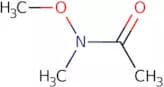
CAS:Controlled Product<p>4-Ethyl-2,5-dimethoxy-benzeneethanamineHydrochloride is a metabolic substrate of CYP2D6. It is also an inhibitor of CYP1A2 and CYP3A4. The class of 4-Ethyl-2,5-dimethoxy-benzeneethanamineHydrochloride is not yet known. 4-Ethyl-2,5-dimethoxy-benzeneethanamineHydrochloride has been shown to cause toxicity in animal studies. Toxicity may be due to its inhibition of cytochrome P450 enzymes, which are involved in metabolism and detoxification.</p>Formula:C12H20ClNO2Purity:Min. 95%Molecular weight:245.75 g/molN-Methoxy-N-methylacetamide
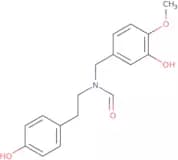
CAS:<p>N-Methoxy-N-methylacetamide is a nucleophilic amide that can be synthesized by the reaction of acetamide with methylmagnesium chloride. It has been used to synthesize an enantiopure derivative of 2-aminopropanol, which is used in the synthesis of potent antitumor agents. N-Methoxy-N-methylacetamide has shown potent anticancer activity in mice and rats. This molecule exhibits a carbonyl group that can act as an enolate, which is a reactive intermediate within chemical reactions. The nucleophilic attack on this carbonyl group leads to intramolecular hydrogen transfer, producing a more stable product.</p>Formula:C4H9NO2Purity:Min. 95%Molecular weight:103.12 g/molN-(p-Hydroxyphenethyl)-N-(3-hydroxy-4-methoxybenzyl)formamide
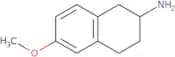
CAS:Controlled Product<p>Please enquire for more information about N-(p-Hydroxyphenethyl)-N-(3-hydroxy-4-methoxybenzyl)formamide including the price, delivery time and more detailed product information at the technical inquiry form on this page</p>Formula:C17H19NO4Purity:Min. 95%Molecular weight:301.34 g/mol6-Methoxy-1,2,3,4-tetrahydronaphthalen-2-ylamine
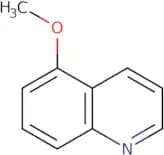
CAS:Controlled ProductPlease enquire for more information about 6-Methoxy-1,2,3,4-tetrahydronaphthalen-2-ylamine including the price, delivery time and more detailed product information at the technical inquiry form on this pageFormula:C11H15NOPurity:Min. 95%Molecular weight:177.24 g/mol5-Methoxyquinoline
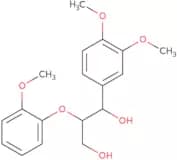
CAS:<p>5-Methoxyquinoline (5MQ) is a chemical compound that belongs to the quinoline derivatives. It has shown anticancer activity in tumor models through a proton-transfer mechanism. 5MQ reacts with an acidic proton, such as the hydronium ion, to produce a reactive intermediate that can react with DNA and other cellular macromolecules. The drug also has been shown to inhibit the growth of bacteria by inhibiting protein synthesis. This inhibition is due to its ability to transfer protons from one molecule to another, which alters the charge distribution on that molecule and prevents it from reacting with other molecules.</p>Formula:C10H9NOPurity:Min. 95%Color and Shape:LiquidMolecular weight:159.18 g/mol1-(3,4-Dimethoxyphenyl)-2-(2-methoxyphenoxy)propane-1,3-diol
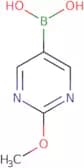
CAS:<p>1,3-Dimethoxy-2-(2-methoxyphenoxy)propane-1,3-diol (DMMP) is a natural product with antioxidant properties. It has been shown to be a potent inhibitor of the epidermal growth factor receptor (EGFR), and also inhibits the activity of the response elements for EGFR. DMMP is also a potent inhibitor of proliferation in human cancer cells and can inhibit the growth of tumour cells that are resistant to methotrexate. DMMP is a precursor to protocatechuic acid, which has been shown to have anti-herpes virus effects. DMMP has been shown to decrease the rate of second order reactions through its ability to react with carbonyl groups on proteins. This reaction leads to an increase in stability and decreases the rate of protein degradation by proteases. A mutant strain was found that can produce this compound without any external stimulus, making it ideal for use as an antibiotic against bacterial</p>Formula:C18H22O6Purity:Min. 95 Area-%Color and Shape:PowderMolecular weight:334.36 g/mol2-Methoxypyrimidine-5-boronic acid
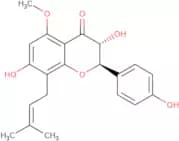
CAS:<p>Please enquire for more information about 2-Methoxypyrimidine-5-boronic acid including the price, delivery time and more detailed product information at the technical inquiry form on this page</p>Formula:C5H7BN2O3Purity:Min. 95%Molecular weight:153.93 g/mol3,7,4'-Trihydroxy-5-methoxy-8-prenylflavanone, (2R,3R)-
CAS:<p>3,7,4'-Trihydroxy-5-methoxy-8-prenylflavanone, (2R,3R)- is a prenylated flavonoid compound, which is a type of naturally occurring polyphenol. These compounds are known for their complex structures and biological activities, frequently contributing to the therapeutic properties of various plants. The source of this flavanone is often plants belonging to the Fabaceae family, including the roots and other parts of certain legumes, where it accumulates as part of the plant’s secondary metabolism.</p>Purity:Min. 95%J147
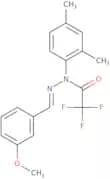
CAS:<p>2,2,2-Trifluoroacetic acid 1-(2,4-dimethylphenyl)-2-[(3-methoxyphenyl)methylene]hydrazide is a neuroprotective drug that belongs to the class of hydrazides. It has been shown to have neurotrophic activity in vitro and in vivo and can be used for the treatment of conditions such as diabetic neuropathy or cancer tissues. 2,2,2-Trifluoroacetic acid 1-(2,4-dimethylphenyl)-2-[(3-methoxyphenyl)methylene]hydrazide also has anti-inflammatory properties and can be used for the treatment of autoimmune diseases. The drug's mechanism of action is not fully understood but is thought to involve monoamine neurotransmitters.</p>Formula:C18H17F3N2O2Purity:Min. 95%Molecular weight:350.34 g/mol


![7-[(4Methoxyphenyl)methyl]-5-methyl-2H-pyrazolo[3,4-d]pyrimidine-4,6(5H,7H)-dione](/_next/image/?url=https%3A%2Fstatic.cymitquimica.com%2Fproducts%2F3D%2Fthumb-webp%2FFM168534.webp&w=3840&q=75)
![(9Z)-N-[(3-Methoxyphenyl)methyl]-9-octadecenamide](/_next/image/?url=https%3A%2Fstatic.cymitquimica.com%2Fproducts%2F3D%2Fthumb-webp%2FFN165022.webp&w=3840&q=75)