Ethers
Ethers are organic compounds containing an ether functional group, characterized by an oxygen atom bonded to two hydrocarbon radicals. These compounds are valuable in synthesis and serve as solvents in various chemical reactions. At CymitQuimica, we offer a selection of high-quality ethers to support your research and industrial applications, ensuring reliable and effective results. Our range of ethers meets diverse laboratory requirements, from routine experiments to advanced research.
Found 40729 products of "Ethers"
Sort by
Purity (%)
0
100
|
0
|
50
|
90
|
95
|
100
2-Fluoro-6-methoxybenzonitrile
CAS:<p>2-Fluoro-6-methoxybenzonitrile (2FMN) is a compound that is used as a starting material for the synthesis of other pharmaceuticals. It has been shown to bind to the acetylcholine receptor by using vibrational spectroscopy and functional theory. It also has been shown to be an effective chemokine inhibitor. Computational methods were used to optimize 2FMN's binding affinity for the acetylcholine receptor, and it was found that 2FMN binds with a dipole orientation in order to increase its binding affinity.</p>Formula:C8H6FNOPurity:Min. 95%Color and Shape:PowderMolecular weight:151.14 g/mol4-Methoxy-3-(trifluoromethyl)benzoic acid
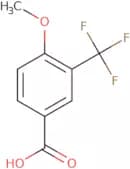
CAS:<p>4-Methoxy-3-(trifluoromethyl)benzoic acid is a useful scaffold that can be used as a building block for the synthesis of complex compounds. It has been shown to react with various reagents and is a versatile building block that can be used in organic synthesis. 4-Methoxy-3-(trifluoromethyl)benzoic acid is a high quality chemical and has been classified as speciality chemicals. This product is also known by the CAS number 213598-09-5.</p>Formula:C9H7F3O3Purity:Min. 98 Area-%Color and Shape:PowderMolecular weight:220.15 g/mol4-Chloro-6,7-dimethoxyquinoline
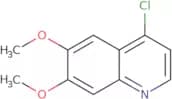
CAS:<p>4-Chloro-6,7-dimethoxyquinoline (4C6DMQ) is a potent inhibitor of the growth of prostate cancer cells. 4C6DMQ is an analog of chloropropyl chloride, which inhibits the growth of epidermal growth factor receptor (EGFR). The binding site for 4C6DMQ on EGFR is the same as that for chloropropyl chloride. 4C6DMQ inhibits EGFR by preventing the activation of downstream signaling cascades, leading to a decrease in cell proliferation and tumor size. The IC50 values for 4C6DMQ are approximately 10 times higher than those for chloropropyl chloride. This drug has been shown to be more potent than other inhibitors of EGFR such as erlotinib and gefitinib.</p>Formula:C11H10ClNO2Purity:Min. 95%Color and Shape:White PowderMolecular weight:223.66 g/mol2,2-Dimethoxyacetaldehyde - About 60% water solution
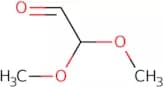
CAS:<p>2,2-Dimethoxyacetaldehyde is an inhibitor of the enzyme DNA polymerase. It has been shown to inhibit replication of the herpes simplex virus type 1 and 2 (HSV-1, HSV-2) in cell cultures. 2,2-Dimethoxyacetaldehyde has also been shown to inhibit the replication of HIV in cells and is a potential antiviral agent. This compound is also used as a building block for other drugs such as amide and ester hydrochloride. It is synthesized from 2,2-dimethoxypropane and formaldehyde with a two step process that starts with an asymmetric synthesis reaction between formaldehyde and methoxide ion followed by an ester hydrochloride formation reaction with methylamine. The product can be purified by recrystallization from water or acetone solution.</p>Formula:C4H8O3Purity:Min. 95%Molecular weight:104.1 g/mol3-Fluoro-4-methoxybenzoic acid
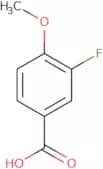
CAS:<p>3-Fluoro-4-methoxybenzoic acid is a dipolar molecule with a fluorine atom. It has been synthesized experimentally and the yields are determined by the experimental conditions. 3-Fluoro-4-methoxybenzoic acid has two isomers, which can be differentiated by their resonances. The molecule also has an asymmetric C3(CF)2Cl group in the middle of its structure that can rotate freely.</p>Formula:C8H7FO3Purity:Min. 95%Color and Shape:PowderMolecular weight:170.14 g/mol2,3-(Dimethoxyphenyl)acetonitrile
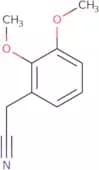
CAS:<p>2,3-(Dimethoxyphenyl)acetonitrile is a chemical intermediate that is used in the synthesis of pharmaceuticals and specialty chemicals. It can be used as a reaction component and reagent for the synthesis of other chemicals. This compound has a high quality and is also a versatile building block for complex compounds. 2,3-(Dimethoxyphenyl)acetonitrile has been shown to be useful in the production of fine chemicals such as pharmaceuticals, agrochemicals, and dyes. The CAS number for this compound is 4468-57-9.</p>Formula:C10H11NO2Purity:Min. 95%Molecular weight:177.2 g/mol3-Amino-2-methoxy-dibenzofuran
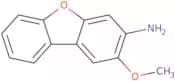
CAS:<p>3-Amino-2-methoxy-dibenzofuran (3AMD) is a cytotoxic agent that is used in the treatment of bladder carcinoma. 3AMD inhibits DNA synthesis, leading to cell death by inhibiting the production of proteins vital for cell division. 3AMD has been shown to be a potent inhibitor of cyclen-dependent kinases and to induce DNA damage in human cells. 3AMD also has significant cytotoxicity against malignant cells and has been shown to inhibit the growth of tumours in mice. 3AMD may have carcinogenic potential due to its structural similarity with other carcinogens such as aniline and aminobiphenyl.</p>Purity:Min. 95%Molecular weight:213.23 g/mol7alpha-Methyl-3,3-dimethoxy-5(10)-estrene-17-one
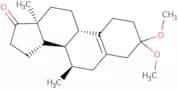
CAS:Controlled Product<p>Please enquire for more information about 7alpha-Methyl-3,3-dimethoxy-5(10)-estrene-17-one including the price, delivery time and more detailed product information at the technical inquiry form on this page</p>Formula:C21H32O3Purity:Min. 95%Color and Shape:PowderMolecular weight:332.48 g/mol4-[(4-chlorophenyl)-2-pyridinylmethoxy]-1-piperidinecarboxylic acid ethylester
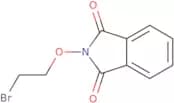
CAS:<p>Please enquire for more information about 4-[(4-chlorophenyl)-2-pyridinylmethoxy]-1-piperidinecarboxylic acid ethylester including the price, delivery time and more detailed product information at the technical inquiry form on this page</p>Formula:C20H23ClN2O3Purity:Min. 95%Molecular weight:374.86 g/molN-(2-Bromoethoxy)phthalimide
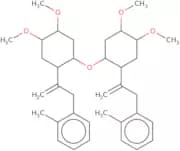
CAS:<p>N-(2-Bromoethoxy)phthalimide is a chemical compound that has been shown to inhibit the activity of histone deacetylases. Histones are proteins that regulate gene expression and play an important role in the regulation of DNA transcription. The enzyme histone deacetylase (HDAC) removes acetyl groups from these proteins, which can lead to changes in gene expression and misregulation of cellular processes. HDACs have been linked to autoimmune diseases, such as arthritis and multiple sclerosis, because they can cause inflammation by affecting the production of inflammatory cytokines. N-(2-Bromoethoxy)phthalimide is able to inhibit HDACs by forming covalent bonds with the lysine residues on these enzymes. This inhibition causes modifications that affect the interaction between HDACs and their substrates, preventing them from modifying histones or interacting with other proteins.</p>Formula:C10H8BrNO3Purity:Min. 95%Molecular weight:270.08 g/mol2-(4,5-Dimethoxy-2-(1-((2-methylphenyl)methyl)vinyl)cyclohexyl)ether
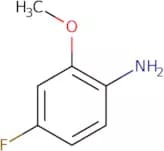
CAS:<p>2-(4,5-Dimethoxy-2-(1-((2-methylphenyl)methyl)vinyl)cyclohexyl)ether is a versatile building block for the synthesis of complex compounds. It is also an intermediate in the synthesis of useful scaffolds and reaction components. This compound has a high quality and can be used as a reagent or research chemicals.</p>Formula:C36H50O5Purity:Min. 95%Molecular weight:562.78 g/mol4-Fluoro-2-methoxyaniline
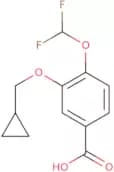
CAS:<p>4-Fluoro-2-methoxyaniline is an inhibitor of tyrosine kinase. It is a molecule that has been isolated from the ground leaves of erythroxylon coca and is used in the treatment of diabetes mellitus. 4-Fluoro-2-methoxyaniline inhibits the growth factor receptor, epidermal growth factor (EGF), and its receptor, EGF receptor. This inhibition leads to decreased proliferation of epidermal cells and decreased insulin production by pancreatic beta cells. 4-Fluoro-2-methoxyaniline also has antioxidant properties, which may be due to its ability to scavenge free radicals.</p>Formula:C7H8FNOPurity:Min. 95%Color and Shape:Light Brown To Brown LiquidMolecular weight:141.14 g/mol3-Cyclopropylmethoxy-4-difluoromethoxy-benzoic acid
CAS:<p>3-Cyclopropylmethoxy-4-difluoromethoxy-benzoic acid is an industrial chemical that is used as a binding agent in the production of dyes, rubber, and pharmaceuticals. The compound is produced by the acylation of 3-chloromethoxybenzoic acid with cyclopropylmethanol. This reaction requires an inorganic base such as potassium carbonate or sodium bicarbonate to activate the chloride. 3-Cyclopropylmethoxy-4-difluoromethoxybenzoic acid can be used as a reactive alkylating agent for the production of amides and other organic compounds, which increases its versatility.</p>Formula:C12H12O4F2Purity:Min. 95%Color and Shape:White/Off-White SolidMolecular weight:258.22 g/mol2-Chloro-6-methoxypyridine
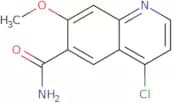
CAS:2-Chloro-6-methoxypyridine (2CMP) is a potent antagonist that binds to copper chloride, inhibiting its ability to activate aryl chlorides. This chemical has been shown to have anti-angiogenic effects in human cancer cells and can be used for the treatment of cancer. 2CMP has also been shown to be effective at blocking angiogenesis in mice with breast cancer. 2CMP is synthesized through an asymmetric synthesis process, which involves the use of a dipole and molecular docking analysis.Formula:C6H6ClNOPurity:Min. 95%Color and Shape:Clear LiquidMolecular weight:143.57 g/mol4-Chloro-7-methoxyquinoline-6-carboxamide
CAS:<p>Intermediate in the synthesis of lenvatinib</p>Formula:C11H9ClN2O2Purity:Min. 95%Molecular weight:236.65 g/mol2-Methoxyethyl acetoacetate
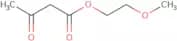
CAS:<p>2-Methoxyethyl acetoacetate is used as a raw material for coatings. It has been shown to be an effective calcium antagonist in the treatment of leukemia and other cancers. 2-Methoxyethyl acetoacetate has also been shown to inhibit the growth of HL-60 cells when it is incubated with these cells in the presence of hydrochloric acid, malonic acid, and quinoline derivatives. The reaction produces chlorine gas, which is toxic to cells.</p>Formula:C7H12O4Purity:Min. 95%Color and Shape:Clear LiquidMolecular weight:160.17 g/molDolastatin 15 (5S)-1-[(2S)-O-(N,N-Dimethyl-Val-Val-N-Me-Val-Pro-Pro)-2-hydroxyisovaleryl]-2-oxo-4-methoxy-5-benzyl-3-pyrroline
CAS:<p>Dolastatin 15 (5S)-1-[(2S)-O-(N,N-Dimethyl-Val-Val-N-Me-Val-Pro-Pro)-2-hydroxyisovaleryl]-2-oxo-4-methoxy-5-benzylpyrrolidinium is a natural compound that has been isolated from the Indian Ocean sea hare Dolabella auricularia. It has shown significant cytotoxicity against cancer cells as well as significant immunosuppressive activities in animals. Dolastatin 15 is an analog of dolastatin 10 and has been shown to be active against hepatitis B and C virus. It also has antiinflammatory properties and may be effective in combating autoimmune diseases. The synthesis of this compound is an asymmetric synthesis with a hydroxyl group on one side of the molecule and an amide on the other side.</p>Formula:C45H68N6O9Purity:Min. 95%Molecular weight:837.06 g/mol1-(3-Chloro-4-methoxyphenyl)acetone
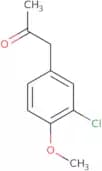
CAS:<p>1-(3-Chloro-4-methoxyphenyl)acetone is a white solid with a melting point of 60-61°C. It is a versatile building block that can be used in the synthesis of complex compounds and as a reaction component for the preparation of speciality chemicals. 1-(3-Chloro-4-methoxyphenyl)acetone has been studied extensively as an intermediate for the synthesis of pharmaceuticals, including acetaminophen and amoxicillin. This compound also has uses in research laboratories and as a reagent in organic synthesis.</p>Formula:C10H11ClO2Purity:Min. 95%Molecular weight:198.65 g/mol(2R,3S)-2-[(1R)-1-[3,5-Bis(trifluoromethyl)phenyl]ethoxy]-3-(4-fluorophenyl)morpholine hydrochloride
CAS:<p>Please enquire for more information about (2R,3S)-2-[(1R)-1-[3,5-Bis(trifluoromethyl)phenyl]ethoxy]-3-(4-fluorophenyl)morpholine hydrochloride including the price, delivery time and more detailed product information at the technical inquiry form on this page</p>Formula:C20H18F7NO2•HClPurity:Min. 95%Molecular weight:473.81 g/mol3-Methoxybenzyl chloride
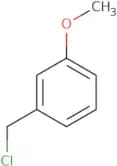
CAS:<p>3-Methoxybenzyl chloride is a polymer conjugate that has the chemical formula C6H5CH2ClO. It reacts with hydroxy groups to form ester bonds. The compound was synthesized by reacting 3-methoxybenzyl chloride with hydrochloric acid in vitro, and the resulting product was found to have antimicrobial properties. In vivo studies have shown that this compound binds to receptors in rat striatal tissue. 3-Methoxybenzyl chloride also showed fluorescence properties when exposed to ultraviolet light and can be used for molecular modeling. Titration calorimetry has been used to study the thermal stability of this polymer conjugate.</p>Formula:C8H9ClOPurity:Min. 95%Molecular weight:156.61 g/mol


![4-[(4-chlorophenyl)-2-pyridinylmethoxy]-1-piperidinecarboxylic acid ethylester](/_next/image/?url=https%3A%2Fstatic.cymitquimica.com%2Fproducts%2F3D%2Fthumb-webp%2FFP152183.webp&w=3840&q=75)

![Dolastatin 15 (5S)-1-[(2S)-O-(N,N-Dimethyl-Val-Val-N-Me-Val-Pro-Pro)-2-hydroxyisovaleryl]-2-oxo-4-…](/_next/image/?url=https%3A%2Fstatic.cymitquimica.com%2Fproducts%2F3D%2Fthumb-webp%2FFD110329.webp&w=3840&q=75)
![(2R,3S)-2-[(1R)-1-[3,5-Bis(trifluoromethyl)phenyl]ethoxy]-3-(4-fluorophenyl)morpholine hydrochlori…](/_next/image/?url=https%3A%2Fstatic.cymitquimica.com%2Fproducts%2F3D%2Fthumb-webp%2FFB102459.webp&w=3840&q=75)