Ethers
Ethers are organic compounds containing an ether functional group, characterized by an oxygen atom bonded to two hydrocarbon radicals. These compounds are valuable in synthesis and serve as solvents in various chemical reactions. At CymitQuimica, we offer a selection of high-quality ethers to support your research and industrial applications, ensuring reliable and effective results. Our range of ethers meets diverse laboratory requirements, from routine experiments to advanced research.
Found 40729 products of "Ethers"
Sort by
Purity (%)
0
100
|
0
|
50
|
90
|
95
|
100
N-Methoxymethyl-N-(trimethylsilylmethyl)benzylamine
CAS:<p>N-Methoxymethyl-N-(trimethylsilylmethyl)benzylamine is a chiral, electron deficient reagent that reacts with aldehydes and boronic esters to form products with high chemical yields. This compound can be used as a catalyst for acylation reactions, such as the synthesis of p-nitrophenol. N-Methoxymethyl-N-(trimethylsilylmethyl)benzylamine is synthesized by the reaction of trifluoroacetic acid and an amine, followed by chloroformate displacement. The product is then reacted with acylating agents in the presence of catalysts.</p>Formula:C13H23NOSiPurity:Min. 95%Color and Shape:Clear Colourless To Pale Yellow LiquidMolecular weight:237.41 g/mol(2-Amino-2-oxoethoxy)acetic acid
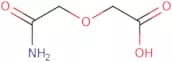
CAS:<p>2-Amino-2-oxoethoxy)acetic acid is a product that can be used as a transport agent in the process of extracting glycosides. It has been shown to have strong adsorption properties and is able to extract glycosides from plant material. 2-Amino-2-oxoethoxy)acetic acid has a high affinity for calcium, which is an important component in the adsorption mechanism.</p>Formula:C4H7NO4Purity:Min. 95%Molecular weight:133.1 g/mol7alpha-Methyl-3,3-dimethoxy-5(10)-estrene-17-one
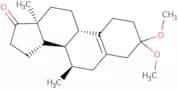
CAS:Controlled Product<p>Please enquire for more information about 7alpha-Methyl-3,3-dimethoxy-5(10)-estrene-17-one including the price, delivery time and more detailed product information at the technical inquiry form on this page</p>Formula:C21H32O3Purity:Min. 95%Color and Shape:PowderMolecular weight:332.48 g/mol1,2-Difluoro-4,5-dimethoxybenzene
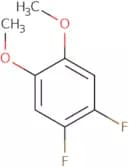
CAS:<p>Diffraction is a technique that is used to measure the angles of the reflections from a crystal or other material. Single-crystal x-ray diffraction (SCXRD) is one form of diffraction that uses a single crystal to generate an image. Diffraction was first observed in 1807 by English scientist William Hyde Wollaston and French physicist Joseph von Fraunhofer. Diffraction can be used to determine the structures of ionic, linear, or annulated frameworks, such as those found in 1,2-Difluoro-4,5-dimethoxybenzene. The molecular geometry and relative orientation of the atoms in these frameworks can be determined through diffraction. This technique is often used to characterize polymers with cyclic structures such as penicillin and cyclic voltammetry. <br>Diffraction studies have shown that 1,2-Difluoro-4,5-dimethoxybenzene has a hydroxylase</p>Formula:C8H8F2O2Purity:Min. 97 Area-%Color and Shape:PowderMolecular weight:174.14 g/molBoc-(R)-2-methoxyphenylglycine
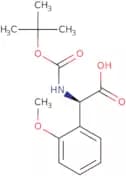
CAS:<p>Please enquire for more information about Boc-(R)-2-methoxyphenylglycine including the price, delivery time and more detailed product information at the technical inquiry form on this page</p>Formula:C14H19NO5Purity:Min. 95%Molecular weight:281.3 g/mol3,4,5-Trimethoxybenzoic acid anhydride
CAS:<p>3,4,5-Trimethoxybenzoic acid anhydride is a synthetic chemical compound that is used as a pharmaceutical intermediate. It is mainly used to prepare potent anticancer agents and potent anticancer drugs. 3,4,5-Trimethoxybenzoic acid anhydride reacts with amines in the presence of a base to form substituted amides. This reaction has been shown by crystal x-ray diffraction to be sensitive to the solvent polarity and temperature of the reaction medium. The compound can also react with chloride ion to form 3,4,5-trichlorobenzoic acid anhydride (3TCBA).</p>Formula:C20H22O9Purity:(%) Min. 85%Color and Shape:PowderMolecular weight:406.38 g/mol2,4-Dichloro-5-methoxyaniline
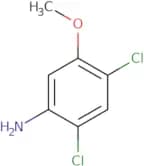
CAS:<p>2,4-Dichloro-5-methoxyaniline (2,4-DMA) is a trifluoroacetic acid derivative that inhibits the growth of cancer cells by interfering with cellular processes such as DNA replication and protein synthesis. It has been shown to have anticancer activity in vitro and in vivo. In addition, 2,4-DMA can inhibit the growth of cancer cells by preventing epidermal growth factor from binding to its receptor on the cell surface. A recent study showed that 2,4-DMA has anti-angiogenic properties and can prevent tumor growth by inhibiting bcr-abl kinase activity. 2,4-DMA also has an acidic property which may be due to its conversion of trifluoroacetic acid into hydrogen fluoride (HF) and hydrogen chloride (HCl).<br>2,4-Dichloro-5-methoxyaniline was approved for use in Japan</p>Formula:C7H7Cl2NOPurity:Min. 95%Color and Shape:White To Pink SolidMolecular weight:192.04 g/mol2,3-(Dimethoxyphenyl)acetonitrile
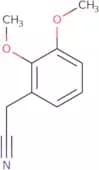
CAS:<p>2,3-(Dimethoxyphenyl)acetonitrile is a chemical intermediate that is used in the synthesis of pharmaceuticals and specialty chemicals. It can be used as a reaction component and reagent for the synthesis of other chemicals. This compound has a high quality and is also a versatile building block for complex compounds. 2,3-(Dimethoxyphenyl)acetonitrile has been shown to be useful in the production of fine chemicals such as pharmaceuticals, agrochemicals, and dyes. The CAS number for this compound is 4468-57-9.</p>Formula:C10H11NO2Purity:Min. 95%Molecular weight:177.2 g/mol2-[2-Trifluoroethoxyphenoxy]ethyl methanesulfonate
CAS:<p>2-[2-Trifluoroethoxyphenoxy]ethyl methanesulfonate is a research chemical that is commonly used in the synthesis of enantioselective compounds. It has been clinically studied for its potential use in the treatment of prostatic hyperplasia, a condition characterized by an enlargement of the prostate gland. This compound has shown promising results in inhibiting the growth of prostatic cells and reducing symptoms associated with hyperplasia. Its enantioselective properties make it an ideal candidate for targeted therapy, allowing for more precise and effective treatment options. Researchers continue to explore the potential applications of 2-[2-Trifluoroethoxyphenoxy]ethyl methanesulfonate in various fields, including medicine and pharmaceuticals.</p>Formula:C11H13F3O5SPurity:Min. 95%Molecular weight:314.28 g/mol2,6-Dimethoxytoluene
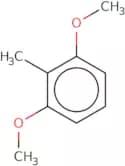
CAS:<p>2,6-Dimethoxytoluene is a regiospecific pentafluorophenyl compound with a thermal isomerization. It is an extractive yield that can be isolated from the reaction of acetaldehyde and formaldehyde in the presence of an imine. The process of making 2,6-dimethoxytoluene begins by reacting chloromethane with oxygenated tetrafluorobenzyne to make an intermediate. Then, this intermediate reacts with methoxylated fatty acids to create the final product. This reaction is stereoselective because it produces only one stereoisomer of 2,6-dimethoxytoluene.</p>Formula:C9H12O2Purity:Min. 95%Color and Shape:PowderMolecular weight:152.19 g/mol3-Methoxyphenylboronic acid
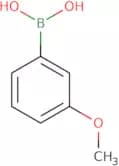
CAS:<p>3-Methoxyphenylboronic acid is a photophysical molecule that can be used as an analytical reagent in plant physiology and analytical chemistry. 3-Methoxyphenylboronic acid reacts reversibly with copper ions to form a complex. The binding constants of the copper complex depend on the pH of the solution, which can be altered by adding a phosphate derivative to the solution. This reaction was investigated using cross-coupling techniques and showed that the binding constants for this complex are dependent on the type of solvent used. 3-Methoxyphenylboronic acid has also been used to measure glucose levels in blood samples.</p>Formula:C7H9BO3Purity:Min. 95%Color and Shape:White PowderMolecular weight:151.96 g/mol4-Chloro-7-methoxyquinoline-6-carboxamide
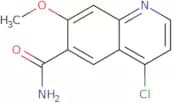
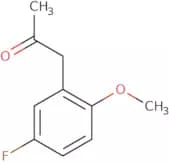
CAS:<p>Intermediate in the synthesis of lenvatinib</p>Formula:C11H9ClN2O2Purity:Min. 95%Molecular weight:236.65 g/mol5-Fluoro-2-methoxyphenylacetone
CAS:<p>5-Fluoro-2-methoxyphenylacetone is a chemical with a wide array of applications in research and industry. It is a versatile building block, useful intermediate, and reagent for organic synthesis. This compound has been used as a starting material in the synthesis of other compounds. CAS No. 1017082-10-8</p>Formula:C10H11FO2Color and Shape:PowderMolecular weight:182.19 g/molH-D-Cys(4-methoxytrityl)-2-chlorotrityl resin (200-400 mesh)
Please enquire for more information about H-D-Cys(4-methoxytrityl)-2-chlorotrityl resin (200-400 mesh) including the price, delivery time and more detailed product information at the technical inquiry form on this pagePurity:Min. 95%4-[(4-chlorophenyl)-2-pyridinylmethoxy]-1-piperidinecarboxylic acid ethylester
CAS:<p>Please enquire for more information about 4-[(4-chlorophenyl)-2-pyridinylmethoxy]-1-piperidinecarboxylic acid ethylester including the price, delivery time and more detailed product information at the technical inquiry form on this page</p>Formula:C20H23ClN2O3Purity:Min. 95%Molecular weight:374.86 g/mol2-Methoxy-5-[[(phenylmethyl)sulfonyl]methyl]benzenamine
CAS:3-Amino-4-methoxybenzyl sulphone is a high quality, versatile building block that is used in the synthesis of complex compounds. It is a reagent that can be used for reactions such as the coupling of amines and carboxylic acids. 3-Amino-4-methoxybenzyl sulphone is also useful in the synthesis of pharmaceuticals and speciality chemicals. The compound has been shown to react with other substances, such as thiols and alcohols, to form new materials with interesting properties.Formula:C15H17NO3SPurity:Min. 95%Color and Shape:PowderMolecular weight:291.37 g/mol2-[(4-Chloro-2-nitrophenyl)azo]-N-(2-methoxyphenyl)-3-oxobutanamide
CAS:2-[(4-Chloro-2-nitrophenyl)azo]-N-(2-methoxyphenyl)-3-oxobutanamide is a chelating agent that has been used as a control agent in the manufacture of dyes, plastics, and rubber. It is also used as an additive in paints, textiles, and paper. 2-[(4-Chloro-2-nitrophenyl)azo]-N-(2-methoxyphenyl)-3-oxobutanamide is nonvolatile, nonflammable, and does not produce toxic byproducts when heated. This compound has low molecular weight with a molecular formula of C12H13NO5Cl. The structure of this compound includes two hydroxy groups (OH), one aliphatic hydrocarbon group (CH3), one carboxylic acid group (COOH), and three chlorine atoms (Cl). This product is soluble in waterFormula:C17H15ClN4O5Color and Shape:Yellow Clear LiquidMolecular weight:390.78 g/molN-(2-Aminoethyl)-3-(trimethoxysilyl)propylamine
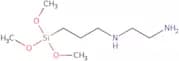
CAS:N-(2-Aminoethyl)-3-(trimethoxysilyl)propylamine (NAP) is a cationic surfactant that is used as a fluorescent probe to study the binding of proteins to cell surface integrin receptors. The adsorption mechanism is based on the interaction between the hydrophobic parts of the protein and the hydrophobic parts of NAP. This interaction leads to an increase in the concentration of NAP at the interface and thus an increase in fluorescence. NAP has been shown to bind human serum albumin, fatty acids, and monoclonal antibodies with high affinity. It also has been shown to bind to plasma proteins through hydrogen bonding. The optimum concentration for NAP adsorption is 1mM.Formula:C8H22N2O3SiPurity:Min. 95%Molecular weight:222.36 g/mol5-Amino-2-methoxybenzonitrile
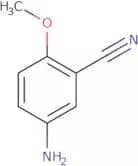
CAS:<p>Please enquire for more information about 5-Amino-2-methoxybenzonitrile including the price, delivery time and more detailed product information at the technical inquiry form on this page</p>Formula:C8H8N2OPurity:Min. 95%Molecular weight:148.16 g/mol2-Hydroxy-5-methoxybenzimidazole
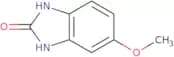
CAS:<p>Please enquire for more information about 2-Hydroxy-5-methoxybenzimidazole including the price, delivery time and more detailed product information at the technical inquiry form on this page</p>Formula:C8H8N2O2Purity:Min. 95%Molecular weight:164.16 g/mol



![2-[2-Trifluoroethoxyphenoxy]ethyl methanesulfonate](/_next/image/?url=https%3A%2Fstatic.cymitquimica.com%2Fproducts%2F3D%2Fthumb-webp%2FFT33048.webp&w=3840&q=75)

![4-[(4-chlorophenyl)-2-pyridinylmethoxy]-1-piperidinecarboxylic acid ethylester](/_next/image/?url=https%3A%2Fstatic.cymitquimica.com%2Fproducts%2F3D%2Fthumb-webp%2FFP152183.webp&w=3840&q=75)
![2-Methoxy-5-[[(phenylmethyl)sulfonyl]methyl]benzenamine](/_next/image/?url=https%3A%2Fstatic.cymitquimica.com%2Fproducts%2F3D%2Fthumb-webp%2FFA70820.webp&w=3840&q=75)
![2-[(4-Chloro-2-nitrophenyl)azo]-N-(2-methoxyphenyl)-3-oxobutanamide](/_next/image/?url=https%3A%2Fstatic.cymitquimica.com%2Fproducts%2F3D%2Fthumb-webp%2FFC149929.webp&w=3840&q=75)