Ethers
Ethers are organic compounds containing an ether functional group, characterized by an oxygen atom bonded to two hydrocarbon radicals. These compounds are valuable in synthesis and serve as solvents in various chemical reactions. At CymitQuimica, we offer a selection of high-quality ethers to support your research and industrial applications, ensuring reliable and effective results. Our range of ethers meets diverse laboratory requirements, from routine experiments to advanced research.
Found 40729 products of "Ethers"
Sort by
Purity (%)
0
100
|
0
|
50
|
90
|
95
|
100
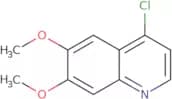
4-Chloro-6,7-dimethoxyquinoline
CAS:<p>4-Chloro-6,7-dimethoxyquinoline (4C6DMQ) is a potent inhibitor of the growth of prostate cancer cells. 4C6DMQ is an analog of chloropropyl chloride, which inhibits the growth of epidermal growth factor receptor (EGFR). The binding site for 4C6DMQ on EGFR is the same as that for chloropropyl chloride. 4C6DMQ inhibits EGFR by preventing the activation of downstream signaling cascades, leading to a decrease in cell proliferation and tumor size. The IC50 values for 4C6DMQ are approximately 10 times higher than those for chloropropyl chloride. This drug has been shown to be more potent than other inhibitors of EGFR such as erlotinib and gefitinib.</p>Formula:C11H10ClNO2Purity:Min. 95%Color and Shape:White PowderMolecular weight:223.66 g/mol2,7-Bis[2-(diethylamino)ethoxy]-9-fluorenone dihydrochloride
CAS:Controlled Product<p>2,7-Bis[2-(diethylamino)ethoxy]-9-fluorenone dihydrochloride (2,7-BDFE) is a potent inducer of interferon. It is a natural compound that has been shown to have significant cytotoxicity against murine sarcoma virus and opportunistic fungal infections. 2,7-BDFE has also been shown to induce toll-like receptor 4 (TLR4), which triggers the production of other cytokines and chemokines. 2,7-BDFE has also been found to inhibit the growth of cancer cells in vitro and in vivo. This drug is used as an inhibitor for benzalkonium chloride for the prevention of bacterial contamination on surfaces.</p>Formula:C25H36N2O3Cl2Purity:Min. 95%Color and Shape:Yellow PowderMolecular weight:483.47 g/mol2,4-Dichloro-5-methoxyaniline
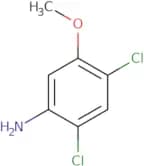
CAS:<p>2,4-Dichloro-5-methoxyaniline (2,4-DMA) is a trifluoroacetic acid derivative that inhibits the growth of cancer cells by interfering with cellular processes such as DNA replication and protein synthesis. It has been shown to have anticancer activity in vitro and in vivo. In addition, 2,4-DMA can inhibit the growth of cancer cells by preventing epidermal growth factor from binding to its receptor on the cell surface. A recent study showed that 2,4-DMA has anti-angiogenic properties and can prevent tumor growth by inhibiting bcr-abl kinase activity. 2,4-DMA also has an acidic property which may be due to its conversion of trifluoroacetic acid into hydrogen fluoride (HF) and hydrogen chloride (HCl).<br>2,4-Dichloro-5-methoxyaniline was approved for use in Japan</p>Formula:C7H7Cl2NOPurity:Min. 95%Color and Shape:White To Pink SolidMolecular weight:192.04 g/molKaempferol-7,4'-dimethoxy-8-butyryl ester
CAS:<p>Kaempferol-7,4'-dimethoxy-8-butyryl ester is a fine chemical that is used as a versatile building block for the synthesis of complex compounds. It is also used in research chemicals and as a reagent and speciality chemical. Kaempferol-7,4'-dimethoxy-8-butyryl ester has CAS number 1284229-43-1 and can be used as an intermediate for the synthesis of other compounds. It is also a useful scaffold for the synthesis of high quality compounds with potential pharmaceutical applications.</p>Formula:C21H20O7Purity:Min. 95%Molecular weight:384.38 g/moltrans-4-Benzyloxy-3-methoxy-beta-nitrostyrene
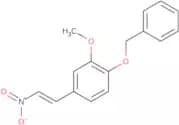
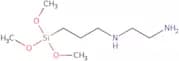
CAS:<p>Trans-4-Benzyloxy-3-methoxy-beta-nitrostyrene is an oxime that can be used as a catalyst for the catalytic hydrogenation of nitroalkanes. It is also a precursor to pallimamine, which is used as a pharmaceutical agent and an experimental virucide. Trans-4-Benzyloxy-3-methoxy-beta-nitrostyrene is synthesized by coupling two indole carboxylic acid analogues in the presence of sodium hydroxide and potassium carbonate. The reaction yields trans-(4'-benzyloxy)-3'-methoxystyrene, which is then converted to the title compound with ammonium chloride and hydrochloric acid. This compound undergoes acidic hydrolysis to yield the title compound.</p>Formula:C16H15NO4Purity:Min. 95%Color and Shape:PowderMolecular weight:285.29 g/molN-(2-Aminoethyl)-3-(trimethoxysilyl)propylamine
CAS:N-(2-Aminoethyl)-3-(trimethoxysilyl)propylamine (NAP) is a cationic surfactant that is used as a fluorescent probe to study the binding of proteins to cell surface integrin receptors. The adsorption mechanism is based on the interaction between the hydrophobic parts of the protein and the hydrophobic parts of NAP. This interaction leads to an increase in the concentration of NAP at the interface and thus an increase in fluorescence. NAP has been shown to bind human serum albumin, fatty acids, and monoclonal antibodies with high affinity. It also has been shown to bind to plasma proteins through hydrogen bonding. The optimum concentration for NAP adsorption is 1mM.Formula:C8H22N2O3SiPurity:Min. 95%Molecular weight:222.36 g/molN-Methoxymethyl-N-(trimethylsilylmethyl)benzylamine
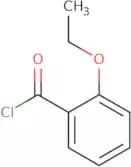
CAS:<p>N-Methoxymethyl-N-(trimethylsilylmethyl)benzylamine is a chiral, electron deficient reagent that reacts with aldehydes and boronic esters to form products with high chemical yields. This compound can be used as a catalyst for acylation reactions, such as the synthesis of p-nitrophenol. N-Methoxymethyl-N-(trimethylsilylmethyl)benzylamine is synthesized by the reaction of trifluoroacetic acid and an amine, followed by chloroformate displacement. The product is then reacted with acylating agents in the presence of catalysts.</p>Formula:C13H23NOSiPurity:Min. 95%Color and Shape:Clear Colourless To Pale Yellow LiquidMolecular weight:237.41 g/molo-Ethoxybenzoyl chloride
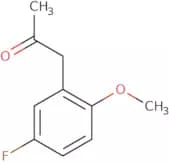
CAS:<p>O-Ethoxybenzoyl chloride is a pesticide that belongs to the group of sildenafil. It inhibits the activity of prolyl endopeptidase, an enzyme that degrades the peptide hormone vasoactive intestinal polypeptide (VIP). This inhibition prevents degradation of VIP, which is important for the regulation of blood vessel tone. The compound has been shown to be effective against Sclerotinia sclerotiorum and Claviceps purpurea. O-Ethoxybenzoyl chloride has been shown to have a high level of tolerance in plants and animals. It also has been found to be safe for humans with its low toxicity levels and low acute toxicity. It is not classified as hazardous by the World Health Organization (WHO).</p>Formula:C9H9ClO2Purity:Min. 95%Molecular weight:184.62 g/mol5-Fluoro-2-methoxyphenylacetone
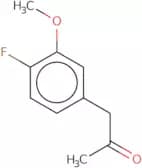
CAS:<p>5-Fluoro-2-methoxyphenylacetone is a chemical with a wide array of applications in research and industry. It is a versatile building block, useful intermediate, and reagent for organic synthesis. This compound has been used as a starting material in the synthesis of other compounds. CAS No. 1017082-10-8</p>Formula:C10H11FO2Color and Shape:PowderMolecular weight:182.19 g/mol4-Fluoro-3-methoxyphenylacetone
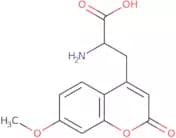
CAS:<p>4-Fluoro-3-methoxyphenylacetone is a high quality reagent that can be used as an intermediate in the synthesis of complex compounds. This compound is also useful for creating fine chemicals and speciality chemicals, for research purposes. 4-Fluoro-3-methoxyphenylacetone has been shown to be a versatile building block in organic synthesis, with many possible applications. It can react with other compounds to create new compounds or react with itself to form new molecules. CAS No. 320338-98-5</p>Formula:C10H11FO2Purity:Min. 95%Molecular weight:182.19 g/molH-beta-(7-Methoxycoumarin-4-yl)-Ala-OH
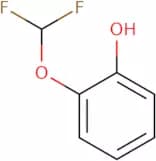
CAS:<p>Please enquire for more information about H-beta-(7-Methoxycoumarin-4-yl)-Ala-OH including the price, delivery time and more detailed product information at the technical inquiry form on this page</p>Formula:C13H13NO5Purity:Min. 95%Molecular weight:263.25 g/mol2-(Difluoromethoxy)Phenol
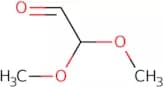
CAS:<p>2-(Difluoromethoxy)Phenol is a purine derivative and pyrimidine derivative. It has been shown to inhibit the growth of cancer cells in vitro and in vivo. 2-(Difluoromethoxy)phenol inhibits multidrug resistance by inhibiting the transport of drugs into cells and thereby preventing their accumulation. As a result, it suppresses inflammatory diseases and autoimmune diseases. The hydroxyl group in this compound can be replaced with fluorine or nitro groups to generate new derivatives with different properties. Piperidine can also be added to this molecule to create an analogue that is more potent than 2-(difluoromethoxy)phenol and has a longer duration of action.</p>Formula:C7H6F2O2Purity:Min. 95%Molecular weight:160.12 g/mol2,2-Dimethoxyacetaldehyde - About 60% water solution
CAS:<p>2,2-Dimethoxyacetaldehyde is an inhibitor of the enzyme DNA polymerase. It has been shown to inhibit replication of the herpes simplex virus type 1 and 2 (HSV-1, HSV-2) in cell cultures. 2,2-Dimethoxyacetaldehyde has also been shown to inhibit the replication of HIV in cells and is a potential antiviral agent. This compound is also used as a building block for other drugs such as amide and ester hydrochloride. It is synthesized from 2,2-dimethoxypropane and formaldehyde with a two step process that starts with an asymmetric synthesis reaction between formaldehyde and methoxide ion followed by an ester hydrochloride formation reaction with methylamine. The product can be purified by recrystallization from water or acetone solution.</p>Formula:C4H8O3Purity:Min. 95%Molecular weight:104.1 g/mol3,4-Diethoxybenzylalcohol
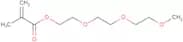
CAS:<p>3,4-Diethoxybenzylalcohol is a metabolite produced by the fungus Ustilago maydis. It has been shown to have pleiotropic effects on the metabolism of the organism. 3,4-Diethoxybenzylalcohol is involved in lignin biosynthesis and bond cleavage reactions. In addition to functioning as an intermediate in the pentose phosphate pathway, it is involved in the nature of the basidiomycete cell wall and also plays a role in carbon source utilization.</p>Formula:C11H16O3Purity:Min. 95%Color and Shape:PowderMolecular weight:196.24 g/molMethoxytriethyleneglycol methacrylate - Contains MEHQ as inhibitor
CAS:<p>Methoxytriethyleneglycol methacrylate is a biocompatible polymer that is used as an antimicrobial agent. It can be used to prevent microbial infection and can be incorporated into polymeric materials, such as microcapsules, to form a model system for the study of drug release kinetics. Methoxytriethyleneglycol methacrylate has shown anti-inflammatory properties in the presence of hydrogen bonds with growth factors and reactive oxygen species. The phosphotungstic acid residue in this molecule has been shown to have antimicrobial activity against several strains of bacteria, including Staphylococcus aureus and Escherichia coli.</p>Formula:C11H20O5Purity:Min. 92 Area-%Color and Shape:Clear LiquidMolecular weight:232.27 g/mol5-(5-Carboxy-2-ethoxyphenyl)-1-methyl-3-n-propyl-1,6-dihydro-7H-pyrazolo[4,3-d]pyrimidin-7-one
CAS:<p>Sildenafil is a drug that is used to treat erectile dysfunction. It inhibits the action of phosphodiesterase type 5 (PDE-5), an enzyme that breaks down the messenger cyclic guanosine monophosphate (cGMP) within the corpus cavernosum. This leads to increased levels of cGMP, which relaxes smooth muscle cells in the corpus cavernosum and allows for more blood flow into the penis. Sildenafil is synthesized from chrysanthemum morifolium, a plant also known as "shamrock." Sildenafil has been shown to have no effects on insulin resistance or lipid metabolism, but it does cause side effects such as headache, visual disturbances, and hearing loss.</p>Formula:C18H20N4O4Purity:Min. 95%Molecular weight:356.38 g/mol4-Acetylamino-5-bromo-2-methoxy-benzoic acid methylester
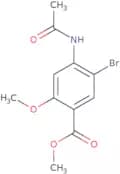
CAS:<p>Please enquire for more information about 4-Acetylamino-5-bromo-2-methoxy-benzoic acid methylester including the price, delivery time and more detailed product information at the technical inquiry form on this page</p>Formula:C11H12BrNO4Purity:Min. 95%Color and Shape:PowderMolecular weight:302.12 g/mol8-Fluoro-6-methoxy moxifloxacin
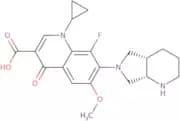
CAS:<p>Please enquire for more information about 8-Fluoro-6-methoxy moxifloxacin including the price, delivery time and more detailed product information at the technical inquiry form on this page</p>Formula:C21H24FN3O4Purity:Min. 95%Molecular weight:401.43 g/mol4-[2-[[(1S)-1-(2-Aminophenyl)-3-methylbutyl]amino]-2-oxoethyl]-2-ethoxybenzoic acid
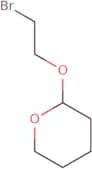
CAS:<p>Bosentan is a potent inhibitor of the uptake of organic anions. It is used in the treatment of pulmonary arterial hypertension and has been shown to be effective against pravastatin-resistant HIV protease inhibitors, such as saquinavir, quinidine, and rosuvastatin. Bosentan inhibits uptake by binding to the transporter protein at a site that does not overlap with the binding site for organic anion substrates. This leads to a change in kinetic parameters for substrates, such as pravastatin and saquinavir. The binding site on bosentan may also be elucidated through monolayer experiments with efflux transporters.</p>Formula:C22H28N2O4Purity:Min. 95%Molecular weight:384.47 g/mol2-(2-Bromoethoxy)tetrahydro-2H-pyran
CAS:<p>2-(2-Bromoethoxy)tetrahydro-2H-pyran is a synthetic molecule that has been shown to act as an estrogen receptor modulator, which has the potential to be used for the treatment of hormone-sensitive diseases such as breast cancer. This compound is chemically very similar to other compounds that have been shown to be effective in treating breast cancer. 2-(2-Bromoethoxy)tetrahydro-2H-pyran has a cavity and 6 hydroxyl groups that can form hydrogen bonds with water molecules, leading to its gelling properties. In addition, this compound is thermoreversible and can reversibly gel when heated or cooled. The gelation property of 2-(2-Bromoethoxy)tetrahydro-2H-pyran makes it a promising candidate for use in vaginal tablets, which could potentially lead to treatments for vaginal dryness and atrophy.</p>Formula:C7H13BrO2Purity:Min. 95%Color and Shape:Clear LiquidMolecular weight:209.08 g/mol

![2,7-Bis[2-(diethylamino)ethoxy]-9-fluorenone dihydrochloride](/_next/image/?url=https%3A%2Fstatic.cymitquimica.com%2Fproducts%2F3D%2Fthumb-webp%2FFB37106.webp&w=3840&q=75)



![5-(5-Carboxy-2-ethoxyphenyl)-1-methyl-3-n-propyl-1,6-dihydro-7H-pyrazolo[4,3-d]pyrimidin-7-one](/_next/image/?url=https%3A%2Fstatic.cymitquimica.com%2Fproducts%2F3D%2Fthumb-webp%2FFC19751.webp&w=3840&q=75)
![4-[2-[[(1S)-1-(2-Aminophenyl)-3-methylbutyl]amino]-2-oxoethyl]-2-ethoxybenzoic acid](/_next/image/?url=https%3A%2Fstatic.cymitquimica.com%2Fproducts%2F3D%2Fthumb-webp%2FFD21379.webp&w=3840&q=75)