Ethers
Ethers are organic compounds containing an ether functional group, characterized by an oxygen atom bonded to two hydrocarbon radicals. These compounds are valuable in synthesis and serve as solvents in various chemical reactions. At CymitQuimica, we offer a selection of high-quality ethers to support your research and industrial applications, ensuring reliable and effective results. Our range of ethers meets diverse laboratory requirements, from routine experiments to advanced research.
Found 40902 products of "Ethers"
Sort by
Purity (%)
0
100
|
0
|
50
|
90
|
95
|
100
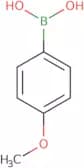
4-Methoxyphenyl boronic acid
CAS:<p>4-Methoxyphenyl boronic acid is a molecule with a hydroxyl group and a boronic acid. It is synthesized by reacting biphenyl with trifluoroacetic acid in the presence of sodium carbonate and palladium-catalyzed coupling. 4-Methoxyphenyl boronic acid has shown to bind to the receptor for fatty acids, which may be due to its structural similarity to p-hydroxybenzoic acid. The protonated form of this molecule has been shown to react with an electrophilic carbon atom and an electron-deficient alkyl or vinyl halide, resulting in ring formation. This reaction is known as the Suzuki coupling reaction.</p>Formula:C7H9BO3Purity:Min. 95%Color and Shape:PowderMolecular weight:151.96 g/mol2-Chloromethyl-4-(3-methoxypropoxy)-3-methylpyridine hydrochloride
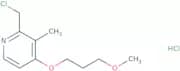
CAS:<p>Please enquire for more information about 2-Chloromethyl-4-(3-methoxypropoxy)-3-methylpyridine hydrochloride including the price, delivery time and more detailed product information at the technical inquiry form on this page</p>Formula:C11H17Cl2NO2Purity:Min. 95%Molecular weight:266.16 g/mol2,4-Dichloro-5-methoxyaniline
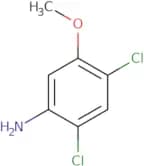
CAS:<p>2,4-Dichloro-5-methoxyaniline (2,4-DMA) is a trifluoroacetic acid derivative that inhibits the growth of cancer cells by interfering with cellular processes such as DNA replication and protein synthesis. It has been shown to have anticancer activity in vitro and in vivo. In addition, 2,4-DMA can inhibit the growth of cancer cells by preventing epidermal growth factor from binding to its receptor on the cell surface. A recent study showed that 2,4-DMA has anti-angiogenic properties and can prevent tumor growth by inhibiting bcr-abl kinase activity. 2,4-DMA also has an acidic property which may be due to its conversion of trifluoroacetic acid into hydrogen fluoride (HF) and hydrogen chloride (HCl).<br>2,4-Dichloro-5-methoxyaniline was approved for use in Japan</p>Formula:C7H7Cl2NOPurity:Min. 95%Color and Shape:White To Pink SolidMolecular weight:192.04 g/mol2-Methoxy-6-picolinic acid
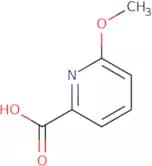
CAS:<p>2-Methoxy-6-picolinic acid (2MPA) is a picolinate that has been shown to be an effective catalyst for the conversion of alcohols into allylic alcohols. 2MPA is able to catalyze the reaction by abstracting hydrogen from the carbonyl group, and then adding it to the adjacent carbon. This reaction can produce peroxide as a byproduct, which is subsequently hydrolyzed to form water and alcohol. The β-unsaturated carbonyl group of 2MPA provides additional stability for this catalytic process.<br>2MPA can also be used as a catalyst in other reactions, such as the oxidation of benzylic alcohols with hydrogen peroxide to form benzylic carbonyl compounds.</p>Formula:C7H7NO3Purity:Min. 95%Color and Shape:PowderMolecular weight:153.14 g/mol5-Amino-2-methoxy-4-methylpyridine
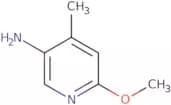
CAS:<p>5-Amino-2-methoxy-4-methylpyridine is a small molecule that inhibits bromodomains. Bromodomains are protein domains that bind to acetylated lysine residues on histones. 5-Amino-2-methoxy-4-methylpyridine binds to the bromodomain, preventing the acetylated lysine residues from binding with other proteins and inhibiting transcription. This drug has been shown to be effective in treating prostate cancer by interacting with the androgen receptor. 5-Amino-2-methoxy-4-methylpyridine also interacts with ATPase, which may lead to increased levels of ATP production, and has been shown to have antitumor effects in vitro.</p>Formula:C7H10N2OPurity:Min. 95%Molecular weight:138.17 g/molMethoxycarbonyl-Lys(Z)-Gly-Arg-pNA hydrochloride salt
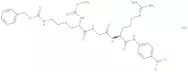
CAS:<p>Please enquire for more information about Methoxycarbonyl-Lys(Z)-Gly-Arg-pNA hydrochloride salt including the price, delivery time and more detailed product information at the technical inquiry form on this page</p>Formula:C30H41N9O9Purity:Min. 95%Molecular weight:671.7 g/mol2,7-Bis[2-(diethylamino)ethoxy]-9-fluorenone dihydrochloride
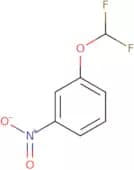
CAS:Controlled Product<p>2,7-Bis[2-(diethylamino)ethoxy]-9-fluorenone dihydrochloride (2,7-BDFE) is a potent inducer of interferon. It is a natural compound that has been shown to have significant cytotoxicity against murine sarcoma virus and opportunistic fungal infections. 2,7-BDFE has also been shown to induce toll-like receptor 4 (TLR4), which triggers the production of other cytokines and chemokines. 2,7-BDFE has also been found to inhibit the growth of cancer cells in vitro and in vivo. This drug is used as an inhibitor for benzalkonium chloride for the prevention of bacterial contamination on surfaces.</p>Formula:C25H36N2O3Cl2Purity:Min. 95%Color and Shape:Yellow PowderMolecular weight:483.47 g/mol3-(Difluoromethoxy)nitrobenzene
CAS:<p>Please enquire for more information about 3-(Difluoromethoxy)nitrobenzene including the price, delivery time and more detailed product information at the technical inquiry form on this page</p>Formula:C7H5F2NO3Purity:Min. 95%Molecular weight:189.12 g/mol4-(2',4'-Dimethoxyphenyl-Fmoc-aminomethyl)-phenoxymethyl-polystyrene resin (200-400 mesh)
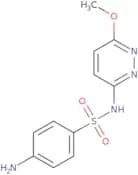
<p>Please enquire for more information about 4-(2',4'-Dimethoxyphenyl-Fmoc-aminomethyl)-phenoxymethyl-polystyrene resin (200-400 mesh) including the price, delivery time and more detailed product information at the technical inquiry form on this page</p>Purity:Min. 95%Sulfamethoxypyridazine
CAS:<p>Sulfamethoxypyridazine is a sulfa drug that inhibits bacterial growth by inhibiting the synthesis of folic acid, which is essential for DNA and RNA production. It has been shown to be effective in the treatment of urinary infections and infectious diseases. Sulfamethoxypyridazine interacts with other drugs, such as oral contraceptives, to increase their blood levels. This drug also has a matrix effect on urine samples, which can be used to detect the presence of bacteria. The matrix effect is due to its hydrophobic nature and ability to form aggregates with other compounds. Sulfamethoxypyridazine is used in wastewater treatment plants as an analytical method for nitrogen atoms.</p>Formula:C11H12N4O3SPurity:Min. 95%Molecular weight:280.3 g/mol2-(2-Ethoxyphenoxy)ethyl bromide
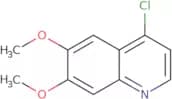
CAS:<p>2-(2-Ethoxyphenoxy)ethyl bromide is a substance that is found as an impurity in the drug sulphonamide. It has been shown to be an optical isomer of methanol and ethanol, which have base form. The substance crystallizes in the form of white needles and its base form is tamsulosin hydrochloride. It has been used as a reagent for organic chemistry reactions, such as recrystallization, and as an impurity in organic solvents.</p>Formula:C10H13BrO2Purity:Min. 95%Molecular weight:245.11 g/mol4-Chloro-6,7-dimethoxyquinoline
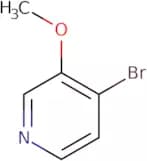
CAS:<p>4-Chloro-6,7-dimethoxyquinoline (4C6DMQ) is a potent inhibitor of the growth of prostate cancer cells. 4C6DMQ is an analog of chloropropyl chloride, which inhibits the growth of epidermal growth factor receptor (EGFR). The binding site for 4C6DMQ on EGFR is the same as that for chloropropyl chloride. 4C6DMQ inhibits EGFR by preventing the activation of downstream signaling cascades, leading to a decrease in cell proliferation and tumor size. The IC50 values for 4C6DMQ are approximately 10 times higher than those for chloropropyl chloride. This drug has been shown to be more potent than other inhibitors of EGFR such as erlotinib and gefitinib.</p>Formula:C11H10ClNO2Purity:Min. 95%Color and Shape:White PowderMolecular weight:223.66 g/mol4-Bromo-3-methoxypyridine
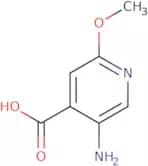
CAS:<p>Please enquire for more information about 4-Bromo-3-methoxypyridine including the price, delivery time and more detailed product information at the technical inquiry form on this page</p>Formula:C6H6BrNOPurity:Min. 95%Molecular weight:188.02 g/mol5-Amino-2-methoxyisonicotinic acid
CAS:<p>5-Amino-2-methoxyisonicotinic acid is a carboxylic acid that is used in the synthesis of aminopyridines. The compound can be synthesized from formamidine acetate and diethyl dicarbonate. This process involves lithiation, followed by addition of an amine and finally conversion to the desired product with formamidine acetate. 5-Amino-2-methoxyisonicotinic acid can also be synthesized from formamide and diethyl ether. 5-Amino-2-methoxyisonicotinic acid is an analog of 2,4,6-trimethylaniline and has been shown to have similar properties to this compound, including strong basicity.</p>Formula:C7H8N2O3Purity:Min. 95%Molecular weight:168.15 g/molDibenzoyl-(-)-p-methoxy-L-tartaric acid
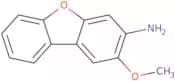
CAS:<p>Dibenzoyl-(-)-p-methoxy-L-tartaric acid is a chiral compound that has been extracted from plants and synthesized. It has a bitter taste and can be used as an enantiomer to treat schistosomiasis, a disease caused by parasitic flatworms. Dibenzoyl-(-)-p-methoxy-L-tartaric acid can be used as an enantiomer to treat schistosomiasis, which is caused by parasitic flatworms. The chemical is an anionic β-cyclodextrin derivative that binds to the parasites in the host's body and prevents them from releasing eggs into the water supply. This chemical also has pharmacological properties, such as antiinflammatory activities.</p>Formula:C20H18O10Purity:Min. 95%Color and Shape:White PowderMolecular weight:418.35 g/mol3-Amino-2-methoxy-dibenzofuran
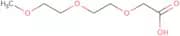
CAS:<p>3-Amino-2-methoxy-dibenzofuran (3AMD) is a cytotoxic agent that is used in the treatment of bladder carcinoma. 3AMD inhibits DNA synthesis, leading to cell death by inhibiting the production of proteins vital for cell division. 3AMD has been shown to be a potent inhibitor of cyclen-dependent kinases and to induce DNA damage in human cells. 3AMD also has significant cytotoxicity against malignant cells and has been shown to inhibit the growth of tumours in mice. 3AMD may have carcinogenic potential due to its structural similarity with other carcinogens such as aniline and aminobiphenyl.</p>Purity:Min. 95%Molecular weight:213.23 g/mol(2-(2-Methoxyethoxy)ethoxy)acetic acid
CAS:<p>2-(2-Methoxyethoxy)ethoxy)acetic acid (MEAA) is a cell stabilizer that can be used in the treatment of cancer, diabetes, and other diseases. MEAA has been shown to inhibit the growth of cells by binding to and stabilizing the cytoskeleton through inhibition of protein synthesis. It also prevents the activation of pro-inflammatory cytokines and reactive oxygen species. MEAA's magnetic resonance spectroscopy properties have been studied in detail and it has been shown to bind well with silver ions. MEAA has also been shown to have high cytotoxicity when combined with laser ablation therapy.</p>Formula:C7H14O5Purity:90%Color and Shape:Clear LiquidMolecular weight:178.18 g/mol4-Fluoro-2-methoxyphenol
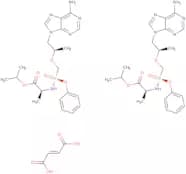
CAS:<p>4-Fluoro-2-methoxyphenol is a fluorinating agent that is used in the manufacture of pharmaceuticals, plastics and pesticides. It has been shown to induce apoptosis in cultured cells by upregulating reactive oxygen species (ROS) and increasing mitochondrial membrane permeability, as well as inhibiting cellular physiology. 4-Fluoro-2-methoxyphenol also inhibits the production of ATP and may be toxic to cells by interfering with dinucleotide phosphate.</p>Formula:C7H7FO2Purity:Min. 95%Color and Shape:Clear LiquidMolecular weight:142.13 g/mol1-Methylethyl N-((S)-(((1R)-2-(6-amino-9H-purin-9-yl)-1-methylethoxy)methyl)phenoxyphosphinoyl)-L-alaninate
CAS:<p>Tenofovir is a nucleoside analog reverse transcriptase inhibitor that binds to the RNA-dependent polymerase. This compound is used in combination with other antiviral agents for the treatment of HIV-1 infection and for prophylaxis against HIV-1 infection. Tenofovir has been shown to be effective against infections caused by strains of HIV-1, such as the drug resistant virus. Tenofovir is absorbed rapidly after oral administration, with a bioavailability of over 80%. The prodrug fumarate is hydrolyzed to tenofovir in vivo and this conversion occurs more efficiently in acidic conditions. Alafenamide, a prodrug of tenofovir, has been approved by the FDA as an alternative to tenofovir disoproxil fumarate (TDF) for the treatment of HIV-1 infection. Alafenamide is an acyclic nucleoside phosphonate that inhibits viral replication by inhibiting reverse</p>Formula:C46H62N12O14P2Purity:Min. 95%Color and Shape:PowderMolecular weight:1,069 g/mol5-Bromo-2-(trifluoromethoxy)benzaldehyde
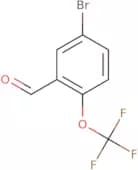
CAS:5-Bromo-2-(trifluoromethoxy)benzaldehyde is a chemical that is used as a reactant in organic chemistry. It can be used as a building block for the synthesis of complex compounds, or as an intermediate in the preparation of fine chemicals. 5-Bromo-2-(trifluoromethoxy)benzaldehyde is also useful in research and development. It has been used to synthesize pharmaceuticals, pesticides, and other organic compounds.Formula:C8H4BrF3O2Purity:Min. 95%Color and Shape:PowderMolecular weight:269.02 g/mol

![2,7-Bis[2-(diethylamino)ethoxy]-9-fluorenone dihydrochloride](/_next/image/?url=https%3A%2Fstatic.cymitquimica.com%2Fproducts%2F3D%2Fthumb-webp%2FFB37106.webp&w=3840&q=75)