Ethers
Found 40906 products of "Ethers"
2-[(2S,3S,4S)-3-Formyl-5-Methoxycarbonyl-2-Methyl-3,4-Dihydro-2H-Pyran-4-Yl]Acetic Acid
CAS:2-[(2S,3S,4S)-3-Formyl-5-Methoxycarbonyl-2-Methyl-3,4-Dihydro-2H-Pyran-4-Yl]Acetic Acid (PCA) is a natural phenolic compound that is found in olive oil. PCA has been shown to possess antioxidant and antiinflammatory properties. It also has minimal toxicity, with no adverse effects on the liver or kidney. PCA is metabolized by hydrolysis to form hydroxytyrosol and tyrosol. Hydroxytyrosol can be further metabolized to produce the aglycon 2-[(2S,3S,4S)-3-(acetyloxy)-5-(hydroxymethyl)oxolan-4-yl]acetic acid (OHA). OHA is an intermediate in the biosynthesis of erythromycin and other macrolide antibiotics such as
Formula:C11H14O6Purity:90%MinMolecular weight:242.23 g/molRef: 3D-FF71925
Discontinued product4-(Butoxymethyl)-2-methoxyphenol
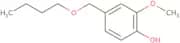
CAS:4-(Butoxymethyl)-2-methoxyphenol is an antimicrobial agent that has been shown to be effective against Candida glabrata. It is a non-ionic surfactant with a C8 alkyl chain, which is derived from the reaction of butyl alcohol and phenol. 4-(Butoxymethyl)-2-methoxyphenol can be used in oral care products such as toothpaste or mouthwash. This product also has a control analysis for sodium citrate and root powder, which may be due to its fatty acid and magnesium salt content.
Formula:C12H18O3Purity:Min. 95%Molecular weight:210.27 g/molRef: 3D-FB140503
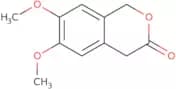
Discontinued product6,7-Dimethoxy-1,4-dihydro-3H-isochromen-3-one
CAS:6,7-Dimethoxy-1,4-dihydro-3H-isochromen-3-one is a hydrazide with the chemical formula C8H8N2O3. It belongs to the family of natural products and has the molecular weight of 172.15. 6,7-Dimethoxy-1,4-dihydro-3H-isochromen-3-one is an isoquinolone derivative that contains two methyl groups on carbons 6 and 7. The compound is a symmetric molecule that can be found as a hydroxy or methoxy derivative. It reacts with 3,4 dimethoxyphenylacetic acid to form yohimbane in the presence of an oxidizing agent such as electrochemical oxidation or maldi tof. 6,7 Dimethoxy 1,4 dihydro 3H isochromen 3 one was obtained from endohedral metalloful
Formula:C11H12O4Purity:Min. 95%Molecular weight:208.21 g/molRef: 3D-FD131802
Discontinued product5[(R)-(2-Aminopropyl)]-2-methoxybenzenesulfonamide hydrochloride
CAS:Controlled ProductPlease enquire for more information about 5[(R)-(2-Aminopropyl)]-2-methoxybenzenesulfonamide hydrochloride including the price, delivery time and more detailed product information at the technical inquiry form on this page
Formula:C10H17ClN2O3SPurity:Min. 95%Molecular weight:280.77 g/molRef: 3D-FA17834
Discontinued product2-(2-Aminoethoxy)ethanol
CAS:2-(2-Aminoethoxy)ethanol (2-AE) is a natural compound that has been synthesized from ethanol and 2-aminoethanol. It has been shown to react with sodium carbonate to form stable complexes that are resistant to hydrolysis by amines. The stability of the complex is attributed to the formation of an intermolecular hydrogen bond between the hydroxyl group on the 2-AE molecule and the carboxylate group on the sodium carbonate molecule. 2-AE reacts with benzalkonium chloride, a quaternary ammonium salt, in water vapor to produce an alcohol and a fatty acid, which is then hydrolyzed by glycol ethers into glycolates. This mechanism is similar to that of other reactions involving quaternary ammonium salts, such as those in fatty acids or glycol ethers.
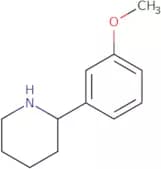
Formula:C4H11NO2Purity:Min. 95%Molecular weight:105.14 g/mol2-(3-Methoxyphenyl)piperidine
CAS:Please enquire for more information about 2-(3-Methoxyphenyl)piperidine including the price, delivery time and more detailed product information at the technical inquiry form on this page
Formula:C12H17NOPurity:Min. 95%Color and Shape:PowderMolecular weight:191.27 g/molRef: 3D-FM121575
Discontinued product4-Methoxybenzene-1,3-diamine sulfate
CAS:Controlled Product4-Methoxybenzene-1,3-diamine sulfate (4MBD) is a chemical substance that inhibits the activity of cytochrome P450 enzymes. It has been shown to inhibit the activity of rat liver microsomal p-450 enzymes, and is used in studies on the effects of chemicals on protein synthesis. When 4MBD is administered to rats at dietary concentrations, it causes an increase in thyroid hormone levels and a decrease in renal function. The enzyme inhibition caused by 4MBD may be due to its ability to acylate amines, which are located near the active site of the enzyme. Linear regression analysis showed that there was a strong correlation between dietary concentrations and the inhibition of protein synthesis caused by 4MBD.
Formula:C7H12N2O5SPurity:Min. 95%Molecular weight:236.25 g/molRef: 3D-FM140848
Discontinued product2-Fluoro-5-methoxyaniline
CAS:2-Fluoro-5-methoxyaniline is a high quality reagent that is used as an intermediate in the synthesis of various complex compounds. The CAS number for this chemical is 62257-15-2 and it has been shown to be useful as a building block for the synthesis of fine chemicals, speciality chemicals, and research chemicals with many different uses. It is also a versatile building block that can be used in reactions involving amines, alcohols, thiols, and nitriles. 2-Fluoro-5-methoxyaniline may also be used as a reaction component in organic syntheses.
Formula:C7H8FNOPurity:Min. 95%Color and Shape:PowderMolecular weight:141.14 g/molRef: 3D-FF66275
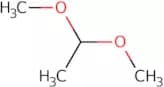
Discontinued product1,1-Dimethoxyethane
CAS:1,1-Dimethoxyethane is an organic compound that belongs to the group of isatin derivatives. It has inhibitory activity against acetal formation and can be used as a solvent in chemical reactions. 1,1-Dimethoxyethane also inhibits cancer cell growth by interfering with the production of carboxylic acids. This compound may also have therapeutic effects on Alzheimer's disease and vascular diseases such as atherosclerosis and angina pectoris.
Formula:C4H10O2Purity:Min. 95%Color and Shape:Clear LiquidMolecular weight:90.12 g/molRef: 3D-FD166483
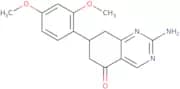
Discontinued product2-Amino-7-(2,4-dimethoxyphenyl)-7,8-dihydroquinazolin-5(6H)-one
CAS:Controlled ProductPlease enquire for more information about 2-Amino-7-(2,4-dimethoxyphenyl)-7,8-dihydroquinazolin-5(6H)-one including the price, delivery time and more detailed product information at the technical inquiry form on this pageFormula:C16H17N3O3Purity:Min. 95%Molecular weight:299.32 g/molRef: 3D-FA125619
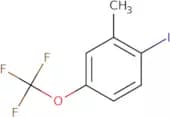
Discontinued product2-Methyl-4-(trifluoromethoxy)iodobenzene
CAS:Please enquire for more information about 2-Methyl-4-(trifluoromethoxy)iodobenzene including the price, delivery time and more detailed product information at the technical inquiry form on this page
Formula:C8H6F3IOPurity:Min. 95%Molecular weight:302.03 g/molRef: 3D-FM85964
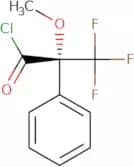
Discontinued productS-(+)-α-Methoxy-α-(trifluoromethyl)phenylacetic acid chloride
CAS:S-(+)-alpha-Methoxy-alpha-(trifluoromethyl)phenylacetic acid chloride is an optical, amide, and epoxidation derivatizing agent that is used to chiralify amines. It is a liquid at room temperature with a molecular weight of 123.87 g/mol. This chemical reacts with alcohols to form esters, which can be identified by their different retention times in chromatography. It also reacts with hydroxyl groups to form ethers and esters, as well as hydroxyls on other molecules such as amino acids, peptides, and proteins. S-(+)-alpha-Methoxy-alpha-(trifluoromethyl)phenylacetic acid chloride has been used for the synthesis of bisoprolol from metoprolol and triethylphosphite.
Formula:C10H8ClF3O2Purity:Min. 95%Molecular weight:252.62 g/molRef: 3D-FM64036
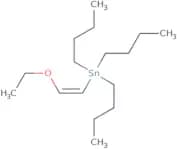
Discontinued product(Z)-1-Ethoxy-2-(tributylstannyl)ethene
CAS:Controlled Product(Z)-1-Ethoxy-2-(tributylstannyl)ethene is a synthetic intermediate that is used in palladium-catalyzed cross-coupling reactions. The product of the reaction can be an acetaldehyde or a halopyridine. The yield and selectivity of the reaction depends on the nature of the reactants, solvent, and catalyst. This compound has also been reinvestigated for its ability to form an anion with electrophilic reactants.
Purity:Min. 95%Ref: 3D-FE45325
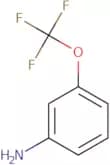
Discontinued product3-(trifluoromethoxy)aniline
CAS:3-(trifluoromethoxy)aniline is a compound that contains a trifluoromethoxy group. It has been shown to have antiproliferative effects in prostate cancer cells. 3-(trifluoromethoxy)aniline inhibits the activity of pim-1, which is important for cell proliferation and differentiation. The synthesis of 3-(trifluoromethoxy)aniline can be accomplished by one of two methods. In the first method, 3-chloroaniline is reacted with trifluoroacetic acid and bis(trimethylsilyl)acetamide in dichloromethane to form 3-hydroxy-4-chlorobenzenesulfonyl chloride (3HCBSCl). In the second method, the desired product is synthesized from 3-aminophenol and trifluoroacetic acid in acetonitrile. These two methods produce different isomers
Formula:C7H6F3NOPurity:Min. 95%Color and Shape:PowderMolecular weight:177.12 g/molRef: 3D-FT105000
Discontinued product(S)-2-Amino-5-methoxytetralin (S)-mandelate
CAS:Controlled ProductPlease enquire for more information about (S)-2-Amino-5-methoxytetralin (S)-mandelate including the price, delivery time and more detailed product information at the technical inquiry form on this pageFormula:C19H23NO4Purity:Min. 95%Molecular weight:329.39 g/mol(2-Bromoethoxy)-tert-butyldimethylsilane
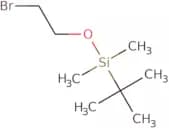
CAS:2-Bromoethoxy-tert-butyldimethylsilane is a conjugate that has been shown to have anticancer efficacy in vivo. It is a pyrimidine derivative and inhibits the viral enzyme RNA polymerase, thereby inhibiting viral replication. 2-Bromoethoxy-tert-butyldimethylsilane also inhibits glyceraldehyde 3-phosphate dehydrogenase, which is an enzyme that catalyzes the conversion of glucose into glyceraldehyde 3-phosphate and plays an important role in glycolysis. The compound has been shown to be active against mouse tumors, which are associated with endogenous retroviruses. The compound has also been shown to inhibit gapdh, an enzyme involved in energy metabolism and cancer therapy.Formula:C8H19BrOSiPurity:Min. 95%Color and Shape:Colorless Clear LiquidMolecular weight:239.23 g/mol4-Phenyl-4-carbethoxy piperidineHCl
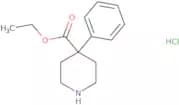
CAS:Controlled Product4-Phenyl-4-carbethoxy piperidineHCl is a germanium compound that can be used as a diagnostic agent to detect the presence of magnesium in the blood. It has been shown to bind to acidic and basic sites on the brain, regulating the functions of these regions. The drug has also been shown to have analgesic properties, as it activates opioid receptors in the brain. 4-Phenyl-4-carbethoxy piperidineHCl binds with high affinity to meperidine and naloxone, which are opioid receptor agonists. It is also able to bind to pentazocine, an opioid receptor antagonist. This drug is not active against molybdenum or thebaine.
Formula:C14H20ClNO2Purity:Min. 95%Molecular weight:269.77 g/molRef: 3D-FP152884
Discontinued product4-Isopropoxyethoxymethyl-1-hydroxybenzene
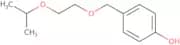
CAS:4-Isopropoxyethoxymethyl-1-hydroxybenzene is a benzyl alcohol derivative that is synthesized by the reaction of 4-isopropoxyethoxymethylbenzene and sodium borohydride. This chemical compound has been used in the synthesis of bisoprolol, a cardioselective β1 adrenergic receptor blocker. It has also been used to synthesize phenolic compounds, such as hydroxybenzaldehyde and vanillin. The reaction time for this compound can be controlled by varying the amount of sodium borohydride used. The high yield obtained from this process makes it an industrially feasible method for large-scale production.br> 4-Isopropoxyethoxymethyl-1-hydroxybenzene is a white crystalline solid that does not dissolve in water but dissolves in organic solvents such as acetone or ethanol. It has an odorless and colorFormula:C12H18O3Purity:Min. 95%Molecular weight:210.27 g/molRef: 3D-FI149810
Discontinued product2-(Phenylmethoxy)-acetic acid hydrazide
CAS:2-(Phenylmethoxy)-acetic acid hydrazide is a synthetic depressant that belongs to the group of phthalimides. It is an orally active drug with a triazolo structure and has been used in the treatment of psychoneurosis and anxiety, but it has also been found to be effective in treating reflexes and diazepine-induced psychosomatic disorders. 2-(Phenylmethoxy)-acetic acid hydrazide may also act as a prodrug for other agents, such as azides or phenylureas.
Formula:C9H12N2O2Purity:Min. 95%Molecular weight:180.2 g/molRef: 3D-FP26988
Discontinued productN-(2-Aminoethyl)-3-aminopropylmethyldimethoxysilane
CAS:N-(2-Aminoethyl)-3-aminopropylmethyldimethoxysilane is an antibacterial agent that inhibits the growth of bacteria by binding to the cell wall, thereby preventing the synthesis of proteins. It is used in dentistry and medicine as a coating for metal surfaces. This compound has been shown to be effective against Escherichia coli and Enterococcus faecalis. The optimum concentration for this compound is 1 mg/mL.
Formula:C8H22N2O2SiPurity:Min. 95%Molecular weight:206.36 g/mol
![2-[(2S,3S,4S)-3-Formyl-5-Methoxycarbonyl-2-Methyl-3,4-Dihydro-2H-Pyran-4-Yl]Acetic Acid](/_next/image/?url=https%3A%2Fstatic.cymitquimica.com%2Fproducts%2F3D%2Fthumb-webp%2FFF71925.webp&w=3840&q=75)

![5[(R)-(2-Aminopropyl)]-2-methoxybenzenesulfonamide hydrochloride](/_next/image/?url=https%3A%2Fstatic.cymitquimica.com%2Fproducts%2F3D%2Fthumb-webp%2FFA17834.webp&w=3840&q=75)