Ethers
Ethers are organic compounds containing an ether functional group, characterized by an oxygen atom bonded to two hydrocarbon radicals. These compounds are valuable in synthesis and serve as solvents in various chemical reactions. At CymitQuimica, we offer a selection of high-quality ethers to support your research and industrial applications, ensuring reliable and effective results. Our range of ethers meets diverse laboratory requirements, from routine experiments to advanced research.
Found 40712 products of "Ethers"
Sort by
Purity (%)
0
100
|
0
|
50
|
90
|
95
|
100
2-Hydroxy-4-methoxyacetophenone
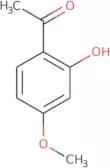
CAS:<p>2-Hydroxy-4-methoxyacetophenone is a compound that has been shown to have a minimal toxicity profile and a wide range of pharmacological activities. It inhibits the activity of NF-κB, which is an inflammatory signaling protein, and also has antioxidant properties. 2-Hydroxy-4-methoxyacetophenone has been shown to reduce the severity of cardiovascular disease by inhibiting oxidative injury in the mitochondria and reducing oxidative stress. This drug also reduces atherosclerotic lesions and prevents hypoglycemia by increasing glucose uptake in tissues. Moreover, it can be used to treat leukemia inhibitory factor in patients with chronic myeloid leukemia (CML).</p>Formula:C9H10O3Purity:Min. 95%Color and Shape:PowderMolecular weight:166.17 g/mol5-Methoxy-2-[[(4-methoxy-3,5-dimethyl-2-pyridinyl)methyl]thio]-1H-benzimidazole N-oxide
CAS:<p>5-Methoxy-2-[[(4-methoxy-3,5-dimethyl-2-pyridinyl)methyl]thio]-1H-benzimidazole N-oxide is a sulfoxide that belongs to the family of medicines called proton pump inhibitors. It is a stereoselective proton pump inhibitor due to its cyclic nature and has been used as a pharmaceutical preparation for the treatment of gastroesophageal reflux disease. 5-Methoxy-2-[(4-methoxy-3,5-dimethylpyridinium) methylthio]-1H benzimidazole N oxide has been shown to be an enantiomerically pure salt form with magnesium chloride.</p>Formula:C17H19N3O3SPurity:Min. 95%Color and Shape:White to off-white solid.Molecular weight:345.42 g/mol3,4-Diethoxybenzoic acid
CAS:<p>3,4-Diethoxybenzoic acid is a phenolic compound that has potent antitumor activity. It inhibits the growth of tumor cells by inhibiting DNA synthesis and protein synthesis in the cell. 3,4-Diethoxybenzoic acid also inhibits the production of enzymes such as pepsin, lipase, and amylase that are important for digestion. It has been shown to be an effective antifungal agent in vitro against Candida albicans and Saccharomyces cerevisiae. 3,4-Diethoxybenzoic acid may also have a role in the prevention of dental caries due to its inhibitory effects on bacterial plaque formation.</p>Formula:C11H14O4Purity:Min. 95%Color and Shape:Clear LiquidMolecular weight:210.23 g/mol2-Fluoro-6-methoxybenzaldehyde
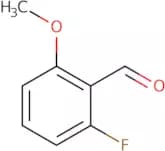
CAS:<p>2-Fluoro-6-methoxybenzaldehyde is a quinone that is used as an intermediate in the synthesis of other organic compounds. It has been shown to be a competitive inhibitor of malonate-induced fibrillation in heart muscle and also slows the reaction time. The pharmacokinetic properties of 2-fluoro-6-methoxybenzaldehyde have been evaluated in dogs, rats, and rabbits. In all three species, 2-fluoro-6-methoxybenzaldehyde showed no significant accumulation in any tissue after intravenous injection and was rapidly excreted unchanged in urine. 2-Fluoro-6-methoxybenzaldehyde may have some potential as an antihypertensive agent due to its ability to reduce blood pressure in rabbits.</p>Formula:C8H7FO2Purity:Min. 95%Color and Shape:PowderMolecular weight:154.14 g/mol1-(2,4-Dimethoxyphenyl)-2-nitropropene
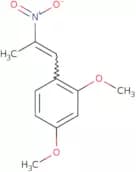
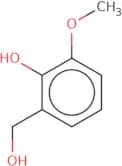
CAS:<p>1-(2,4-Dimethoxyphenyl)-2-nitropropene is a versatile building block that can be used in the synthesis of a wide range of compounds. It is a high quality chemical with a CAS number of 15804-78-1. This compound has been used as an intermediate to synthesize other compounds such as 2-amino-3,5,6-trimethylbenzaldehyde and 1-(2,4-dimethoxyphenyl)-2-(pyrrolidin-1-yl)propene. The compound is also useful as a reagent for reaction components in organic chemistry and biochemistry.</p>Formula:C11H13NO4Purity:Min. 95%Color and Shape:PowderMolecular weight:223.23 g/mol2-Hydroxy-3-methoxybenzyl alcohol
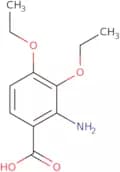
CAS:<p>2-Hydroxy-3-methoxybenzyl alcohol is a phenolic compound that belongs to the class of mandelonitrile. It is an envenomation agent that has been shown to have a molecular weight of 146, and is synthesized by reacting 2-hydroxy-4-methoxybenzaldehyde with formic acid. This drug also has been shown to have high binding affinity for the androgen receptor, which allows it to be used as an antihormone therapy. 2-Hydroxyl-3-methoxybenzyl alcohol binds to hormone receptors in cells and prevents them from binding with the hormones needed for transcription. The hydroxyl group on this molecule allows it to act as an acceptor for other molecules in reactions involving formylation and hydroxylation reactions.</p>Formula:C8H10O3Purity:Min. 95%Color and Shape:PowderMolecular weight:154.16 g/mol2-Amino-3,4-diethoxybenzoic acid
CAS:<p>2-Amino-3,4-diethoxybenzoic acid is a high quality chemical with a CAS No. 61948-72-9. It is an organic compound that belongs to the class of aromatic carboxylic acids and has a molecular weight of 174.2 g/mol. 2DHB is a useful intermediate in the synthesis of fine chemicals, research chemicals, and speciality chemicals like pharmaceuticals, pesticides, and dyes. It can also be used as a building block in the synthesis of many other compounds. The versatility of 2DHB makes it an important component in reactions involving nucleophilic substitution or addition reactions.</p>Formula:C11H15NO4Purity:Min. 95%Color and Shape:PowderMolecular weight:225.24 g/mol2-Ethoxy-3-methoxybenzaldehyde
CAS:<p>2-Ethoxy-3-methoxybenzaldehyde is a coordination compound that contains two thiolate ligands, one carbonyl group, and a chelate ring with sulfur. The compound has been shown to bind to the active site of thiosemicarbazide in the enzyme sulfite oxidase, which catalyzes the oxidation of sulfite to sulfate. 2-Ethoxy-3-methoxybenzaldehyde has also been shown to be an effective ligand for rhenium.</p>Formula:C10H12O3Purity:Min. 95%Molecular weight:180.2 g/mol2,4'-Dimethoxyacetaphenone
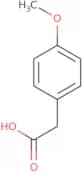
CAS:<p>2,4'-Dimethoxyacetaphenone is a chalcone that has been synthesized by the allylation of 2-hydroxy-5-methylacetophenone with 4-methoxybenzaldehyde. It has potent antibacterial activity and has been shown to inhibit HIV integrase. The chemical structure consists of two methoxy groups on the phenyl ring at positions 4 and 5, respectively. This heterocycle is also a synthetic compound.</p>Formula:C10H12O3Purity:Min. 95%Color and Shape:Clear LiquidMolecular weight:180.2 g/mol(4-Methoxyphenyl)acetic acid
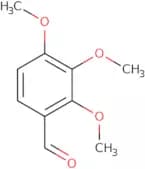
CAS:<p>4-Methoxybenzoic acid is a chemical compound that belongs to the group of phenylacetic acids. It is an organic acid with a carboxylic acid group and a hydroxyl group. 4-Methoxybenzoic acid is used as an intermediate in the synthesis of other compounds, such as 3-methoxyphenylacetic acid and dihydroconiferyl alcohol. 4-Methoxybenzoic acid has been shown to inhibit the growth of breast cancer cells by inducing apoptosis. This effect was found to be increased when combined with tamoxifen (a drug used for the treatment of breast cancer). The mechanism of action is not clear but may involve hydrogen bond formation between 4-methoxybenzoic acid and tamoxifen, leading to increased uptake into cells.</p>Formula:C9H10O3Purity:Min. 95%Color and Shape:White PowderMolecular weight:166.17 g/mol2,3,4-Trimethoxybenzaldehyde
CAS:<p>2,3,4-Trimethoxybenzaldehyde is a hydroxylated aromatic compound that is used as a dietary supplement. It is found in the natural form of zirconium oxide and has been shown to have cancer-fighting properties. It has also been shown to be able to inhibit the growth of liver cancer cells in vitro and in vivo models. The mechanism of 2,3,4-trimethoxybenzaldehyde's ability to inhibit cancer growth is not fully understood but it may be due to its ability to react with reactive oxygen species and its ability to bind with methoxy groups and benzyl groups.</p>Formula:C10H12O4Purity:Min. 95%Color and Shape:PowderMolecular weight:196.2 g/mol2-Hydroxy-5-methoxy-3-nitrobenzaldehyde
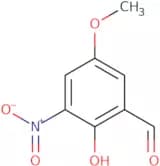
CAS:<p>2-Hydroxy-5-methoxy-3-nitrobenzaldehyde is a 6-membered aromatic compound that has been shown to have anti-cancer properties. It has been shown to inhibit the proliferation of cancer cells by inhibiting protein synthesis, as well as inducing apoptosis. This compound also inhibits the growth of colon cancer cells and cervical cancer cells in culture. 2-Hydroxy-5-methoxy-3-nitrobenzaldehyde has an inhibitory effect on the growth of cancer cells and may be used for treatment against tumors.</p>Formula:C8H7NO5Purity:Min. 95%Color and Shape:PowderMolecular weight:197.14 g/mol2,3,4-Trimethoxy-6-methylphenol
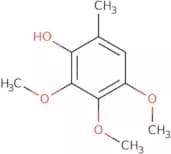
CAS:<p>2,3,4-Trimethoxy-6-methylphenol is a prenylated phenol with an acidic character. It is synthesised from 5-nitrovanillin and methoxyphenol in dioxane by reaction with hydrogen peroxide and hydrochloric acid. This acid catalyst initiates the reactions that produce 2,3,4-trimethoxy-6-methylphenol. The reaction time is 10 hours at pH 3 to 4. 2,3,4-Trimethoxy-6-methylphenol has been used for the synthesis of phosphotungstate, which is used as a reagent in analytical chemistry for the determination of metal ions. 2,3,4-Trimethoxy-6 methylphenol also provides a route to manufacture peracid and peroxide, which are oxidants with antimicrobial properties.</p>Formula:C10H14O4Purity:Min. 95%Color and Shape:PowderMolecular weight:198.22 g/molN-[2-(2,3-Dimethoxyphenyl)ethyl]-2-chlorobenzamide
CAS:Controlled Product<p>N-[2-(2,3-Dimethoxyphenyl)ethyl]-2-chlorobenzamide is a versatile building block that can be used as a reaction component and reagent. It is an intermediate in the synthesis of pharmaceuticals and fine chemicals and has been shown to be useful in the synthesis of complex compounds. This compound reacts with nucleophiles, such as amines and alcohols, by replacing the chloride group with a variety of functional groups. The product is then hydrolyzed to release the original reactant. N-[2-(2,3-Dimethoxyphenyl)ethyl]-2-chlorobenzamide has a CAS number of 320576-19-0 and can be found at ChemDiv.com.</p>Formula:C17H18ClNO3Purity:Min. 95%Molecular weight:319.78 g/mol3-Methoxy-4-nitroacetophenone
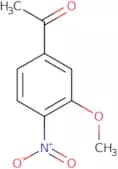
CAS:<p>3-Methoxy-4-nitroacetophenone is an enamine that can be used in the synthesis of a variety of organic compounds. It is a good reducing agent and can be used to synthesize nitrophenols and nitrosamines. Catalytic hydrogenation, transfer hydrogenation, and reductive condensation reactions all use 3-methoxy-4-nitroacetophenone as a starting material. It has been shown to react with a range of alcohols to form acetals, which are stable compounds with a protective group on the alcohol. Cyclization reactions using 3-methoxy-4-nitroacetophenone have also been reported. This compound has been crystallized in pure form.</p>Formula:C9H9NO4Purity:Min. 95%Color and Shape:PowderMolecular weight:195.17 g/mol2-Methoxy-4-(methylsulfonyl)aniline
CAS:Formula:C8H11NO3SPurity:95%Color and Shape:SolidMolecular weight:201.245-METHYL-2-O-METHYLURIDINE
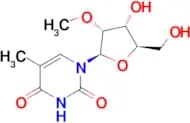
CAS:Formula:C11H16N2O6Purity:97%Color and Shape:SolidMolecular weight:272.2571-(a-D-ribofuranosyl)uracil
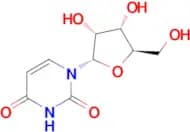
CAS:Formula:C9H12N2O6Purity:95%Color and Shape:SolidMolecular weight:244.203

![5-Methoxy-2-[[(4-methoxy-3,5-dimethyl-2-pyridinyl)methyl]thio]-1H-benzimidazole N-oxide](/_next/image/?url=https%3A%2Fstatic.cymitquimica.com%2Fproducts%2F3D%2Fthumb-webp%2FFM63432.webp&w=3840&q=75)



![N-[2-(2,3-Dimethoxyphenyl)ethyl]-2-chlorobenzamide](/_next/image/?url=https%3A%2Fstatic.cymitquimica.com%2Fproducts%2F3D%2Fthumb-webp%2FFD66108.webp&w=3840&q=75)


![5-Bromo-6-fluorobenzo[d][1,3]dioxole](/_next/image/?url=https%3A%2Fstatic.cymitquimica.com%2Fproducts%2F10%2Fthumb-webp%2FF782331.webp&w=3840&q=75)