


Organoboranes
Found 6123 products of "Organoboranes"
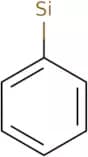
Phenylsilane
CAS:Phenylsilane is a model system for the study of the reaction mechanism of nucleophilic substitution. It is used to investigate the steric interactions between a substrate molecule and an electrophile that are important in determining the rate of reactivity. Phenylsilane has been shown to have antioxidative properties, which may be due to its ability to scavenge reactive oxygen species (ROS), such as hydroxyl radicals, superoxide ions, and hydrogen peroxide. Phenylsilane also has low kinetic energy and can form hydrogen bonds with carbonyl groups and amines. This chemical substance can react with quinoline derivatives, including benzoquinone, which is a toxic by-product of the metabolism of many drugs.
Formula:C6H8SiPurity:Min. 95%Color and Shape:Clear LiquidMolecular weight:108.21 g/molIron bis(tetrafluoroborate) hexahydrate
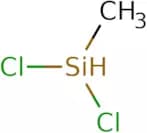
CAS:Iron bis(tetrafluoroborate) hexahydrate is a ferrimagnetic, thermally stable coordination compound that has been shown to interact with bidentate ligands. Iron bis(tetrafluoroborate) hexahydrate can be used as a mononuclear section in analogy to the octahedral section of nickel bis(tetrafluoroborate) hexahydrate. The ligands are methyl groups, which are diffracted at 2θ values of 12.8° and 18.3°. The compound is stable in solvents such as dimethylsulfoxide and tetrahydrofuran. It also has chelate ligand transfer properties, which are due to the presence of two hydroxyl groups on each iron atom.Formula:Fe(BF4)2•(H2O)6Purity:Min. 95%Color and Shape:SolidMolecular weight:337.55 g/molDichloromethylsilane
CAS:Dichloromethylsilane (DCS) is a chemical compound that is used in the synthesis of silicone rubber, silicone elastomers, and silicone sealants. It can also be used as a cross-linking agent for polymers such as polyurethane, epoxy resin, and silicone. The synthesis of DCS is achieved by reacting chlorosilanes with methyl alcohol or methyl chloride in the presence of an acid catalyst. DCS exhibits high chemical stability and can be activated at room temperature. This product has been shown to be useful for fabricating medical devices that are implanted into the human body because it does not react with water or blood.
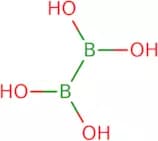
Formula:CH4Cl2SiPurity:Min. 95%Molecular weight:115.03 g/molTetrahydroxydiborane
CAS:Tetrahydroxydiborane is an organic compound that contains a hydroxyl group. It has been shown to be an effective nucleophile in the mechanism studies of hydrolysis of halides and nitro compounds. Tetrahydroxydiborane is also used in the Suzuki coupling reaction, which is a chemical reaction between an aryl halide and sodium carbonate, as well as in cationic polymerization. This compound may also have biological applications such as the use of tetrahydroxydiborane as a fluorescence probe for optical sensor detection of autoimmune diseases.
Formula:H4B2O4Purity:Min. 95%Color and Shape:White PowderMolecular weight:89.65 g/mol(3-IMidazol-1-yl-propyl)-[4-(4,4,5,5-tetraMethyl-[1,3,2]dioxaborolan-2-yl)-benzyl]aMine
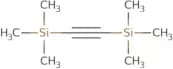
CAS:Please enquire for more information about (3-IMidazol-1-yl-propyl)-[4-(4,4,5,5-tetraMethyl-[1,3,2]dioxaborolan-2-yl)-benzyl]aMine including the price, delivery time and more detailed product information at the technical inquiry form on this pagePurity:Min. 95%Bis(trimethylsilyl)acetylene
CAS:Bis(trimethylsilyl)acetylene (bis-TMS) is a reactive ancillary that can be used in polymerization reactions as an initiator. The bis-TMS is prepared by reaction of trimethylsilyl chloride with acetylene to form the trimethylsilyl acetylene, which is then reacted with copper to generate the bis-TMS. Bis-TMS reacts with nucleophiles such as alcohols and amines to produce polymers through a nucleophilic attack. It also has been used for sample preparation for NMR spectra. Bis-TMS is a synthetic compound that has been characterized using nmr spectroscopy and analytical methods. The molecular formula of bis-TMS is C8H16Si2 and its molecular weight is 196.13 g/mol. The chemical structure of bis-TMS consists of two benzyl groups connected by a single carbon bond at the 3 o'clock position on the central
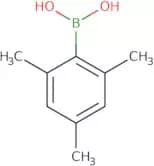
Formula:C8H18Si2Purity:Min. 95%Color and Shape:Clear LiquidMolecular weight:170.4 g/molMesitylboronic acid
CAS:Mesitylboronic acid is a divalent organoboron compound with the molecular formula CHB(O)OH. It is a white solid that is soluble in organic solvents, but not water. Mesitylboronic acid has been used for the palladium-catalyzed cross-coupling of aryl halides and vinylogous esters, yielding substituted pyridines. Mesitylboronic acid also catalyzes the Suzuki coupling reaction of aryl boronic acids and alkenes, producing substituted indoles. This compound has diagnostic applications due to its ability to form a fluorescent complex with certain metal ions. It also plays an important role in insulin resistance due to its ability to form cross-couplings with unsymmetrical boron compounds.
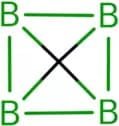
Formula:C9H13BO2Purity:Min. 95%Molecular weight:164.01 g/molBoron carbide - 10um particle size
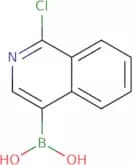
CAS:Controlled ProductBoron carbide is a hard, refractory material with high melting point. It is used in the production of ceramic and as a catalyst. Boron carbide has been shown to be effective in the treatment of wastewater due to its ability to adsorb organic matter and heavy metals. Boron carbide also has thermal expansion properties that make it suitable for use in various engineering applications. Boron carbide is composed of boron and carbon atoms, which interact through steric effects. The nitrogen atoms on the surface of boron carbide particles are responsible for its reactivity with other materials, such as silicon or zirconium oxide. The kinetic energy of the reaction mechanism can be determined by examining the surface methodology of boron carbide particles with a microscope.Formula:B4CPurity:Min. 95%Molecular weight:55.25 g/mol(1-Chloroisoquinolin-4-yl)boronic acid
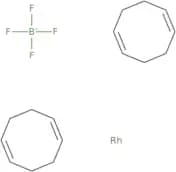
CAS:Please enquire for more information about (1-Chloroisoquinolin-4-yl)boronic acid including the price, delivery time and more detailed product information at the technical inquiry form on this pageFormula:C9H7BClNO2Purity:Min. 95%Molecular weight:207.42 g/molBis (1,5-Cyclooctadiene) rhodium(I)tetrafluoroborate
CAS:Bis (1,5-Cyclooctadiene) rhodium(I)tetrafluoroborate (BODIPY) is a catalyst that enhances the rate of hydrosilylation reactions. This catalyst has been shown to be effective in the synthesis of aryl chlorides from amines and aldehydes with high enantioselectivity. BODIPY is also immobilized on silica gel to create an active catalyst for asymmetric synthesis. The immobilization process on silica gel is done by reacting BODIPY with ammonium formate and amines. The resulting catalyst can be used for the synthesis of functionalized organic compounds, such as pyrrolidines, tetrahydrofurans, and thiophenes.Formula:C16H24BF4RhPurity:Min. 95%Molecular weight:406.07 g/mol1H-Benzo[d]imidazol-6-ylboronic acid
CAS:Please enquire for more information about 1H-Benzo[d]imidazol-6-ylboronic acid including the price, delivery time and more detailed product information at the technical inquiry form on this pageFormula:C7H7BN2O2Purity:Min. 95%Molecular weight:161.95 g/molDichlorodiisopropylsilane
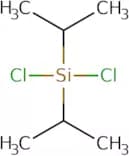
CAS:Dichlorodiisopropylsilane is a cycloaddition process, which is the addition of two molecules to create a new ring. It reacts with an unsaturated organic compound, such as an alkene or alkyne, to produce a reactive functional group. Dichlorodiisopropylsilane has been used in chemistry as a cross-linking agent for proteins and as a solid catalyst. The chemical stability of dichlorodiisopropylsilane makes it useful in the synthesis of model proteins. This compound also has low bioavailability due to its high reactivity with hydrochloric acid found in the stomach.
Formula:C6H14Cl2SiPurity:Min. 95%Color and Shape:Clear LiquidMolecular weight:185.17 g/mol2-Chloro-3-ethylbenzoxazolium tetrafluoroborate
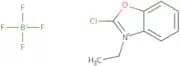
CAS:2-Chloro-3-ethylbenzoxazolium tetrafluoroborate is a synthetic compound that inhibits the enzyme maltase. This compound is used in the treatment of diabetic patients with intestinal maltase deficiency and has been shown to be effective in clinical studies. 2-Chloro-3-ethylbenzoxazolium tetrafluoroborate has also been shown to inhibit other enzymes, such as thiocarbamate synthetase and aminooxazoline synthetase, which are involved in the biosynthesis of chlorinated pesticides and herbicides. The chloride ion is necessary for this inhibition activity. The compound can be prepared by a preparative method that involves hexaacetate and chloride ion or by using an aglycone, trehalamine, or stereospecific method.Formula:C9H9BClF4NOPurity:Min. 95%Color and Shape:PowderMolecular weight:269.43 g/mol(3-Chloropropyl)diphenylsulfonium tetrafluoroborate
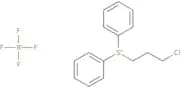
CAS:Please enquire for more information about (3-Chloropropyl)diphenylsulfonium tetrafluoroborate including the price, delivery time and more detailed product information at the technical inquiry form on this pageFormula:C15H16ClS•BF4Purity:Min. 95%Molecular weight:350.61 g/molBis(pyridine)iodonium tetrafluoroborate
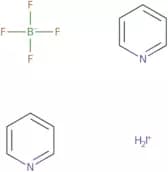
CAS:Bis(pyridine)iodonium tetrafluoroborate is a reagent that can be used to iodinate organic compounds. It is prepared by the reaction of pyridine with iodine and bromine in tetrafluoroboric acid. Bis(pyridine)iodonium tetrafluoroborate is an active compound that can be used for amino acid analysis, optical properties, and functional groups. This compound also can be used for magnetic resonance analysis, palladium-catalyzed coupling, and synthetic reactions. Bis(pyridine)iodonium tetrafluoroborate has been found to have radiation transport properties and a strong reactivity towards acids.
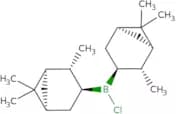
Formula:C10H10BF4IN2Purity:Min. 95%Molecular weight:371.91 g/mol(+)-B-Chlorodiisopinocampheylborane - 60-65% in Hexane
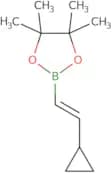
CAS:(+)-B-Chlorodiisopinocampheylborane is a chiral organoboron reagent that can be used for the enantioselective synthesis of amines. It is prepared from the reaction of chlorodiphenyl borane with (+)-diaminobenzene in hexane. The product can be purified by column chromatography or recrystallization. (+)-B-Chlorodiisopinocampheylborane can also be used in the synthesis of other compounds, such as pyrroles and pantolactones. It is an excellent catalyst for the dehydration of primary amines to give unsymmetrical ketones. This reagent has been shown to be effective in asymmetric hydrogenation reactions, such as the reduction of chiral secondary alcohols, and is also capable of catalyzing aldol reactions.Formula:C20H34BClPurity:Min. 95%Color and Shape:Clear LiquidMolecular weight:320.75 g/mol(trans)-2-Cyclopropylvinylboronic acid pinacol ester
CAS:Please enquire for more information about (trans)-2-Cyclopropylvinylboronic acid pinacol ester including the price, delivery time and more detailed product information at the technical inquiry form on this page
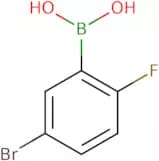
Formula:C11H19BO2Purity:Min. 95%Molecular weight:194.08 g/mol(5-bromo-2-fluorophenyl)boronic Acid
CAS:5-Bromo-2-fluorophenyl)boronic acid is a synthetic chemical that is used in the synthesis of pharmaceuticals and pesticides. This compound is an inhibitor of bace1, which is an enzyme involved in the production of amyloid beta peptide (Aβ) and other proteins implicated in Alzheimer's disease. 5-Bromo-2-fluorophenyl)boronic acid has been shown to be effective at reducing Aβ levels in mice with Alzheimer's disease. It also inhibits pyrethroid, a pesticide that is used on crops to control insects, by binding to the active site of the enzyme. 5-Bromo-2-fluorophenyl)boronic acid has been evaluated for use as a cancer treatment, but these studies have not been completed.Formula:C6H5BBrFO2Purity:Min. 95%Molecular weight:218.82 g/mol2-[4-(tert-Butyldimethylsilyloxymethyl)-2-nitrophenoxy]acetic Acid
CAS:Please enquire for more information about 2-[4-(tert-Butyldimethylsilyloxymethyl)-2-nitrophenoxy]acetic Acid including the price, delivery time and more detailed product information at the technical inquiry form on this page
Formula:C15H23NO6SiPurity:Min. 95%Molecular weight:341.43 g/mol(5-Chloropyridin-3-yl)boronic acid
CAS:Please enquire for more information about (5-Chloropyridin-3-yl)boronic acid including the price, delivery time and more detailed product information at the technical inquiry form on this page
Formula:C5H5BClNO2Purity:Min. 95%Molecular weight:157.36 g/mol


![(3-IMidazol-1-yl-propyl)-[4-(4,4,5,5-tetraMethyl-[1,3,2]dioxaborolan-2-yl)-benzyl]aMine](/_next/image/?url=https%3A%2Fstatic.cymitquimica.com%2Fproducts%2F3D%2Fthumb-webp%2FFI39774.webp&w=3840&q=75)
![1H-Benzo[d]imidazol-6-ylboronic acid](/_next/image/?url=https%3A%2Fstatic.cymitquimica.com%2Fproducts%2F3D%2Fthumb-webp%2FFH160014.webp&w=3840&q=75)
![2-[4-(tert-Butyldimethylsilyloxymethyl)-2-nitrophenoxy]acetic Acid](/_next/image/?url=https%3A%2Fstatic.cymitquimica.com%2Fproducts%2F3D%2Fthumb-webp%2FFB60313.webp&w=3840&q=75)
