Nitro
Found 2518 products of "Nitro"
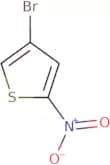
4-Bromo-2-nitrothiophene
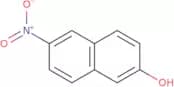
CAS:Please enquire for more information about 4-Bromo-2-nitrothiophene including the price, delivery time and more detailed product information at the technical inquiry form on this pageFormula:C4H2BrNO2SPurity:Min. 95%Molecular weight:208.03 g/mol2-Hydroxy-6-nitronaphthalene
CAS:2-Hydroxy-6-nitronaphthalene is a colourless, crystalline solid that is soluble in water and polar organic solvents. It has been used as a coupling agent for chromium compounds, such as dichromates and chromates. 2-Hydroxy-6-nitronaphthalene can be diazotised to form an orange compound. This reaction occurs under acidic conditions, but the product is stable at alkaline pH levels. The product of this reaction is an asymmetric monoazo dye that has trivalent chromium atoms covalently bonded to it. Hydrogen atoms are present on the nitrogen atoms of the molecule. 2-Hydoxy-6-nitronaphthalene can also be used to produce sulfate esters, which are typically used in organic synthesis reactions involving sulfuric acid or hydrogen sulfate ion donors.Formula:C10H7NO3Purity:Min. 95%Molecular weight:189.17 g/molDansyl-D-Ala-Gly-4-nitro-Phe-Gly-OH trifluoroacetate salt
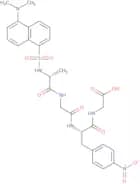
CAS:Dansyl-D-Ala-Gly-4-nitro-Phe-Gly-OH trifluoroacetate salt is a fluorescent marker that can be used in immunohistochemical staining. It binds to endogenous vasoactive intestinal peptide, calcitonin and other proteins in tissues and can be detected using immunostaining. Dansyl-D-Ala-Gly-4-nitro-Phe-Gly-OH trifluoroacetate salt is optimised for use as a substrate for neutral endopeptidase and metalloendopeptidase enzymes, which are responsible for the degradation of vasoactive intestinal peptide.Formula:C28H32N6O9S·C2HF3O2Purity:Min. 95%Color and Shape:SolidMolecular weight:742.68 g/molN-Hydroxy-2-nitro-benzamidine
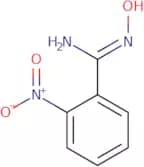
CAS:Please enquire for more information about N-Hydroxy-2-nitro-benzamidine including the price, delivery time and more detailed product information at the technical inquiry form on this pageFormula:C7H7N3O3Purity:Min. 95%Molecular weight:181.15 g/molMethyl 6-nitropyrido[1,2-a]benzimidazole-8-carboxylate
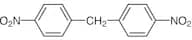
CAS:Please enquire for more information about Methyl 6-nitropyrido[1,2-a]benzimidazole-8-carboxylate including the price, delivery time and more detailed product information at the technical inquiry form on this pageFormula:C13H9N3O4Purity:Min. 95%Molecular weight:271.23 g/mol4,4'-Dinitrodiphenylmethane
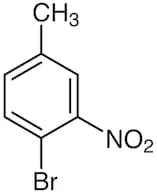
CAS:Formula:C13H10N2O4Purity:>99.0%(GC)Color and Shape:White to Light yellow powder to crystalMolecular weight:258.234-Bromo-3-nitrotoluene
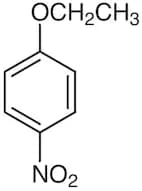
CAS:Formula:C7H6BrNO2Purity:>96.0%(GC)Color and Shape:White or Colorles to Yellow to Orange powder to lump to clear liquidMolecular weight:216.034-Nitrophenetole
CAS:Formula:C8H9NO3Purity:>98.0%(GC)Color and Shape:White to Orange to Green powder to crystalMolecular weight:167.162,4-Dinitroiodobenzene
CAS:Formula:C6H3IN2O4Purity:>98.0%(GC)Color and Shape:Light yellow to Yellow to Orange powder to crystalMolecular weight:294.005-Nitro-DL-tryptophan
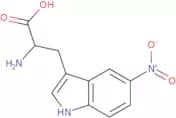
CAS:5-Nitro-DL-tryptophan is a synthetic amino acid that has been shown to inactivate tryptophan synthase, an enzyme involved in the biosynthesis of tryptophan. It binds to the active site of the enzyme and prevents it from carrying out its function. The affinity for 5-nitro-DL-tryptophan is very high and it has been shown that it is effective in inhibiting the enzyme at concentrations as low as 1 mM. This compound is also homodimeric, which means that it can bind two molecules of tryptophan synthase at once, leading to a quicker inhibition of this enzyme. 5-Nitro-DL-tryptophan also reacts with reactive oxygen species, such as superoxide radicals or hydrogen peroxide, and can be used to study reactions between these compounds and proteins.
5-Nitro-DL-tryptophan can be used to inhibit brain protein kinetics by blockingFormula:C11H11N3O4Purity:Min. 95%Color and Shape:Off-White To Yellow To Orange SolidMolecular weight:249.23 g/molRef: 3D-FN52266
Discontinued product1-(2-Hydroxyphenyl)-2-nitroethene
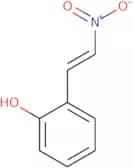
CAS:1-(2-Hydroxyphenyl)-2-nitroethene is an organocatalytic biomolecule that has been synthesized in an asymmetric fashion. The synthesis of the molecule relies on a squaramide and the use of intramolecular hydrogen transfer reactions to create a nitro group. The molecule was used to generate antiestrogenic activity in MDA-MB-231 breast cancer cells and MCF-7 breast cancer cells by inhibiting estrogen receptor alpha (ERα) transcriptional activity. This molecule has also been shown to be bifunctional, as it inhibits both protein kinase C (PKC) and mitogen-activated protein kinase (MAPK) signaling pathways when applied to these cell lines. X-ray crystal structures of the molecule have been obtained with orientations that exhibit different degrees of hydrophobicity, which may be due to interactions with water molecules.
Formula:C8H7NO3Purity:Min. 95%Molecular weight:165.15 g/molRef: 3D-FH65831
Discontinued productNitrovin
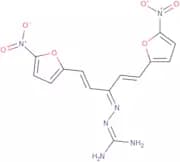
CAS:Nitrovin (difurazone) is widely used as an antibacterial growth promotor in livestock. Nitrovin was shown to inhibit Salmonella growth both in vitro and in vivo (in chickens). It induces ROS-mediated non-apoptotic and apoptotic-like cell death by targeting TrxR1.
Formula:C14H12N6O6Purity:Min. 95%Color and Shape:PowderMolecular weight:360.28 g/mol3-Nitrotyramine
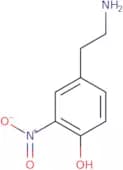
CAS:3-Nitrotyramine is a compound that has catabolic properties. It is the product of tyrosine, which is an amino acid found in most proteins. 3-Nitrotyramine has been shown to be metabolized by humans through the liver and kidneys. The metabolic pathway for this compound starts with the conversion of L-methionine into dl-methionine. This reaction generates a molecule called S-adenosyl methionine, or SAMe, which is involved in many biological processes such as neurotransmitter synthesis and gene expression regulation. 3-Nitrotyramine can also be converted into dopamine by way of the enzyme catecholamine methyltransferase. Dopamine has been shown to have a variety of effects on human physiology, including being involved in mood disorders and motor control. 3-Nitrotyramine can also be converted into gold nanoparticles by means of an acid analysis test.
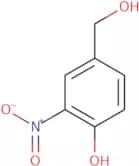
Formula:C8H10N2O3Purity:Min. 95%Color and Shape:PowderMolecular weight:182.18 g/mol4-Hydroxy-3-nitrobenzyl alcohol
CAS:4-Hydroxy-3-nitrophenylacetic acid (4ONPA) is an organic compound that is the product of the reaction between hydroxylamine and nitrobenzaldehyde. It has been shown to have cytotoxicity in breast cancer cells and has been used as a probe for optical imaging studies. 4ONPA has also been shown to be able to inhibit the activity of enzymes such as catalase, peroxidase, and lipoxygenase. The uptake of 4ONPA into cells is dependent on its concentration and the cell type. This drug can be useful for treating degenerative diseases because it inhibits microglia activation by blocking the enzyme phospholipase A2. Clinical trials are currently being conducted for 4ONPA’s potential use in treating herpes simplex virus infections and cancerous lesions associated with Alzheimer's disease.
Formula:C7H7NO4Purity:Min. 95%Color and Shape:PowderMolecular weight:169.13 g/molRef: 3D-FH66790
Discontinued productN-Nitroso-N-methyl-4-aminobutyric acid
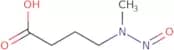
CAS:N-Nitroso-N-methyl-4-aminobutyric acid (NMBA) is a solid with a low melting point which has been identified as a potentially carcinogenic component of both tobacco and tobacco smoke. NMBA is also one of a number of nitrosamine impurities which have been found to be present in angiotensin II receptor blocker (ARB) drugs used to treat high blood pressure.
Formula:C5H10N2O3Purity:Min. 98 Area-%Color and Shape:Slightly Yellow PowderMolecular weight:146.14 g/mol5-Chloro-1-methyl-4-nitroimidazole
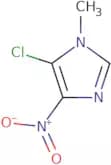
CAS:5-Chloro-1-methyl-4-nitroimidazole (5C1MI) is a fatty acid that is synthesized by the reaction of phosphorus pentachloride and an aliphatic hydrocarbon. It has been shown to be effective in treating women with breast cancer. 5C1MI blocks the activity of a protein called HER2, which promotes tumor growth. The drug has been shown to cause an increase in the number of circulating lymphocytes and natural killer cells, as well as an increase in the production of antibodies in mice. These effects are likely caused by 5C1MI's ability to inhibit the proliferation of T cells and B cells. 5C1MI has also been shown to have a high solubility in water and low solubility in lipids, which makes it suitable for administration via intravenous injection.
Formula:C4H4ClN3O2Purity:Min. 95%Color and Shape:PowderMolecular weight:161.55 g/molRef: 3D-FC19985
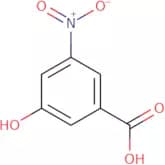
Discontinued product3-Hydroxy-5-nitrobenzoic acid
CAS:3-Hydroxy-5-nitrobenzoic acid is a reactive mesomorphic compound. It is often used as an analytical reagent and has been shown to be useful in spectrometric analysis of amino acid sequences. 3-Hydroxy-5-nitrobenzoic acid can be quantified by gas chromatography and mass spectrometry to determine its chemical composition. 3-Hydroxybenzoic acid and 2,5-dihydroxybenzoic acid are the two main products that are formed when this compound reacts with hydroxyl radical under certain conditions.
Formula:C7H5NO5Purity:Min. 98%Color and Shape:PowderMolecular weight:183.12 g/molRef: 3D-FH67573
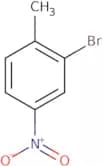
Discontinued product2-Bromo-4-nitrotoluene
CAS:2-Bromo-4-nitrotoluene (2BNT) is a mononitro substituted aromatic compound and a potent inhibitor of protein synthesis. It has been shown to have antimalarial activity, but it is not known to what extent the inhibition of protein synthesis contributes to its anti-malarial activity. 2-Bromo-4-nitrotoluene is also used in the preparation of imatinib, an anticancer drug that inhibits the growth of certain types of cancer cells. It can also be used as an inhibitor in vibrational spectroscopy.
Formula:C7H6BrNO2Purity:Min. 97.5%Color and Shape:PowderMolecular weight:216.03 g/molRef: 3D-FB02111
Discontinued product

![Methyl 6-nitropyrido[1,2-a]benzimidazole-8-carboxylate](/_next/image/?url=https%3A%2Fstatic.cymitquimica.com%2Fproducts%2F3D%2Fthumb-webp%2FFM132139.webp&w=3840&q=75)