Nitro
Found 2518 products of "Nitro"
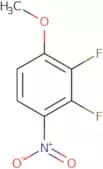
2,3-Difluoro-4-nitroanisole
CAS:2,3-Difluoro-4-nitroanisole is a chemical compound with CAS No. 66684-59-1. It is a useful intermediate that can be used to synthesize other chemicals and compounds. 2,3-Difluoro-4-nitroanisole can be used for the synthesis of research chemicals and speciality chemicals. This compound has been found to be a versatile building block that can be used in many reactions as a reagent. 2,3-Difluoro-4-nitroanisole has high quality and is a fine chemical with many uses.
Formula:C7H5F2NO3Purity:Min. 95%Molecular weight:189.12 g/molRef: 3D-FD70068
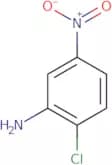
Discontinued product2-Chloro-5-nitroaniline
CAS:2-Chloro-5-nitroaniline (2C5N) is a drug substance that belongs to the group of amines. It is an intermediate that is used in the synthesis of caffeine and other amines. 2C5N has been shown to have genotoxic impurities, which may be due to its reaction with hydrochloric acid and acylation. 2C5N has also been shown to be soluble in water, but not chloroform or ethers.
Formula:C6H5ClN2O2Purity:Min. 95%Color and Shape:PowderMolecular weight:172.57 g/molRef: 3D-FC70430
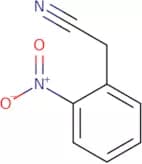
Discontinued product2-Nitrobenzylcyanide
CAS:2-Nitrobenzylcyanide is a potential use in the synthesis of β-unsaturated ketones, nitroalkanes, and biomolecular compounds. This compound reacts with nitrogen atoms to form an unsymmetrical nitrene group. The reaction selectivity is due to the active methylene group that is acidic, which selectively reacts with amines or cb1 receptor groups.
Formula:C8H6N2O2Purity:Min. 95%Color and Shape:Off-White PowderMolecular weight:162.15 g/molRef: 3D-FN26291
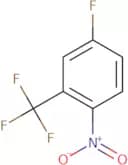
Discontinued product5-Fluoro-2-nitrobenzotrifluoride
CAS:5-Fluoro-2-nitrobenzotrifluoride is a triamine that stabilizes complex molecules. It has been used in the synthesis of fluorinated compounds and as a nucleophile in organic reactions. The amido group, which is present on 5-fluoro-2-nitrobenzotrifluoride, reacts with electrophilic carbon atoms to form new bonds. This type of reaction is known as an amido substitution. 5-Fluoro-2-nitrobenzotrifluoride is also able to react with sodium nitrate to form a nitro group, which can be used for the synthesis of nitro compounds. As a result, this chemical has been used as a waveguide material in the fabrication of microns and operational amplifiers.
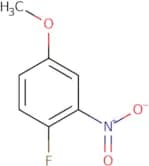
Formula:C7H3F4NO2Purity:Min. 95%Color and Shape:Clear LiquidMolecular weight:209.1 g/mol4-Fluoro-3-nitroanisole
CAS:4-Fluoro-3-nitroanisole is a useful chemical intermediate and building block. It is a versatile compound that can be used in research as well as commercial applications. 4-Fluoro-3-nitroanisole has the CAS number 61324-93-4. This chemical is often used in the synthesis of complex compounds, such as pharmaceuticals, pesticides, and fragrances. The high quality of this product makes it a good reagent for laboratory experiments.
Formula:C7H6FNO3Purity:Min. 95%Color and Shape:Slightly Yellow PowderMolecular weight:171.13 g/molSodium nitroprusside dihydrate
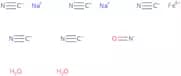
CAS:Controlled ProductSodium nitroprusside dihydrate is an oxygen transport agent that works by inhibiting the enzyme cyclase. This inhibits the production of tnf-α and other inflammatory mediators, which reduces inflammation and pain. Sodium nitroprusside dihydrate is used to lower blood pressure in emergency situations, such as shock. It has been shown to be effective for treating pulmonary hypertension, chronic obstructive pulmonary disease, and other conditions related to oxygen transport. Sodium nitroprusside dihydrate is a metastable molecule that can be converted into a stable form (sodium nitroprusside) by ester hydrochloride or fatty acid esters.
Formula:C5FeN6O•(H2O)2•Na2Purity:Min. 98.0%Color and Shape:Red PowderMolecular weight:297.95 g/molRef: 3D-FS55880
Discontinued product4'-Nitroacetanilide
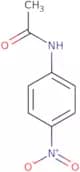
CAS:4'-Nitroacetanilide is an amide that has shown the ability to bind to the active site of a bacterial enzyme. This binding inhibits the enzyme's activity and prevents the conversion of nitrite to nitric oxide. 4'-Nitroacetanilide is stable in aqueous solution, which makes it suitable for intravenous administration. It is also used as a precursor for other substances with antibiotic properties. The molecular weight of 4'-Nitroacetanilide is 298 grams per mole and its chemical formula is C6H4NO2. This compound has been shown to be effective against group P2 enzymes, such as those found in Streptococcus pneumoniae and Haemophilus influenzae.
Formula:C8H8N2O3Purity:Min. 95%Molecular weight:180.16 g/mol2-Fluoro-5-nitrobenzotrifluoride
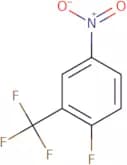
CAS:2-Fluoro-5-nitrobenzotrifluoride is a chiral, fluorinated organic compound that has been shown to be an effective antiviral agent. It is active against Coxsackievirus B3 and other viruses in vitro. The antiviral activity of 2-fluoro-5-nitrobenzotrifluoride appears to be due to its ability to inhibit the virus's ability to bind and enter the host cell. In vivo studies have shown that 2-fluoro-5-nitrobenzotrifluoride can reduce the spread of coxsackievirus B3 in mice. This compound also has been shown to inhibit viral replication by preventing the synthesis of viral protein pai-1, which is necessary for viral assembly and release from infected cells.
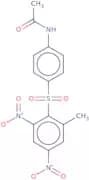
Formula:C7H3F4NO2Purity:Min. 95%Color and Shape:PowderMolecular weight:209.1 g/mol4-Acetamido-2',4'-dinitro-5'-methyldiphenyl sulphone
CAS:4-Acetamido-2',4'-dinitro-5'-methyldiphenyl sulphone is a high quality, versatile building block that is used as a reagent and complex intermediate. It can be used in the production of speciality chemicals, research chemicals and fine chemicals. 4-Acetamido-2',4'-dinitro-5'-methyldiphenyl sulphone is also a useful scaffold for the construction of new chemical compounds. This compound has been shown to be a reaction component in organic synthesis reactions.Formula:C15H13N3O7SPurity:Min. 95%Color and Shape:Solid.Molecular weight:379.35 g/molRef: 3D-FA66900
Discontinued product5-Nitroisatoic anhydride
CAS:5-Nitroisatoic anhydride is a chemical compound that has found use in the synthesis of complex compounds and fine chemicals. It is a useful intermediate for the preparation of 5-nitro-1,2,4-triazole, which can be used as a research chemical or speciality chemical. 5-Nitroisatoic anhydride reacts with alcohols to form nitrosamines. This reaction component is also used in organic syntheses and as a reagent in the production of other chemicals.
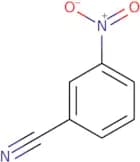
Formula:C8H4N2O5Purity:Min. 95%Molecular weight:208.13 g/mol3-Nitrobenzonitrile
CAS:3-Nitrobenzonitrile is a chemical compound with molecular formula C6H5NO2. It is used as an intermediate in the synthesis of other organic compounds. 3-Nitrobenzonitrile can be synthesized by reacting 3-nitrotoluene with sodium hydroxide in methanol solution. The reaction products are analyzed using a mass spectrometer, and the structural analysis is performed by using a matrix-assisted laser desorption/ionization time-of-flight mass spectrometry (MALDI TOF MS) technique. This compound can also be obtained from the reaction of nitrous acid with benzaldehyde in presence of a base catalyst. The structure of this molecule was first determined by magnetic resonance spectroscopy (NMR). This synthetic compound can also be identified via ionization techniques such as electron impact (EI) or chemical analyses such as gas chromatography–mass spectrometry (GCMS).
Formula:C7H4N2O2Purity:Min. 95%Color and Shape:PowderMolecular weight:148.12 g/molRef: 3D-FN16368
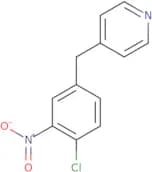
Discontinued product4-(4-Chloro-3-nitrobenzyl)pyridine
CAS:Ai Product Descriptions 50 Creative
Formula:C12H9ClN2O2Purity:Min. 95%Color and Shape:PowderMolecular weight:248.66 g/molRef: 3D-FC131489
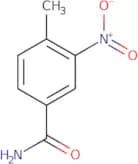
Discontinued product4-Methyl-3-nitrobenzamide
CAS:4-Methyl-3-nitrobenzamide is a nitrile that can be synthesized by the reaction of potassium hydroxide and 3-nitrobenzamide. It has been shown to react with dichloroethane to form 4-methyl-3-nitrobenzoic acid. The optimum temperature for this reaction is 120°C, which leads to a high yield of 4-methyl-3-nitrobenzamide. This product is also available in an isotopic form at high purity.
Formula:C8H8N2O3Purity:Min. 95%Color and Shape:PowderMolecular weight:180.16 g/molMethyl 3,5-dinitro-4-hydroxybenzoate
CAS:Methyl 3,5-dinitro-4-hydroxybenzoate is a reactive compound that can be used to glycosylates alcohols. It is a good choice for the glycosylation of complex oligosaccharides due to its high yields and stereoselectivity. Methyl 3,5-dinitro-4-hydroxybenzoate is an efficient method for the synthesis of oligosaccharides. Reaction with methanol and glycosyl acceptor yields a disaccharide in which the two sugars are linked by an alpha-(1,2) glycosidic bond. The nucleophilic nature of methyl 3,5-dinitro-4-hydroxybenzoate allows it to act as a nucleophile in the reaction with the glycosyl acceptor.
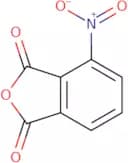
Formula:C8H6N2O7Purity:Min. 95%Color and Shape:PowderMolecular weight:242.14 g/mol3-Nitrophthalic anhydride
CAS:3-Nitrophthalic anhydride is a nucleophilic compound that is activated by the addition of hydrochloric acid and chloride. It reacts with dimethyl formamide to produce nitrobenzene, which can be oxidized to nitrobenzoic acid. 3-Nitrophthalic anhydride has been used as a precursor for pomalidomide, a drug used in the treatment of multiple myeloma and other cancers. In this reaction, n-dimethyl formamide reacts with 3-nitrophthalic anhydride to produce nitromethane, which can then be oxidized to nitrobenzoic acid. Molecular modeling studies have shown that 3-nitrophthalic anhydride binds to DNA through hydrogen bonding interactions and the formation of covalent bonds. The solubility data for 3-nitrophthalic anhydride show that it is soluble in water and organic solvents such as acetone or met
Formula:C8H3NO5Purity:Min. 85%Color and Shape:PowderMolecular weight:193.11 g/molRef: 3D-FN26343
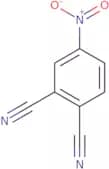
Discontinued product4-Nitrophthalonitrile
CAS:4-Nitrophthalonitrile is a chemical substance that can be synthesized by the reaction of sodium carbonate with 3,4,5-trimethoxybenzyl alcohol. It can also be prepared using nitro phenol and sodium hydroxide. 4-Nitrophthalonitrile has been shown to have high photochemical activity in the presence of light. The frequency shift of its infrared spectrum is indicative of a nucleophilic addition reaction mechanism. 4-Nitrophthalonitrile has been used as an intermediate for producing other chemicals, such as herbicides and pharmaceuticals.
Formula:C8H3N3O2Purity:Min. 95%Color and Shape:White PowderMolecular weight:173.13 g/molRef: 3D-FN36858
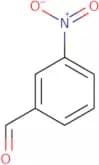
Discontinued product3-Nitrobenzaldehyde
CAS:3-Nitrobenzaldehyde is an organic compound that is used in the synthesis of monoclonal antibodies for use in cancer research. It has been shown to have genotoxic and carcinogenic effects, as it binds to nucleic acids and inhibits DNA replication. 3-Nitrobenzaldehyde has been shown to be effective against a variety of bacteria, including methicillin-resistant Staphylococcus aureus (MRSA) and Clostridium perfringens. This compound also inhibits protein synthesis by binding with amines and hydrogen bonding with the amino acid residues of proteins.
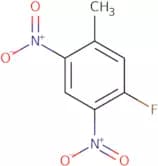
Formula:C7H5NO3Purity:Min. 95%Color and Shape:PowderMolecular weight:151.12 g/mol2,4-Dinitro-5-fluorotoluene
CAS:2,4-Dinitro-5-fluorotoluene is a fine chemical that can be used as a versatile building block in the synthesis of complex compounds. It is an intermediate in many reactions involving aliphatic nitro compounds and has been shown to be reactive with aromatic amines. This chemical has been used as a research chemical for the detection of proteins and nucleic acids and is also a good reagent for the synthesis of other chemicals. The compound reacts quickly with acid to produce a highly explosive gas which can be stabilized by reacting it with potassium nitrate or sodium bicarbonate.
Formula:C7H5FN2O4Purity:Min. 95%Color and Shape:PowderMolecular weight:200.12 g/molRef: 3D-FD67959
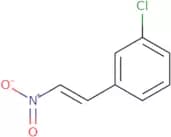
Discontinued product1-(3-Chlorophenyl)-2-nitroethene
CAS:1-(3-Chlorophenyl)-2-nitroethene is a reagent that is used as an intermediate in the production of fine chemicals, research chemicals, and speciality chemicals. It has been shown to provide a useful scaffold for the synthesis of complex compounds and is also a versatile building block that can be used in a variety of reactions. 1-(3-Chlorophenyl)-2-nitroethene is not intended for use as a drug or food additive.
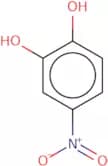
Formula:C8H6ClNO2Purity:Min. 95%Color and Shape:PowderMolecular weight:183.59 g/mol4-Nitrocatechol
CAS:4-Nitrocatechol is a reactive chemical that has been used as an analytical reagent for the detection of nitrite ions. It reacts with nitrite ion to form stable complexes, which can be detected by titration calorimetry. 4-Nitrocatechol has also been used as a model for study of reaction mechanisms and coordination geometry. The reaction mechanism of 4-nitrocatechol is thought to involve formation of a dinucleotide phosphate intermediate and subsequent attack by the nitrite ion to produce an unstable intermediate that decomposes to form stable complexes with the nitrite ion.
Formula:C6H5NO4Purity:Min. 95%Color and Shape:Yellow PowderMolecular weight:155.11 g/molRef: 3D-FN32363
Discontinued product