Nitro
Nitro compounds are organic molecules containing one or more nitro groups (NO2). These compounds are widely used in the synthesis of explosives, pharmaceuticals, and dyes. At CymitQuimica, we offer a wide range of high-quality nitro compounds to support your research and industrial applications, ensuring safe and effective results. Our selection includes a variety of nitro compounds suitable for different chemical syntheses and applications.
Found 2516 products of "Nitro"
Sort by
Purity (%)
0
100
|
0
|
50
|
90
|
95
|
100
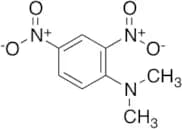
N,N-dimethyl-2,4-dinitroaniline
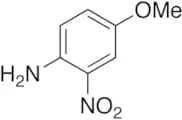
CAS:Controlled Product<p>Applications N,N-dimethyl-2,4-dinitroaniline (cas# 1670-17-3) is a useful research chemical.<br></p>Formula:C8H9N3O4Color and Shape:NeatMolecular weight:211.174-Methoxy-2-nitroaniline(2-Nitro-p-anisidine)
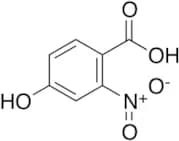
CAS:Controlled Product<p>Applications Toxic to some wild and domestic birds and mice. Molluscicidal activity<br> Not a dangerous good if item is equal to or less than 1g/ml and there is less than 100g/ml in the package<br>References De Abreu, F. et al.; Bioorg. Med. Chem. 9, 659 (2001); Schafer, E.W. et al.; Arch. Environ. Con. Tox. 14, 111 (1985); Schafer, E.W. et al.; Arch. Environ. Con. Tox. 12, 355 (1983)<br></p>Formula:C7H8N2O3Color and Shape:NeatMolecular weight:168.154-Hydroxy-2-nitrobenzoic Acid
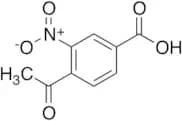
CAS:Controlled Product<p>Applications 4-hydroxy-2-nitrobenzoic acid (cas# 74230-08-3) is a useful research chemical.<br></p>Formula:C7H5NO5Color and Shape:Dark Red To Dark BrownMolecular weight:183.1184-Acetyl-3-nitrobenzoic Acid
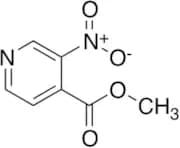
CAS:Controlled ProductFormula:C9H7NO5Color and Shape:NeatMolecular weight:209.156Methyl 3-Nitroisonicotinate
CAS:Controlled Product<p>Applications Methyl 3-nitroisonicotinate (cas# 103698-10-8) is a useful research chemical.<br></p>Formula:C7H6N2O4Color and Shape:NeatMolecular weight:182.132-(2-Nitroanilino)ethanol
CAS:Controlled Product<p>Applications 2-(2-Nitroanilino)ethanol is used in the preparation of (phenylamino)quinoxalinone derivatives which has been identified as a new class of glycogen phosphorylase inhibitors.<br>References Dudash, J., et al.: Bioorg. Med. Chem. Lett., 21, 4790 (2005); Hellerstein, M., et al.: J. Clin. Invest. 100, 1305 (1994)<br></p>Formula:C8H10N2O3Color and Shape:Dark Red To RedMolecular weight:182.184-Nitrobenzoic Acid
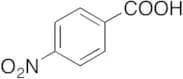
CAS:Controlled Product<p>Stability Hygroscopic<br>Applications 4-Nitrobenzoic Acid is used in the synthesis of anti-Trypanosoma cruzi agents in the treatment of chagas disease.<br>References Palace-Berl, F. et al.: Bioorg, Med. Chem. Lett., 21, 5395 (2013); Zhou, L. et al.: J. Med. Chem., 56, 796 (2013);<br></p>Formula:C7H5NO4Color and Shape:NeatMolecular weight:167.123-Nitrobenzoylacetonitrile
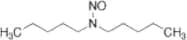
CAS:Controlled Product<p>Applications 3-Nitrobenzoylacetonitrile (cas# 21667-64-1) is a useful research chemical.<br></p>Formula:C9H6N2O3Color and Shape:Yellow To Dark YellowMolecular weight:190.155N,N-Diamylnitrosamine
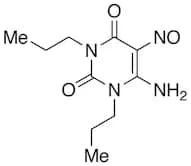
CAS:Controlled Product<p>Applications N,N-Diamylnitrosamine (cas# 13256-06-9) is a compound useful in organic synthesis.<br></p>Formula:C10H22N2OColor and Shape:NeatMolecular weight:186.296-Amino-1,3-dipropyl-5-nitrosouracil
CAS:Controlled Product<p>Stability Stable at RT<br>Applications An intermediate used for the sythesis of xanthine derivatives.<br>References Daly, J.W., et al.: J. Med. Chem., 28, 487 (1985), Erickson, R.H., et al.: J. Med. Chem., 34, 3405 (1991),<br></p>Formula:C10H16N4O3Color and Shape:NeatMolecular weight:240.26N-Ethyl-N-(2-hydroxyethyl)nitrosamine
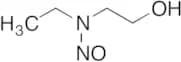
CAS:Controlled Product<p>Applications N-Ethyl-N-(2-hydroxyethyl)nitrosamine is a member of the nitrosamine class of carcinogens and induces renal cancer. It has been shown to induce tumors in the kidneys of rats and in the lungs of mice.<br>References Hiasa, Y., et al.: Cancer Lett, 145, 143-149 (1999)<br></p>Formula:C4H10N2O2Color and Shape:NeatMolecular weight:118.134-Nitrocatechol
CAS:<p>Applications 4-Nitrocatechol can be used as a catalyst and an antibacterial against intestinal bacteria.<br>References Jones, Matthew D., et al.: Polymer Preprints (Amer. Chem. Soc.), 48(2), 873-874 (2007);Jeong, Eun-Young, et al.: Food Chem., 115(3), 1006-1010 (2009)<br></p>Formula:C6H5NO4Color and Shape:NeatMolecular weight:155.113,4-Dinitroaniline
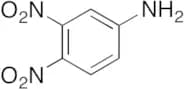
CAS:Controlled Product<p>Applications 3,4-Dinitroaniline is a useful intermediate for the preparation of various industrially important chemicals like dyes, pestices, herbicides and other useful research chemicals.<br>References Sivakumar, K. K., et al.: Int. J. Res. Pharm. Chem., 4, 517 (2014); Shahinian, E. G. H., et al.: Sci. Bull. B: Chem. Mater. Sci., 73, 153 (2011); Jahn, U.: Science of Synthesis, 41, 371 (2010)<br></p>Formula:C6H5N3O4Color and Shape:NeatMolecular weight:183.12N,N-Diethyl-4-nitroaniline
CAS:Controlled Product<p>Applications N,N-Diethyl-4-nitroaniline<br></p>Formula:C10H14N2O2Color and Shape:Light Yellow To YellowMolecular weight:194.23N-(3-Hydroxypropyl) 4-hydroxy-2-nitroaniline
CAS:Controlled Product<p>Stability Hygroscopic<br>Applications N-(3-Hydroxypropyl) 4-hydroxy-2-nitroaniline is a hair ingredient. It is used as a semipermanent (nonoxidative) hair colorant and as a toner in permanent (oxidative) hair dye products.<br> Not a dangerous good if item is equal to or less than 1g/ml and there is less than 100g/ml in the package<br>References Burnett, C. L., et al.: Int. J. Toxicol., 28, 217S (2009); Yazar, K., et al.: Contact Dermatitis, 61, 269 (2009)<br></p>Formula:C9H12N2O4Color and Shape:NeatMolecular weight:212.22-Nitrobenzene-1,4-diamine
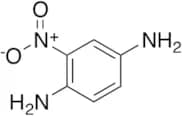
CAS:Controlled Product<p>Applications 2-nitrobenzene-1,4-diamine (cas# 5307-14-2) is a useful research chemical.<br></p>Formula:C6H7N3O2Color and Shape:NeatMolecular weight:153.14Ethyl 4-Nitrobenzoate
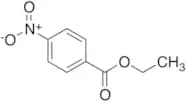
CAS:Controlled Product<p>Applications ETHYL 4-NITROBENZOATE (cas# 99-77-4) is a useful research chemical.<br></p>Formula:C9H9NO4Color and Shape:White To Light YellowMolecular weight:195.172-Amino-5-nitro-2'-chlorobenzophenone
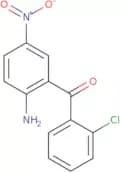
CAS:<p>2-Amino-5-nitro-2'-chlorobenzophenone (2ACCB) is a precursor for the synthesis of 2,4,6-trichlorophenol. 2ACCB reacts with hydrochloric acid in the presence of a scrubber to produce diphenyl ether and activated 2ACCB. The reaction rate can be increased by adding sodium hydroxide solution to the reaction solution. The hydroxy group on the 2ACCB molecule can be converted to a terpene by transfer reactions with glycol esters. This compound has been used as a sterilant and disinfectant in reaction solutions containing chlorine atoms or carbonyl groups.</p>Formula:C13H9ClN2O3Purity:Min. 95%Color and Shape:PowderMolecular weight:276.67 g/mol2,5-Dichloronitrobenzene
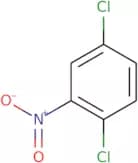
CAS:<p>2,5-Dichloronitrobenzene is a compound that is used to manufacture dyes and pharmaceuticals. It can be synthesized from sodium carbonate, 4-tert-butylbenzoic acid, and sodium hydroxide solution. To produce 2,5-dichloronitrobenzene, the reactants are heated in a reaction vessel with a diphenyl ether as an acid catalyst. The product of this reaction is then dissolved in deionized water or water containing other solvents such as methanol or ethanol. The reaction yield is approximately 95%. The byproducts of this process include 2-chloroacetophenone and hydrogen chloride gas. 2,5-Dichloronitrobenzene reacts with sodium hydroxide solution to form 4-tert-butyl benzoic acid and sodium chloride. This reaction occurs because these compounds have polar functional groups which can form hydrogen bonds with each</p>Formula:C6H3Cl2NO2Purity:Min. 95%Color and Shape:PowderMolecular weight:192 g/mol6-Chloro-2-nitrotoluene
CAS:<p>6-Chloro-2-nitrotoluene is a synthetic organic compound that has been identified in environmental samples as a reaction product of chlorine and organic compounds. It has been shown to induce root formation in plants, which is related to its ability to inhibit the formation of chlorinated hydrocarbons. 6-Chloro-2-nitrotoluene can be produced by reacting nitrogen atoms with zirconium at high temperatures and low pressures, requiring an activation energy of 50 kcal/mol.</p>Formula:C7H6ClNO2Purity:Min. 95%Molecular weight:171.58 g/mol