Nitro
Nitro compounds are organic molecules containing one or more nitro groups (NO2). These compounds are widely used in the synthesis of explosives, pharmaceuticals, and dyes. At CymitQuimica, we offer a wide range of high-quality nitro compounds to support your research and industrial applications, ensuring safe and effective results. Our selection includes a variety of nitro compounds suitable for different chemical syntheses and applications.
Found 2516 products of "Nitro"
Sort by
Purity (%)
0
100
|
0
|
50
|
90
|
95
|
100
5-Nitroisoquinoline
CAS:<p>5-Nitroisoquinoline is a nitro compound that has been shown to be a potential biomarker for liver disease. 5-Nitroisoquinoline is synthesized from the reaction of hydroxylamine, sodium carbonate, and nitric acid. This chemical can also be found in human liver tissue. The titration calorimetry experiments performed on 5-nitroisoquinoline showed that the compound has a high heat of formation (194.1 kJ/mol) and low enthalpy of formation (-19.6 kJ/mol). Vibrational analysis revealed that there are four nitrogens in the molecule and two nitrogen atoms per molecule. X-ray crystal structures were obtained for 5-nitroisoquinoline with different solvents and hydrogen bonding was observed in all cases. Molecular modeling showed that there are five nitro groups, which would explain the name "5-nitro." The five nitrogen atoms coordinate to form a trigonal bip</p>Formula:C9H6N2O2Purity:Min. 95%Color and Shape:PowderMolecular weight:174.16 g/mol2-Nitroterephthalic acid
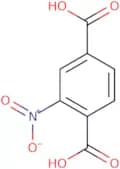
CAS:<p>2-Nitroterephthalic acid is an inorganic acid that belongs to the nitro group. It is a white powder and has a melting point of 115°C. The crystal structure of 2-nitroterephthalic acid was determined using x-ray crystallography, and the thermal expansion coefficient was measured at different temperatures between 10° and 120°C. This compound has been used as a test sample to study the hydrogen bonding interactions between methyl ethyl groups on the molecule's surface with carboxylate groups in other molecules. Structural analysis of this compound also revealed that it contains a carboxylate group that can be converted into an ester for use in organic synthesis.</p>Formula:C8H5NO6Color and Shape:PowderMolecular weight:211.13 g/molBoc-3-nitro-L-phenylalanine
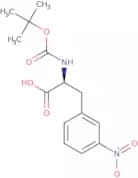
CAS:<p>Boc-3-nitro-L-phenylalanine is a chemical intermediate that is useful for the synthesis of a wide variety of compounds. It is a versatile building block with many applications in research and industry. Boc-3-nitro-L-phenylalanine has been used as a reaction component in organic synthesis, as well as in the production of pharmaceuticals and other specialized chemicals. This compound can be used as a reagent or starting material for the synthesis of other organic compounds. Boc-3-nitro-L-phenylalanine is an important chemical with high quality, which can be used in the production of many different types of products.</p>Formula:C14H18N2O6Purity:Min. 98 Area-%Color and Shape:PowderMolecular weight:310.3 g/molFmoc-3-nitro-L-tyrosine
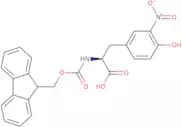
CAS:<p>Fmoc-3-nitro-L-tyrosine is an intermediate in the synthesis of a fluorogenic substrate for the determination of tyrosine residues in peptides by reverse phase high performance liquid chromatography (RP-HPLC). The product is synthesized by solid phase methods. Fmoc-3-nitro-L-tyrosine is prepared by reacting 3,4,5,6-tetrafluoroacetophenone with L-tyrosine in piperidine. The product can be cleaved to yield the residues and hydroxyl groups. The fluorogenic nature of Fmoc-3-nitro-L-tyrosine enables it to be used as a quenching reagent for the fluorescence of other compounds. This product can also be modified to become fluorescent or enzymatically active.</p>Formula:C24H20N2O7Purity:Min. 95%Color and Shape:PowderMolecular weight:448.42 g/mol4-Chloro-3-nitrophenylacetamide
CAS:<p>4-Chloro-3-nitrophenylacetamide is a chemical compound that can be used as a reagent, useful scaffold for research, and a high quality research chemical. CAS No. 5540-60-3, this versatile building block is useful for the synthesis of complex compounds and fine chemicals.</p>Formula:C8H7ClN2O3Purity:Min. 98 Area-%Color and Shape:PowderMolecular weight:214.61 g/mol3-Nitro-4-chlorobenzaldehyde
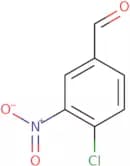
CAS:<p>3-Nitro-4-chlorobenzaldehyde is a copper complex that has been used in the study of molecular interactions. The molecule has been studied by a number of techniques, including binding experiments, vibrational spectroscopy, and light emission. 3-Nitro-4-chlorobenzaldehyde has shown bacteriostatic activity against Escherichia coli and Bacillus subtilis. This compound also appears to have potential as a drug target due to its ability to inhibit the growth of Pseudomonas aeruginosa. 3-Nitro-4-chlorobenzaldehyde may be useful in the treatment of industrial processes involving nitric acid.</p>Formula:C7H4ClNO3Purity:Min. 95%Color and Shape:White PowderMolecular weight:185.56 g/mol2-Acetyl-4-nitroindane-1,3-dione
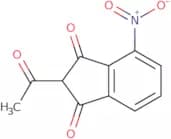
CAS:<p>2-Acetyl-4-nitroindane-1,3-dione is a synthetic compound that is assembled in two steps from commercially available starting materials. The first step involves the assembly of the nitro group and acetyl group on the indane ring. The second step involves the oxidative cyclization of the nitro group to form the final product. The compound was monitored by UV absorption and HPLC analysis with a spermidine standard. It has been shown to selectively inhibit trypanothione reductase, an enzyme involved in trypanosome metabolism. 2-Acetyl-4-nitroindane-1,3-dione is also an analogue of disulphide, which has been shown to be effective against trypanosomes. 2-Acetyl-4-nitroindane-1,3-dione is synthesized on solid phase using strategies developed for peptides and amines. This compound has also</p>Formula:C11H7NO5Purity:Min. 95%Color and Shape:PowderMolecular weight:233.18 g/mol5-Nitro-2-furaldehyde diacetate
CAS:<p>5-Nitro-2-furaldehyde diacetate is a synthetic compound that can be used in the production of quinoline derivatives. It has been shown to have an inhibitory effect on lung cancer cells, although its mechanism of action is not yet known. 5NFDA was synthesized and tested with a reaction solution containing sodium carbonate and hydrochloric acid. The electron microscopic analysis showed that this compound reacts with the hydroxyl group on the surface of the lung cell membrane. This reaction causes a loss of integrity in the cell wall, leading to cell death.</p>Formula:C9H9NO7Purity:Min. 97 Area-%Color and Shape:PowderMolecular weight:243.17 g/mol6-Amino-3-methyl-4-(4-nitrophenyl)-4H-pyrano[3,2-d]pyrazole-5-carbonitrile
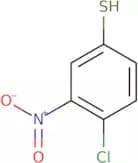
CAS:<p>6-amino-3-methyl-4-(4-nitrophenyl)-4H-pyrano[3,2-d]pyrazole-5-carbonitrile is a compound that has been shown to have correlations with energies and regression. It also has a linear regression, polarities, photophysical properties, and dipole. The fluorescence and excited state of this compound are singlet and hydrogen bonding interactions with solvents.</p>Formula:C14H11N5O3Purity:Min. 95%Color and Shape:PowderMolecular weight:297.27 g/mol4-Chloro-3-nitrobenzenethiol
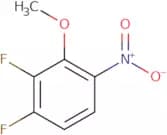
CAS:<p>4-Chloro-3-nitrobenzenethiol (4CNBT) is a micropet that is used as a radiotracer to measure the uptake of serotonin in the brain. This compound has been shown to bind to the serotonin transporter, which is responsible for reuptake of serotonin from the synapse. The radiolabeled 4CNBT can be used for positron emission tomography (PET) scanning and postinjection autoradiography. 4CNBT has also been used as a ligand in pharmacological studies on serotonin transporters.</p>Formula:C6H4ClNO2SPurity:Min. 95%Color and Shape:White PowderMolecular weight:189.62 g/mol2,3-Difluoro-6-nitroanisole
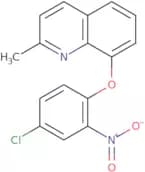
CAS:<p>2,3-Difluoro-6-nitroanisole is a chemical that can be used as a building block for the synthesis of other compounds. It is a versatile intermediate that is useful in the synthesis of a wide variety of compounds. 2,3-Difluoro-6-nitroanisole has been used in research and as a reagent in organic chemistry. The compound has been observed to have high quality and to be stable under most conditions. CAS No. 66684-60-4 is assigned to 2,3-difluoro-6 nitroanisole in the Chemical Abstracts Service registry system.</p>Formula:C7H5F2NO3Purity:Min. 95%Molecular weight:189.12 g/mol4-Chloro-1-(2-methyl(8-quinolyloxy))-2-nitrobenzene
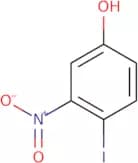
CAS:<p>Please enquire for more information about 4-Chloro-1-(2-methyl(8-quinolyloxy))-2-nitrobenzene including the price, delivery time and more detailed product information at the technical inquiry form on this page</p>Formula:C16H11ClN2O3Purity:Min. 95%Color and Shape:PowderMolecular weight:314.72 g/mol4-Iodo-3-nitrophenol
CAS:<p>4-Iodo-3-nitrophenol is a chemical compound that is used in the synthesis of decanoic acid, an ester. It also has pharmacological properties and can be used as a cataleptic or neuroleptic agent. 4-Iodo-3-nitrophenol has been shown to have stimulant effects on the central nervous system, which may be due to its ability to inhibit the metabolism of acetylcholine by blocking cholinesterase enzymes. 4-Iodo-3-nitrophenol is also used in the preparation of analogues and it has been tested for use as a treatment for Parkinson's disease.</p>Formula:C6H4INO3Purity:90%Color and Shape:Brown Yellow PowderMolecular weight:265.01 g/mol2-Nitro-p-phenylenediamine
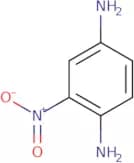
CAS:<p>2-Nitro-p-phenylenediamine is a chemical substance that can be used as a predictive biomarker for allergic reactions. It is an amine with the chemical formula C6H5CH2N2O2. It is soluble in water, ethanol, and ether, but insoluble in acetone and diethylether. 2-Nitro-p-phenylenediamine has been shown to cause cutaneous lesions in animal studies and has been classified as a possible human carcinogen by the International Agency for Research on Cancer (IARC). This compound was not mutagenic to bacteria or yeast strains tested, but it did cause chromosome aberrations in cultured human lymphocytes. The metabolite profile of 2-nitro-p-phenylenediamine has been studied in rats treated with this compound at different doses. When administered orally to rats at a dose of 50 mg/kg body weight per day, 2 nitro p phenylened</p>Formula:C6H7N3O2Purity:Min. 95%Color and Shape:PowderMolecular weight:153.14 g/mol3-Acetyl-5-nitrobenzoic acid
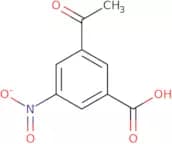
CAS:<p>3-Acetyl-5-nitrobenzoic acid is a chemical that is used as a versatile building block, useful intermediate, and useful building block. It has been used in the synthesis of pharmaceuticals, agricultural chemicals, and other fine chemicals. 3-Acetyl-5-nitrobenzoic acid has been shown to be a versatile reaction component and reagent in organic synthesis. It can be used as a building block for the preparation of complex compounds with different functionalities. 3-Acetyl-5-nitrobenzoic acid can also be used to make high quality research chemicals as well as speciality chemicals. This compound is listed on the Chemical Abstract Services registry with CAS number 717-75-9.</p>Formula:C9H7NO5Purity:Min. 95 Area-%Color and Shape:PowderMolecular weight:209.16 g/mol3',5'-Dinitroacetophenone
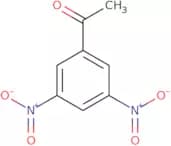
CAS:<p>3',5'-Dinitroacetophenone is a chemical compound that is used as an intermediate in the synthesis of other organic compounds. This chemical is highly toxic and can be fatal if ingested. 3',5'-Dinitroacetophenone has a high solubility in water, but reacts quickly with air, so it should be stored in an airtight container. It has been shown to produce foramen ovale-type lesions when applied to the maxillary sinus. This chemical also has an electron deficient profile and produces frequencies at about 350 MHz and chloride ions at about 250 MHz.</p>Formula:C8H6N2O5Purity:Min. 95%Color and Shape:PowderMolecular weight:210.14 g/mol4-Chloro-3-nitrobenzoic acid ethyl ester
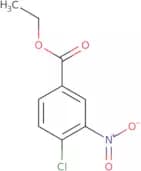
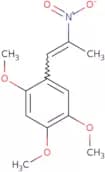
CAS:<p>4-Chloro-3-nitrobenzoic acid ethyl ester is a six-membered, planar, hydrogen bond that has a crystal structure with a six-membered ring. It has hydrogen bonds and five-membered ring. The molecule is coplanar and oriented.</p>Formula:C9H8ClNO4Purity:Min. 95%Color and Shape:PowderMolecular weight:229.62 g/mol1-(2,4,5-Trimethoxyphenyl)-2-nitropropene
CAS:<p>1-(2,4,5-Trimethoxyphenyl)-2-nitropropene is a fine chemical that can be used as a building block in organic synthesis. It is also an intermediate or scaffold for the preparation of other compounds. 1-(2,4,5-Trimethoxyphenyl)-2-nitropropene has been used in the synthesis of many pharmaceuticals and natural products. The compound has high purity and quality.</p>Formula:C12H15NO5Purity:Min. 95%Color and Shape:PowderMolecular weight:253.25 g/mol7-Nitroindole
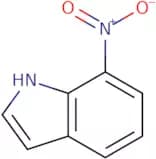
CAS:<p>7-Nitroindole is a hybridization analog of the base cytosine that has been used in biological studies. It has been shown to be active against microglia cells, which are involved in the inflammatory response. 7-Nitroindole's mechanism of action is not well understood; it may react with hydrochloric acid in the stomach to form nitrosamines and chloride ions, or it may react with hydrogen chloride to produce an ethyl ester. It also reacts with ethyl esters in the presence of light to form a photochemical reaction that generates fluorescence. The mechanism is not yet fully understood.</p>Formula:C8H6N2O2Color and Shape:PowderMolecular weight:162.15 g/mol(4-N-Propoxyphenyl)-2-nitropropene
CAS:<p>4-N-Propoxyphenyl)-2-nitropropene is a high quality chemical that is a versatile building block in organic synthesis. It can be used as a reagent, reaction component, or useful intermediate. 4-N-Propoxyphenyl)-2-nitropropene is an excellent choice for research and development of new compounds because it has high purity and versatility. This chemical is also a fine chemical with CAS No. 1251483-63-2.</p>Formula:C12H15NO3Purity:Min. 95%Color and Shape:PowderMolecular weight:221.25 g/mol




![6-Amino-3-methyl-4-(4-nitrophenyl)-4H-pyrano[3,2-d]pyrazole-5-carbonitrile](/_next/image/?url=https%3A%2Fstatic.cymitquimica.com%2Fproducts%2F3D%2Fthumb-webp%2FFA169805.webp&w=3840&q=75)