Nitro
Nitro compounds are organic molecules containing one or more nitro groups (NO2). These compounds are widely used in the synthesis of explosives, pharmaceuticals, and dyes. At CymitQuimica, we offer a wide range of high-quality nitro compounds to support your research and industrial applications, ensuring safe and effective results. Our selection includes a variety of nitro compounds suitable for different chemical syntheses and applications.
Found 2516 products of "Nitro"
Sort by
Purity (%)
0
100
|
0
|
50
|
90
|
95
|
100
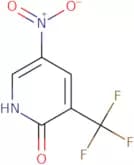
2-Hydroxy-5-nitro-3-(trifluoromethyl)pyridine
CAS:<p>Please enquire for more information about 2-Hydroxy-5-nitro-3-(trifluoromethyl)pyridine including the price, delivery time and more detailed product information at the technical inquiry form on this page</p>Formula:C6H3F3N2O3Purity:Min. 99.00 Area-%Molecular weight:208.09 g/mol3-Fluoro-2-nitrobenzaldehyde
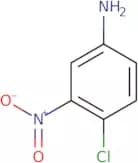
CAS:<p>3-Fluoro-2-nitrobenzaldehyde is a pyridine derivative that has been used in the synthesis of a number of important heterocyclic compounds. This compound can be prepared by reacting 3,4-dichloroaniline with nitrous acid and then hydrolyzing the resulting 3-chloroquinoline with hydrochloric acid. The reaction yields anilines and quinolines in regiospecifically, as well as formylation, cyclisation, and condensation products. It is also capable of aromatisation reactions with benzene to produce benzofuran derivatives.</p>Formula:C7H4FNO3Purity:Min. 95%Color and Shape:Yellow PowderMolecular weight:169.11 g/mol4-Chloro-3-nitroaniline
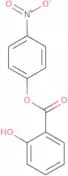
CAS:<p>4-Chloro-3-nitroaniline is an antibacterial agent that inhibits bacterial growth by binding to the enzyme topoisomerase II, which is essential for DNA replication. It has been shown to have a statistically significant inhibitory effect on the growth of Staphylococcus aureus. 4-Chloro-3-nitroaniline may also disrupt hemosiderosis and reduce iron levels in plasma samples from patients with hemosiderosis. The biological effects of this drug are not well understood.</p>Formula:C6H5ClN2O2Purity:Min. 95%Color and Shape:PowderMolecular weight:172.57 g/mol4-Nitrophenyl Salicylate
CAS:<p>4-Nitrophenyl salicylate is an organic compound that is a derivative of phenol. This colourless solid has been shown to be a good catalyst for amine oxidation reactions. It also stabilizes organic compounds and prevents their oxidation by oxygen and other reactive species, such as free radicals, peroxides, and heavy metals. 4-Nitrophenyl salicylate reacts with amines to produce alicyclic nitrosoamines, which are more stable than the parent amine. The reaction mechanism of 4-nitrophenyl salicylate is not yet fully understood; however, it may involve nucleophilic attack on the aromatic ring followed by resonance stabilization of the resulting product.</p>Purity:Min. 95%Color and Shape:PowderMolecular weight:259.21 g/molL-threo-(+)-2-Amino-1-(4-nitrophenyl)-1,3-propanediol
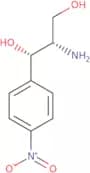
CAS:<p>L-threo-(+)-2-amino-1-(4-nitrophenyl)-1,3-propanediol is a functional group that is composed of a fatty acid and an amino acid. It has been shown to inhibit the growth of corynebacterium glutamicum bacteria by hydrolyzing their cell wall. This compound also inhibits the activity of bacterial enzymes that are involved in the synthesis of proteins. This functional group may be useful for the treatment of chronic lymphocytic leukemia and HIV infection.</p>Formula:C9H12N2O4Purity:Min. 95%Color and Shape:PowderMolecular weight:212.2 g/molAbz-Ser-Pro-3-nitro-Tyr-OH
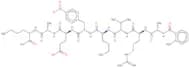
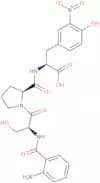
CAS:<p>Abz-Ser-Pro-3-nitro-Tyr-OH is a chromophobe peptide that is expressed in renal cell carcinomas. It is a potent inhibitor of all three major classes of proteases: serine, cysteine and aspartyl proteases. Abz-Ser-Pro-3-nitro-Tyr-OH inhibits the activity of peptidases, which are enzymes involved in protein degradation and turnover. Abz has been shown to inhibit the activity of intrarenal proteolytic enzymes, including endopeptidase, metallopeptidase and aminopeptidase activities. Abz also has been shown to inhibit the expression of markers on the surface of kidney cells and to reduce renal cell proliferation.</p>Formula:C24H27N5O9Purity:Min. 95%Molecular weight:529.5 g/mol5'-Chloro-2'-hydroxy-3'-nitro-[1,1'-biphenyl]-3-carboxylic acid
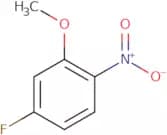
CAS:<p>Please enquire for more information about 5'-Chloro-2'-hydroxy-3'-nitro-[1,1'-biphenyl]-3-carboxylic acid including the price, delivery time and more detailed product information at the technical inquiry form on this page</p>Formula:C13H8ClNO5Purity:Min. 95%Molecular weight:293.66 g/mol5-Fluoro-2-nitroanisole
CAS:<p>5-Fluoro-2-nitroanisole is an aminophenol that has potent inhibitory activity against lung cancer cells. This agent inhibits the growth of cancer cells by methylating the epidermal growth factor receptor (EGFR) and preventing its activation. 5-Fluoro-2-nitroanisole also inhibits the production of epidermal growth factor, which is a potent mitogen for skin cells. In vitro cytotoxic activity was observed when this compound was combined with heat or ultraviolet light.</p>Formula:C7H6FNO3Purity:Min. 95%Color and Shape:Light (Or Pale) Yellow To Tan To Grey SolidMolecular weight:171.13 g/molBoc-L-Nitroarginine
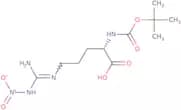
CAS:<p>Boc-L-Nitroarginine is a nitric oxide synthase inhibitor that belongs to the class of drugs called nitric oxide inhibitors. It is a potent inhibitor of nitric oxide synthase, preventing the production of nitric oxide from arginine. The drug has been shown to have therapeutic effects in the treatment of cancer, diabetes mellitus, and other diseases. Boc-L-Nitroarginine inhibits tumor angiogenesis by blocking endothelial cell proliferation and migration. It also inhibits insulin secretion, leading to an improved glycemic control in diabetic patients. Boc-L-Nitroarginine can be used as a hydrogenation reducing agent for the synthesis of imatinib and palladium catalysts for hydrogenation reactions.</p>Formula:C11H21N5O6Purity:Min. 95%Color and Shape:PowderMolecular weight:319.31 g/mol5-Chloro-2-nitrodiphenylamine
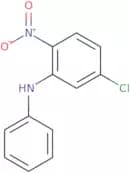
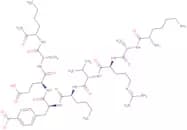
CAS:<p>5-Chloro-2-nitrodiphenylamine is a synthetic dyestuff that belongs to the class of acridones. It can be used as an anti-epileptic drug, although it has not been approved for this use in any country. 5-Chloro-2-nitrodiphenylamine is manufactured by reacting a 6-carboxylic acid with an organic solvent and ammonolysis. This chemical is also known as 6'-chloroacridone and is used in the production of dyes and pigments. The manufacturing process produces impurities such as chloride, which must be removed by evaporation. Nitro groups are introduced during the manufacturing process to improve the dye's stability and color fastness under light exposure.</p>Formula:C12H9ClN2O2Purity:Min. 95%Color and Shape:Orange To Red SolidMolecular weight:248.66 g/molHIV Protease Substrate VII
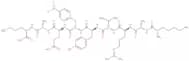
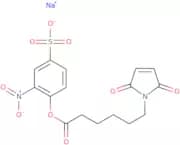
CAS:<p>Please enquire for more information about HIV Protease Substrate VII including the price, delivery time and more detailed product information at the technical inquiry form on this page</p>Formula:C52H81N15O14Purity:Min. 95%Molecular weight:1,140.29 g/molε-Maleimidocaproic acid-(2-nitro-4-sulfo)-phenyl ester·sodium salt
CAS:<p>Epsilon-Maleimidocaproic acid-(2-nitro-4-sulfo)-phenyl ester·sodium salt (EMAP) is a crosslinker that belongs to the group of heterobifunctional reagents. It has been used to conjugate monoclonal antibodies with other molecules, such as toxins. EMAP is activated by the dianion generated by protonation of the nitro groups on the phenyl ring and reacts with free amines or thiols in proteins. EMAP can be used for labeling immunotoxins for diagnostic use, maximizing detection sensitivity, and crosslinking DNA molecules for use in molecular cloning experiments.</p>Formula:C16H15N2NaO9SPurity:Min. 95%Molecular weight:434.35 g/molHIV Protease Substrate IV
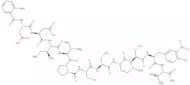
CAS:<p>Please enquire for more information about HIV Protease Substrate IV including the price, delivery time and more detailed product information at the technical inquiry form on this page</p>Formula:C49H83N15O13Purity:Min. 95%Molecular weight:1,090.28 g/molAbz-Asp-Asp-Ile-Val-Pro-Cys-Ser-Met-Ser-3-nitro-Tyr-Thr-NH2
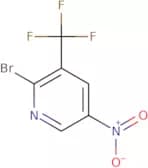
CAS:<p>Please enquire for more information about Abz-Asp-Asp-Ile-Val-Pro-Cys-Ser-Met-Ser-3-nitro-Tyr-Thr-NH2 including the price, delivery time and more detailed product information at the technical inquiry form on this page</p>Formula:C58H84N14O22S2Purity:Min. 95%Molecular weight:1,393.5 g/mol2-Bromo-5-nitro-3-(trifluoromethyl)pyridine
CAS:<p>2-Bromo-5-nitro-3-(trifluoromethyl)pyridine is a white crystalline compound that is soluble in water. It has high melting point and is stable at high temperatures. This chemical has been recycled from terephthalic acid by the cyanation reaction with sodium nitrite, followed by hydrogenation of 2-bromo-5-nitro-3-(trifluoromethyl)pyridine to 5,6-dichloro-2,4,6-(1H,3H)-triazine. The target product of this recycling process is terephthalic acid. 2-Bromo-5-nitro-3-(trifluoromethyl)pyridine can be used as a catalyst for the preparation of drugs for urogenital use.</p>Purity:Min. 95%4-Fluoro-3-methylnitrobenzene
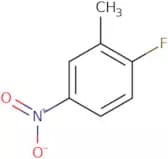
CAS:<p>4-Fluoro-3-methylnitrobenzene is a carbazole that is used as a pesticide. It has been shown to be effective against typhimurium and other bacteria. The mechanism of action of this compound may involve nitrenium ion formation, which is an intermediate in the reaction of ammonium nitrate with calcium carbonate. 4-Fluoro-3-methylnitrobenzene has two isomers: 4-fluoro-3-methylnitrobenzoic acid and 4-fluoronitrobenzoic acid, but only the former reacts with ammonium nitrate. The reaction time for this compound to form carcinogenic nitrosamines can vary from about one day to several months. Chemical shift data for this compound reveal its radical mechanism, which explains its low efficiency. This compound also has optical properties that can cause fluorescence or phosphorescence when exposed to ultraviolet light or laser beams, respectively.</p>Formula:C7H6FNO2Purity:Min. 95%Molecular weight:155.13 g/molAnthranilyl-HIV Protease Substrate V trifluoroacetate salt
CAS:<p>Please enquire for more information about Anthranilyl-HIV Protease Substrate V trifluoroacetate salt including the price, delivery time and more detailed product information at the technical inquiry form on this page</p>Formula:C50H76N14O13Purity:Min. 95%Molecular weight:1,081.23 g/mol3-Nitro-1,2,4-triazole
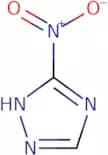
CAS:<p>3-Nitro-1,2,4-triazole is a heterocyclic compound that can be used in organic synthesis. It has been shown to react with nucleophiles such as thiols and amines. The reaction products are covalent adducts, which are low detection and can be used for the chemical analysis of nucleophiles. 3-Nitro-1,2,4-triazole is also known to form a coordination complex with palladium (II) chloride and zinc chloride in the presence of a base. This coordination complex has been shown to inhibit the growth of v79 cells in vitro. 3-Nitro-1,2,4-triazole has also been shown to have antiangiogenic properties and inhibit tumor growth in animal models.</p>Formula:C2H2N4O2Purity:Min. 95%Color and Shape:PowderMolecular weight:114.06 g/mol4-Fluoro-3-nitroaniline
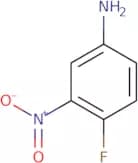
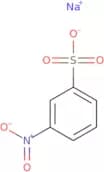
CAS:<p>4-Fluoro-3-nitroaniline is a chemical that can be used for industrial preparation. It is an efficient method for the production of 4-fluoroaniline, which is used in the manufacture of dyes and pharmaceuticals. The chemical ionization technique has been shown to be a good way to determine the presence of 4-fluoro-3 nitroaniline in animals. It has also been found to be active against infections caused by bacteria such as Salmonella enterica, Escherichia coli, and Klebsiella pneumoniae. This chemical may have adverse effects on testicular function and hematocrit levels in animals.</p>Formula:C6H5FN2O2Purity:Min. 95%Molecular weight:156.11 g/molSodium 3-nitrobenzenesulphonate
CAS:<p>Sodium 3-nitrobenzenesulphonate is a reactive chemical that can be used in the treatment of wastewater. It reacts with sulfonic acid to form a cross-link between two molecules, which lowers the solubility of the organic compound. This reaction product can then be removed from solution by adding sodium carbonate or sodium citrate to form insoluble salts that are removed from the water by filtration. Sodium 3-nitrobenzenesulphonate is an alternative to chlorine for water treatment because it does not react with ammonia and other nitrogenous compounds.</p>Formula:O2NC6H4SO3NaPurity:Min. 95%Color and Shape:White To Yellow SolidMolecular weight:225.16 g/mol


![5'-Chloro-2'-hydroxy-3'-nitro-[1,1'-biphenyl]-3-carboxylic acid](/_next/image/?url=https%3A%2Fstatic.cymitquimica.com%2Fproducts%2F3D%2Fthumb-webp%2FFC159731.webp&w=3840&q=75)