Ketones
Found 18870 products of "Ketones"
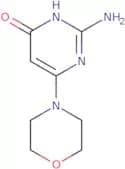
2-Amino-6-morpholin-4-ylpyrimidin-4(3H)-one
CAS:2-Amino-6-morpholin-4-ylpyrimidin-4(3H)-one (2AP) is a versatile building block for the synthesis of complex compounds. It is used as a reaction component in organic chemistry, as well as a reagent for the synthesis of other chemical substances. 2AP is also useful as an intermediate in the production of pharmaceuticals, agrochemicals, and other research chemicals. 2AP has been shown to be useful in the synthesis of fine chemicals, such as amorphous silicon dioxide and polystyrene sulfonic acid. This substance can be used to make a variety of products with different properties, which makes it an excellent scaffold for research purposes. 2AP can be found under CAS number 37409-97-5.Formula:C8H12N4O2Purity:Min. 95%Color and Shape:PowderMolecular weight:196.21 g/mol(2,4-Dimethoxyphenyl)acetone
CAS:2,4-dimethoxyphenylacetone is a high quality chemical intermediate that is used as a reagent in the synthesis of complex compounds. It is also useful in the synthesis of fine chemicals and speciality chemicals. This compound has been shown to be an excellent scaffold for the construction of other molecules and has been used as a building block in reactions with other functional groups. 2,4-dimethoxyphenylacetone can be used as a versatile building block with many different functional groups and has been shown to be reactive with nucleophiles such as amines, alcohols, and thiols.
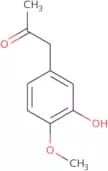
Formula:C11H14O3Purity:Min. 95%Color and Shape:PowderMolecular weight:194.23 g/mol(3-Hydroxy-4-methoxyphenyl)acetone
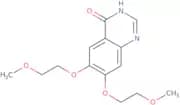
CAS:(3-Hydroxy-4-methoxyphenyl)acetone is a versatile building block that can be used as a reagent or in the synthesis of complex compounds. It is a useful intermediate in the synthesis of pharmaceuticals, agrochemicals, and other specialty chemicals. This compound also has the potential to serve as a scaffold for drug discovery.Formula:C10H12O3Purity:(%) Min. 85%Color and Shape:PowderMolecular weight:180.2 g/mol6,7-Bis(2-methoxyethoxy)-3,4-dihydroquinazolin-4-one
CAS:This compound is a synthetic molecule that has been shown to have growth factor activity and may be useful in cancer research. The molecule is a nucleophile and reacts with epidermal growth factor (EGF) to form the corresponding adduct. This adduct can then react with chloride to form the corresponding chloro-adduct. It also binds to cellular proteins, such as antigen and factor receptors. The piperazine ring of this molecule is responsible for its binding affinity for these receptors.
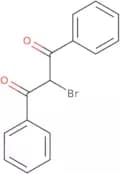
The compound was expressed from a plasmid under normoxic conditions, but was not expressed under hypoxic conditions.Formula:C14H18N2O5Purity:Min. 95%Color and Shape:White PowderMolecular weight:294.3 g/mol2-Bromo-1,3-diphenylpropane-1,3-dione
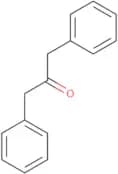
CAS:2-Bromo-1,3-diphenylpropane-1,3-dione is a ligand that binds to metal ions. It has been used as an efficient method for the synthesis of phenyl groups in organic chemistry. 2-Bromo-1,3-diphenylpropane-1,3-dione was found to have a catalytic effect on reactions involving halides and phosphine. A study on the reaction mechanism revealed that 2-bromo-1,3-diphenylpropane-1,3-dione acts as an electron donor to phosphites and phosphines. The xray diffraction study showed that the ligand binds to metal ions through its phenyl groups.Formula:C15H11BrO2Purity:Min. 95%Molecular weight:303.15 g/mol1,3-Diphenylacetone, 97.0%+
CAS:1,3-Diphenylacetone is a high quality chemical that is used as a reagent and intermediate in the production of specialty chemicals. It can be used to synthesize other compounds such as pharmaceuticals, pesticides, and lubricants. 1,3-Diphenylacetone has been shown to be an effective building block for a variety of chemical reactions. This compound is also versatile because it can be used as a research chemical or scaffold for synthesis of other compounds. 1,3-Diphenylacetone has CAS number 102-04-5 and can be found in the speciality chemical category.Formula:C15H14OPurity:Min. 97.0 Area-%Molecular weight:210.28 g/molRef: 3D-D-6112
1kgTo inquire5kgTo inquire250gTo inquire500gTo inquire2500gTo inquire-Unit-kgkgTo inquireEthyl undecyl ketone
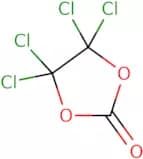
CAS:Ethyl undecyl ketone is the organic compound with the formula (CH3)2C(=O)C(CH3)2. It is a colorless liquid that smells like oranges. It is used as a solvent and in the production of citronella oil, which is used in perfumes, soaps, and insecticides. The reaction vessel can be used to produce mosquitoes by introducing the bacteria Culex pipiens and feeding them with sugar or yeast. The strain of mosquito that develops has been shown to be more resistant to dry weight loss than other strains. Ethyl undecyl ketone also reacts with citratus in a process called esterification, resulting in fatty alcohols such as ethyl oleate and ethyl stearate. Ethyl undecyl ketone contains methyl ketones that are diagnostic for various systemic diseases such as hyperthyroidism and liver disease. These compounds are also found in fatty acids found in AsFormula:C14H28OPurity:Min. 95%Color and Shape:SolidMolecular weight:212.37 g/mol4,4,5,5-Tetrachloro-1,3-dioxolan-2-one
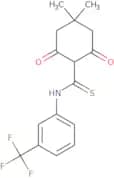
CAS:4,4,5,5-Tetrachloro-1,3-dioxolan-2-one is a chemical compound that is the product of the reaction between phosphorus pentachloride and amines. This compound has been used as a reagent for the synthesis of nanotubes in an efficient method. The interaction with malonic acid leads to formation of vinylene carbonate ester. Hydrogen chloride and chloride are used as hydrogen donors and acceptors respectively during this process. 4,4,5,5-Tetrachloro-1,3-dioxolan-2-one also reacts with oxalyl in the presence of base to form 4-(4',4'''-dimethoxytrityl)benzoic acid.Formula:C3Cl4O3Purity:(%) Min. 95%Molecular weight:225.84 g/mol5,5-dimethyl-2-(thioxo((3-(trifluoromethyl)phenyl)amino)methyl)cyclohexane-1,3-dione
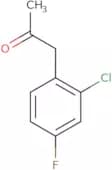
CAS:Please enquire for more information about 5,5-dimethyl-2-(thioxo((3-(trifluoromethyl)phenyl)amino)methyl)cyclohexane-1,3-dione including the price, delivery time and more detailed product information at the technical inquiry form on this pagePurity:Min. 95%(2-Chloro-4-fluorophenyl)acetone
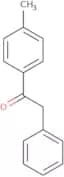
CAS:2-Chloro-4-fluorophenyl)acetone (CAS No. 845781-18-2) is a fine chemical that is useful as a scaffold for the synthesis of various compounds, including pharmaceuticals, pesticides and dyes. The compound is used as an intermediate in the synthesis of other chemicals such as pharmaceuticals, research chemicals and speciality chemicals. The compound has versatile uses, making it a useful building block in organic chemistry. It can be used to make a wide range of compounds that have different properties and functions. 2-Chloro-4-fluorophenyl)acetone also has high quality and purity.Formula:C9H8ClFOPurity:Min. 95%Color and Shape:PowderMolecular weight:186.61 g/molBenzyl p-toluylketone
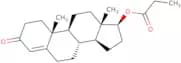
CAS:Benzyl p-toluylketone is an oxime that can be used as a catalyst in the catalytic hydrogenation of various carbonyl compounds. It is also used for the amination of alcohols and acylation reactions. This compound has a melting point of 110°C, a boiling point of 216°C, and a density of 1.05g/mL. The reaction can be carried out at temperatures between 25°C and 160°C, with hydrogen pressure between 10 bar and 120 bar. The reaction time should be less than two hours. The yield is typically greater than 95%.Formula:C15H14OPurity:Min. 95%Color and Shape:PowderMolecular weight:210.27 g/molTestosterone propionate
CAS:Controlled ProductTestosterone propionate is a synthetic androgen and anabolic steroid. It is classified as a Schedule III drug under the Controlled Substances Act, meaning that it has less potential for abuse than Schedule I or II drugs, but more potential for abuse than Schedule IV drugs. Testosterone propionate is a white crystalline solid with a melting point of about 155-160°C. It has been shown to produce significant up-regulation of ovarian activity in rats following injection into their ovaries. This effect may be due to testosterone's ability to activate the polymerase chain reaction (PCR). Testosterone propionate also induces the production of polymorphonuclear leucocytes by binding to toll-like receptors on cell surfaces, which may play a role in bowel disease. The use of testosterone propionate nanoparticulate compositions as a delivery system may allow for more efficient absorption into the bloodstream, leading to increased bioavailability. Testosterone propionate can also cause an increase in energyFormula:C22H32O3Purity:Min. 95%Color and Shape:PowderMolecular weight:344.49 g/mol1,5-Bis(4-hydroxyphenyl)pentane-1,5-dione
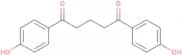
CAS:1,5-Bis(4-hydroxyphenyl)pentane-1,5-dione is a fine chemical that can be used as an intermediate in the synthesis of other compounds. It is also a useful building block for the synthesis of complex compounds. This compound can be used as a reagent for research purposes or as a reaction component in the synthesis of speciality chemicals. 1,5-Bis(4-hydroxyphenyl)pentane-1,5-dione has been shown to have high purity and quality.Formula:C17H16O4Purity:Min. 95%Molecular weight:284.31 g/mol6-Oxo boldione
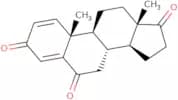
CAS:Controlled Product6-Oxo boldione is an aromatase inhibitor that inhibits the conversion of testosterone to estradiol and has been shown to be effective in inhibiting the growth of bacteria such as Typhimurium. 6-Oxo boldione has been shown to inhibit the growth of estrogen-sensitive breast cancer cells in vitro. It also has a dose-dependent effect on rat liver microsomes, with a greater inhibition at high doses. This drug may be metabolized by modification of its side chain or by biotransformation. 6-Oxo boldione is not active against other enzymes such as cytochrome P450 or glutathione S-transferases.Formula:C19H22O3Purity:Min. 95%Color and Shape:PowderMolecular weight:298.38 g/mol3-Methylphenylacetone
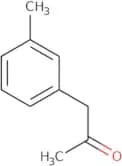
CAS:3-Methylphenylacetone is a dioxane with functional groups, which can be synthesized by coupling of acetoacetate and nitrobenzene. 3-Methylphenylacetone is a versatile precursor for the synthesis of various esters, such as phenylethyl acetate. This compound can also be deacylated to form 3-methylphenol, which is used in the synthesis of nitrophenols. In addition, 3-methylphenylacetone can be used in the production of acetophenones, ketones, and other aromatic compounds by using catalysts such as iodine or phosphoric acid. Nitro groups on 3-methylphenylacetone react with chloro-, bromo-, or methoxy-substituted substrates to form nitrosated derivatives. The tert-butyl group is eliminated spontaneously to form an amine.Formula:C10H12OPurity:Min. 95%Color and Shape:Clear LiquidMolecular weight:148.2 g/mol2-(((2-Indol-3-ylethyl)amino)ethylidene)indane-1,3-dione
CAS:Please enquire for more information about 2-(((2-Indol-3-ylethyl)amino)ethylidene)indane-1,3-dione including the price, delivery time and more detailed product information at the technical inquiry form on this page
Formula:C21H18N2O2Purity:Min. 95%Color and Shape:PowderMolecular weight:330.38 g/mol5beta-Pregnan-3alpha,21-diol-11,20-dione
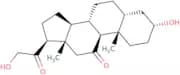
CAS:Controlled Product5beta-Pregnan-3alpha,21-diol-11,20-dione (5beta-pregnan) is a fine chemical used in research and development as a building block or intermediate. It has many uses, including as a useful scaffold for complex compounds. This chemical is also an excellent reagent for the synthesis of new organic compounds. It is a versatile building block that can be used in the production of high quality speciality chemicals. 5beta-pregnan may be used to synthesize many different types of building blocks and intermediates that are useful for the synthesis of other compounds.Formula:C21H32O4Purity:(Tlc) Min. 95.0%Color and Shape:PowderMolecular weight:348.48 g/molPyridin-3-Yl-[4-[3-(Trifluoromethyl)Phenyl]Piperazin-1-Yl]Methanone Dihydrochloride
CAS:Controlled ProductThis polymer is a high efficiency, low cost particle that can be used to store electricity at temperatures of up to 300 degrees Celsius. It has a cycle life of more than 10,000 cycles and can be recharged in less than one minute. This polymer has been shown to have excellent structural stability and structural reversibility with lithium ion insertion/extraction. The coulombic efficiency is greater than 99%.Formula:C17H18Cl2F3N3OPurity:Min. 95%Molecular weight:408.25 g/mol4-Pregnen-20β-ol-3-one
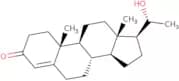
CAS:Controlled Product4-Pregnen-20beta-ol-3-one is a synthetic progestin that has been shown to have both contraceptive and noncontraceptive activities. It is used primarily to treat female infertility, endometriosis, and amenorrhea. The drug also has a number of other effects on the body, including anti-inflammatory and anti-angiogenic properties. 4-Pregnen-20beta-ol-3-one binds to the human liver receptor, which is responsible for its metabolism. The drug also has some activity in the endometrium of pregnant women and in the ovary cells of postmenopausal women. It increases epidermal growth factor production in skin cells and may be involved in lipid metabolism. 4-Pregnen-20beta-ol-3-one also stimulates lactogenic hormone production in women.Formula:C21H32O2Purity:Min. 95%Color and Shape:PowderMolecular weight:316.48 g/mol1,4-Dihydroxy-2-butanone
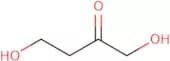
CAS:1,4-Dihydroxy-2-butanone is a synthetic organic compound, often described as an intermediate or precursor in various biochemical processes. It is primarily derived from chemical synthesis methods involving the manipulation of butanone derivatives. Its chemical stability and reactivity make it a valuable compound in laboratory settings.The mode of action of 1,4-Dihydroxy-2-butanone involves its participation as a key intermediate in the biosynthesis of riboflavin, or vitamin B2, in microorganisms. Within this pathway, it undergoes several enzymatic transformations, contributing to the formation of complex structures necessary for riboflavin synthesis.The uses and applications of 1,4-Dihydroxy-2-butanone are predominantly found in research environments, where it serves as a critical component in studies focused on understanding and synthesizing riboflavin. Additionally, its role in elucidating enzyme mechanisms and exploring metabolic pathways makes it an essential compound for scientists working in the fields of biochemistry and metabolic engineering. This compound's contribution to fundamental research provides insights into potential biotechnological applications and innovations in vitamin production.Formula:C4H8O3Purity:Min. 97 Area-%Color and Shape:White PowderMolecular weight:104.1 g/mol




![Pyridin-3-Yl-[4-[3-(Trifluoromethyl)Phenyl]Piperazin-1-Yl]Methanone Dihydrochloride](/_next/image/?url=https%3A%2Fstatic.cymitquimica.com%2Fproducts%2F3D%2Fthumb-webp%2FFP100969.webp&w=3840&q=75)