Ketones
Found 18869 products of "Ketones"
4-Methyl-3a,4,7,7a-tetrahydro-2-benzofuran-1,3-dione
CAS:Controlled Product4-Methyl-3a,4,7,7a-tetrahydro-2-benzofuran-1,3-dione is a racemic benzofuran analogueFormula:C9H10O3Purity:Min. 95%Color and Shape:Clear LiquidMolecular weight:166.17 g/molMontelukast methyl ketone
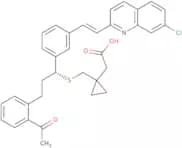
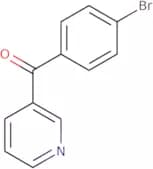
CAS:Montelukast is a sulfonyl-containing leukotriene receptor antagonist with anti-inflammatory and bronchodilator properties. It is used in the treatment of asthma and chronic obstructive pulmonary disease. Oral administration of Montelukast methyl ketone to rats caused prolonged retention of the drug (1.5 times) in the stomach, which may be due to its impurities or salts. The use of this medication can lead to an increase in blood pressure and heart rate, as well as other side effects such as dizziness, headache, nausea, vomiting, and diarrhea.Formula:C34H32ClNO3SPurity:(%) Min. 95%Color and Shape:PowderMolecular weight:570.14 g/mol(4-Bromophenyl)-(pyridin-3-yl)methanone
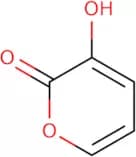
CAS:The compound is a reactive, logistic and logistic regression analysis. The logistic regression was used to determine the effects of temperature on the yields of this organic chemical. The compound is not active against test organisms such as dimethylamine, but does react with carbonyl groups in other organic chemicals. This chemical is considered reactive because it can be easily oxidized by air or water. It has been shown that this chemical reacts with oxygen molecules to form aldehydes and ketones.Formula:C12H8BrNOPurity:Min. 95%Molecular weight:262.1 g/mol3-Hydroxy-2H-pyran-2-one
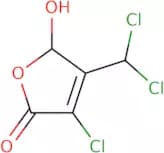
CAS:3-Hydroxy-2H-pyran-2-one is a dehydroascorbic acid analog. 3-Hydroxy-2H-pyran-2-one has been shown to inhibit HIV infection in vitro and in vivo. This compound binds to the enzyme gamma aminobutyric acid (GABA) and prevents the production of GABA, which is an inhibitor of HIV replication. 3-Hydroxy-2H-pyran-2-one also inhibits the activity of ethylene diamine, which is a precursor for nitric oxide synthesis, leading to a decrease in nitric oxide levels. The stable complex formed by 3-hydroxy 2H pyran 2 one with ethylene diamine is less reactive than the free drug, which may reduce its toxicity.Formula:C5H4O3Purity:Min. 95 Area-%Color and Shape:PowderMolecular weight:112.08 g/mol3-Chloro-4-(dichloromethyl)-5-hydroxy-2(5H)-furanone
CAS:3-Chloro-4-(dichloromethyl)-5-hydroxy-2(5H)-furanone belongs to the class of polymerase chain inhibitors. It inhibits DNA synthesis by binding to the enzyme DNA polymerase and blocking the progression of DNA synthesis. 3-Chloro-4-(dichloromethyl)-5-hydroxy-2(5H)-furanone has significant cytotoxicity in mammalian cells and is genotoxic, which may be due to its mutagenicity. The mechanism of its mutagenicity is not known, but it has been shown that this compound reacts with effector proteins such as thiols and sulfhydryls. 3-Chloro-4-(dichloromethyl)-5-hydroxy-2(5H)-furanone can react with chlorine in water to form a chlorinated derivative that is more stable than the parent compound. This chemical stability has been usedFormula:C5H3Cl3O3Purity:(%) Min. 95%Color and Shape:PowderMolecular weight:217.43 g/mol3-(4-chlorophenyl)spiro[1,3-thiazolidine-2,3'-indoline]-4,7-dione
CAS:Please enquire for more information about 3-(4-chlorophenyl)spiro[1,3-thiazolidine-2,3'-indoline]-4,7-dione including the price, delivery time and more detailed product information at the technical inquiry form on this pageFormula:C16H11ClN2O2SPurity:Min. 95%Color and Shape:PowderMolecular weight:330.79 g/mol3-(1,1-Dimethylethyl)-3α,8β-dihydro-8β-hydroxy-4H-indeno[2,1-d]isoxazol-4-one
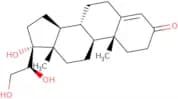
CAS:Please enquire for more information about 3-(1,1-Dimethylethyl)-3α,8β-dihydro-8β-hydroxy-4H-indeno[2,1-d]isoxazol-4-one including the price, delivery time and more detailed product information at the technical inquiry form on this pageFormula:C14H15NO3Purity:Min. 95%Color and Shape:PowderMolecular weight:245.27 g/mol4-Pregnen-17alpha,20alpha,21-triol-3-one
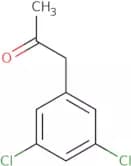
CAS:Controlled Product4-Pregnen-17alpha,20alpha,21-triol-3-one (4PT) is a versatile building block that can be used in the synthesis of complex compounds. It has been used as a reagent and speciality chemical in research chemicals and as an intermediate for pharmaceuticals and other organic syntheses. 4PT also has been shown to have high quality with a reaction component and scaffold for organic synthesis.Formula:C21H32O4Purity:Min. 95%Color and Shape:PowderMolecular weight:348.48 g/mol(3,5-Dichlorophenyl)acetone
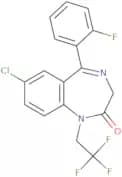
CAS:(3,5-Dichlorophenyl)acetone is a versatile building block that can be used as a research chemical or a speciality chemical. It is an intermediate for the synthesis of other compounds and has been used in the synthesis of complex compounds. The compound is also useful as a reaction component for organic syntheses and is a useful building block for high quality fine chemicals.Formula:C9H8Cl2OPurity:Min. 95%Molecular weight:203.06 g/mol7-Chloro-5-(2-fluorophenyl)-1,3-Dihydro-1-(2,2,2-trifluoroethyl)-2H-1,4-benzodiazepin-2-one
CAS:Controlled ProductQuazepam is a benzodiazepine drug that binds to the benzodiazepine binding site of the GABAA receptor. It has clinical properties as an anxiolytic and anticonvulsant. Quazepam has been determined to have a high affinity for the benzodiazepine binding site in human liver, plasma, and brain tissue. The kinetic data for quazepam show that it is metabolized by oxidation and hydrolysis, which result in two metabolites: N-desmethyldiazepam and oxazepam. Quazepam is also shown to induce sleep, even at doses of 25 mg or less per day. The clinical properties of quazepam are similar to those of other benzodiazepines with a short half-life such as triazolam. However, it does not have significant drug interactions with other drugs like triazolam does.Formula:C17H11ClF4N2OPurity:Min. 98 Area-%Color and Shape:SolidMolecular weight:370.73 g/mol(3,5-Dimethoxyphenyl)acetone
CAS:(3,5-Dimethoxyphenyl)acetone is a plant phenolic compound that has been found in many plants. It is an intermediate in the biosynthesis of lignans and a wide range of other natural products. The production of (3,5-dimethoxyphenyl)acetone by plants is induced by the presence of nitrate, chloride and/or tyrosol. This compound also represses the expression of genes involved in dextrose metabolism and carbon fixation pathways. Furthermore, it can be quantified using isotopic labelling techniques and has been detected at low levels in human urine samples.
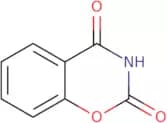
Formula:C11H14O3Purity:Min. 95%Color and Shape:Yellow Clear LiquidMolecular weight:194.23 g/mol2H-1,3-Benzoxazine-2,4(3H)-dione
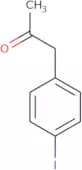
CAS:2H-1,3-Benzoxazine-2,4(3H)-dione is an analog of 5-HT7 receptor ligands. It has inhibitory properties and can be used to treat skin conditions such as psoriasis. It may also be used to increase insulin sensitivity in type 2 diabetes mellitus and for the treatment of inflammatory diseases. The 2H-1,3-benzoxazine-2,4(3H)-dione binds to the 5-HT7 receptors in the target tissue, which may lead to a reduction in inflammation. This drug has shown activity against both 5-HT2A receptors and 5-HT7 receptors in vitro.Formula:C8H5NO3Purity:Min. 95%Color and Shape:White PowderMolecular weight:163.13 g/mol(4-Iodophenyl)acetone
CAS:Controlled Product4-Iodophenylacetone is a chemical compound that is used as a radioactive label in animal and human studies. 4-Iodophenylacetone has been shown to be taken up by the nervous system, specifically the brain, when injected into animals. This uptake is constant with time and dose, indicating that it may be used as a radiopharmaceutical for imaging of the brain. 4-Iodophenylacetone has also been shown to have characteristics similar to those of acetate extraction (i.e., lipid solubility) and can be used for the analysis of tissue samples in liquid chromatography. The use of 4-iodophenylacetone as a labeling agent may provide information about the uptake of this compound in humans and its effects on blood pressure.
Formula:C9H9IOPurity:Min. 95%Color and Shape:Clear LiquidMolecular weight:260.07 g/mol4-Pregnen-20β-ol-3-one
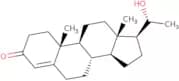
CAS:Controlled Product4-Pregnen-20beta-ol-3-one is a synthetic progestin that has been shown to have both contraceptive and noncontraceptive activities. It is used primarily to treat female infertility, endometriosis, and amenorrhea. The drug also has a number of other effects on the body, including anti-inflammatory and anti-angiogenic properties. 4-Pregnen-20beta-ol-3-one binds to the human liver receptor, which is responsible for its metabolism. The drug also has some activity in the endometrium of pregnant women and in the ovary cells of postmenopausal women. It increases epidermal growth factor production in skin cells and may be involved in lipid metabolism. 4-Pregnen-20beta-ol-3-one also stimulates lactogenic hormone production in women.Formula:C21H32O2Purity:Min. 95%Color and Shape:PowderMolecular weight:316.48 g/mol4-Chloro-1-(3-Fluorophenyl)-1-Butanone
CAS:4-Chloro-1-(3-fluorophenyl)-1-butanone is a reagent that is used in the synthesis of complex compounds. It has been used as an intermediate in the synthesis of a variety of useful compounds and as a building block for more complex molecules. This chemical is one of the most versatile building blocks available, and can be used for reactions involving deprotection, coupling, and polymerization. The CAS number for this compound is 3110-52-9.Formula:C10H10ClFOPurity:Min. 95%Color and Shape:Clear LiquidMolecular weight:200.64 g/mol(4-Bromophenyl)cyclopropylmethanone
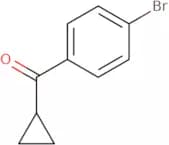
CAS:(4-Bromophenyl)cyclopropylmethanone is a cyclopropane derivative that can be synthesized from 4-bromobenzaldehyde and cyclopropylmagnesium bromide. It is an important precursor to fluoroquinolones in the pharmaceutical industry, as well as to other derivatives used in the synthesis of antihistamines and antimalarial drugs. This compound has been shown to have biomolecular mediated intramolecular cyclopropane ring formation and pentacyclic cyclopropane ring formation.
Formula:C10H9BrOPurity:Min. 95%Color and Shape:PowderMolecular weight:225.09 g/mol2-(3,4-dimethoxyphenyl)-3-((4-chlorophenyl)amino)inden-1-one
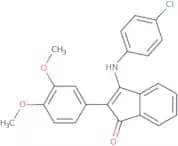
CAS:Please enquire for more information about 2-(3,4-dimethoxyphenyl)-3-((4-chlorophenyl)amino)inden-1-one including the price, delivery time and more detailed product information at the technical inquiry form on this pagePurity:Min. 95%3,8-Dihydroxy-6H-benzo[c]chromen-6-one
CAS:3,8-Dihydroxy-6H-benzo[c]chromen-6-one (3,8 DHC) is a natural compound that has been shown to have antioxidant and anti-inflammatory properties. It increases the production of ATP (cellular energy) by activating the ATP binding cassette transporter and increasing autophagy. 3,8 DHC may also inhibit apoptosis (cell death), which has been observed in studies involving balloon injury and atherosclerotic lesions. This compound may also have potential therapeutic benefits for bowel disease, cancer, and neuronal death.
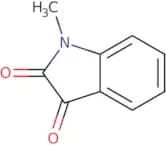
Formula:C13H8O4Purity:Min. 95%Color and Shape:White To Beige To Yellow To Brown SolidMolecular weight:228.2 g/mol1-Methyl-1H-indole-2,3-dione
CAS:1-Methyl-1H-indole-2,3-dione is a chemical compound that belongs to the class of indole derivatives. It can be synthesized by reacting 2,3-dihydroxybenzaldehyde with 2,2'-azobis(2-amidinopropane) dihydrochloride and methyl iodide in the presence of copper (II) acetate. This reaction mechanism is similar to that of other reactions involving an intramolecular hydrogen transfer. The binding constants for 1-methyl-1H-indole-2,3-dione are very high and this compound has been shown to inhibit herpes simplex virus replication in vitro. 1MIDD binds to the active site of tryptophan fluorescence and synchronous fluorescence proteins. 1MIDD also binds to copper ions in a coordination geometry that is similar to that found for other compounds containing a carbonyl group.
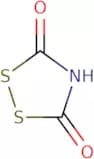
Formula:C9H7NO2Purity:Min. 95%Color and Shape:PowderMolecular weight:161.16 g/mol1,2,4-Dithiazolidine-3,5-dione
CAS:1,2,4-Dithiazolidine-3,5-dione is a disulfide bond compound that contains a nucleophilic cysteine residue. It is oxidized to the corresponding sulfoxide or sulfone by reaction with hydrochloric acid. 1,2,4-Dithiazolidine-3,5-dione has been shown to react with amines to form adducts. The nucleophilic attack of the sulfur atom on the carbonyl carbon generates an intermediate thioketal and leaves the original disulfide intact. The nucleophilic attack leads to a number of possible products including dithioesters and dithioimidates. Both these products are stable in water and can be used in organic synthesis reactions such as DNA duplex formation.Formula:C2HNO2S2Purity:Min. 95%Color and Shape:PowderMolecular weight:135.16 g/mol

![3-(4-chlorophenyl)spiro[1,3-thiazolidine-2,3'-indoline]-4,7-dione](/_next/image/?url=https%3A%2Fstatic.cymitquimica.com%2Fproducts%2F3D%2Fthumb-webp%2FFC169673.webp&w=3840&q=75)
![3-(1,1-Dimethylethyl)-3α,8β-dihydro-8β-hydroxy-4H-indeno[2,1-d]isoxazol-4-one](/_next/image/?url=https%3A%2Fstatic.cymitquimica.com%2Fproducts%2F3D%2Fthumb-webp%2FFA169676.webp&w=3840&q=75)


![3,8-Dihydroxy-6H-benzo[c]chromen-6-one](/_next/image/?url=https%3A%2Fstatic.cymitquimica.com%2Fproducts%2F3D%2Fthumb-webp%2FFD171109.webp&w=3840&q=75)