


Ketones
Found 18871 products of "Ketones"
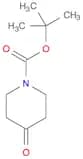
N-(tert-Butoxycarbonyl)-4-piperidone
CAS:Controlled ProductFormula:C10H17NO3Purity:98%Color and Shape:SolidMolecular weight:199.2469Ref: IN-DA0035CT
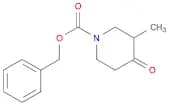
Discontinued product1-Piperidinecarboxylic acid, 3-methyl-4-oxo-, phenylmethyl ester
CAS:Formula:C14H17NO3Purity:98%Color and Shape:SolidMolecular weight:247.2897Ref: IN-DA0003J2
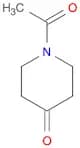
Discontinued productRef: IN-DA003SOK
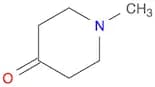
Discontinued product4-Piperidinone, 1-methyl-
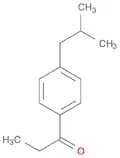
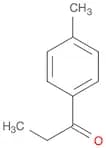
CAS:Formula:C6H11NOPurity:98%Color and Shape:LiquidMolecular weight:113.15761-(4-ISOBUTYLPHENYL)PROPAN-1-ONE
CAS:Formula:C13H18OPurity:97%Color and Shape:LiquidMolecular weight:190.28142000000005(4'-Bromo-[1,1'-biphenyl]-4-yl)(phenyl)methanone
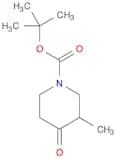
CAS:Formula:C19H13BrOPurity:>98.0%(HPLC)Color and Shape:SolidMolecular weight:337.20991-BOC-3-METHYL-PIPERIDIN-4-ONE
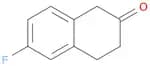
CAS:Formula:C11H19NO3Purity:97%Color and Shape:SolidMolecular weight:213.27352(1H)-Naphthalenone, 6-fluoro-3,4-dihydro-
CAS:Formula:C10H9FOPurity:97%Color and Shape:SolidMolecular weight:164.1763Ref: 4Z-B-126003
Discontinued productRef: 4Z-B-126007
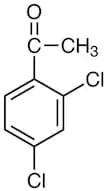
Discontinued product2',4'-Dichloroacetophenone
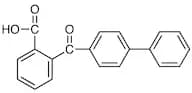
CAS:Formula:C8H6Cl2OPurity:>98.0%(GC)Color and Shape:White or Colorless to Light yellow powder to lump to clear liquidMolecular weight:189.042-(4-Biphenylylcarbonyl)benzoic Acid
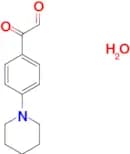
CAS:Formula:C20H14O3Purity:>97.0%(GC)(T)Color and Shape:White to Almost white powder to crystalMolecular weight:302.334-Piperidinylphenylglyoxal hydrate
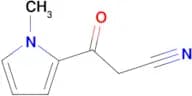
CAS:Purity:95.0%Color and Shape:SolidMolecular weight:235.28300476074223-(1-methyl-1H-pyrrol-2-yl)-3-oxopropanenitrile
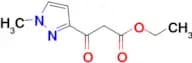
CAS:Purity:95.0%Color and Shape:SolidMolecular weight:148.16499328613283-(1-Methyl-1 H -pyrazol-3-yl)-3-oxo-propionic acid ethyl ester
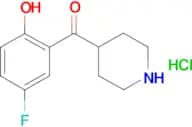
CAS:Color and Shape:Solid, solidMolecular weight:196.20599365234375(5-fluoro-2-hydroxyphenyl)(piperidin-4-yl)methanone hydrochloride
CAS:Purity:95.0%Molecular weight:259.70999145507811,7-Bis(4-hydroxyphenyl)hepta-1,6-diene-3,5-dione
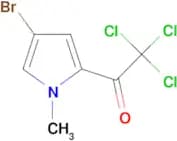
CAS:Purity:95.0%Color and Shape:SolidMolecular weight:308.33300781251-(4-Bromo-1-methyl-1H-pyrrol-2-yl)-2,2,2-trichloroethanone
CAS:Purity:97.0%Color and Shape:SolidMolecular weight:305.3800048828125Ref: 10-F618802
Discontinued product5-Amino-1,3-dimethyl-1,3-dihydro-2H-benzimidazol-2-one dihydrochloride
CAS:5-Amino-1,3-dimethyl-1,3-dihydro-2H-benzimidazol-2-one dihydrochloride (5ADMB) is a high quality reagent that is used as a complex compound. It has been shown to be useful in the synthesis of various compounds and is a fine chemical that can be used as a building block. 5ADMB has also been shown to be an excellent scaffold for the synthesis of benzo[b]thiophenes. This compound is also useful as a research chemical or specialty chemical. 5ADMB can be used in organic syntheses as a versatile building block and it reacts with nucleophiles such as alcohols and amines to form substituted derivatives. It has an appearance of white solid powder and its CAS number is 1986846-08-5.
Formula:C9H11N3O·2HClPurity:Min. 95%Color and Shape:PowderMolecular weight:250.12 g/molRef: 3D-FA120120
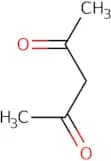
Discontinued product2,4-Pentanedione
CAS:2,4-Pentanedione is a fluorescence probe that can be used as an intramolecular hydrogen-sensitive reagent. It is also used to detect bowel disease and other diseases. 2,4-Pentanedione reacts with acetylacetone in the presence of methyl ethyl ketone to form a fluorescent compound. This reaction is shown in two steps: CH3COCOCH2CH3 + p-nitrophenyl phosphate → CH3COOCOCH2CH2 + p-nitrophenol 2,4-Pentanedione + CH3COOCOCH2CH2 → 2,4-pentanedione-1,5-dione + CO This compound is also used for wastewater treatment and as a ferroelectric material. X-ray diffraction data has been collected on this compound at different temperatures and in different solvents. Biological studies have been done on the effects of
Formula:C5H8O2Purity:Min. 95%Color and Shape:PowderMolecular weight:100.12 g/molRef: 3D-FP35056
Discontinued product4-Oxahomoadamantan-5-one
CAS:4-Oxahomoadamantan-5-one is a synthetic molecule with a labile peroxide group. It has biological functions, including the ability to bind to and activate the benzodiazepine receptor. The molecule forms an ethyl ester and an acid solution. The compound's nmr spectra have been obtained in both acetonitrile and formamide solutions, in which the stereoisomers are visible. It reacts with oxygen to form a peroxide group, which is easily oxidized to create a reactive intermediate that can be used for chemical reactions such as oxidation of alcohols or alkyl halides. 4-Oxahomoadamantan-5-one can be synthesized from benzonitrile and acetone using two different methods: by reacting with sodium methoxide in methanol or by reacting with potassium formate in methanol.
Formula:C10H14O2Purity:Min. 95%Color and Shape:White PowderMolecular weight:166.22 g/molRef: 3D-FO67037
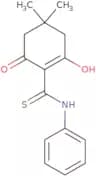
Discontinued product5,5-dimethyl-2-((phenylamino)sulfanylmethylene)cyclohexane-1,3-dione
CAS:Please enquire for more information about 5,5-dimethyl-2-((phenylamino)sulfanylmethylene)cyclohexane-1,3-dione including the price, delivery time and more detailed product information at the technical inquiry form on this pageFormula:C15H17NO2SPurity:Min. 95%Color and Shape:PowderMolecular weight:275.37 g/molRef: 3D-FD169866
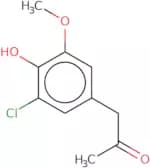
Discontinued product(5-Chloro-4-hydroxy-3-methoxyphenyl)acetone
CAS:(5-Chloro-4-hydroxy-3-methoxyphenyl)acetone is a high quality reagent that is useful as an intermediate in the synthesis of complex compounds. It can be used to synthesize a wide range of fine chemicals, such as pharmaceuticals, pesticides, and fragrances. (5-Chloro-4-hydroxy-3-methoxyphenyl)acetone is also a versatile building block for the synthesis of speciality chemicals. This compound has been shown to react with other compounds to form reaction components for research purposes.
Formula:C10H11ClO3Purity:Min. 95%Molecular weight:214.65 g/molRef: 3D-FC66870
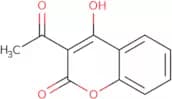
Discontinued product3-Acetyl-4-hydroxy-2H-chromen-2-one
CAS:3-Acetyl-4-hydroxy-2H-chromen-2-one is a potent inhibitor of human lipoxygenase and soybean lipoxygenase. This compound has been shown to inhibit the growth of cancer cells in culture, with IC50 values ranging from 1.5 to 8.0 μM. 3-Acetyl-4-hydroxy-2H-chromen-2-one inhibits the activation of hydrogen peroxide by inhibiting the activity of enzymes such as amine oxidases and coumarin hydroxylases that are involved in the production of hydrogen peroxide. 3-(3'-acetylphenyl)acrylic acid (3APAA), which is structurally related to 3-(3'-acetylphenethyl)acrylic acid, was identified as an additional metabolite for this compound. The molecular docking analysis of these two compounds revealed that they have similar binding modes with regard to their binding affinity for the enzyme active
Formula:C11H8O4Purity:Min. 95%Color and Shape:PowderMolecular weight:204.18 g/molRef: 3D-FA121787
Discontinued product(1S,4S)-1,7,7-Trimethyl-3-(Trifluoroacetyl)Bicyclo[2.2.1]Heptan-2-One
CAS:(1S,4S)-1,7,7-Trimethyl-3-(Trifluoroacetyl)Bicyclo[2.2.1]Heptan-2-One is a white solid with a melting point of -76.8°C and a boiling point of 265°C at 10 mm Hg. It has the following functional groups: particle, luminescent, lanthanide, stabilizer, ligand, voltammetry, thermally stable and has nmr spectra that show light emission and coordination chemistry. This compound is a sulfoxide but can also be considered to be a phosphine or an amine depending on its structural features. The compound's nature is dependent on the temperature and pressure as well as the solvent it is being dissolved in.>>END>>
Formula:C12H15F3O2Purity:Min. 95%Color and Shape:Clear LiquidMolecular weight:248.24 g/molRef: 3D-FT98786
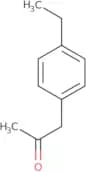
Discontinued product4-Ethylphenylacetone
CAS:Controlled Product4-Ethylphenylacetone is a high quality reagent and useful building block for the production of more complex compounds. It is an intermediate for the production of fine chemicals, speciality chemicals, and research chemicals. 4-Ethylphenylacetone can be used as a versatile building block in organic synthesis, providing a scaffold to form new structures with different functional groups. This product has been shown to react with nucleophiles such as amines and alcohols to form new compounds.
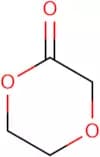
Formula:C11H14OPurity:90%Color and Shape:Clear LiquidMolecular weight:162.23 g/mol1,4-Dioxan-2-one
CAS:1,4-Dioxan-2-one is a chemical compound that belongs to the class of inorganic compounds. It is an acid with a molecular weight of 116.07 g/mol and a melting point of -104°C. 1,4-Dioxan-2-one can be used as diagnostic agents for the detection of lanthanum and polymerization catalysts for the synthesis copolymers. It has been shown that 1,4-dioxan-2-one reacts with ethylene oxide to give polyoxymethylene ethers, which are thermoplastic polymers. The reaction is promoted by metathesis reactions and polymerization catalysis.
Formula:C4H6O3Purity:Min. 95%Color and Shape:Clear Liquid PowderMolecular weight:102.09 g/molRef: 3D-FD62736
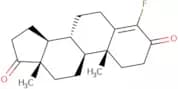
Discontinued product4-Fluoroandrostenedione
CAS:Controlled Product4-Fluoroandrostenedione is a synthetic, nonsteroidal compound that has been shown to be an effective androgen ablation agent. It binds to the androgen receptor, which prevents conversion of testosterone into dihydrotestosterone (DHT). 4-Fluoroandrostenedione has been used in clinical trials for the treatment of prostate cancer. This drug has also been shown to inhibit the production of estrogens by binding to the aromatase enzyme, which converts androgens into estrogens. Substitutions on the a-ring have been shown to increase its activity as an anti-cancer agent. 4-Fluoroandrostenedione can be synthesized from androstenedione by substituting a fluorine atom on one of the carbons in the a-ring.
Formula:C19H25FO2Purity:Min. 95%Molecular weight:304.4 g/mol3-((4,5-dichloroimidazolyl)methyl)-4-bromo-2-methyl-1-phenyl-3-pyrazolin-5-one
CAS:Please enquire for more information about 3-((4,5-dichloroimidazolyl)methyl)-4-bromo-2-methyl-1-phenyl-3-pyrazolin-5-one including the price, delivery time and more detailed product information at the technical inquiry form on this page
Purity:Min. 95%Ref: 3D-FD169753
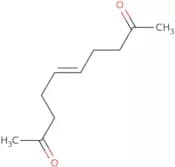
Discontinued productE-Dec-5-ene-2,9-dione
CAS:E-Dec-5-ene-2,9-dione is a deodorant that is used in combination with other deodorants or antiperspirants to reduce body odor. E-Dec-5-ene-2,9-dione is a synthetic product that does not contain aluminum salts. It works by blocking the sweat glands and preventing perspiration.
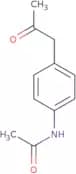
Formula:C10H16O2Purity:Min. 95%Color and Shape:PowderMolecular weight:168.23 g/mol(4-Acetamidophenyl)acetone
CAS:(4-Acetamidophenyl)acetone is a chemical compound that belongs to the class of complex compounds. It is an intermediate in the synthesis of other chemicals and can be used as a building block for more complicated molecules. (4-Acetamidophenyl)acetone has been used as a reagent in organic synthesis, and it has shown high reactivity. This chemical is also used in research, such as the development of new pharmaceutical drugs, and it can be used to synthesize speciality chemicals. The versatility of this chemical makes it useful in many different reactions.
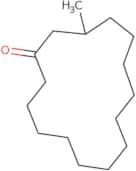
Formula:C11H13NO2Purity:Min. 95%Color and Shape:Brown Beige PowderMolecular weight:191.23 g/mol3-Methyl-1-cyclopentadecanone
CAS:3-Methyl-1-cyclopentadecanone is a chemical compound with the molecular formula C10H18O. It has an optimum concentration of 0.08% and phase transition temperature of -83 degrees Celsius. The pro-apoptotic protein, Bax, is activated by 3-methyl-1-cyclopentadecanone in mammalian cells, inducing apoptosis. This compound also inhibits the activity of enzymes such as lipoxygenase and cyclooxygenase, which are involved in inflammation. 3-Methyl-1-cyclopentadecanone has been shown to be effective against cancer tissues and neuronal death in rats. 3MCTD has been shown to inhibit polymerase chain reaction (PCR) amplification of DNA from rhizoma gastrodiae, a traditional Chinese herbal medicine for the treatment of myocardial infarcts.
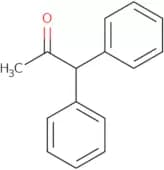
Formula:C16H30OPurity:Min. 95%Color and Shape:Clear LiquidMolecular weight:238.41 g/mol1,1-Diphenylacetone
CAS:1,1-Diphenylacetone is a molecule that belongs to the group of aromatic hydrocarbons. It has two functional groups, a carbonyl group and a diphenyl ether. 1,1-Diphenylacetone can be synthesized by reacting benzene with acetone in the presence of sodium hydroxide. The molecule fluoresces with a short lifetime and has been used as a corrosion inhibitor for metals such as copper and aluminum. 1,1-Diphenylacetone has also been used to synthesize polymers via free radical polymerization or copolymerization reactions. X-ray structures have shown that 1,1-diphenylacetone binds to metal ions such as copper or silver ions. This binding causes light emission when the metal ion is excited by an external source such as x-rays or visible light.
Formula:C15H14OPurity:Min. 95%Molecular weight:210.27 g/molRef: 3D-FD45824
Discontinued product2-[[(4-Acetylphenyl)amino]methylene]-5,5-dimethyl-1,3-cyclohexanedione
CAS:Please enquire for more information about 2-[[(4-Acetylphenyl)amino]methylene]-5,5-dimethyl-1,3-cyclohexanedione including the price, delivery time and more detailed product information at the technical inquiry form on this page
Formula:C17H19NO3Purity:Min. 95%Color and Shape:PowderMolecular weight:285.34 g/molRef: 3D-FA169010
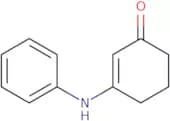
Discontinued product3-Anilinocyclohex-2-en-1-one
CAS:3-Anilinocyclohex-2-en-1-one is an organic compound that has been modified with groups of atoms to give it a particular function. The functional theory states that the molecule will have a different shape, depending on the modifications made to it. 3-Anilinocyclohex-2-en-1-one is a fluorescing molecule with a low energy transfer rate. It is macroscopic and photophysical in nature, which means that it can be analysed by techniques such as polarimetry and FTIR spectroscopy. The modification of 3-Anilinocyclohex-2-en-1-one alters its frequency and may also stabilize the molecule.
Formula:C12H13NOPurity:Min. 95%Color and Shape:PowderMolecular weight:187.24 g/molRef: 3D-FA169191
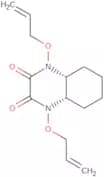
Discontinued productcis-5,6-Tetramethylen-1,4-diallyloxypiperazine-2,3-dione
CAS:cis-5,6-Tetramethylen-1,4-diallyloxypiperazine-2,3-dione is a versatile building block and useful scaffold for the synthesis of pharmaceuticals. It has been shown to be an excellent reaction component in organic synthesis and as a speciality chemical. cis-5,6-Tetramethylen-1,4-diallyloxypiperazine-2,3-dione is a high quality reagent that can be used in research work.Formula:C14H20N2O4Purity:Min. 95%Molecular weight:280.32 g/mol[4-(2-Aminoethoxy)phenyl](phenyl)methanone HCl
CAS:[4-(2-Aminoethoxy)phenyl](phenyl)methanone HCl is a fine chemical that belongs to the group of versatile building blocks. It can be used as a reagent, speciality chemical, useful building block, high quality research chemical, or useful intermediate. The CAS registry number is 1185504-45-3.
Formula:C15H15NO2·HClPurity:Min. 95%Color and Shape:White PowderMolecular weight:277.75 g/molRef: 3D-FA133569
Discontinued product

![(4'-Bromo-[1,1'-biphenyl]-4-yl)(phenyl)methanone](/_next/image/?url=https%3A%2Fstatic.cymitquimica.com%2Fproducts%2FIN%2Fthumb-webp%2FDA003KSK.webp&w=3840&q=75)






![2-[4-(methylamino)-3-nitrobenzoyl]benzoic acid](/_next/image/?url=https%3A%2Fstatic.cymitquimica.com%2Fproducts%2F10%2Fthumb-webp%2FF518183.webp&w=3840&q=75)

![2-Azaspiro[3.5]nonan-7-one hydrochloride](/_next/image/?url=https%3A%2Fstatic.cymitquimica.com%2Fproducts%2F10%2Fthumb-webp%2FF618802.webp&w=3840&q=75)


![(1S,4S)-1,7,7-Trimethyl-3-(Trifluoroacetyl)Bicyclo[2.2.1]Heptan-2-One](/_next/image/?url=https%3A%2Fstatic.cymitquimica.com%2Fproducts%2F3D%2Fthumb-webp%2FFT98786.webp&w=3840&q=75)

![2-[[(4-Acetylphenyl)amino]methylene]-5,5-dimethyl-1,3-cyclohexanedione](/_next/image/?url=https%3A%2Fstatic.cymitquimica.com%2Fproducts%2F3D%2Fthumb-webp%2FFA169010.webp&w=3840&q=75)
methanone HCl](/_next/image/?url=https%3A%2Fstatic.cymitquimica.com%2Fproducts%2F3D%2Fthumb-webp%2FFA133569.webp&w=3840&q=75)