Amides
Amides are a wide range of chemical compounds that contain at least one heterocyclic ring, which has atoms of at least two different elements in the ring structure, and at least one amide group (-CONH2). These compounds are crucial in the synthesis of pharmaceuticals, polymers, and agrochemicals. Amides exhibit unique properties and reactivity, making them valuable intermediates in organic synthesis. At CymitQuimica, we offer a comprehensive selection of high-quality amides to support your research and industrial needs.
Found 16399 products of "Amides"
Sort by
Purity (%)
0
100
|
0
|
50
|
90
|
95
|
100
2-Methylbenzenesulfonamide
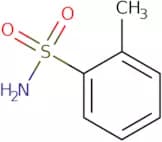
CAS:<p>2-Methylbenzenesulfonamide is a chemical compound that has been shown to induce apoptosis in bladder cancer cells. It is an acid conjugate of the drug 2-methylbenzene-1,4-sulfonamide and it can be used for the treatment of bladder cancer. The compound binds to the apoptosis protein and inhibits its function, leading to cell death. The cytotoxic effects of 2-methylbenzenesulfonamide have been shown in short term toxicity studies in rats. In long term animal studies, this compound showed no adverse effects on the liver or kidneys, but did show some indication of reproductive toxicity. 2-Methylbenzenesulfonamide is not mutagenic and does not affect male fertility when given orally at doses up to 2000 mg/kg body weight for 90 days. 2-Methylbenzenesulfonamide binds to receptors on the surface of cancerous cells and induces apoptosis by inhib</p>Formula:C7H9NO2SPurity:Min. 95%Molecular weight:171.03544-(2,3-Epoxypropoxy)phenylacetamide
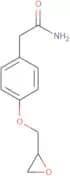
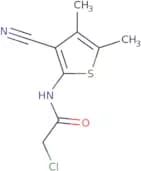
CAS:<p>Please enquire for more information about 4-(2,3-Epoxypropoxy)phenylacetamide including the price, delivery time and more detailed product information at the technical inquiry form on this page</p>Formula:C11H13NO3Purity:Min. 95%Molecular weight:207.23 g/mol2-Chloro-N-(3-cyano-4,5-dimethylthien-2-yl)acetamide
CAS:<p>Please enquire for more information about 2-Chloro-N-(3-cyano-4,5-dimethylthien-2-yl)acetamide including the price, delivery time and more detailed product information at the technical inquiry form on this page</p>Formula:C9H9ClN2OSPurity:Min. 95%Molecular weight:228.7 g/mol[4-(4-Aminophenoxy)(2-pyridyl)]-N-methylcarboxamide
CAS:<p>4-(4-Aminophenoxy)(2-pyridyl)]-N-methylcarboxamide is a chemical compound that inhibits the growth of cancer cells by binding to the active site of b-raf and blocking its activity. It has been shown in a pharmacokinetics study that 4-(4-aminophenoxy)(2-pyridyl)]-N-methylcarboxamide is absorbed rapidly through the oral administration, excreted in urine, and eliminated rapidly from the body. The optimal reaction for this drug was found to be at pH 7.0 with an ionic strength of 0.1 M (sodium chloride). This drug also has significant inhibitory activities against human cervical carcinoma and breast cancer cell lines (MDA-MB-231).</p>Formula:C13H13N3O2Purity:Min. 95%Color and Shape:Off-White To Beige To Light Brown SolidMolecular weight:243.26 g/molN-(2,3-Dihydro-1H-inden-5-yl)acetamide
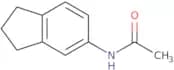
CAS:<p>N-(2,3-Dihydro-1H-inden-5-yl)acetamide (DHICA) is an organic compound that is used in the synthesis of stilbazolium and trichophyton. It has been shown to be a kinetic model for photoisomerization of indene derivatives, which is important in the study of chemistry. DHICA has also been shown to be active against the violaceum fungus. The fluorescence properties of DHICA have been studied extensively and it has been found to have high quantum yields and a large number of channels.</p>Formula:C11H13NOPurity:Min. 95%Molecular weight:175.23 g/mol4-Amino-1-Boc-piperidine-4-carboxamide
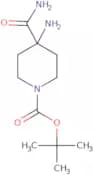
CAS:<p>Please enquire for more information about 4-Amino-1-Boc-piperidine-4-carboxamide including the price, delivery time and more detailed product information at the technical inquiry form on this page</p>Formula:C11H21N3O3Purity:Min. 95%Molecular weight:243.3 g/molN-Phenylpropanamide
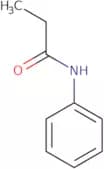
CAS:<p>N-Phenylpropanamide is a chemical inhibitor that has been shown to have a protective effect against the light-induced degradation of drugs in urine samples. The compound also inhibits the hydrolysis of amides by hydrochloric acid and hydrogen bonds with the receptor binding site on human liver cells. N-Phenylpropanamide has been shown to affect cardiac function, as well as growth factor production.</p>Formula:C9H11NOPurity:Min. 95%Molecular weight:149.19 g/molN-(4-Aminophenyl)butanamide
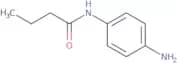
CAS:<p>Please enquire for more information about N-(4-Aminophenyl)butanamide including the price, delivery time and more detailed product information at the technical inquiry form on this page</p>Formula:C10H14N2OPurity:Min. 95%Molecular weight:178.23 g/molN-(3-Aminopropyl)acetamide
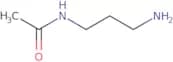
CAS:<p>N-(3-Aminopropyl)acetamide is a secondary amine that is used as a reagent in the profiling of tissues. It has been shown to inhibit the growth of Thermus thermophilus and other bacteria, including Staphylococcus aureus, Escherichia coli, and Pseudomonas aeruginosa. N-(3-Aminopropyl)acetamide has also been shown to inhibit the growth of cancer cells in cell culture. It was found to be effective against logarithmic growth phase cells and not against stationary phase cells. However, its mechanism of action is unknown.</p>Formula:C5H12N2OPurity:Min. 95%Color and Shape:Colorless PowderMolecular weight:116.16 g/molN-(2-Aminoethyl)-4-(1,1-dimethylethyl)-2,6-dimethylbenzeneacetamide
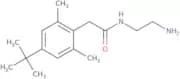
CAS:<p>Please enquire for more information about N-(2-Aminoethyl)-4-(1,1-dimethylethyl)-2,6-dimethylbenzeneacetamide including the price, delivery time and more detailed product information at the technical inquiry form on this page</p>Formula:C16H26N2OPurity:Min. 95%Color and Shape:PowderMolecular weight:262.39 g/mol(S)-(+)-2-Phenylglycine amide
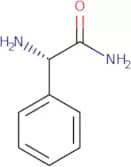
CAS:<p>(S)-(+)-2-Phenylglycine amide is a racemic mixture of the (R) and (S) enantiomers. It is an inhibitor of the enzyme, racemase, which converts one type of amino acid to another. This inhibition prevents allergic reactions that can be caused by acylation reactions or ph profiles in the body. The amino acid composition of this drug is unique because it contains an ester hydrochloride group, which does not exist in other drugs. The kinetic and thermodynamic properties of (S)-(+)-2-phenylglycine amide have been studied extensively, but there are no reports on its ability to inhibit inflammatory diseases. However, it has been shown that the β-amino acid in this drug can inhibit amide hydroxamic acids and stereoselective hydroxamic acids.</p>Formula:C8H10N2OPurity:Min. 95%Molecular weight:150.18 g/molC20-Ceramide
CAS:<p>Ceramide is a group of sphingolipids that are found in the outermost layer of cells. Ceramides have been shown to be important for maintaining cell structure and function, as well as regulating cellular processes such as apoptosis, insulin resistance, and inflammation. A ceramide profile can be used to identify an individual's risk for developing certain conditions such as cardiovascular disease, chronic kidney disease, or cancer. In addition to its role in cell biology, ceramide has been shown to increase insulin sensitivity in animals by increasing glucose uptake in adipocytes. Ceramides are also produced by the body from other lipids such as cholesterol or fatty acids. They are found in various tissues and organs including the brain, skin, lungs, and gut.</p>Formula:C38H75NO3Purity:Min. 95%Molecular weight:594.01 g/mol(R)-5-(2-Aminopropyl)-2-methoxybenzenesulfonamide
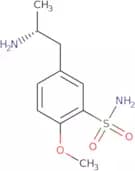
CAS:Controlled Product<p>(R)-5-(2-Aminopropyl)-2-methoxybenzenesulfonamide is an amide. It is a hydrochloric acid salt that can regulate the reaction system and introduce filtration, which can be used to separate the components of the reaction system. The kinetic and chiral properties of this compound are derived from Friedel-Crafts reactions with phosphites and Friedel-Crafts reactions with d-alanine. (R)-5-(2-Aminopropyl)-2-methoxybenzenesulfonamide can also catalyze ammonolysis and catalysis with phenoxy.</p>Formula:C10H16N2O3SPurity:Min. 95%Color and Shape:PowderMolecular weight:244.31 g/molL-Alanine amide hydrobromide
CAS:<p>L-Alanine amide hydrobromide is a carboxylic acid that can be used as an antibacterial agent. It reacts with the amino group of l-tyrosine and alkylsulfonyl groups to form an amide. L-Alanine amide hydrobromide has been shown to inhibit bacterial growth in vitro, and it also has anti-inflammatory properties. The antibacterial activity of L-alanine amide hydrobromide is activated by reaction time, which may be due to its ability to react with the basic proteins found in bacteria. This drug also interacts with vinyl alcohol, which may be important for its immobilized application.</p>Formula:C3H8N2O·HBrPurity:Min. 95%Molecular weight:169.02 g/mol2-Methylnicotinamide
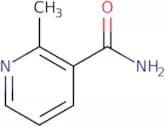
CAS:<p>2-Methylnicotinamide is an amide that is used to treat inflammatory bowel disease. It inhibits the production of glutamate and aspartate, which are neurotransmitters that are involved in the inflammation process. 2-Methylnicotinamide has been shown to have a protective effect on renal function by reducing blood flow to the kidneys, thereby decreasing renal damage caused by glutamate and aspartate. This drug also has anticancer properties, which may be due to its ability to inhibit viral replication and reduce the incidence of cancer in animals. 2-Methylnicotinamide has not yet been tested on humans, but it is thought to be safe for use in pharmaceutical dosages.</p>Formula:C7H8N2OPurity:Min. 95%Molecular weight:136.15 g/molN-(2-Benzoyl-4-chlorophenyl)-2-chloro-N-methylacetamide
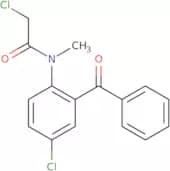
CAS:<p>Please enquire for more information about N-(2-Benzoyl-4-chlorophenyl)-2-chloro-N-methylacetamide including the price, delivery time and more detailed product information at the technical inquiry form on this page</p>Formula:C16H13Cl2NO2Purity:Min. 95%Molecular weight:322.19 g/molOxamide
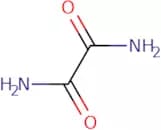
CAS:<p>Oxamide is a chemical compound with the molecular formula CHNO. It is a white solid that is moderately soluble in water and alcohol, but not in ether. Oxamide has been shown to have antioxidative properties and to inhibit the formation of reactive oxygen species. This drug also has an effect on thermal expansion and on the blood flow rate in human serum.</p>Formula:C2H4N2O2Purity:Min. 95%Molecular weight:88.07 g/molN,N-Dimethyl 4-boronobenzenesulfonamide
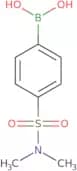
CAS:<p>Please enquire for more information about N,N-Dimethyl 4-boronobenzenesulfonamide including the price, delivery time and more detailed product information at the technical inquiry form on this page</p>Formula:C8H12BNO4SPurity:Min. 95%Molecular weight:229.06 g/mol4-Amino-5-methoxy-2-methyl-N-methylbenzenesulfonamide
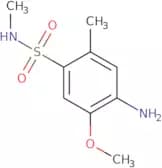
CAS:<p>4-Amino-5-methoxy-2-methyl-N-methylbenzenesulfonamide is a surfactant that is used in the chemical industry to dissolve diazotized aromatic amines. It is also used in the preparation of coupling agents, such as naphthol, and hydrochloric acid. 4-Amino-5-methoxy-2-methylbenzenesulfonamide can be prepared by the diazotization of aniline followed by coupling with hydrochloric acid and sodium phosphate. The product can then be purified by recrystallization from a salt solution containing sodium acetate.</p>Formula:C9H14N2O3SPurity:Min. 95%Molecular weight:230.29 g/mol4-(2-Chloro-4-nitrophenyl)piperazine-1-carboxamide
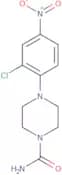
CAS:<p>Please enquire for more information about 4-(2-Chloro-4-nitrophenyl)piperazine-1-carboxamide including the price, delivery time and more detailed product information at the technical inquiry form on this page</p>Formula:C11H13ClN4O3Purity:Min. 95%Molecular weight:284.7 g/mol

![[4-(4-Aminophenoxy)(2-pyridyl)]-N-methylcarboxamide](/_next/image/?url=https%3A%2Fstatic.cymitquimica.com%2Fproducts%2F3D%2Fthumb-webp%2FFA17813.webp&w=3840&q=75)